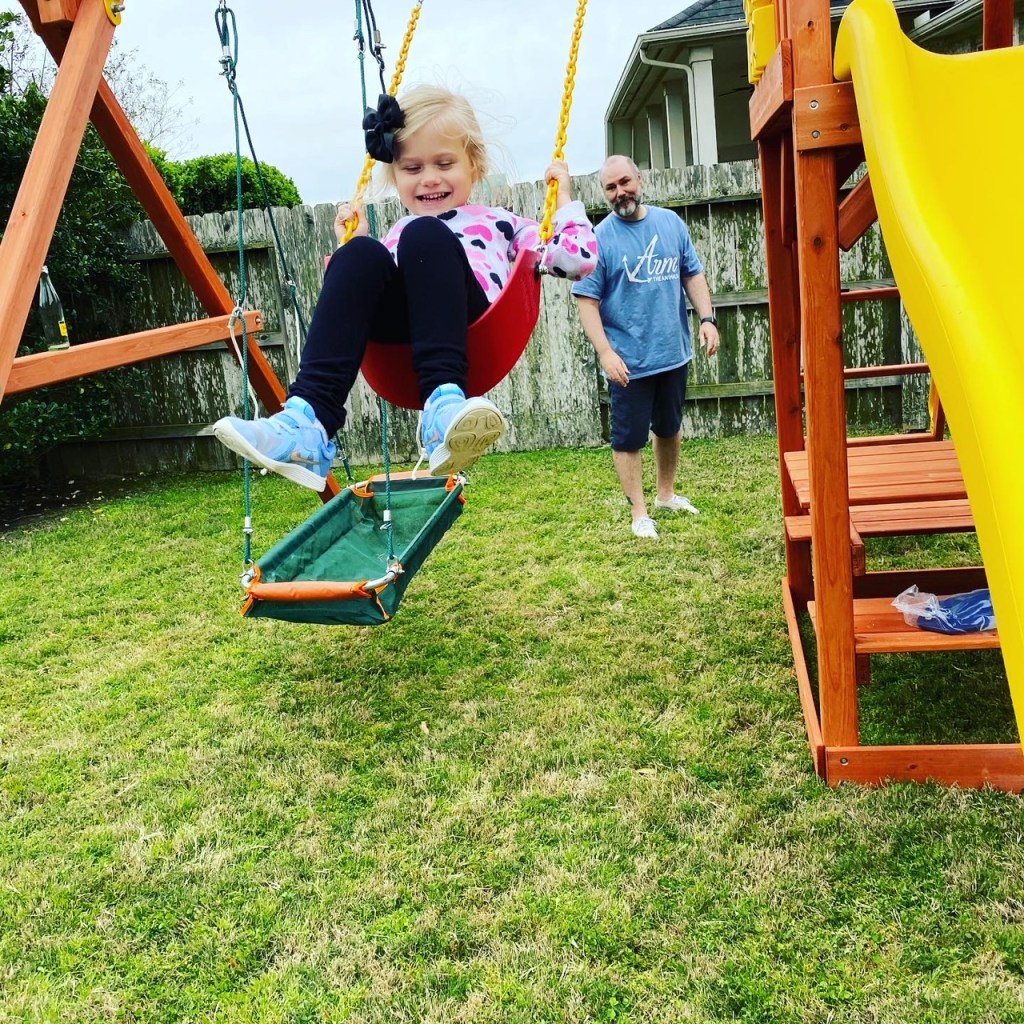
Hello again! I hope your summer’s starting well. This is my nine-year-old’s last week of school, and I’m a little apprehensive. Her support needs are high, and last summer was miserable for everyone in our household as she battled boredom and hormone-induced irritability (physically, she’s an early bloomer). Because her ability to communicate is limited, Daphne’s feelings manifested as daily tears at best and tantrums at worst, and most days felt like a marathon of bewildered and frustrated caretaking that nearly wrecked her dad and me. It was the beginning of a shift in our daughter’s personality–she’s grown moodier, less content this year–and the resentment I felt at this sudden change was tough. For a while there last summer, with nearly all my free time gone, I was on the brink of burnout.
We have a plan to make this summer better, however. We’re implementing a visual schedule Monday through Friday that will identify Daphne’s daily activities using simple pictures and phrases. Eat breakfast, brush teeth, get dressed, play outside, choose activity, enjoy iPad, etc. Once the activity is done, Daphne will move that activity (printed on a laminated square of paper attached to Velcro) from the left-side TO DO column into the right-side DONE. That way, she can see the progress in her day and have a clearer idea of what will happen next. It will help us visualize our expectations of her, basically. Our daughter has Level II Autism Spectrum Disorder, and though she’s always been relatively flexible, as she’s gotten older and more aware of the world, she’s grown to need a clearer sense of what will happen and what she’ll need to do. Her team at school uses a visual schedule, and they’ve emphasized how well she responds to visual cues of all kinds. So, as much as I dislike the idea of regulating our home life in this seemingly strict way, I’m ready to try it, for myself as much as for her. I’m hoping the schedule will prevent me from letting too much time go by, which I think was the root of our problems last summer. We’d get up too slowly, lounge too long, she’d have too much YouTube Kids too early in the day, she’d satiate on that, she’d get frustrated, she’d fight me when we did do something academic or skill-based, and everyone was wretched…
I will keep you updated on how that goes.

It’s funny to acknowledge that summer is now the time of year I most dread. For many years, it was the late winter/new year that felt toughest. But I was an educator, a classroom teacher for fifteen years and then a curriculum specialist for nearly two, and January through March was always the bleakest, most stressful and exhausting period what with state exams, senior graduation projects, no holidays in sight, the honeymoon period with the students long over… Summer, of course, was always the sweet respite from all that difficulty, the period of true rest. Now, my life is very different.
And that is for the best. Hands-down, absolutely. Over the last four years, our little family has made several radical revisions to our lives, and they’re among the best decisions I’ve ever made.
Let me back up a bit. I am a native Houstonian, and until spring 2021, I was also very much a suburbanite. I grew up in a little West Houston suburb, came back after college to live in the nicer suburb of Sugar Land, Texas, where my parents moved us when I was ten. I taught high school English of all levels in a public school district nearby, and after my husband and I got married, we built a large tract home in a shiny new master-planned community in the rapidly developing suburb of Fulshear, not far from where we grew up. It was all very nice and orderly and conventional. My life was on the path I’d envisioned, we were close to our parents (which was fantastic since they took turns caring for our infant daughter after I went back to work), and our house was new and pretty. We had our baby and two dogs and plenty of neighbors around our age. I colored my hair, worked out regularly, got mani/pedis when I could. We went to the mall on weekends, out to dinner when possible, had family and friends over…
The American Dream, right?
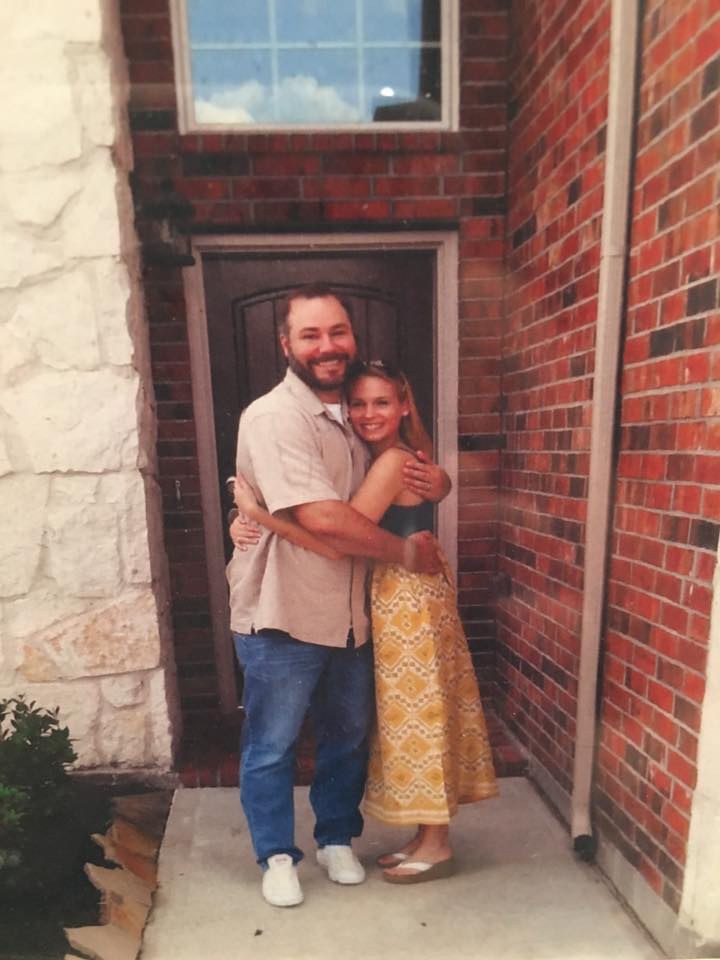
Except it wasn’t. And that became more and more evident as the years stacked up. As we failed to make any true friends among our more-conservative neighbors, many of whom acted like overgrown sorority or fraternity kids. As our daughter got older, and we faced that grave diagnosis that would make our parenting experience so different and isolating. As our friends and family made changes themselves–got married, moved away, had less time for get-togethers. As things in my work life inevitably changed–the colleagues with whom I’d been close in those early years moving campuses or districts or taking entirely new jobs elsewhere, or as my own professional decisions, to go from one campus to another or one position to another, took me away from inspiring, supportive coworkers. As my New England-born husband, never a suburbanite or a Texan at heart, grew more and more miserable. By the time Daphne was five, he was working remotely, which was great because he could take her to school once she started her autism preschool, but then it meant he was stuck at home all day, most days, in a house we realized we did not love, in a neighborhood he had grown to despise (what with houses that all looked alike and a difficult HOA on top of rude or dismissive neighbors) and everything getting more expensive thanks to insane hikes in our property, city, school, and MUD taxes.
And I’ll be honest about my teaching career–I was never entirely comfortable in it. Never entirely happy. I’d wanted to teach because I was fortunate to have so many gifted instructors myself, particularly one AP English teacher who taught me the techniques of close reading and analytical writing, which opened so many doors of understanding and inspiration. I wanted to do the same thing for other young people, but when I student taught, it was like I’d dropped into a freezing sea expecting to dog paddle at least, but the shock of the reality was so powerful it paralyzed me and I found myself sinking, then drowning. What?! I thought in my panic. I read the manual; I’m supposed to know how to do this, how to swim. By that time, though, it was too late. I was graduating. I needed to support myself. I had to get a job, and the district in which I’d done my field work was quick to hire me, despite my struggles. What followed was a two-year crucible of nothing but utter survival. I continued to wonder, aren’t I supposed to understand this? Why is this so difficult? But I realized, though I’d learned the philosophies and abstract methods of teaching well (I scored high on all my certification exams), the reality of it all, of putting these theories into daily practice with real teenagers, without the benefit of much real-world experience, was something else completely. It was going to require an entirely new skillset I would have to develop on the job, and fast. And all my mistakes, all my blunders, all my failures would be on display everyday for my poor students. It was all one long, extended exercise in vulnerability, humility, and resiliency, and I remember having the epiphany that adulthood was nothing more than grappling with a series of unexpected problems in an indifferent world, which was SO much tougher than sitting in lectures, taking notes, writing papers, and studying for exams. Being a student was extraordinarily easy. Fun. Being a grownup and a teacher was f*****g hard.
But I am a resilient person, and I believe in a growth mindset, so I stuck with it. I got better. Over the years, I learned to love sharing literature with my kids, and I learned to love and appreciate them not as tabula rasas but as vibrant young personalities with quirks and talents all their own. I was given team leadership positions, nominated multiple times for campus Teacher of the Year (finally winning in 2019, my last semester in the classroom), and was ultimately invited into a curriculum specialist position. I did gain control, and I learned to do certain things well. I never felt, though, that I was entirely suited to the work. Looking back, I recognize that I was always too rigid, too controlling. I was never a great facilitator, and in many ways I was also too critical of my students. If I had it to do over again, I’d do many things differently. If I ever find myself in a classroom once more, I think I will be a fundamentally different instructor– more patient, more facilitative. Less fearful.
Having said all that, I never stopped wanting to do something else, despite my professional successes. I never stopped suspecting that teaching wasn’t for me. But I didn’t know what else to do. I’d also grown complacent, so the idea of taking a professional risk by starting something entirely new, and struggling yet again on a steep learning curve, overwhelmed me, and I resisted the urge.
Then came the spring of 2020 and the COVID-19 pandemic.
I won’t rehash that because we all know what it was like. We were all there. I will say, though, that after pivoting so sharply, and coming through all the anxiety and discomfort, my husband and I found ourselves facing a reckoning. Things can change, and fast. Nothing, NOTHING is guaranteed. And I had hit a low point with my work; it had become clear that the people running our program and even our district only cared about numbers, even during a pandemic. Even when the world might be ending, they only cared about passing rates, graduation rates, attendance rates, the bottom line. Looking good. Even though we had students and staff grappling with challenges like supporting their families or taking care of their health. On top of all that, I’d become a punching bag for those below and above me because, in that incredibly stressful situation, I was an easy target. I had some authority as the go-between for teachers and admin, but I was no one’s actual supervisor, and I had no real ability to hold anyone accountable. All the while, I was supposed to give my boss sage advice in an unprecedented situation when I was still very new to my role. A position for which, to be clear, I never received any actual training.
I was done.
We were done.
Let’s pack up and go to Vermont, my husband suggested. Let’s get away from the cement and packed-in houses, the pollution of the land and politics. Let’s get some acreage, some space to breathe. Let’s get chickens, learn to grow our own food. Let’s become a little more self-sufficient. Stay home with Daphne so you can support her in the same amazing ways you have while we’ve been in quarantine (it was during that house-bound period that we finally potty trained her). That way, my husband said, she can continue the marvelous progress she’s made here at home in these months.
Let’s slow down.
And I was ready.
I think, because the world stopped for a little while and we could breathe, take a little rest and truly reflect on where we were, what we wanted from our limited time alive, I was finally receptive to change. And not just a little change–a sweeping, epic change that began with tearing up our Houston roots.
Yank up all those roots, we did. It was brutal in certain ways, possibly even cruel, but it felt great.

We put our house on the market in January 2021. It sold in less than two weeks, and we packed up most of our worldly things in a giant moving van and sent them on their way to storage in Brattleboro, Vermont. I gave my boss a month’s notice, and then I resigned from my job. I had zero qualms about it. Still in Texas, we alternated between living with my parents and my husband’s mother and stepfather while winter ended in northern New England. Then, on Easter Sunday, we said goodbye to our family (that was tough, no lie), piled into our new Subaru, every last inch of which was packed with the stuff we’d kept, and pointed the car north. After six days on the road, we moved into our temporary lodging, an Air B&B in an old Victorian house in Canaan, Vermont, which is literally in the most northeastern corner of the state–we were two minutes from a bridge over the Connecticut River into New Hampshire, and about ten minutes from the Canadian border.
The population of Canaan, VT, in 2021? Roughly 800, probably a little less. The population of Fulshear, TX? Roughly 25,000.
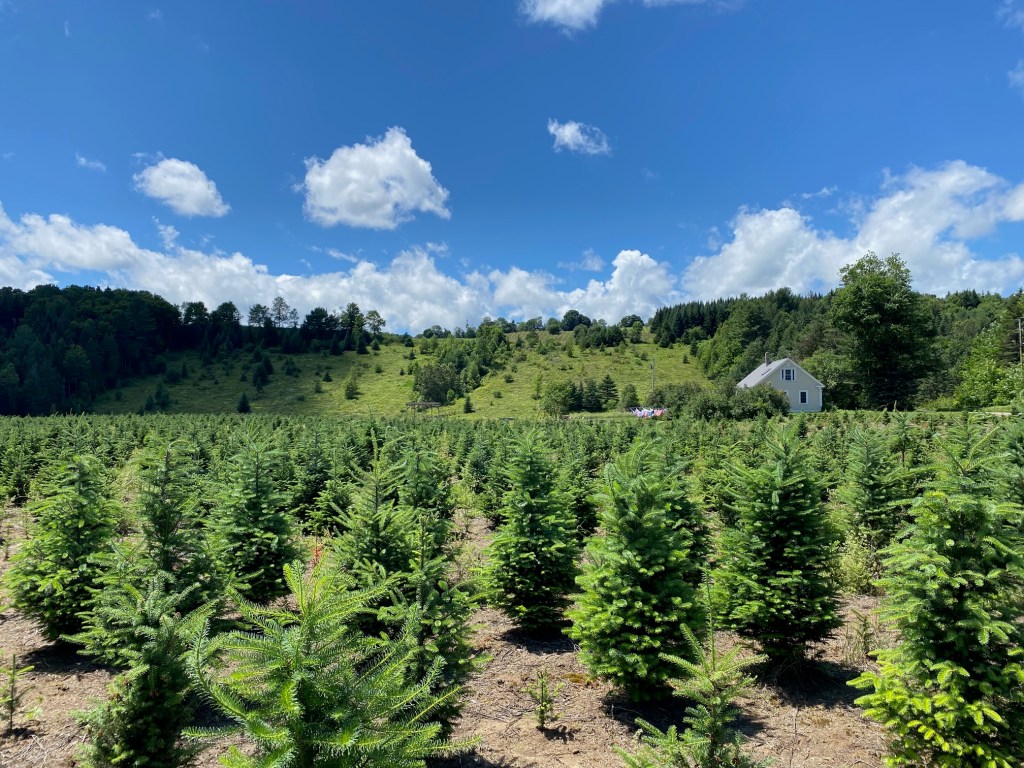
It was the beginning of a new era. Now, three years later, we are living happily on eleven acres of a Christmas tree farm in Lyndonville, in a two-hundred-year-old farmhouse with four chickens and a large garden in a lovely, rural area. Our daughter is doing well in the local school, whose approach to special education is premised on mainstreaming–including all students in general education classrooms as much as possible. My values have changed, and I am a happier, more genuine person.
I’m also writing, something I returned to during the pandemic when I suddenly had more time and a great need to escape. (I’d dabbled in creative writing when I was younger, at the encouragement of teachers and professors, but I did not yet have the desire or discipline to pursue it seriously). During those months in quarantine, I wrote a Christmas novella, a love story set over the course of four days in Newport, Rhode Island in 1900. It is historically inaccurate and awkwardly written, I’m sure. Probably full of cringe. That doesn’t matter. It was the first step, and it felt glorious.
So there you are. An overview of the radical revisions I’ve made to my adult life.
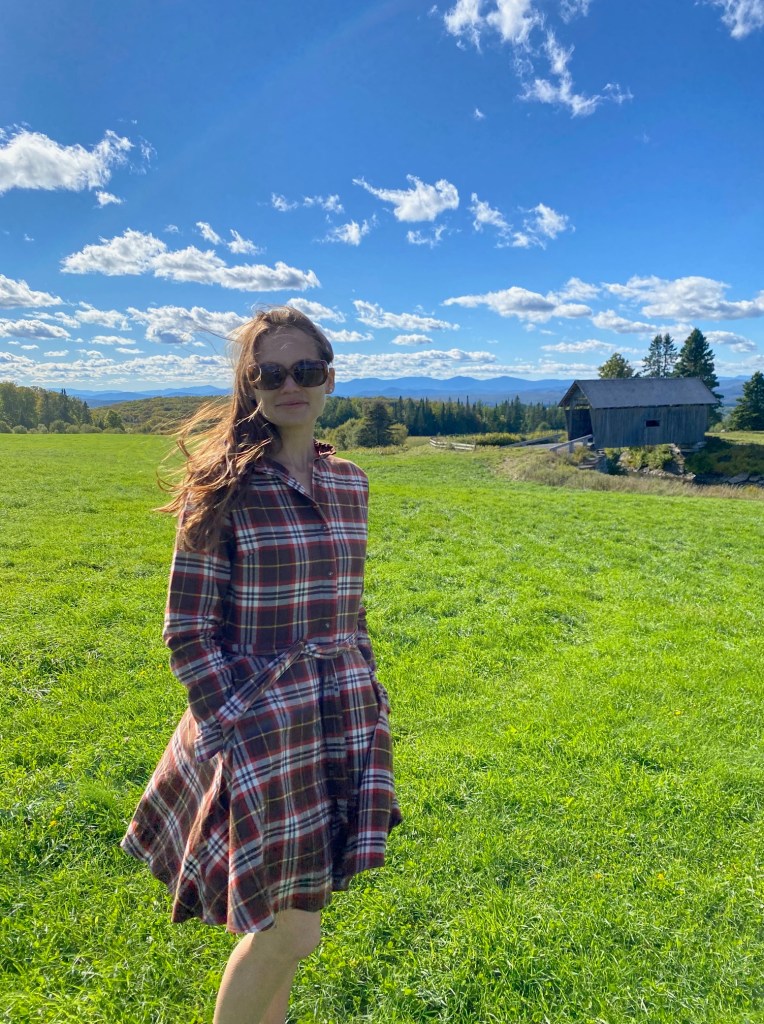
As with stories, our lives always have promise, the potential to be fulfilling, extraordinary even, but the executions might be flawed. So, we might have to scrap what we have and start over. Maybe the edits are easy; maybe they’re gut-wrenching. Either way, we recognize they’re necessary, and we move forward the best we can.
I’d love to hear about your life edits. What have you reconsidered? What new things have you tried? What have you kept, and what have you discarded? How is your story better? What, ultimately, have you learned, about the world and yourself?
Thanks so much for sticking with this, and I hope to hear from you!
Until next time, go forth into this beautiful summer, and enjoy.
XOXO,
Jenn
 Jennifer Shaw