Happy New Year! I hope yours has started well.

I was shocked to see I haven’t written about our chickens since October 18th. At that time, we were preparing to move our pullets into the grown-girl coop, and I was nervous about how they would assimilate with the older hens.
Eleven weeks later–eeek!–I’m happy to report the little girls are doing fairly well.
We never saw evidence of fighting with the older hens overnight, and it only took the little ones three evenings to take themselves back up the plank and into the coop for the night. Before then, Jer and I had to scoop them up at sunset from where they were huddling by an old tire stack and put them into the coop ourselves. Thankfully, they figured out bedtime pretty quickly, especially since the temperature began to drop, and chasing them around in the cold and creeping darkness wasn’t pleasant.
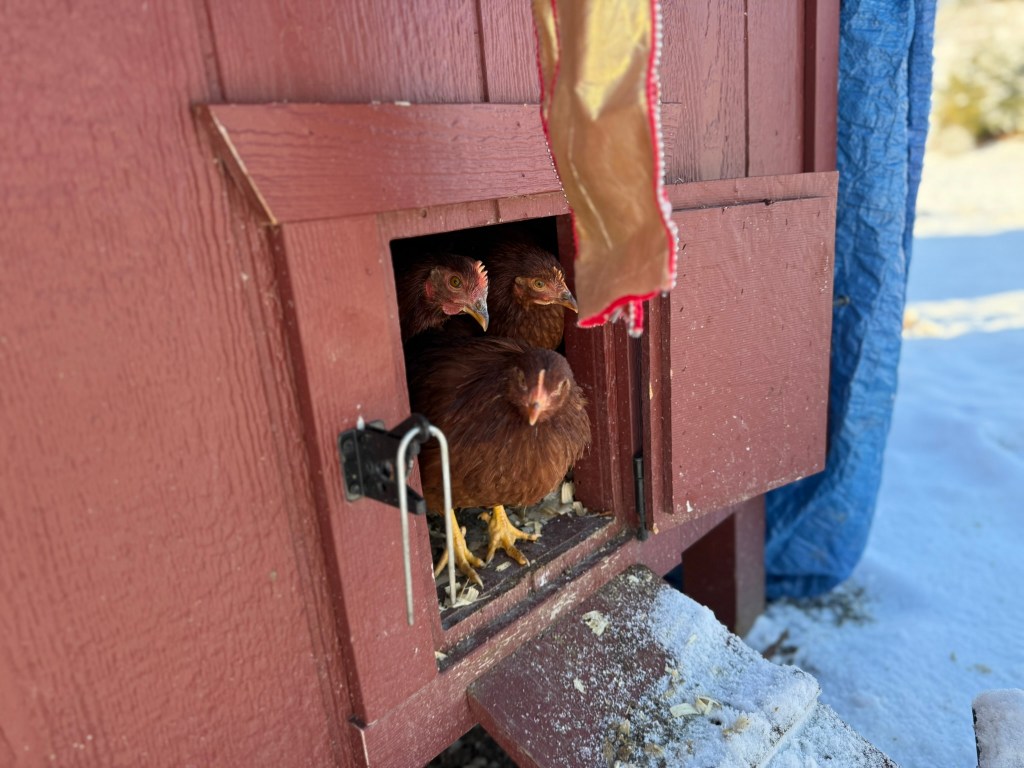
They did, however, take longer to figure out how to eat from the treadle feeder. It didn’t help that the older hens chased them away each time one of them got too close, so I put their baby feeder down, and soon they were all eating out of that until after Thanksgiving. *Eye roll*
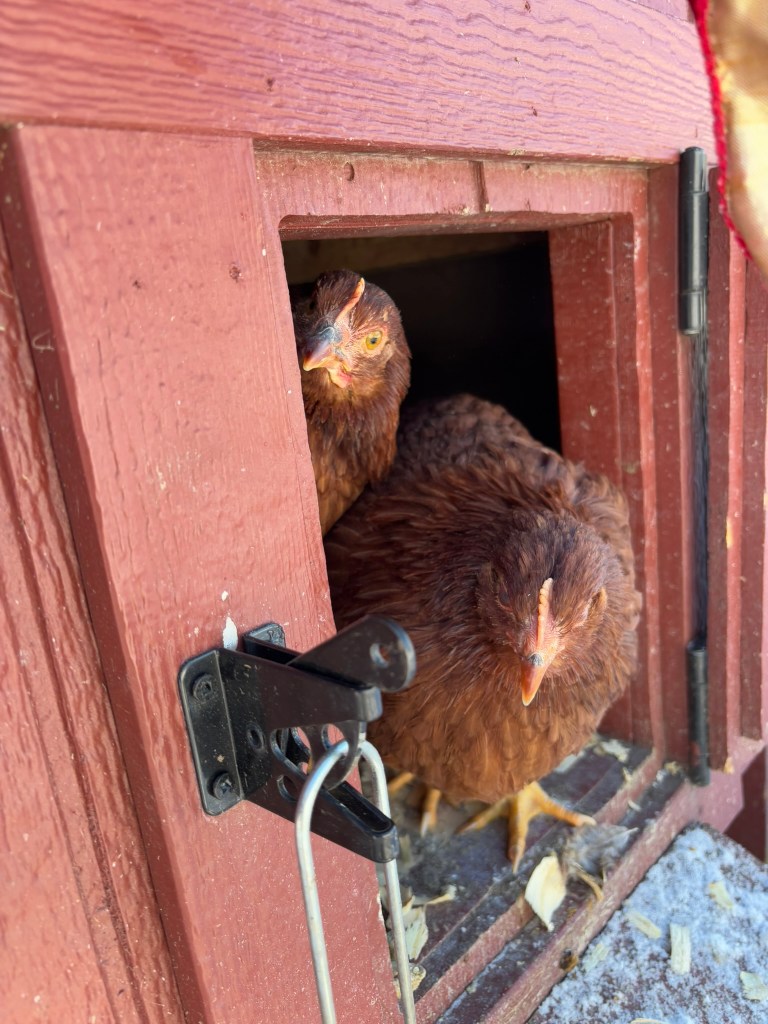
Around that time, meek Jeanie (of all the pullets!) figured out that jumping on the silver treadle made the lid of the big feeder open, revealing–lo and behold!–so much more food than their smaller feeder contained. From there, they all learned how to do it, and how to wait until their older sisters were done before helping themselves.
Now, little Daisy sometimes perches directly on the skinny upper ledge of the feeder, below the lid, and leans her head down to eat. She’s so small that it’s difficult for her to stand where she’s supposed to and reach all the way over to feed comfortably, especially as the food supply gets low.
Yesterday, I actually saw her standing inside the food box, her body turned sideways, eating to her heart’s content. I suppose cold feed feels better on her feet than icy metal–our daytime temps have been in the teens and single digits.
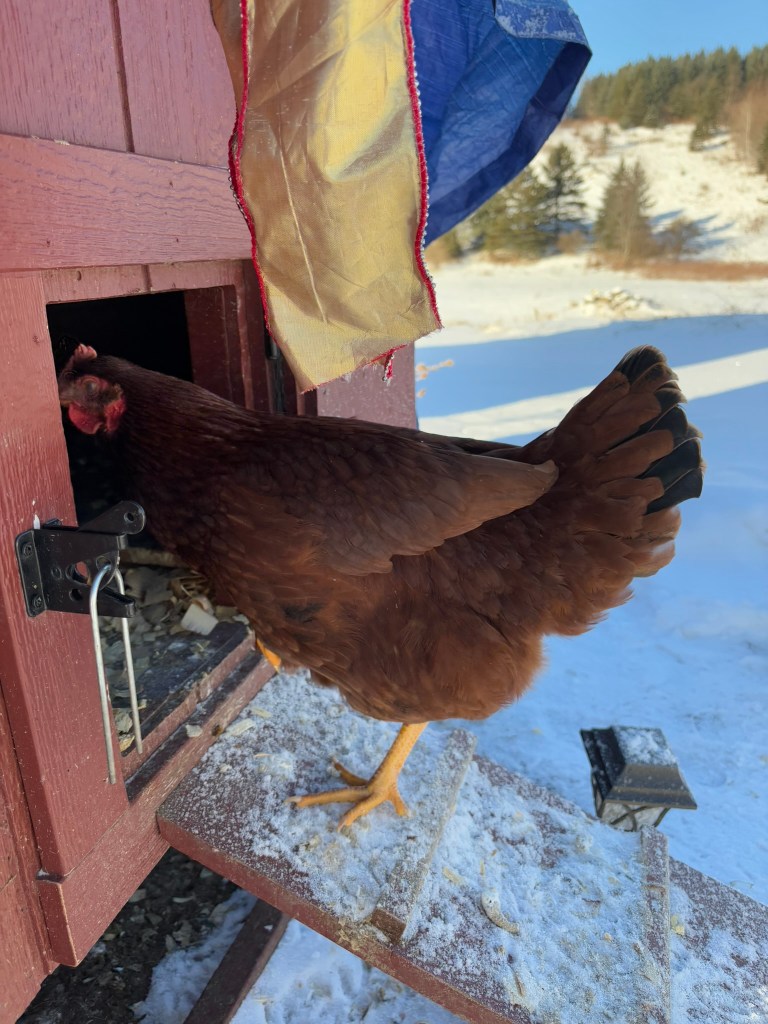
What the pullets are not all doing yet is sleeping on the roost bar. Our pullet alpha, Mimi, gets up there occasionally, but the others are still sleeping down below.
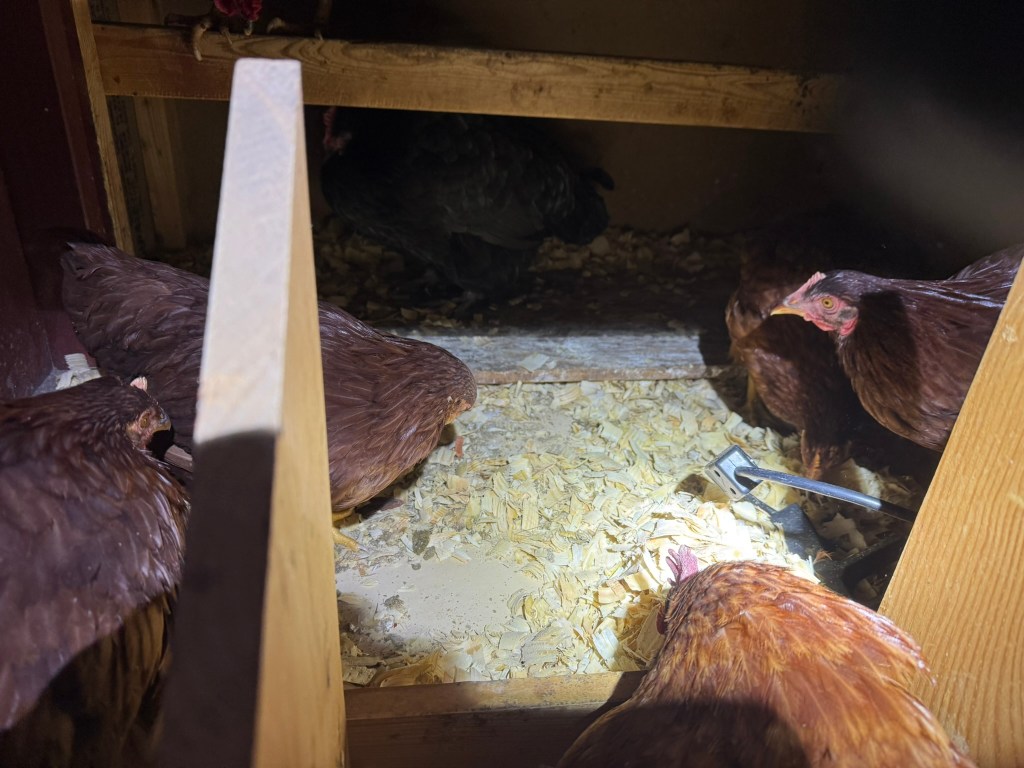
In the early weeks, they were piling together in the nest boxes, and I had to clean those out each morning because they were filled with poop. Yuck!
They’ve graduated now to roosting on the low ledge that divides the nesting boxes from the floor of the main area. That’s still not where they’re supposed to be, but at least they have the idea. I believe they’ll make it onto the proper bar eventually.
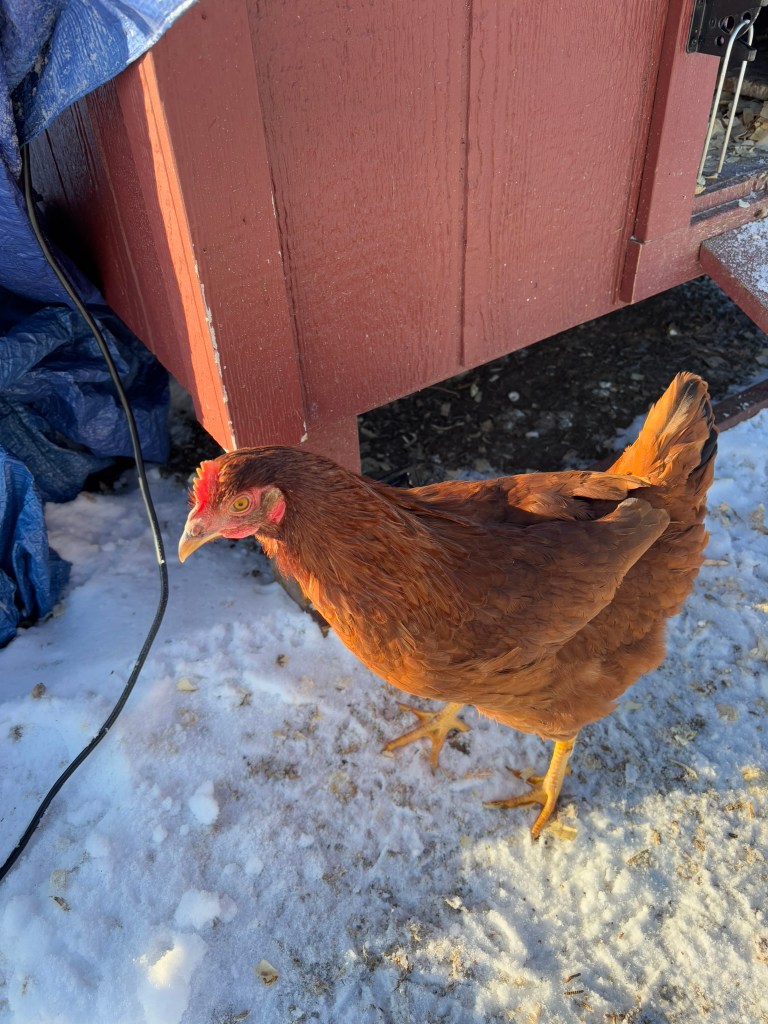
In terms of physical development, Mimi and Susie, at the top of their little flock, are good-sized and thriving. Jeanie is weaker; one of her legs is slightly crooked, so she doesn’t move around as well. All the chicks’ little legs appeared fine when they arrived from the hatchery, so I think she might have injured her leg somehow when she was still in the brooder or maybe on an early field trip outside, and it didn’t heal completely.
Daisy is still significantly undersized, but she is eating, drinking, and growing. She appears to be fine except for a strange marching gait that we didn’t see until she was outside with plenty of space to move around. We don’t know if that strange walk developed over time, or if she’s always had it and we just didn’t observe it earlier because their brooder was too small to allow a lot of movement. Her little back claws are awfully short, and we wonder if this is a minor deformity that makes balancing difficult, affecting her walk. We also worry she might have Marek’s Disease, since a strange gait is one symptom, but we double-checked our order from the hatchery, and all four chicks were vaccinated against it (as were all of our original hens). At least, that’s what the hatchery claims. Who knows?
I hope her walk, and Jeanie’s leg, aren’t because we kept them too long in a brooder that was really too small. I worry about that, but it’s over and done. Next time we brood chicks, I’ll be sure to get one of those giant galvanized tubs they sell them in at Tractor Supply. No more plastic storage containers from Walmart.
The assimilation with the older girls wasn’t as quick and easy as we’d hoped. And speaking of the older ones, I have sad news.
In early December, Mildred, our black Australorp, was suddenly struggling to walk. She hobbled, then half-fell, out of the coop one morning and couldn’t make it to her water bowl. I tried standing her up several times, but she just flopped back down, like she couldn’t feel her legs. That first morning, my stomach in knots, I finally carried her over to the water dish so she could drink, then I gave her a separate, small bowl of food to eat from right there. I hoped against hope she was just stiff.
But that evening, she hadn’t moved. We had to pick her up to get her back into the coop. She was in the same condition the next morning.
I gave her one more day to see if she’d improve. When she didn’t, I brought her inside, coming to grim terms with what we had to do. I washed her dirty vent in our bathtub (which we never use, so I didn’t hesitate), dried her off, then settled her with food, water, and mealworms in our neighbor’s cat carrier. She just leaned into her food bowl, but her eyes were heavy, and she looked warm and content. She was partially paralyzed, so I don’t think she was in pain, and she seemed to enjoy the warmth of the house.

That afternoon, I sat on the bathroom floor with her in my lap, stroking her back and chest. She napped in my arms.
She always wanted to be a house chicken. I’m glad she finally got her wish, even if it was just for a little while.
That night, our neighbor and good friend brought over his .22 pistol with suppressor, and he and my husband wrapped Mildred in a towel, carried her outside, and set her gently in the snow, where they put her down. Jer said she went quickly and quietly. That was a relief, of course.
That experience was hard enough, but then Beverly, our oldest Rhode Island Red, was sick. She hadn’t looked like she’d felt well for a while, moving around slowly and eating and drinking very little, her comb pale and dry. It had been weeks since she’d laid an egg. I worried she was egg tied, and I was preparing to bring her in for a saltwater bath to help her body release the egg. Or, I was preparing to provide palliative care, as I’d done with Mildred, because I sensed she wasn’t going to get better. Her last morning awake in the coop, I’d found her sitting in a nest box where she’d taken to sleeping with her little sisters, her head tucked under her wing.
It broke my heart.
That final morning, I had a sinking feeling when I opened to coop door. Sure enough, there was Beverly in the middle of the floor where she’d moved to sometime during the night. Laying down on her stomach, her head turned to the side, her eyes shut. She was frozen stiff.
I texted Jer, who was already at his desk in the house:
Tell Shawn we won’t need his gun again.
I wish we could have buried both girls, but the ground was frozen. We had to bag them instead and put them in the trashcan, which sounds awful and insensitive, but we didn’t want to lay them out somewhere only to draw wild animals our way.
Now, only sweet Doris is left from our original flock. Before we got too much snow, she wandered around by herself during the day, then came onto the porch to cry at the door.
Chickens grieve their lost flock members, I’m certain of it.
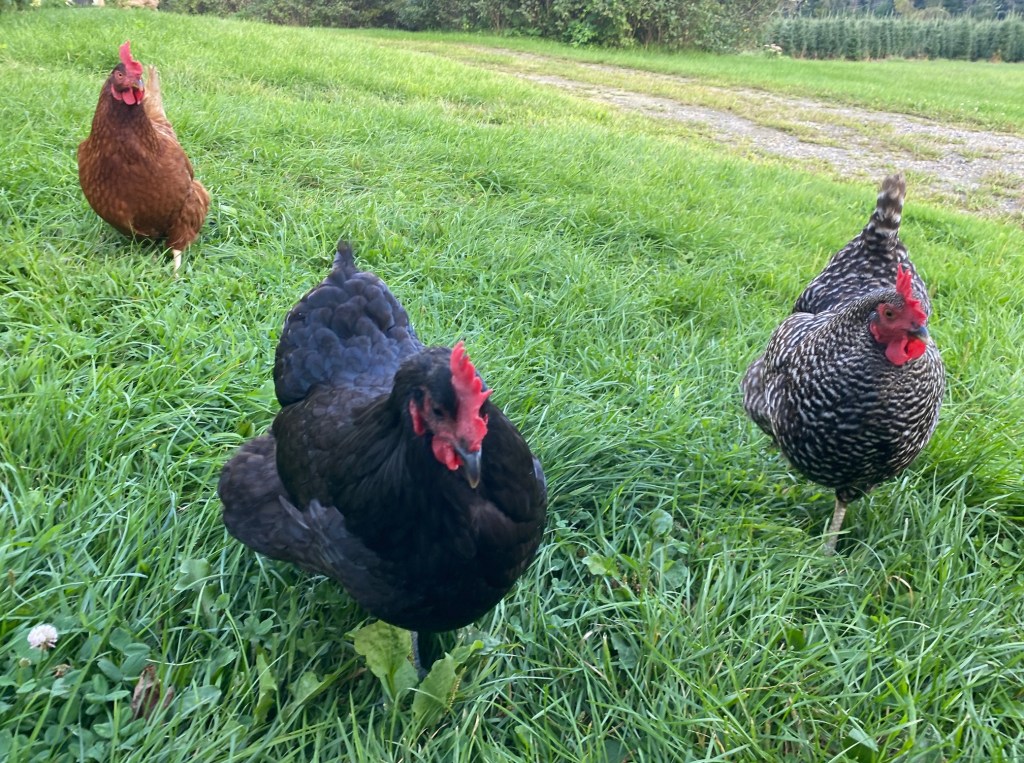
Again, we wondered if one of the little ones–Daisy, maybe–had given Bev and Mildred Marek’s Disease. That would explain Mildred’s paralysis, since the virus causes tumors to grow on a chicken’s spinal cord. But, Beverly moved fine; she just looked like she didn’t feel well.
Doris continues to look healthy, too. And we checked our records for the first flock–they were also all vaccinated against Marek’s, as I mentioned.
It’s so odd. I suppose Mildred could have gotten injured somehow just as Beverly got sick from something, but we wonder if the younger girls brought a disease into the Granny Coop.
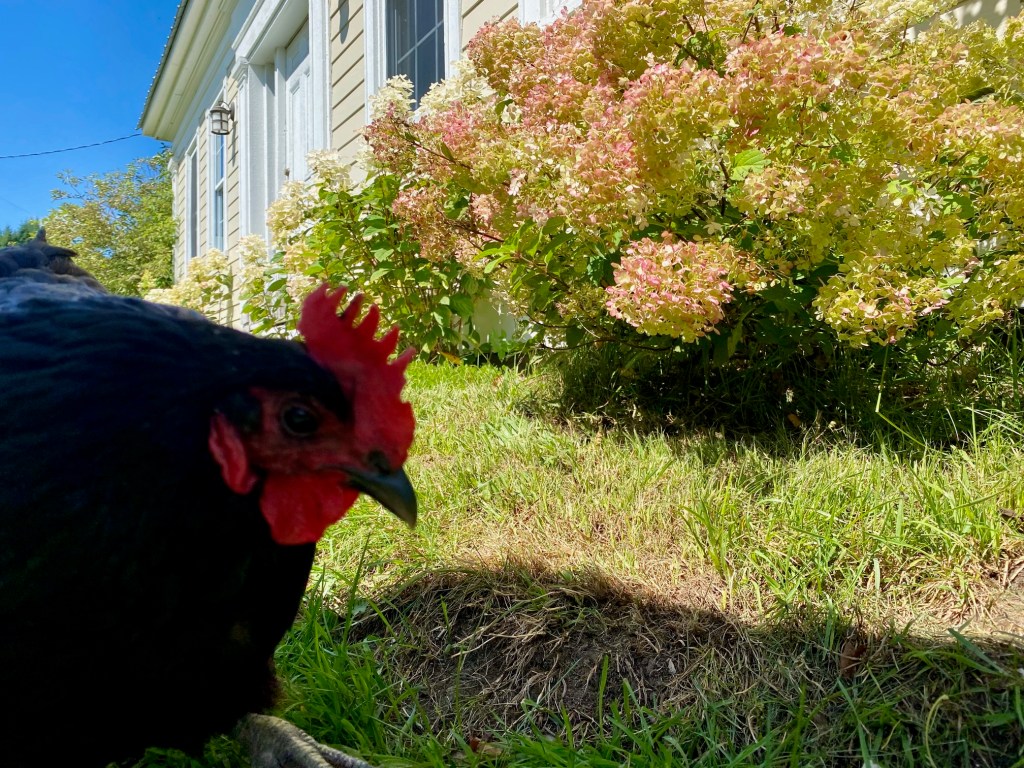
I miss Mildred and Beverly.
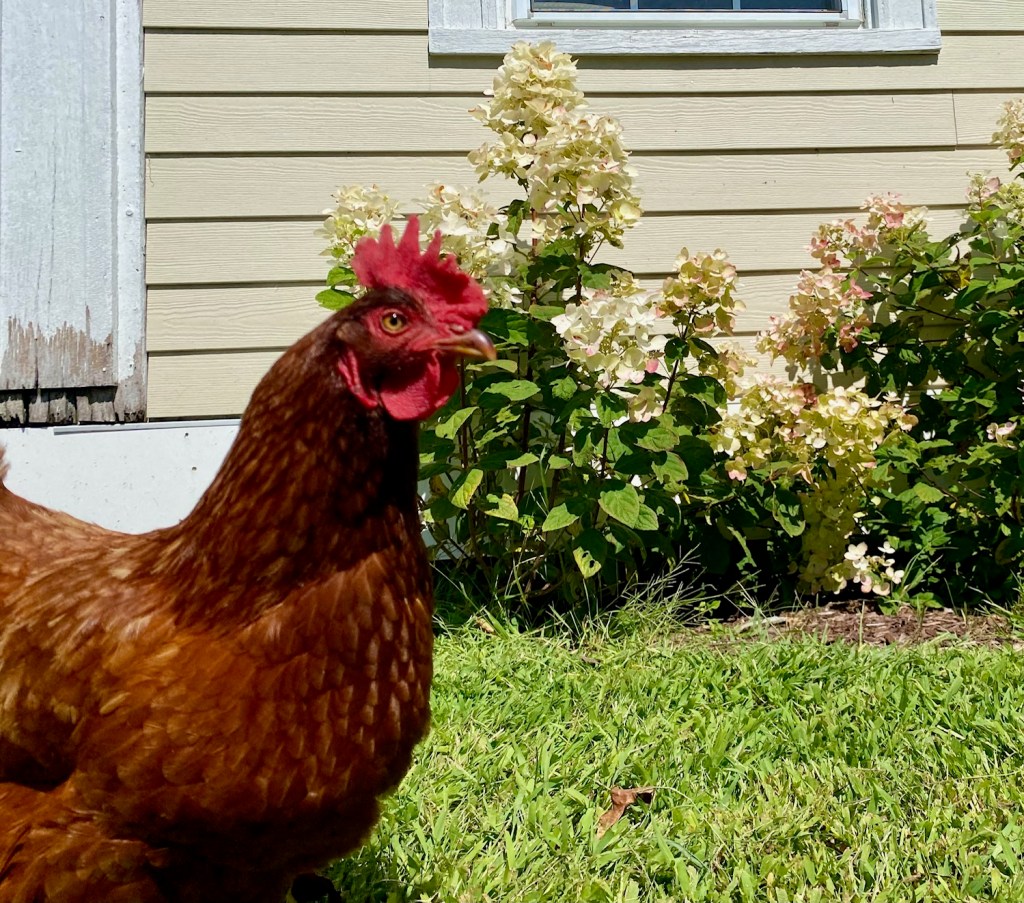
We don’t have dogs or cats right now, so our chickens are like our pets. It’s all been a reminder of how precarious the health of livestock can be, especially chickens who totally free range. I worry we’re not taking proper enough care of them. But, they’ve always seemed so happy ranging about where and how they like. I don’t want to take that joy from them.
I hope this first post of 2025 wasn’t too much of a downer. Thank you for reading, and I wish you only good, happy things for this year.

Feel free to let me know how your January is going!
See you next Tuesday.
XOXO,
Jenn
 Jennifer Shaw