Last week, after we were all healthy again, I finished the zero draft of my first novel! Woo-hoo!
If you’re not familiar with that term, a zero draft is an initial, usually unpolished version of a story, where the main focus is just getting the narrative written down.

That felt great–I finally held myself accountable to this significant goal! I’ve blogged about it several times, and now I’ve taken that huge step. Yep, it feels ginormous! And I’m better for having done it.

To finally make it happen, I expanded my 30k psychological horror-romance novella rather than finish my sprawling, multiple POV, already-110k historical manuscript, which just bulldozed right over little ole’ newbie me. Pivoting to the novella was more manageable and made for a more decent zero draft.
However, while I’m fond of certain parts, I don’t love this story.

Even now that I’ve expanded it, much of the narrative–the atmosphere, worldbuilding, antagonist, climax, even the romance–feels like it’s not enough. The bones are all there: a protagonist with a clear goal who realizes she needs something else, an internal arc shaped by the external plot that builds toward a single, climactic turning point, a romantic subplot supporting the main narrative well. But, those bones are brittle. A little osteoporotic, perhaps.

Even if a developmental editor took this on as a charitable project, and I had endless support, I believe it would only ever be mediocre. It just doesn’t feel inherently special. It’s not The One. Or, I’m not yet capable of doing it justice.
That’s ok.
I stuck with this project because pushing myself to develop something longform felt necessary. I need to work on elaboration and endurance, and this was an important exercise for that.

While I will probably never publish this novel, I do have a plan to edit it myself because that seems like the best way to learn from it.
Here’s my plan:
- Spend at least one month away from it.
- Read a printed copy straight through (like a reader, not the writer), making only the briefest, barest marginal notes when problems and deficiencies scream at me from the page.
- Write my own editorial letter.
- Complete another round of deep structure revisions, addressing the issues laid out in my letter? (Or wait?)
- Spend more time away from it–maybe a week? Longer?
- Print another copy, then begin guided annotations:
- Scene analysis= color code the elements in each scene (conflict, choice, consequence). If it should be a scene and only reads like a beat, what’s missing? Do scenes link smoothly in a clear cause-effect chain?
- Character notes=what’s s/he like? What does s/he want? Annotations will gradually shift to what does s/he need? How is s/he changing? Annotate discrepancies and needed revisions for arc development and consistency
- Plot notes= Are genre conventions/expectations met? How is the story pyramid unfolding? Where are the plot holes? (using a checklist)
- World building notes=Where are more details needed? What additional research do I need to complete? What should be clarified?
- Sum up each scene on a notecard, including where themes are established/developed/finalized; lay cards out to see how the novel unfolds. Consider if anything is missing, or if anything can be cut to tighten plot/pacing.
- Use all of this–editorial letter, annotations, and notecards–to complete another round of developmental edits.
This plan is based on suggestions from two authors on Substack–Jodi Meadows, whose two-part article “How to Edit Your Own Book” was impressively thorough, and Jessica Payne, whose article “How to Tighten Your Plot and Fix Pacing Issues with Scene Cards” also proved thoughtful and potentially beneficial.
This plan is hypothetical, of course. I might skip steps 4 and 5 and go straight to 6. I might also start this process and realize some of it is redundant. After all, these elements work together, so it might be that I’m addressing a problem with plot even as I’m noting revisions to character arc, for example. That’s fine. If I pare this process down, that will only make it more efficient.

It might also be too much. I might find that I can’t look at all these things–scene structure, character, plot, world–altogether as I move through the chapters. If that’s the case, I’ll stick to a single element all the way through the novel, as a writer friend advised.
I’m also starting an eight week course, The Story Beneath the Story, this Saturday. It’s all about techniques for developing implicit emotional connections with readers, and of course, I will apply these techniques to my revisions as well. I’m stoked about this class with speculative fiction author Erin Swann because I’ve struggled to balance show versus tell and implication versus explication. I’ve always been uncertain about how much I should trust my readers to make meaning on their own (though I understand that’s tied to genre and audience), so I’m hoping to get a lot of guidance and clarification in this course.
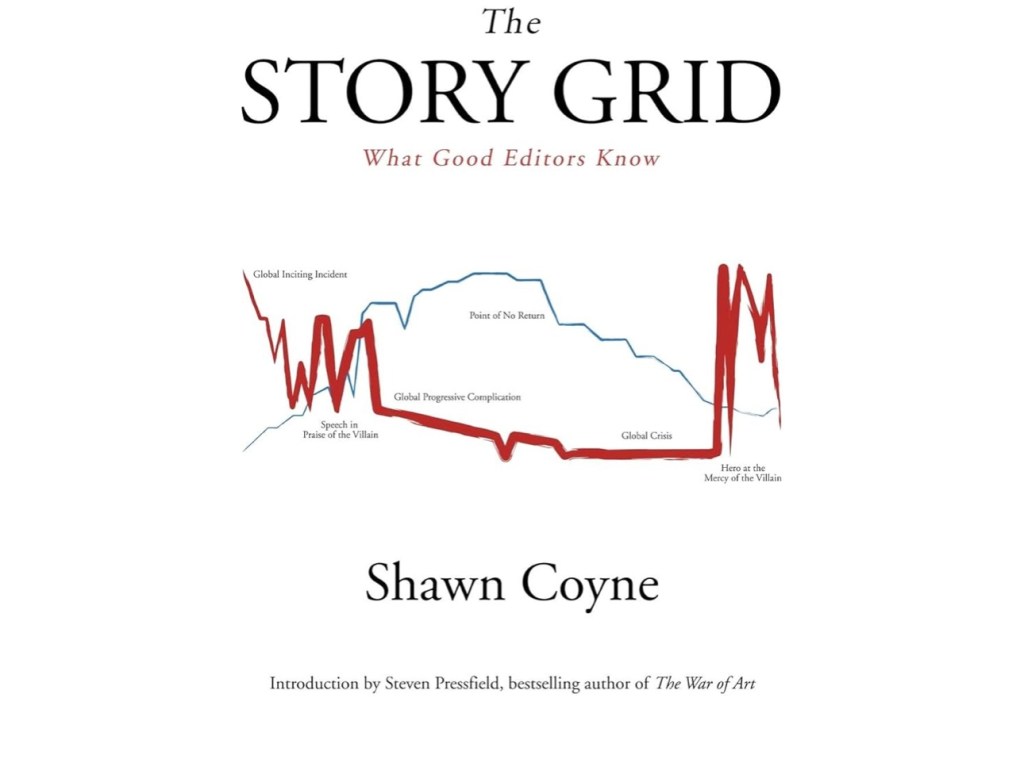
Finally, I’ve ordered the craft book The Story Grid: What Good Editors Know by Shawn Coyne. I keep hearing how excellent it is, and it sounds perfect for developmental edits. So, I’ll factor that into my revisions as well.
We’ll see how it all goes!
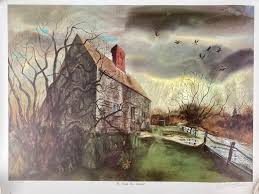
For now, here’s the elevator pitch for Saltbox, my first novel (which I’m only sharing to practice writing a pitch):
Stacy Ryan, a young woman eager to prove her competence and independence, uproots her life after purchasing, sight unseen, a 300-year-old saltbox house on the coast of Massachusetts. But when strange, then terrifying, things begin to happen, leaving no trace of evidence behind, and she learns the myth–or truth?–of the old house’s history, she must decide how far she is willing to go to take control of her new life. What, or whom, is she willing to fight for, and to what extent does she believe in herself?
Friends, I’d love to hear your thoughts about any of this.
Until next week, take care!
Oh, and speaking of next week, I plan to share something special, just in time for Valentine’s Day!
XOXO,
Jenn
 Jennifer Shaw