On Tuesday, November 5, 2024, I was hopeful. My husband and I had discussed how the presidential election was certainly Biden’s–then Harris’s–to lose, so the Democratic candidate needed to tread carefully and strategically, of course. But surely, short of a serious gaffe on the opposing side, America would not vote Donald Trump in again. Not the man who encouraged an insurrection, among other things.
Well, we know how that turned out.
Thankfully, I had a new anthology in which to seek some comfort: Alternative Liberties, edited by Bob Brown et. al. and published on January 20th, 2025 by B Cubed Press, a small, independent publisher out of Kiona, WA.
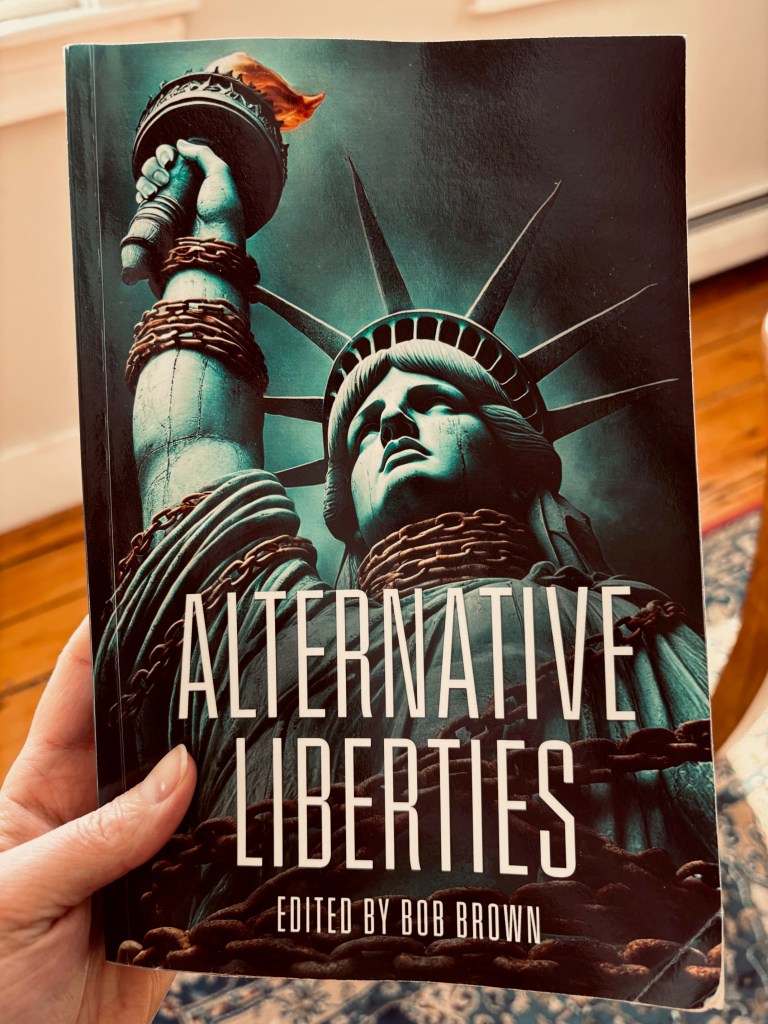
Tera Schreiber, a writer friend and fellow contributor from another anthology, made me aware of its publication when she posted on social media about having a piece included, and I’m a fan of hers so I was eager to read her story. I purchased a print copy but didn’t start reading the entire book right away.
No, it took a solid three weeks of newborn chaos at the federal level to drive me to the entire collection, and I’m so glad I read it in earnest, from start to finish.
As you might imagine, it’s a collection of mostly short satire and dystopian fiction based on the writers’ predictions of what might happen to our American liberties under a second–and unconstitutionally prolonged–Trump administration. These are not my absolute favorite genres, but right now they are appealing and appropriate, and the anthology does include a few poems and reflective essays as well.
The collection also features a good range of tone.
Some pieces are straightforward in their seriousness and tragedy. For example, my friend’s “Seen and Not Heard” is a disturbing tale of two females (one older and outspoken, one younger and yearning for free expression) effectively silenced by their rigidly traditional, patriarchal community.

Another, Jacy Morris’s “Little Boxes,” is set in a funeral home in which a grieving, angry mother arrives seeking coffins and arrangements for her children who have died of smallpox, which is back thanks to the federal government’s distrust of established medical science. “Suka-blat” by Robert Walton features a powerful scene describing what might happen to Ukrainian soldiers after the US has withdrawn its support, and “Brown Eyes” by Ell Rodman, narrated by a U.S. Border Patrol protagonist, describes the inhumane effects of unconditional mass deportations on immigrants.

Rodman’s story in particular broke my heart; they did the best job truly humanizing their characters, particularly the dynamic narrator, who feels like a realistic, complex man, and that can be tough to do in these genres.
Other stories are lighter and humorous, which brings a nice levity. “Legacy” by Larry Hodges, in which Trump himself is the narrator, is great, as are “Death of the God Emperor of the Universe” by Elizabeth Ann Scarborough and “Three Patriotic Witches” by Susan Murrie Macdonald.

I laughed out loud reading “A Day in the Life of a Freedom Fighter” by Joseph Nettles, who spins a yarn about a poor, ignorant white guy who worships a picture of Donald Trump in his trailer and belongs to a volunteer militia, the “Freedom Corps,” fighting for Trump’s magnificent agenda. The MC and his teammates go about their town monitoring for leftist Deep State propaganda at Walmart and enforcing good American values like free speech in the town square, where they pass out pamphlets titled “How to Spot a Socialist in Your Neighborhood” and “20 Supermarket Products that Directly Fund Domestic Terrorism.” They also practice spotting impure “citizens” at the local playground. My favorite part– during their daily debrief, teammate Karen reviews the group’s social media analytics: “three new followers, all from Armenia, and two angry comments from ‘bots.’” LOL.
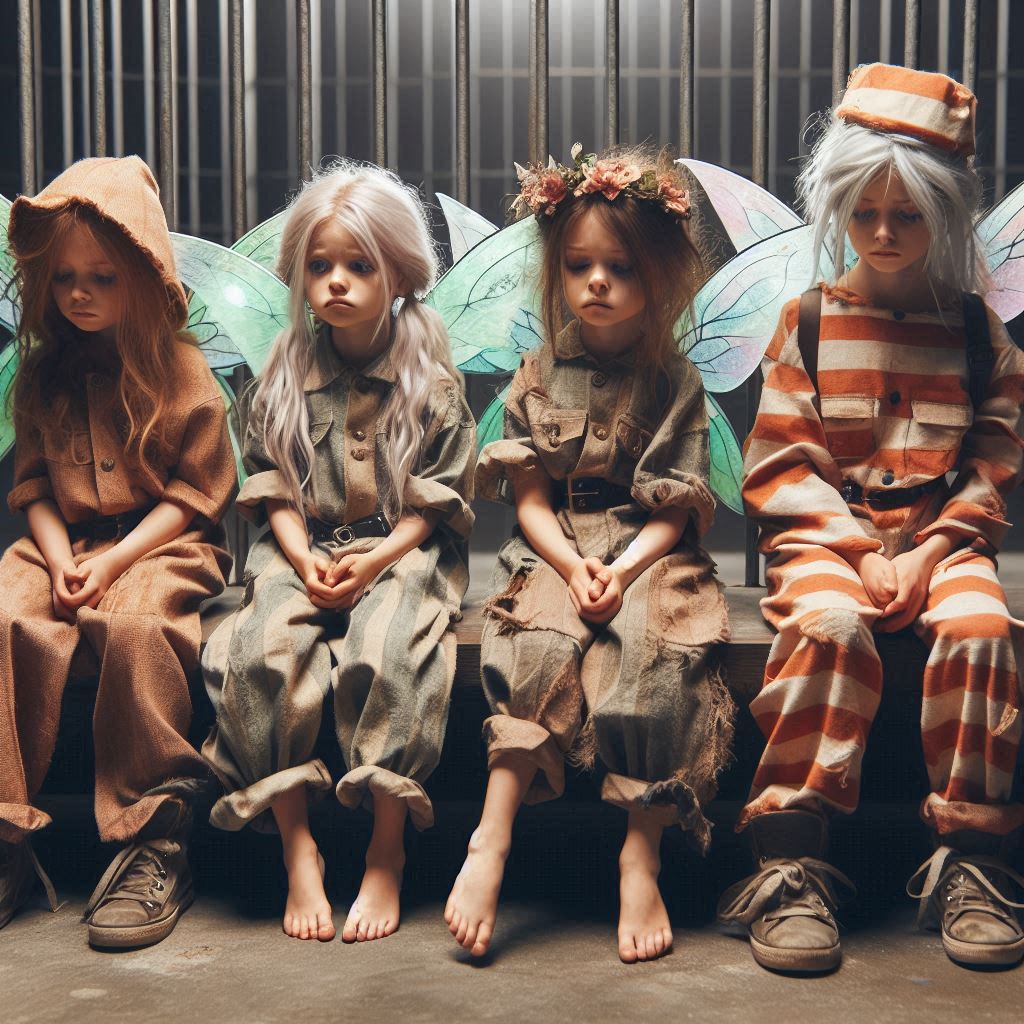
A good number of stories are hopeful and inspiring, too, featuring characters that are complacent, in denial, or just doing their jobs at first, then find themselves committing or forced into resistance. “Sanitation Day” by DP Sellers falls into this category; it’s also an interesting one in that this author made his satire an urban fantasy–the illegal aliens being herded out are not humans but fairies.
“Miss Drake’s Lesson” by Lou J Berger, “A Place Before the Storm” by William Kingsley, “Sivilized World” by Elwin Cotman, and most notably “Diminished Horizons” by Adam-Troy Castro also feature main characters either already dedicated to or persuaded into fighting back.
Castro’s story is the longest and arguably the most brilliant–about an author who’s lost his wife and his hope as the Trump presidency commits “two genocides three years in,” but he decides he’ll just keep to himself in his little sheltered bubble of a house, and that way he’ll be fine. He’s never been a radical, vocal protester, after all.
“I could only hope that I was too small for them to worry about,” he notes at the beginning.
But of course, a team of government enforcers visits him one day, and after condemning him to house arrest for possession of subversive materials, they begin, slowly and over the course of many visits, to strip things away from the man’s life. No more online postings or publications. No more books, posters, or art of any kind to sustain him. Eventually, they even wall him in, literally, so he is forced to subsist in just a single downstairs room of his own home. They drug him so he cannot even daydream. In fact, the man is so metaphorically shackled and literally mind-controlled that his beloved dogs almost die because he forgets to feed them.
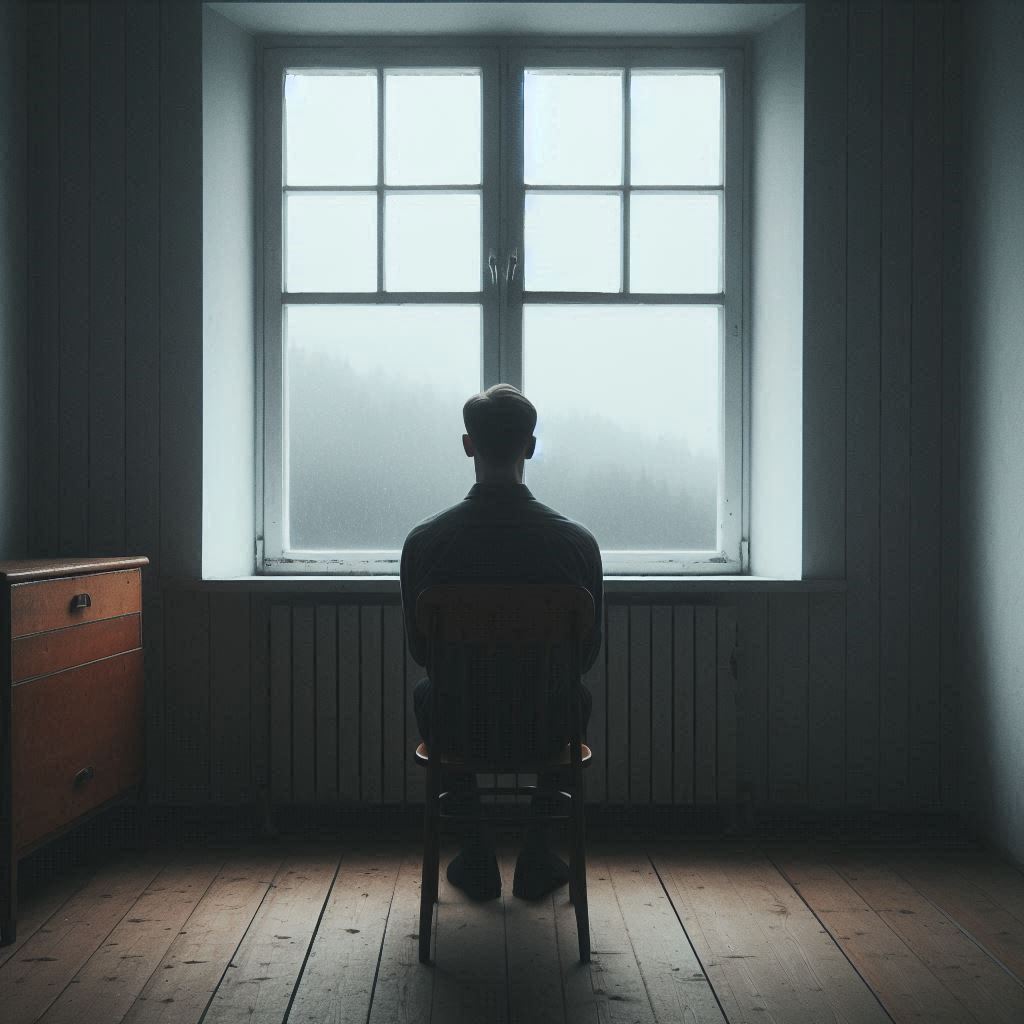
That’s the tipping point that spurs the MC to finally resist, and the story ends magnificently with him stepping out his front door, finally, into a strange, noxious smog, determined to go forward and act no matter what the state of the world is.
The length of Castro’s story is warranted; it’s magnificently crafted, with a surreal, nightmarish, allegorical quality that is still visceral and emotional enough to make the reader feel like the character and his situation are real. Despite the way the man’s life slowly devolves, and how dismal the atmosphere is throughout a majority of the plot, the MC’s uplifting arc and resolution inspired me. The tale is a powerful reminder that complacency is not the answer, and no one is safe when liberties are systematically squelched.
That’s the powerful message, truly, of the entire anthology.
Reading it during such a hard time was cathartic and inspiring, both politically and artistically. Even better, B-Cubed Press is donating a portion of all purchases to the American Civil Liberties Union. As I understand it, this is standard with many of their publications.
I will admit, this anthology’s treatment of our political emergency is not always the most complex or nuanced, but that makes sense given the exaggerated and hyperbolic nature of satire, and this is a collection of mostly satirical pieces. It’s not a book for everyone, but if you wear a certain lens and you’re looking for catharsis, this collection is a great example of art as inspiration and resistance. Even better, it’s from a brave independent press, and March is National Small Press Month. I’m hoping to write more about that next week.
Thanks so much for reading. Have you read or watched anything soothing or inspiring lately? I’d love to hear about it!
If you are a subscriber, you can comment on this post via email; I’m still working on how to make comments available to everyone.
See you next week.
XOXO,
Jenn
 Jennifer Shaw