A beloved professor, Dr. Gene Young, once shared an anecdote with our sophomore American Lit class.
He played the guitar and “fiddle,” and he told us when he was young, he wanted to be a professional musician. He was in Nashville one weeknight at some little-known dive bar, and a guitarist was performing. This guy, Dr. Young asserted, was incredibly gifted. An amazing technician, I believe he said (my memory’s fuzzy), and Dr. Young decided then and there to quit his dream.

“If that guy, who played like that, was an unknown, how the hell would I ever be successful?” he explained.
At the time, I thought, yeah. That makes sense. I bet it’s incredibly tough to make is as a musician, and talent alone isn’t always enough. Oh, well. So the hard truth goes.
For some reason, however, his story stayed with me.
Now, as a writer, it’s more poignant than ever. I see how true it is in the publishing world, too.
I’ve learned a fair amount in the three years I’ve been writing. I see all the new ways writers can get published. How many more opportunities there are to share our work, more than have ever existed. Beyond traditionally publishing with the Big Five, writers can self-publish (in various forms), hybrid publish, and get published through hundreds of literary/genre magazines and dozens of small niche presses, several of which take un-agented submissions. It does feel like the gate-keeping is ending, and that is a wonderful development.
It also means the market is more saturated than ever. In terms of books alone, “over 2.2 million” are published every year, according to ChatGPT, and a majority of those are self-published. This aligns with other answers from Google sources, which generally offer 3 million as the approximate number. Add to that all the other types of publications out there, and the number is even higher.

It’s a lot. And everyone’s time is limited. Avid readers will tell you they literally don’t have enough hours to read all the things they’d like to in their lifetimes. So, we all have to pick and choose. Ultimately, even some titles that catch our interest get passed over.
To an aspiring author, this reality feels dismal. Even from a reader’s point of view, it depresses me. For example, I loved the gothic anthology These Dark Things from Briar Press NY.
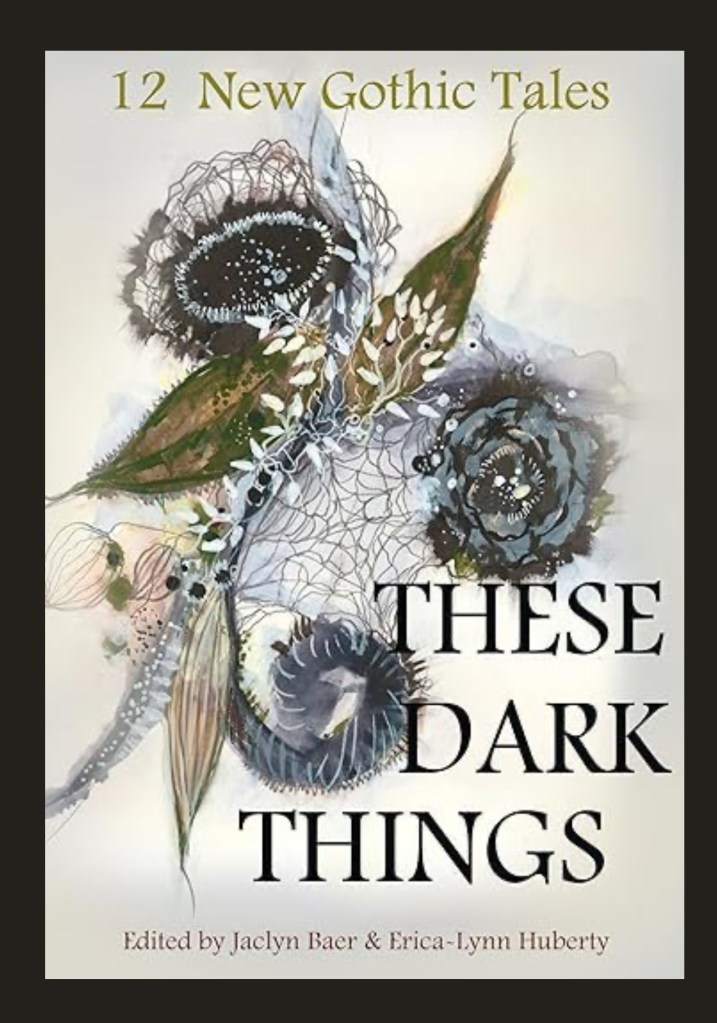
Three stories in particular impressed me; they were chilling, resonant, and beautifully crafted. Truly literary. Those authors have real talent. If you look the book up on Amazon, however, you’ll see its reality:
#1,398,024 in Books (Best Sellers Rank)
#502 in Werewolf & Shifter Mysteries
#995 in Vampire Mysteries
#6,436 in Ghost Mysteries
Please note, I’m reporting these numbers at 11 am on 3/28. They will change, given that rankings are ongoing.
Adding to these stats are its ratings: 4 total, 3 with reviews (including mine). 100% five stars, but only four.
It seems to me, this gem of a book has been utterly buried, and that saddens me.
It’s probably no fault of the press or their marketing, either. It’s just, there’s SO MUCH out there.
I’ve also heard first-hand from fellow authors in my writer’s group how soul-crushing it is to spend years and thousands of dollars to self-publish a book they are rightly proud of, and then hundreds of hours trying to market it through newsletters and social media, only to have sales lag or prove non-existent.
What’s the point?

Ultimately, I think that answer is, if you are lucky or privileged enough to publish, you have to continue writing because you love the act. That will save you some heartache and allow you to keep going and find satisfaction even in the likely silence. And there are so many benefits to writing and publishing for yourself alone.
But that’s not what this post is about. This is about what we can do to help writers–ourselves and others–combat invisibility.
In short, we can all strive to be “good literary citizens.” This is a term Kim Catanzarite employs in her article “Easy Ways to Support Indie Authors–and Why You Should” in the Writer’s Digest Jan/Feb 2025 issue. I’m not sure if it’s something she coined herself or if it’s a common publishing phrase, but that was the first time I’d seen it used, and it summed up what I’d already come to believe.
I believe it helps when we can all be good, conscientious inhabitants of the bookish community. And what does that mean?
To me, it means we can explore more than what we might otherwise, unearth what we find to be the treasures, then share them with our world.
How, specifically?
Here are some starters:
Post reviews for all the books we enjoy. On Amazon, Goodreads, and any other platform where even a few readers will see it. Give it the star rating, and put down a few sentences if we can–they need not be brilliant, just a few reasons why we loved the book. This is the simplest thing anyone can do. Authors, especially indie authors, rely heavily on these reviews because the more their book gets, the more the algorithms push the title in their suggestions. After that, if we’re comfortable doing so, we ought to post some version of our review or just our positive thoughts to our social media.
Also, talk about the books we absolutely adore with our friends. Word of mouth can be hugely influential. We can even gift them a copy of the book, if we think they’re its target audience.
Additionally, sign up for the author’s newsletter and/or follow/subscribe to their account, whether that’s on Substack, WordPress, or somewhere else. If they publish anything directly on their account, we should read and comment on at least a few of their pieces. Follow the author on their social media. Tag other people in the comments for posts about the author’s books, if we think it will help a friend find this book they might also love.
And definitely, if we request an Advanced Reader Copy (ARC) of a book, we need to actually read and post about it. It’s crappy not to. We’re getting someone’s blood, sweat, and tears for free; the least we can do is hold up our end of the bargain. Even if we finally get to it a year later–hey, we’re human, and life gets busy–that’s better than never.
These are pretty basic. We can go beyond them, too, by taking a few more chances than we might otherwise.

Try a book or two–especially an anthology– from a small press, if it sounds appealing. Small niche/boutique presses are popping up all over, and they’re a fantastic way to discover and ultimately support talented emerging authors. I highly recommend Briar Press NY, B-Cubed Press, and Amaranth Publications. I’ve had great experiences with them as either a reader or a writer, and they deserve all the support they can get. Sometimes, these new presses are still learning, but we should try to be patient with logistical kinks in things like purchasing, delivery, and formatting. Maybe that’s a big ask, but they’re finding their way, and they can only continue to learn from experience if readers like us are buying their titles.
Similarly–if we enjoy literary fiction, try patronizing a few literary magazines. We can give even one issue of just one mag a try. Make it the thing we read for 5-10 minutes over coffee each day. There is extraordinary talent in these pages (they’re the lit equivalents of the Nashville dive bar guitarists), and usually only other lit-fic writers read them. How wonderful would it be if we could open up that circle with more “purely readers” finding delight in these publications? And if we enjoy it, review it where we can and post about it with links in our social media. Follow the authors of the pieces we loved, and maybe even shoot them a quick message about what we enjoyed. Try their other publications, too, especially if we can read them for free in digital versions. This is something I want to do more of, myself. These writers might need it most.

Finally, if we’re writers ourselves, it’s especially important that we read and engage in these smaller indie markets and with other indie authors. It’s natural to feel ecstatic when our own short stories and poetry are published, or when we self-publish our magnificent novels. However, we can’t get too frustrated when our work receives little attention if we ourselves are not supporting our peers’ works in similar pubs. We have to do the reading and help spread the word together if we want to make all of us more visible. We can’t be completely self-centered. We have to carve out some time (and maybe a little money, if we can) to engage.
On what do I premise these beliefs?
Primarily, as a writer, on The Golden Rule: Do unto other writers as you would have them do unto you. If we share about one another’s work and lift each other up, we can all benefit. That will also help keep the small presses and lit mags running so we will all continue to have these awesome opportunities.
Also, it does wonders for a writer’s (or any artist’s) soul when we share even a few words about how their piece made us feel. Visibility is hard, plus fiction and poetry, as art forms, are subjective. People will dislike the work, but others will enjoy it too. Let’s help voice the positive impacts of someone’s effort instead of keeping them mute. We never know how much they might need it.
I don’t think we need to do any of this disingenuously or out of pure obligation. I believe we should only avidly support those writers with whom we truly connect. If we didn’t care for something, or if it simply wasn’t for us, no worries, no pressure. There’s no need to say or do anything else; we can simply move on.
In fact, if we concentrate our energy on those little-known titles and writers who truly impressed us, our word will be that much more credible and powerful.

Last year, I was given what was essentially an ARC copy of a contemporary romance from a small press. I found it weak and disengaging, I think because the author was new and still learning some fundamentals about story arcs, genre, and craft. And let me say, that’s understandable. It will happen if we’re taking a chance on newer presses and lesser known, newer writers. However, despite the disappointment, I did post a generous review about the things I liked, and I only gently mentioned one major aspect I found dissatisfying. That was it. I didn’t crow about it here or on social media. I also wasn’t going to tear it down on Amazon and Goodreads, either, though I very easily could have. That would have done the author, and the press, no good.
Not that there aren’t ever reasons to write highly critical reviews. There could be, and maybe that’s a subject for another day. I do think we have to be judicious about when/how we do that, however, and we ought to do it as constructively as possible, in ultimate service to the author, press, and book community as a whole.
My apologies if this post sounds preachy, but this is a topic I’m becoming more passionate about. It also feels like a great way to end March, National Small Press Month. In that spirit, I’ll mention that I’m enjoying Black Fox Literary’s latest issue. If you’re a lit fic fan, I suggest giving it a look. You can read their digital issue for free on their website.

I still consider myself a relative newbie to the writing community, and I still have a lot to learn. So, if there’s anything I’ve overlooked or misunderstood, or anything you’d like to add, please don’t hesitate to share your thoughts. If you’re a subscriber, you can comment via the email you receive. If you’re not, you can message me directly through WordPress (I think) or via Bluesky: or Substack. I have indeed left Meta, but you can find me in these other media.
Happy spring, happy reading, and happy National Small Press Month! I hope you continue discovering wonderful new authors and publications and feel comfortable sharing a little more about what you loved.
XOXO,
Jenn
 Jennifer Shaw