This is Susie. Susie is mean.
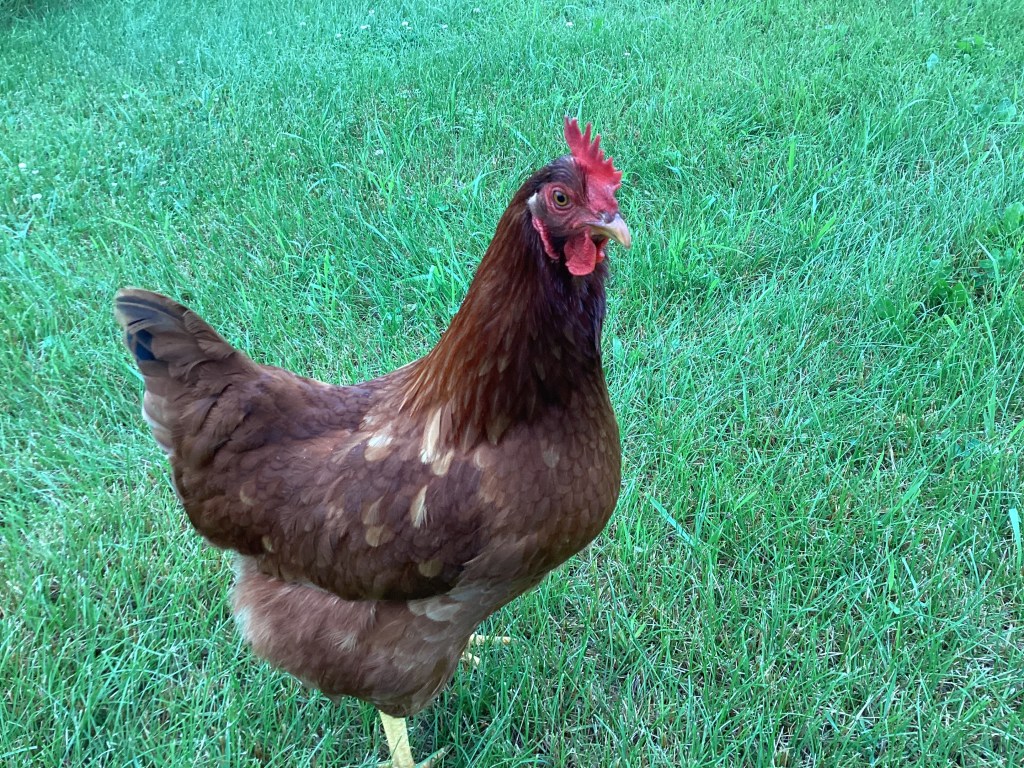
Whenever we’re doing the chicken chores, or when I take Daphne outside to swing, Susie runs up behind us and pecks our Achilles tendons. She’ll even come straight at us sometimes to peck the top of our feet, a real problem in the warm months when we’ve donned sandals or flip-flops, exposing plenty of skin.
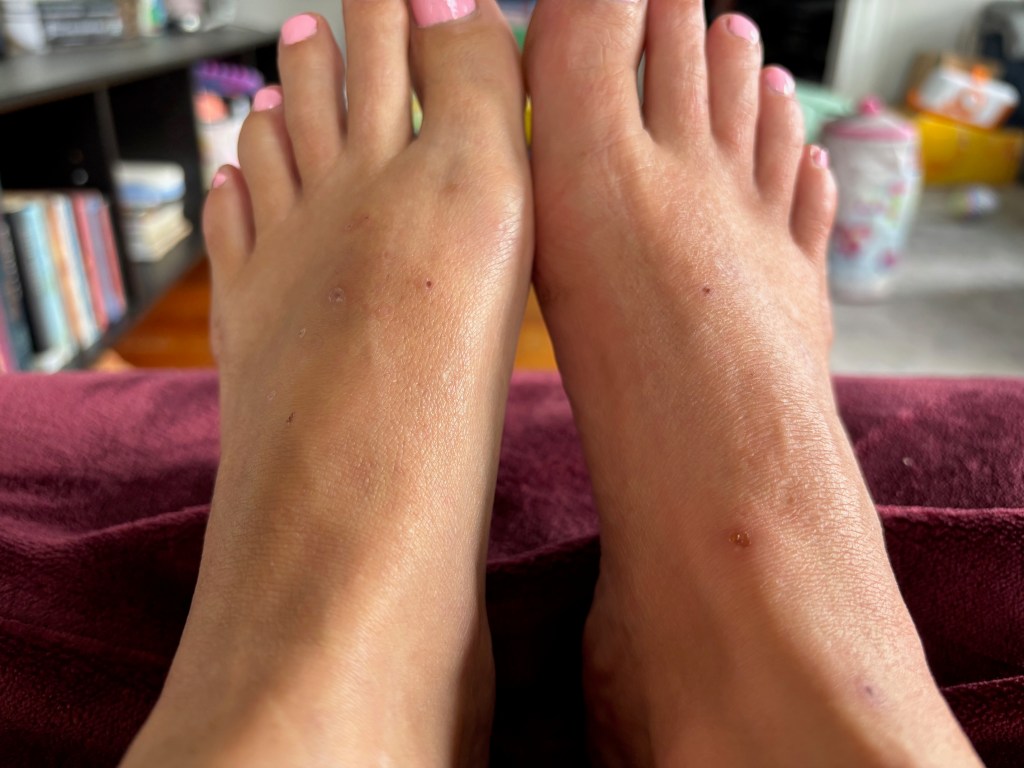
“Are you choosing violence today, Susie?” My husband likes to ask. “Are you choosing hate?”
Her attacks can actually hurt–she’ll get a pinch of flesh in her beak and pull, sometimes breaking the skin and causing us to bleed. Jer kicks her away. More often than not, I just pick her up. Sometimes I’ll put her on my lap and swing with her, which she loves. She gets drowsy and almost cuddly, a sweet response that keeps me from totally despising her.
This is all quite odd, not only because she’s a hen but because she’s a Rhode Island Red, which is supposed to be an especially docile, affectionate breed. Not Susie.
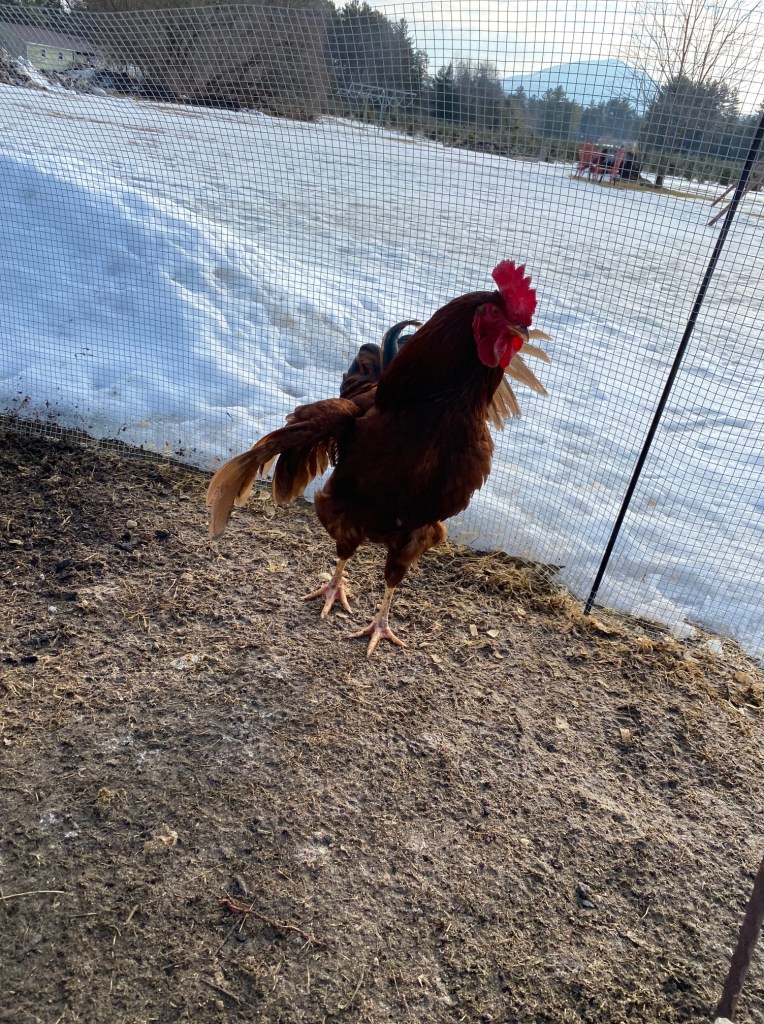
She acts, in truth, more like a Rhode Island Red rooster, which has a reputation for being quite the bastard–the truth to which I can attest because Marty, our late chanticleer from our original flock, was a prime example of a real asshole.
Which got me thinking.
Hens sometimes get aggressive toward one another, pecking, biting, and chasing other girls away during feeding or laying in the nest boxes. But Susie doesn’t do that to her sisters. I’ve never seen her go after another hen, not even little Daisy who was clearly ill and a detriment to the flock (and who we recently lost to a predator).
In fact, Susie’s sometimes the victim of chicken-on-chicken violence. She suffers the occasional peck from Doris, our older hen and the current flock’s alpha. Susie’s only rough with humans, so I don’t think this behavior is just about trying to move up in the flock’s social hierarchy. She’s not trying to challenge Doris. Her actions seem more defensive, like she’s protecting her sisters from us and possibly other potential predators.

I’ve also seen Susie tidbit. This is another rooster behavior in which the male scratches around in the dirt. When he unearths a tasty worm or other bit of live protein, he crows, calling his girls over to enjoy it while abstaining himself. Susie’s done this; she’s scratched and made a terrible screeching cluck, and then her sisters have charged over in that amusing waddle-run to peck frantically on the ground around her while she watches. Even when we scatter mealworms as treats, she often holds off, letting her sisters partake first.
Finally, if she’s in a particularly foul mood, she’ll puff up and do a strange side stalk as she comes toward me, about to bite. That was something I saw Marty do. Susie will even extend and then arch her neck in a way the other girls don’t, posturing like a rooster about to crow.
I started some casual research. Yes, some hens can become roosters, figuratively or literally, due to certain environmental or hormonal factors.
Apparently, a hen might take on the behaviors of a rooster when there’s no cock in the flock (lol). The absence of a rooster qualifies as an environmental stressor, since there’s no natural protector for the group. Other sources of stress include losing flock mates, which poor Susie experienced when we lost Mildred and Beverly back in December. So maybe, life on our little farm just hasn’t been that easy, and this is Susie’s reaction. From that perspective, it’s really rather noble.
This masculine behavior can also have a hormonal cause. According to Talkinghens.com, “when a hen’s left ovary becomes damaged or diseased, the right gonad can develop into an ovotestis, producing male hormones like testosterone.” This development can go so far as to create even physical changes in which the hen grows features like spurs and a larger comb. I don’t think Susie’s features are any sharper or bigger, and she hasn’t stopped laying eggs, thank goodness, but it’s possible disease has caused a hormonal change in her body and thus in her personality. We’re pretty sure her flock–probably from little Daisy–was infected with Marek’s Disease despite being supposedly vaccinated. While Susie isn’t sick, carrying the virus might have caused or contributed to a shift in her hormones.
Whatever the reason, if this behavior continues, we might have to start using a spray bottle to squirt her in the eyes.
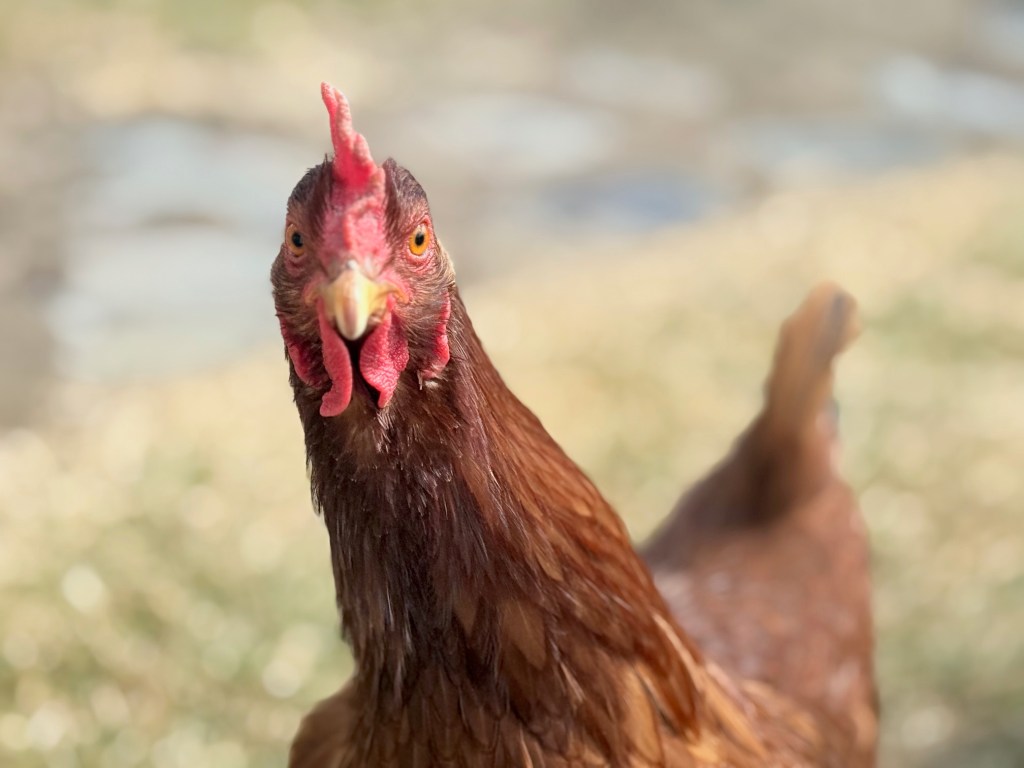
It’s one humane recommendation for dealing with aggressive roosters, so it ought to work with Susie. I don’t want to kill or rehome her; she’s not inherently evil, and we need all the eggs we can get.
And look, she can identify however she wants, as Jer says. It’s 2025, after all.
She just can’t attack us.
I’ll keep you posted on her behavior management.
I never thought I’d contemplate how to handle a difficult hen. What’s the oddest pet problem you’ve had to deal with?
See you next week!
XOXO,
Jenn
 Jennifer Shaw