Eight days ago, I opened my email and saw at the top of my inbox the notification I’d been waiting two months for.
Dear Jennifer, Thank you for submitting…
The salutation sickened me.
I knew what the rest would say–that this small horror press was passing on the story I’d submitted in late April.
I sat there for a minute, a little stunned, comprehending the implications. I considered deleting the message and trying to go about my day. But of course, I couldn’t resist clicking and reading the entire form letter because there was an irrational sliver of hope that it might just surprise me. That, maybe, this press didn’t start their acceptances the same way everyone else did, with Congratulations!
Such wishful thinking.
Sure enough: Unfortunately, we are passing on your piece at this time.
This wasn’t my first rejection of the year. I’d had another one, about two weeks prior, from a literary magazine with a 10% acceptance rate for my contemporary story, “You Should Have Stayed.” I’d expected that one, but since my story fit their theme, and I’d revised it thanks to some excellent and encouraging professional feedback, I figured it couldn’t hurt to try. When that notification arrived, I felt I’d done all I could and was proud of myself for trying. That particular note was longer and warmer, too. I’m not entirely sure it was a form letter.
This one was shorter and more terse. A definite form letter, and it stung.
The sting is lessening, thankfully. Now, it’s more like an occasional smarting, since I’ve had several days to reflect on it–and, blessedly, not the luxury of time to wallow, what with a camping trip, family in town, a kiddo to take care of, and a husband on the mend.
Now, I can calmly articulate why it hurt and why, on the flip side, it’s quite likely a good thing.

First, the more obvious: why it felt like a wound.
I worked hard on this piece, a 6K spicy horror-romance. I labored at it for most of March and April, scrapping my first attempt entirely and letting it evolve into something simpler and much better. I trusted the process and became emotionally invested in the characters, which I felt was a good sign. I was on to something. For sure.
The call for this particular anthology was also a brilliant opportunity to try my hand at a newer blend of genres, one with all the primary romantic beats but with a narrative shaped by the horrific. In this case, a woman trying to come to terms with a difficult past just as she discovers, one terrible night, that her amazing new boyfriend is actually a werewolf ready to tear her to pieces. And not in the mind-blowing sexual way, though they do have great sex before things go south.
No, this wasn’t a typical paranormal romance. No sexy shifting, no Omegaverse, no knotting. It was much more old-school American Werewolf in London style, much more horror-driven, and much more emotionally compelling (or so I thought). The shifting is torturous and frightening, a brutal and irrational affliction, and the suffering man needs help. My female protagonist, who finds a surprising new strength and redemption, is there, in the end, to save him, even as he helps her too. It’s Carly’s story primarily, though, and I loved her arc. I still love her.

Now, though, I have to wonder if my perception was totally skewed, even more so than usual (since none of us are ever totally objective about our own work).
I’ve always assumed, if something feels great to write, it must be fairly solid. That’s only logical, right?
But then, I’m reminded of all the articles I’ve read where the authors describe being passionately invested in certain pieces, only to realize much later they’re actually flat. Fundamentally flawed, somehow, but they loved these works too much to see it.
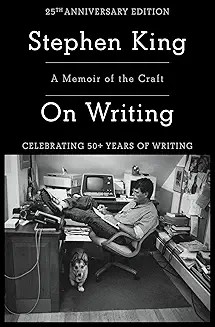
Or the reverse, as Stephen King described of his debut success, Carrie. How that novel felt awful to start, and he actually threw it away, only to have his wife rescue it from the trash can, her objectivity allowing her to see its potential. Sometimes, he tells aspirants in his book On Writing, something is sound and worth pursuing even when it doesn’t feel good to write.
So how the hell are we supposed to know? Is there really a way to tell the difference?
How do we know what’s strong and worth fully pursuing, versus what what’s actually weak and should be relegated to an e-file and nothing more?
Maybe the answer here is, time. As much time as we can allow between the completion of a working draft and a revisit, when we can look at it with the freshest eyes possible. It’s hard to find that kind of time, however, when we have deadlines.
Or, maybe, we never quite know. Even with plenty of time. Even with alpha and beta readers, critique partners, and editors giving us positive feedback within that ample time. Maybe it’s just something we can never quite perceive correctly, never quite control.
Plus, there is the subjectivity. Even if the fictional elements are sound–working scenes all connected by a through-line, a dynamic protagonist who experiences a clear arc, the submission and genre expectations met–what appeals to one publisher might not appeal to another. How are we supposed to know who will like it? How do we get a surer sense where that’s concerned?
Actually, I know the answer to this question: you read some of the work that publisher has already produced. Though I’d purchased two books from this press, I didn’t take the time to start either one. Maybe out of fear, I suppose, that I’d realize how inadequate I was. But it would have been a good idea, and that mistake is on me.
This ignorance, this blindness, terrifies me. It feels like a permanent handicap we have to figure out how to live with, or how to manage, so that our hearts don’t get broken over and over and over again. How do we manage it?
Or, maybe I am just a “sweet summer child” in the world of publishing. I’ve just begun this writer’s odyssey, after all.
Maybe, our hearts must break on the regular. Maybe, that’s the life of a writer, or at least one trying to get published. Maybe, it’s always a little painful because we have to take chances when we feel one way but know the truth might be entirely different. The fewer the chances, the less likely we are to succeed, right? Isn’t this just another form of gambling?
Ugh.
So, there you go. That’s the first reason this rejection hurt.
The other one is, I wanted validation. Having my story selected by a more established, competitive press (one with an acquisitions team!) would bring me a surer sense of legitimacy. A little more evidence that I’ve leveled up, that I have some promise. That I’m not wasting my time.
I realize, however, this is a dangerous desire. If I want the stamina it takes to make it in publishing (whatever that actually means), I have to find that validation from within.
Looking for it externally only leads to forever moving the goal post and never being able to appreciate, even enjoy, the progress I do make. And I do believe I am getting better. Blind as I ultimately am, I think I have enough clarity to see that the three short pieces I’ve written this year are better than any short piece I got published last year, even though only one of these three has been accepted so far.
Many people say, if you write, you’re a writer. I need to start believing that. Maybe, I need to write these words down and keep them nearby, and speak them out loud each time I sit down to compose. I think I have some mindset work to do.
For the sake of length, I’ll end this here. Next week, I’ll have a cheerier reflection–why rejection might actually be a great thing.
In the meantime, I acknowledge how extraordinarily privileged I am to call a story rejection a “problem,” a source of pain. So many people are suffering right now and would sell their souls to have their heart ache for this reason.
I didn’t just lose a child in a flash flood, or have my child taken by ICE. My husband didn’t just lose his job to AI. I could go on and on about all the nightmares that didn’t just happen.
Thank you for reading. If you’ve had similar experiences with rejection or want to offer any words of wisdom, whether you’re a writer or not, I’d love to read them.
See you next week.
XOXO,
Jenn
 Jennifer Shaw