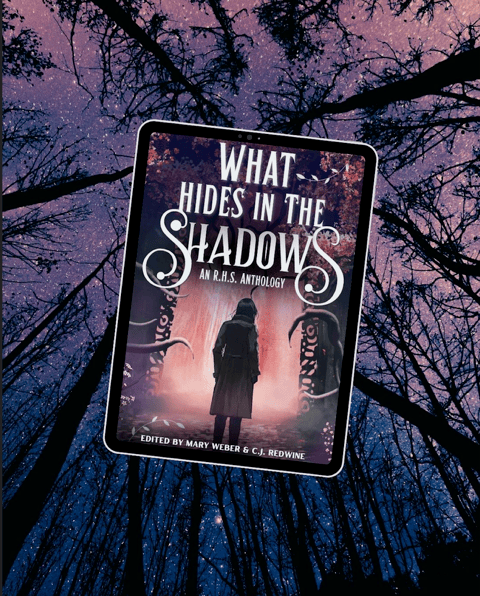
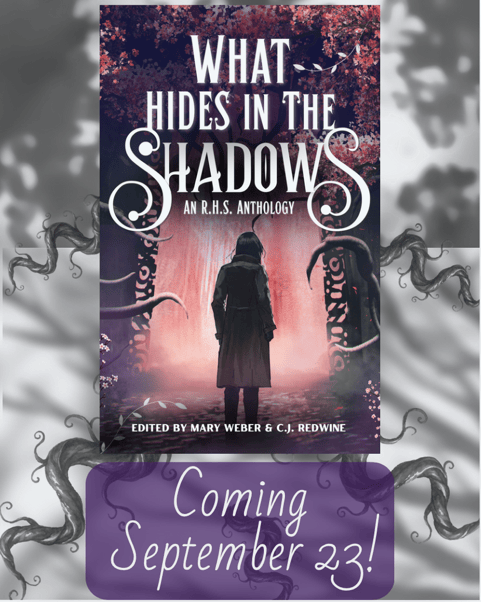
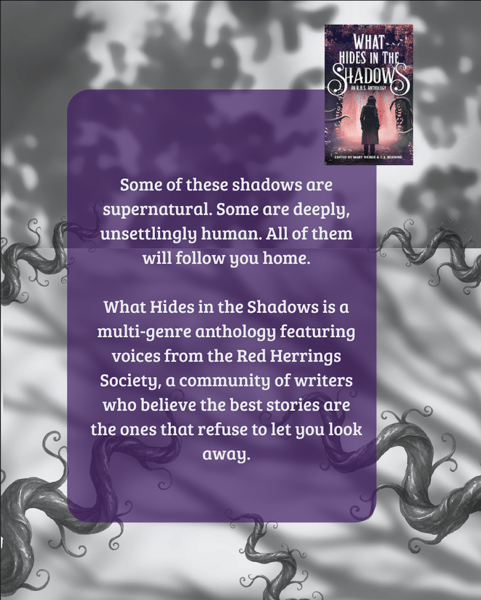
Today, September 23, is release day for the Red Herrings Society’s spooky anthology What Hides in the Shadows.
Image design by Andi L. Gregory and Julie Fugate
You can find short blurbs for several of the stories in this collection here. When I posted these last week, I don’t think I emailed them out, so you probably didn’t see them. If you like creepy stories, take a peek!
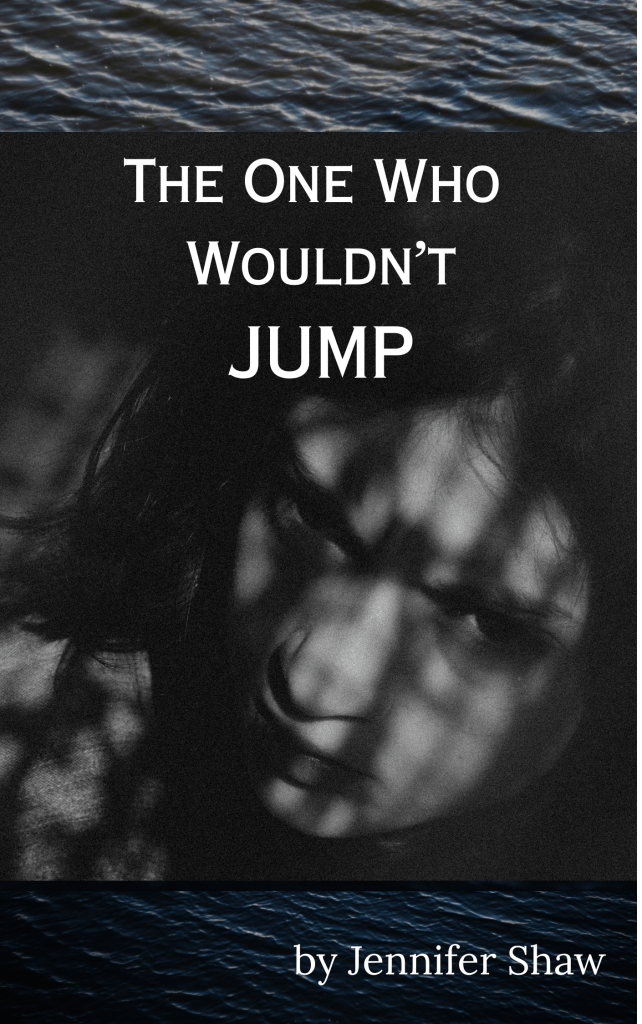
Below, you’ll find an excerpt from my contribution, “The One Who Wouldn’t Jump.”
Designed on Canva; photo by Alue Carrizo on Unsplash
When I was a kid, I thought I’d love that big, new room of mine. It sat at the end of a second hallway, like a private wing separate from the rest of the old ranch-style house. It also had one massive, full-length window, but at night, a streetlamp shone through the pane, and that orange light sliced across the shag carpet and did strange things.
Shelves, toys, books, and an overloaded rocking chair morphed into eerie mounds and sticks of shadow—menacing creatures with grasping skeletal arms. Sometimes, it even looked like one of them moved.
Squeezing my eyes shut—there’s nothing there—I’d turn over, pull the covers up to my chin, and will myself to sleep.
“Close the drapes at night,” my mother said when I told her, in late August, that something was wrong in my bedroom. “Then there won’t be any light to cast weird shadows.”
“But too much darkness might be worse!”
“Jess…” She was considering a kitchen renovation, and she paused her contemplation of the 1960s cabinets to look at me. “You’re letting your imagination tell you tales. It’s been a rough few months since the divorce, I know. We’ve made a big change starting over like this, so it’s okay to be anxious. You’re so sensitive.” She ran a tender thumb along my cheek. “But you’ll get to spend the weekend with Dad soon. And …” she looked back at the planked wooden doors and colonial wrought-iron pulls. I thought they were ugly, but they reminded her of her own mother’s cabinets growing up. “There’s nothing wrong with this house. It is superb.”
Mom was happily indulging in her new freedom, and she wouldn’t hear me. So, I stopped complaining.
But things in my room got worse.
One night, something else appeared.
I lay curled up facing the window, just under the surface of sleep, when the floor creaked with the weight of something shifting on the carpet. A stink of weedy, putrid water wafted across my bed.
I lifted my head. A new silhouette stood at the foot of my bed, entirely separate from everything else. An ink-black figure my height. Rounded at the top like it bore a head, something longish—hair maybe?—plastered against its coal-dark face.
I blinked.
Just your mind telling tales.
It stared at me. It felt eerily familiar.
Silly, stupid imagination!
Something else moved over the top of the bed frame. Fingers curling over the bar.
“You—” it hissed.
My heart exploded.
***
Thanks for reading!
I loved writing this one, especially when it came to creating the eerie and nostalgic vibes. It’s set in 1992, so if you’re an early Millennial like me, you’ll probably enjoy the references. It’s definitely a work of fiction, but the main character, Jessica, is a lot like I was at that age (and still am, sometimes), so giving her these struggles, choices, and consequences was personally cathartic.
You can download an e-copy of What Hides in the Shadows for $.99 here. All proceeds will go to a literacy fund. The paperback will be available soon. If you enjoy the anthology, please consider leaving a review on Amazon. Reviews help other readers find this book.
Designed by Andi L. Gregory and Julie Fugate
If you’re not already all in on Spooky Season, consider this your friendly invitation. What else are you planning to read this season? Let me know in the comments!
I have a new story coming out soon, and I’m excited to share teasers from this macabre yet moving anthology.
Image design by Andi L. Gregory and Julie Fugate(Gregory and Fugate)(Gregory and Fugate)(Gregory and Fugate)(Gregory and Fugate)
Here are glimpses of a few ghoulish gems inside this collection:
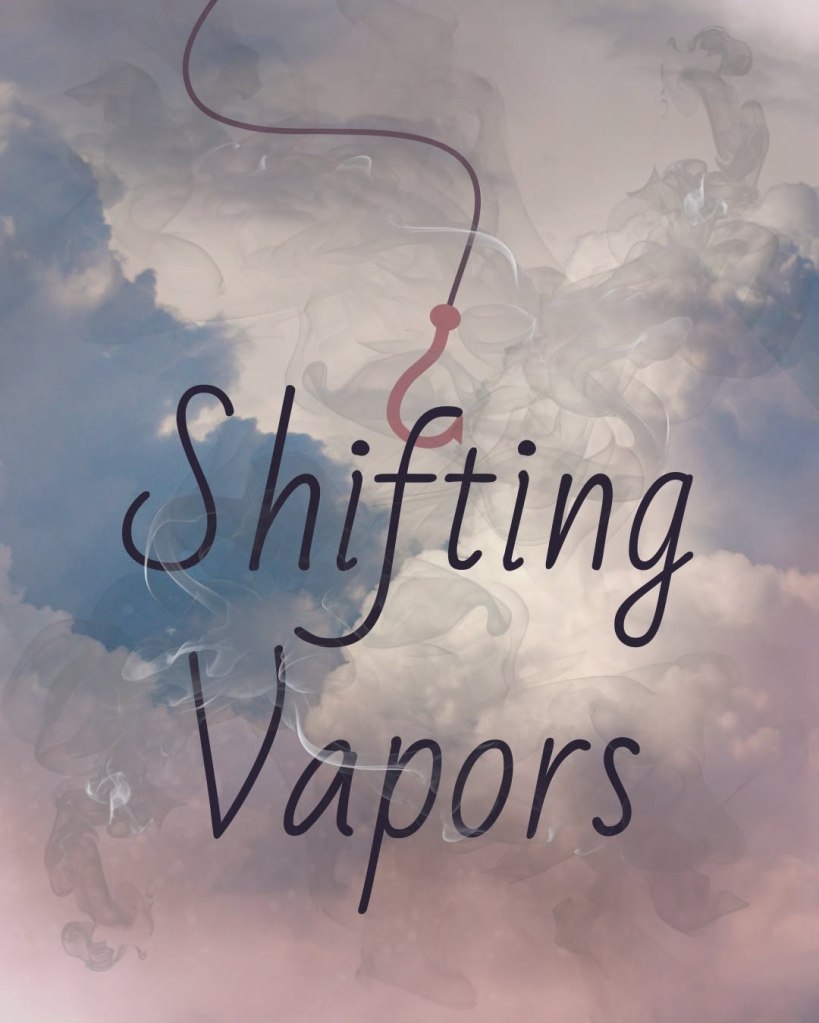
“Shifting Vapors” by Andi L. Gregory
Although Virga visits Tropos World Park almost daily, envious of the park rangers’ ability to create pathways among the clouds, when she reveals her accursed talent to save a child, she knows she’ll never be welcome at Tropos again.
The blurb alone tugs at my heart. Poor Virga!
And what exactly is going on at Tropos?
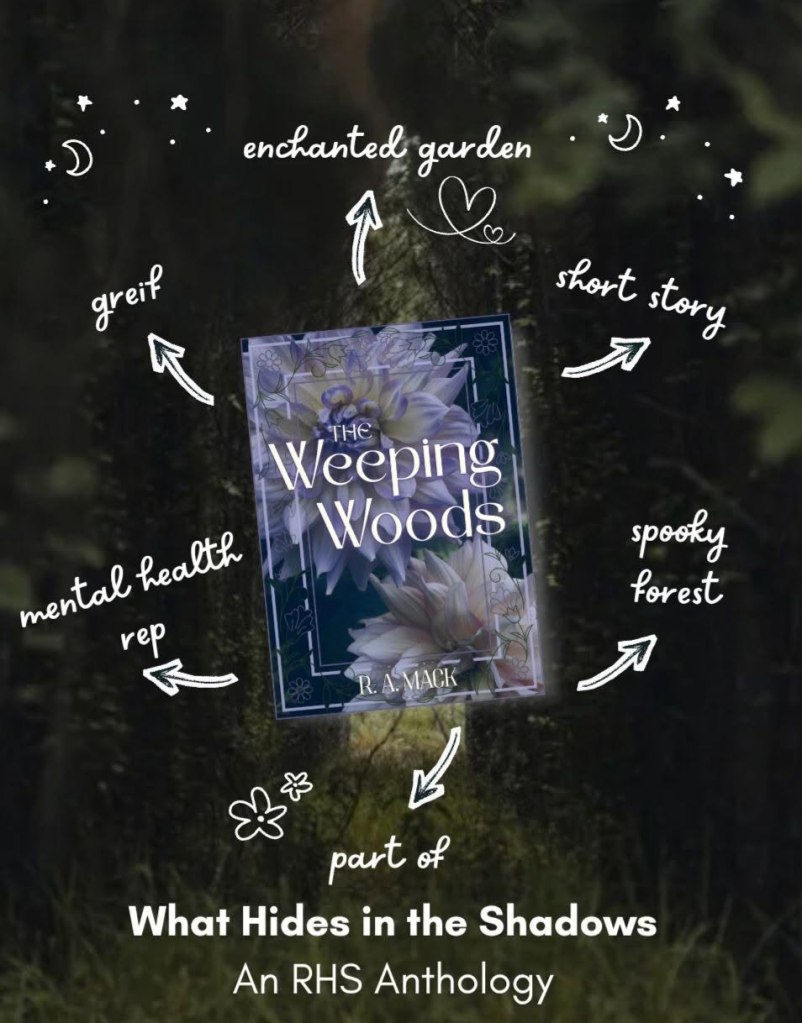
“The Weeping Woods” by R.A. Mack
Desperate to rid herself of the grief from her mother’s passing, Margot takes a chance on a local legend. Depending on who you ask, the Weeping Woods will either take away your pain, or pull you in and never let go. But the forest holds many secrets, and when Margot loses her way, she finds that escaping her grief, and the woods themselves, won’t be an easy task. When she stumbles into a hidden grove, she’ll have to place her trust in the mysterious stranger there, or risk being lost to the woods forever.
This is so intriguing (I’m getting TheSecret Garden vibes), and I love how it includes mental health as a theme–so important!
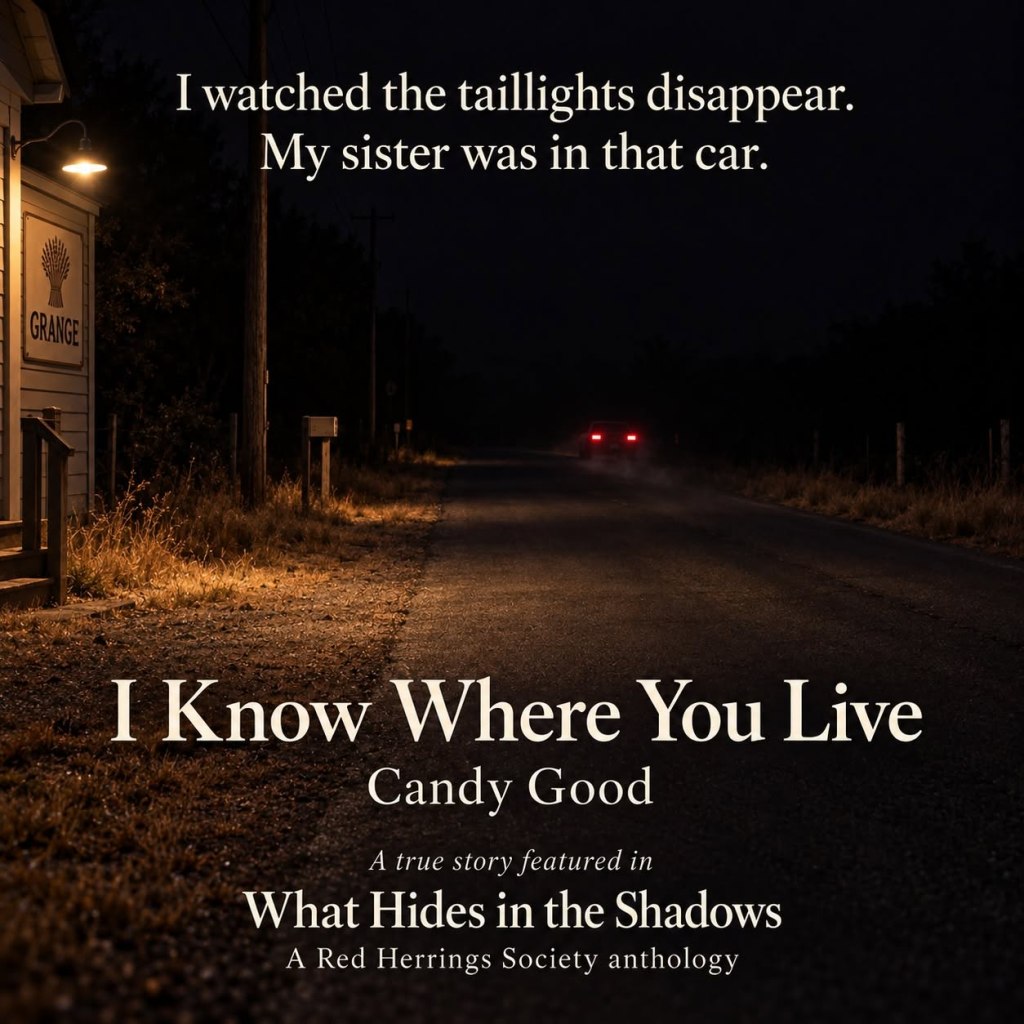
“I Know Where You Live” by Candy Good
For sixteen-year-old Candy, Saturday night means dancing at the Grange Hall. Then her sister shows up outside with a stranger.
Something about him feels wrong. Before they leave, Candy gives him a warning: “Take good care of her. ’Cause I know where you live.”
He doesn’t laugh.
As his red taillights disappear into the darkness, Candy goes back inside to finish her dance.
I’m excited to read all of these stories, but holy hell this is like catnip for me! Right or wrong, I love true crime (I just finished four Morbid episodes about the Green River Killer). I’m crossing my fingers and holding my breath, though, that Candy’s tale ends well.
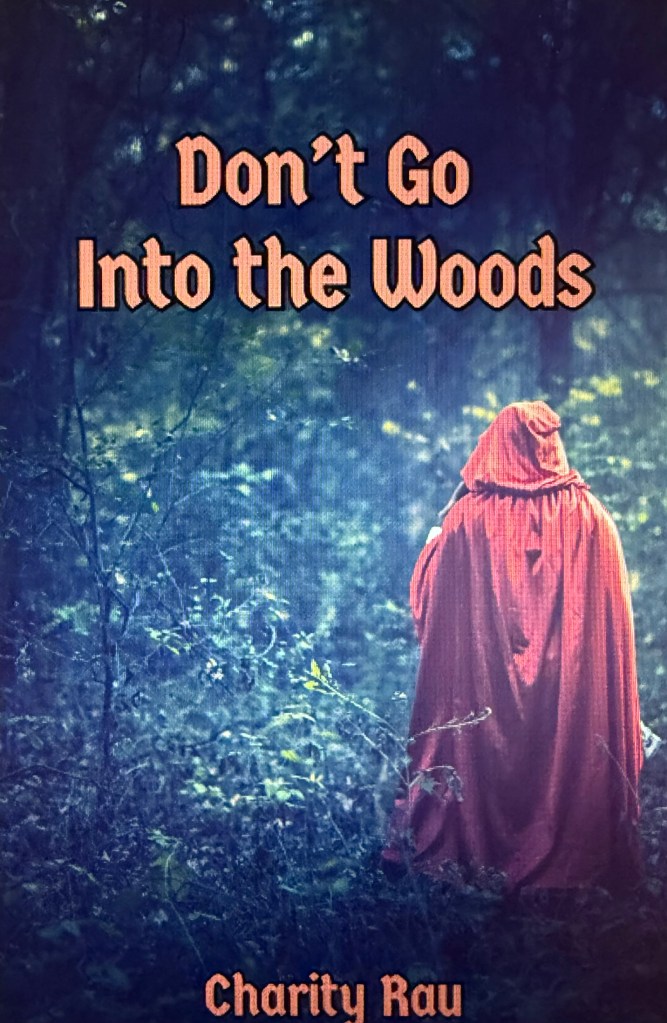
“Don’t Go into the Woods” by Charity Rau
Sienna lives in a town gripped by fear. A shadowy entity haunts the woods—the same entity that took Sienna’s fiancé, Phelan, and others after they ventured into the forest. But when a note appears from Phelan pleading for help, Sienna determines to make the dangerous trek to find him. Once there, she must figure out how to defeat the darkness, or it will cost both Phelan and herself their lives.
Sienna sounds like a strong, admirable woman, and I love the Little Red Riding Hood vibes (also hinted at in the FMC’s name). Charity is a lover of fairytales, so I’m anticipating a satisfying new take on an old favorite.
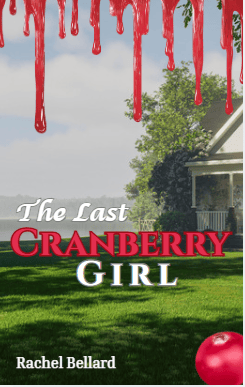
“The Last Cranberry Girl” by Rachel Bellard
New house. New town. Again.
Staci’s parents chase fixer-uppers from town to town, and she has stopped bothering to make friends. As summer fades, their latest project brings them to Cranberry Lake House in Carver, Massachusetts. Staci finds something jammed beneath the porch floorboards: a handkerchief stitched with three initials. L.J.W. It’s the first clue in a trail left by a girl who vanished decades ago, a girl who knew every corner of this property. Someone wanted Lenora “Lenni” Jean Whitmore forgotten. Lenni had other plans.
What a fabulous title, and what an uncanny mystery awaits us in this one! I’m hoping it’s a tale of a girl’s friendship (and alliance) with a ghost because one of my favorite books when I was little featured just such a pair of unforgettable characters. We shall see!
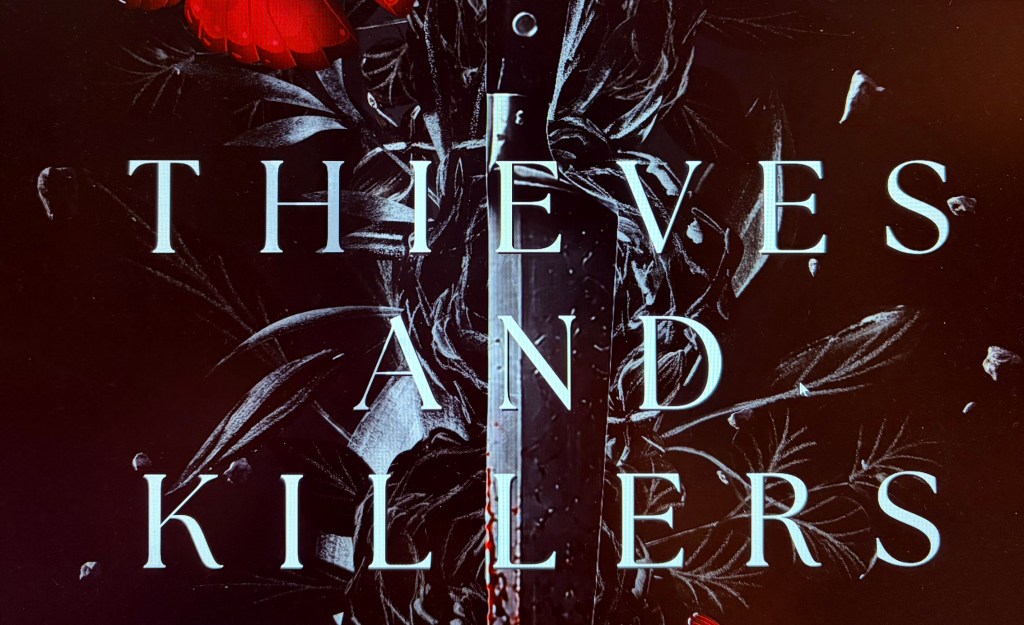
“Thieves and Killers” by Julie Fugate
After turning in her serial killer mother, teenager Layla may have avoided prison, but she still had to deal with the haunting memories of her training. Then, a wealthy benefactor offers her a place in a program for those who don’t deserve redemption. It’s a chance for her and those like her to make amends for the death and pain they’ve caused. Except on her first mission, she finds herself falling for the seemingly perfect boy she’s supposed to recruit. Everyone has secrets. Some are just more killer than others.
This sounds like a killer romance! (Terrible, I know.) But seriously, I love dark romantic tales, and I’m eager to dive right into this one. Plus, we get more serial murderers! And that gorgeous cover!! *chef’s kiss* Though, I could only capture part of it because I was struggling to convert the image from a pdf, which is an absolute failure on my part.
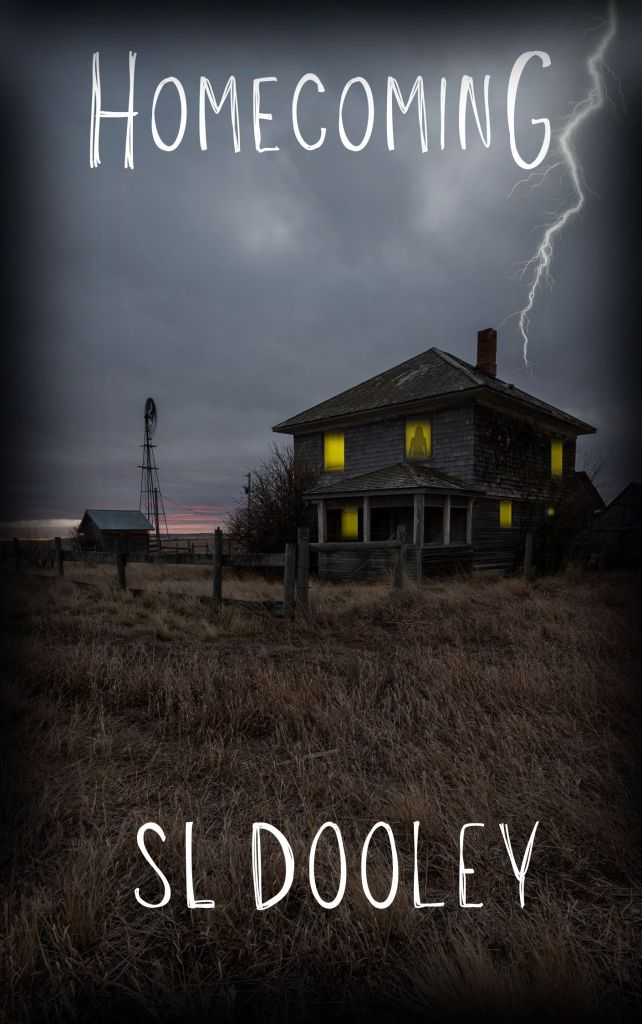
“Homecoming” by Stephanie Dooley
Returning to her childhood farmhouse and the ghosts she thought she had left behind, Frankie must confront a horrific past that just won’t stay hidden.
Oh, this sounds like a classic haunted house story, and one I can personally relate to because odd things happen in our old farmhouse. That image is so creepy, too! I already love this!
Photo by Trac Vu on Unsplash
“Don’t Touch Those, Baby” by Amy Fortenberry
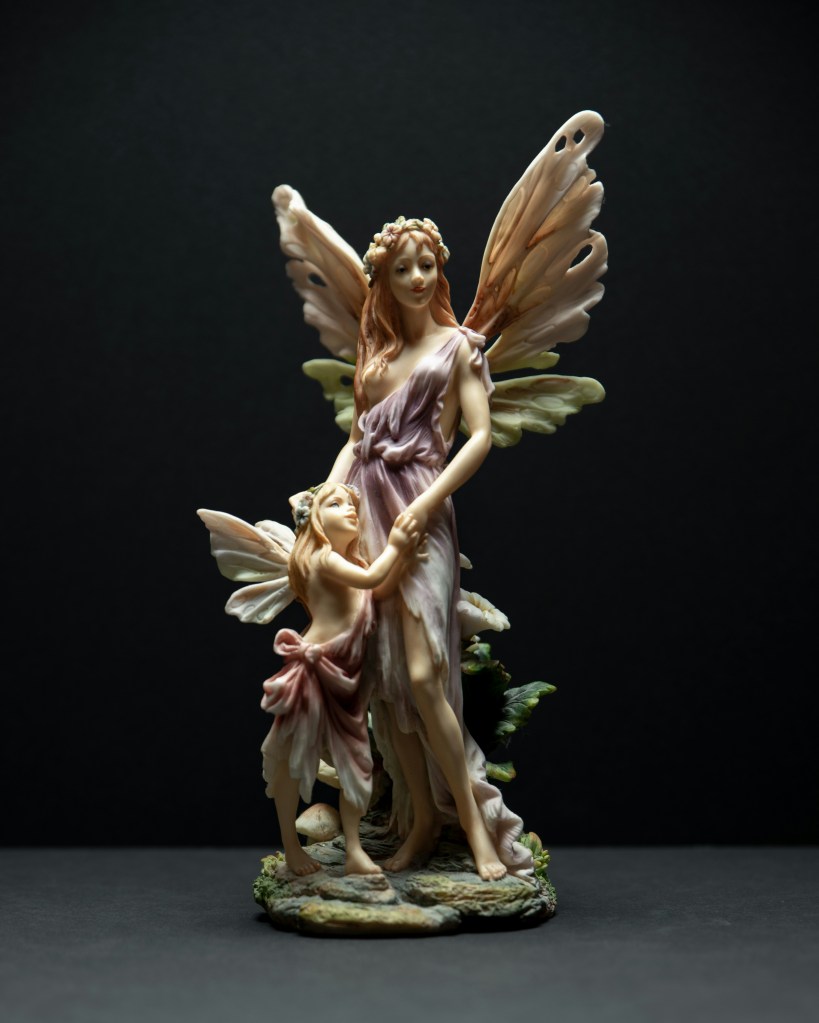
Marley Jones came to her grandmother’s Mississippi farmhouse for a birthday, not a haunting. But when she arrives to find Memaw has performed a sixty-five-years-in-the-making banishing one day too soon, Marley comes face-to-face with the three haints once trapped inside the china fairy figurines she was never allowed to touch. Now the wrinkled, bickering trio wants her youth, and with only a thinning line of salt holding them back, it’s up to Marley to put a lifetime of Memaw’s folklore to use.
This sounds like such a clever, amusing little folkloric story. Amy, a Southern writer, has a wonderful voice and sense of humor, and I know this piece will be a delight. It might also provide some much-needed levity among all the pathos.
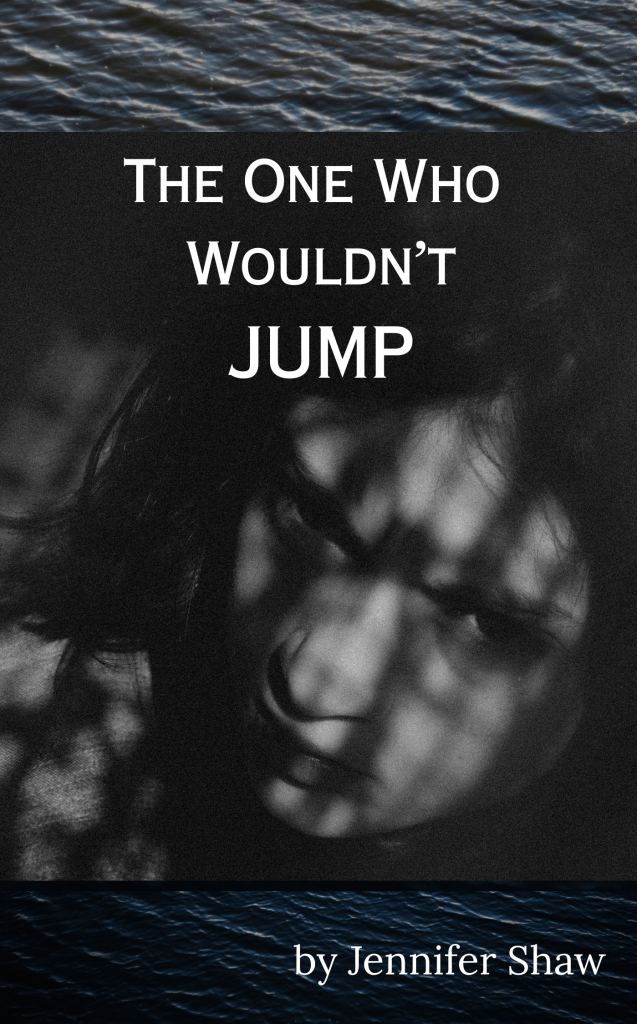
Finally, a little about my own story, “The One Who Wouldn’t Jump.”
A lonely girl. A flooded quarry. A warning from the darkness.
“The hard stuff’s behind us,” her mother insists.
But ten-year-old Jessica isn’t so sure. Her parents are divorced, she’s lonely in a new neighborhood, and the uncertainty of a new school hangs over her. If all that weren’t enough, Jess is haunted by a mysterious figure that appears in her bedroom at night–an impossible presence that smells of rot and whispers words too terrifying to bear.
As autumn deepens and Jessica finds friendship among a small group of neighborhood kids, The Figure’s message becomes increasingly urgent. Can Jess overcome the paralyzing fear this awful shadow evokes, or will The Figure render her helpless, destroying more than she can ever imagine?
Both haunting and hopeful, “The One Who Wouldn’t Jump” is a story about fear, fate, first love, and the moments that shape the people we become.
An early reader called my contribution “a beautiful, eerie story with a great deal of heart.”
Thanks for reading! I hope you’ve enjoyed these.
I, for one, can’t wait to dive into my e-copy when it lands on my iPad a week from today. What a fun way to usher in Spooky Season! Also, all stories are “PG-13,” as we in RHS like to say, so they’re suitable for adolescent readers too.
Publication day is September 23, and the e-book is available for preorder now ($.99). All proceeds will go to a literacy charity, and the paperback will be available soon.
A big thanks to my fellow contributors for sharing their teasers. All images and blurbs were created by the authors themselves.
Hi, friends. My family got home from our Labor Day trip to seaside Mystic, Connecticut, on September 7th.
Zoomed in view of the little bay where we stayedAnother shot
For me, that means we officially crossed the seasonal threshold.
Basking in the coastal sunshine
Now, it’s autumn, and here in northern Vermont, Mother Nature agrees with me.
First foliage
Leaves are turning crimson and gold. Crab apples litter the ground outside my kitchen window. I’ve found feathers in our nest boxes–some of our hens are beginning to molt. I’m wearing my bathrobe downstairs on these chillier mornings.
September has always felt like a second fresh start, a late New Year of sorts. A shedding, a do-over if needed. We’re back indoors, school’s in session, students are setting academic goals, and schedules are settling once more into stricter routines. This shift inspires many of us to buckle down, to refocus, or to aim higher. As we enter the calendar’s homestretch, many of us exert ourselves in a final, even urgent, burst of concentrated effort. Let this year not be wasted, we tend to think.
In this spirit, I’m offering a September short story. It’s a piece of contemporary fiction just under 4k words, a realistic coming-of-age tale inspired by many things: the time I spent on a pre-professional ballet track, my later years teaching in a richly multicultural, low SES public school (with all its challenges and surprises), and finally my experiences as a mother.
This story, titled You Should Have Stayed, is different from the other work I’ve shared here, especially A King’s Epilogue and Flight. So, if something more modern and literary-leaning isn’t your jam, I totally understand. I like to stretch myself, however, as I aim for versatility, and I’d like to give this piece a home.
I did not email the story because I’m planning other posts and don’t want to clutter your inboxes, but if you’re interested, you can read it here. I’ve also included it on my new page, Fiction Shared Here.
If you read this story, I hope you like it. If anything, I hope it leaves you pondering this question: Who, if anyone, is to blame?
Thanks for reading! Happy fall, and let me know what you’re up to in the comments.
Ten-year-old Dalia tipped her dark bunhead back. She gazed up at the thirty-foot glass ceiling of the city ballet’s enormous atrium. Light filtered down, bright but cool in the vigorous air conditioning, and weirdly heavy.
If this were a swimming pool, it would be deep.
Cold, too. It was, in fact, way colder in here than she’d imagined. All this chilly air pressing down on her might give her calf cramps. How could she dance well, if her muscles locked up?
Ahead of her, Dalia’s mother waved her on, her voice quieter than usual. “Let’s go, Dal. You’ll do great. Don’t dawdle.”
They followed other parents and children making their way to a marbled countertop in the reception area, its sheen bright enough to reflect in the glasses of the elderly receptionist.
At the desk, Dalia exchanged her name for a cardboard number and safety pin. The official, crabby-looking lady glared at them over her wire rims as Dalia’s mother paid the audition fee in cash. The ugly look rolled over Dalia like a powerful wave, and she resisted the urge to rock back on her heels.
But she was really only imagining it, she told herself.
This lady doesn’t know me. She has nothing against me. It’s okay.
In a sleek, vanilla-colored waiting area, where someone’s rose-scented body mist wafted under her nose, Dalia sat flat on the spotless carpet. She bent her legs into a butterfly position and tried to give herself a good pre-class stretch. She was distracted, though, by all the other chattering children. Strange seams ran up the backs of their matte tights, which were clearly another brand than Dalia’s thin, shiny ones. Their fancy-strapped leotards were different too, fresh pastels unlike her simple, washed-out black one. These girls were rainbow clusters, all blonde and brunette giggles, and they chirped together in nervous cheer.
How did they all know each other? Where had they come from? Not her part of town.
Dalia wanted to pull out Evie, the little stuffed elephant her friend Prisha’s mother had made for her, and give the good luck plushie a squeeze. But it was buried deep in her hot pink bag, cartoonish pointe shoes emblazoned across its plastic front. One corner of the laminate was beginning to peel, the overlay curling back, dirty with lint. She’d had the bag since she was six. She caught one younger girl staring at it, and at her. These other kids had large, sturdy, new-looking bags, with nothing but Bloch or Freed or Danskin logos on them.
Dalia turned her bag around.
Like the atrium, the inner ballet studio was large and airy. Under a white-tiled ceiling, , wooden double barres ran mounted along mirrored walls. So many mirrors, reflecting every angle. A scruffy man with a gray ponytail and old sneakers sat at an upright piano.
Live music for class! This place really was the real deal.
Upfront, three stony adults perched on chairs behind a folding table. They pressed their lips together as they shuffled papers, clutched pens, and sipped from water bottles before leaning in to smirk and whisper together.
Thankfully, the lady giving the class was younger and softer.
“I’m Miss Henley.” She made a graceful, welcoming motion.
She had a smooth face and fabulous dangle earrings that swung as she floated about. A fringed, flowery skirt wrapped around her narrow hips, and the high arches of her soft-shoed feet impressed Dalia. Miss Henley probably smelled rosy too.
This lady would be on her side.
“Does everybody have a place at the barre?”
Dalia remained where she was, in a back corner.
“I will teach a full class, and the combinations will be simple.” Miss Henley’s sweet voice lilted over the room. “Please concentrate on doing your best. We want to see how you move.”
Back home, at Dalia’s neighborhood studio, Karen Kang’s Toes ’N Tunes, Miss Karen often gave Dalia’s dance class tricky combinations, tests of physical skill and memory.
“I don’t want you to get bored,” her teacher often said. “It’s good for your brain, too.”
But if these combinations were easy, Dalia should have no problem dancing well, even if her muscles were cold and tight. She was “a little etoile,” as Miss Karen liked to say. Her movements were “sublime.”
Dalia had needed to look that word up a few times, in a couple different dictionaries, then listen to the definition out loud before she fully understood it.
Super, amazing, wonderful.
That was her, according to Miss Karen. She’d said it more times than Dalia could count.
Placing her left hand on the barre, Dalia bounced on the balls of her slippered feet. She, too, could be pure air, like everything else here. She was made of the same stuff they were, even if she didn’t look like them or have the right clothes or bag.
Maybe, what she was made from was even better. People always told her how blessed and special she was. She had a learning disability, so school was usually awful—she was no good there—but she was the best dancer at her studio. That she knew, with rare, fierce certainty. It was the one sure thing. And this audition today was Dalia’s chance to “take it to the next level,” as Miss Karen had said, so Dalia could start going to the fancy classes at the ballet academy and, someday, dance professionally with the city’s company.
Dalia would never be a teacher or a doctor or a businessperson. She didn’t have the brains for any of that. But, she could be a real ballerina!
Photo by Torben Getter on Unsplash
That was even better.
She’d had a hard time wrapping her head around the idea, at first. But, she trusted Miss Karen as much as she trusted her own mother.
After all, Miss Karen was never wrong, and she’d said, “You remind me of a young Marianela Nunez. You have the same lines and delicate fluidity, that special vulnerability that shines onstage. You’re a natural.”
Dalia hadn’t understood those words, not really, but they’d sounded so pretty.
This audition would change her future, Miss Karen had assured her more than once.
“Don’t be scared,” she’d said yesterday, when Dalia admitted she felt off-balance. “Lift that chin. Go show the world how special you are, ma petite etoile.”
That’d made Dalia smile. Everyone loved Miss Karen’s pretend French accent.
Now, at a signal from Miss Henley, the pianist touched hovering hands to the keys, and sharp notes, rising and falling, filled Dalia’s heart. She raised her chin.
I’m an etoile.
The plies were in fact simple: two demis and a grande, in first, second, fourth and fifth positions, the sweep of arms the usual. Dalia’s body finally generated some warmth as she executed the basic knee bends.
“Deepen the bend in your knees, Number Thirty-One,” Miss Henley said, stopping in front of Dalia to study her. “Don’t lift your heels, though. Heels stay planted in the ground.”
Had the judges noticed?
Keep going.
The next part was easy, too. From first position, the students extended their legs forward along the floor, toes pointed, in three tendus, then plied. Then three to the side, plie. Then three back, plie, and once more three to the side, plieing as they closed in fifth position, repeating the combo on the same leg once more before soutenu turning to face the other side.
Miss Henley appeared in front of Dalia again, her smile tighter.
“Brush the floor with the ball of your foot.” She demonstrated, her toes visibly caressing the vinyl floor. “Leg stick straight. But—” As she positioned her hands on Dalia’s hips, Dalia’s body blazed and her arms prickled. “Stay square to the front.”
Miss Karen never gave her corrections like these. Rarely did she put her hands on her. This wasn’t good.
Meanwhile, all around her, Miss Henley was blessing everyone else with compliments.
“Gorgeous port de bras, Number Seven.”
“Lovely full ronde de jamb, rotating that hip at the last possible moment. That’s right, Number Twenty-Two.”
During fondues: “Yes! Up and out, one continuous movement. Carve the air.” Miss Henley emphasized the description with her arm, an elegant motion of its own, her earrings swinging. “Perfect, Number Sixteen.”
But Dalia kept getting picked on. Her neck and shoulders were stiff, she was turning out from her ankles, not her thighs. Her frappes and grande battements were dull, heavy.
Perspiration slicked her body, thickest under her arms. She was getting dizzy. She should have eaten more than a banana. She should have put on more deodorant.
As one disoriented moment after another accumulated, like a string of cursed beads, Dalia grew awkward and stiff, the combinations suddenly confusing. Now, she couldn’t remember simple steps. Her bad brain was betraying her. She forgot things, screwed up the rhythm. She missed more than one turn to face the other side, finding herself sliced by the gaze of the owlish girl in front of her and knocked out of time with the music.
The heat of the eyes from the folding table scalded her. She knew those eyes were on her, sensitive as they must be to imperfections, especially stupid mistakes like these.
Even the way she positioned her fingers was wrong.
“Leave a little dainty space between your middle finger and thumb. Yes, like that. Soft hand. Much better.” Miss Henley finally gave her a real smile.
But that little bit of praise came far too late. By then, Dalia had been pulled so far outside of herself she was only hovering nearby in searing, spinning misery. In a terrible, boiling limbo in which someone else was in control of her body and it was all happening too slowly.
Stars burn out, don’t they?
Soon, she’d be a pile of ash.
Like the firebird in the production Miss Karen had taken a group of them to a few months ago.
You can come back, be reborn.
Wait, no. That was the phoenix, not the firebird. She was mixing up her stories. God, she was stupid!
A fat bead of sweat rolled down her temple.
“You have to be strong in life,” her mother’s mantra echoed in her mind. “You have to fight for the things you want.”
After barre, Dalia hid in the back line where she wobbled through the adagio sequence. Next came turns, and they were given a traveling combination: four piques, four chaines, plie into pas de bouree, and a pirouette.
“A clean single is fine,” said Miss Henley.
Dalia positioned herself second to last, watching as all the other children spun in a diagonal line across the never-ending room, which seemed to stretch ever longer. Several children pulled off tidy double turns, performing for the judges who examined each auditioner more closely.
One girl executed the most graceful triple pirouette Dalia had ever seen. Her turns looked almost lazy, her balance and control were so superhuman. When she rejoined the line—they would all have to do it again!—she caught Dalia’s eye and grinned. Her straight, white teeth were huge and perfect.
As the child in front of her took off, a powerful burn ignited in Dalia’s belly. She stood in tendu, arms in position though her biceps felt like weights strapped to her limbs.
Everyone was looking at her.
“Chin up!” Miss Henley called out. It landed on Dalia like a final, fiery hex.
She couldn’t shift her weight. She couldn’t step into that first turn. She couldn’t breathe.
“Go!” Someone hissed behind her.
The studio tilted.
In her damp chest, her heart slammed hard against her rib. It cracked the awful spell, she could move again.
She bolted for the door, heaving air in and out of her lungs. Wishing she could turn to smoke and make everyone forget she was ever there. That she’d ever stepped foot over this threshold.
(Threshold. A vocabulary word from last year at school. Today, she finally understood its meaning.)
She flew to her mother, who was sitting in one of the colorless corner chairs in the waiting area, clutching her purse.
“Get this off me!” Dalia fumbled with the safety pin, frantic to rip the number off and ready to fight. But her mother did not catch her hands to soothe her. She did not tell Dalia to go back into the studio, as Dalia expected.
What’s happening? I really don’t understand what’s happening!
On the car ride home, calmer, the girl leaned her forehead on the cool glass of the window. She could have taken a timeout in the lobby restroom, she knew. Given herself a chance to catch her breath, then gone back inside. Tried to finish stronger, or at least finish with some kind of dignity. (That had been another vocabulary word. She’d liked that one.) Even if they kicked her back out, it would have been better than abandoning the class. Better than giving up.
But, she could not collect herself.
How does one gather all their bits and pieces once they’re only flakes of ash?
She didn’t have that kind of magic.
She wasn’t that special.
Clutching Evie, Dalia ran her thumb over the soft cloth of the good luck stuffie. It caught on something, and she glanced down at a loose seam on the elephant’s chest. A bit of stuffing bled out, and she slipped her thumb inside its fabric body.
She stared at it.
She ripped her thumb downward, tearing the seam, pulling the fabric apart. A mass of fluff bloomed, and Dalia yanked more and more of it out until the pathetic thing was limp and empty and her lap was snowy with shredded white.
“What are you doing?!” her mother cried.
Dalia didn’t answer. She threw the useless, empty toy down on the dirty floorboard and buried her face in her arms.
“Miss Karen lied to me!” she wailed, elbows heavy on her bent knees.
“What?”
“She said I had a good chance. But she lied!”
“How do you know that?”
“Because I couldn’t even plie right!”
Usually, Dalia’s mother was quick with pep talks. Now, after a flat silence, Dalia only heard, weakly, “All we can do is our best.”
It was not what Dalia wanted to hear, and her belly button collapsed into her tailbone.
The most honest thing her mother said came after they finally rolled into the carport at home. Dalia refused to touch the ruined stuffie, so her mother turned back to the passenger seat. She snatched the animal up and examined its construction before throwing it away in a trash bin faint with the sweet stink of rot.
“Should have made the stitches smaller,” her mother said. “Too big, and things come apart.”
***
But on that ride home, the sky a low, vast ceiling of bruised clouds, making even the highway claustrophobic, Celia’s tongue was heavy, immobile. She wanted to comfort her daughter, but she was too flustered by that place, the academy.
That ginormous, posh space was nothing like the warm cocoon of Karen’s messy little studio, where the students, the families, and the handful of teachers all knew each other intimately and loved one another well. That made Karen’s place nicer, really, despite the smelly carpet puked on a half-dozen times, the sirens wailing down the highway, the addicts camped out in the vacant, graffiti-spattered suite on the strip center’s west end.
It’s not perfect.
It certainly wasn’t.
But it doesn’t have to be.
At Karen’s, things were safe. Nurturing. She took roll and made sure the kids came to class. She got them to commit and act respectful, unlike the teachers at Dalia’s school. She turned out drill team officers at the nearby high schools, year after year. All the older kids who stuck with her ended up with their diplomas. Celia could afford her tuition, and when she couldn’t, Karen has all those little scholarships. She also went above and beyond for Celia when she kept Dalia at the studio late, when Celia had to take evening shifts at the Chili’s across the road to help pay for a sudden repair or crazy-ass medical bill.
Karen Kang was a jewel in the community.
Wasn’t she?
Of course she was.
And recently, Karen had offered something more, and only to Dalia— a special future, a surer one. She wanted to put the girl on track to become a professional dancer.
The evening she’d first mentioned it, back in May, Dalia was in tap class.
“Come here.” Karen had waved Celia into her office and shut the door.
A minute before, Celia’d been worrying whether they could afford another drive-through dinner, but that ground beef in their fridge had probably gone bad. And oh god, Taco Bell sounded so much easier than the Old El Paso kit, and Dalia probably had homework they’d need to get through before bed, and it’d be eight o’clock before they even got home, and Celia’d been up since 4:30 am, and it was only Tuesday…
“Your daughter can go pro,” Karen said. “I know it. She just needs to audition for the ballet company’s school.”
“Wow.” Celia lowered herself into a metal chair. That chronic ache that felt like an illness—or maybe a curse—throbbed in her head and neck. Her throat was parched—she’d done more talking than usual that day because there had been a substitute, and since she was the aide, everything had fallen on Celia. She’d kill for a Dasani and a chance to just stretch out, rest her eyes. For the world to be quiet.
“What about the cost?” she’d asked instead.
“The academy will offer her a scholarship. I’m sure they’ll be eager to, given your situation. What a success she’ll be! What a story!”
Karen was a storyteller. She invented all kinds of stories for her students—it was one of the things that made her hugely popular. “If you don’t bend your knees when you land your jumps,” she’d told Dalia’s tot class way back when her daughter first started lessons, “you’ll get big green monster legs!”
Karen saved other appeals for the older kids, more romantic and inspirational ones. Platitudes, usually, all very general. Variations on “Dream big!,” punctuated by personal anecdotes. Like the time Karen won the Bojangles Award when she was a student herself and, later, when she performed with the backup dancers for Hillary Duff at a fundraiser somewhere downtown.
“It’s just…” Celia scanned Karen’s tiny, cluttered space. A faded, wrinkled poster of Baryshnikov leaping across a stage, an ancient Capezio ad, hung on the wall. The man had been retired for decades. “…That’s so major. So big. Dalia’s in a good situation now.”
What she couldn’t say to Karen—her child’s happiness had been hard won. The joy and pride Dalia had found in the studio had been the one thing giving her a solid sense of purpose and self-worth, and Celia did not want that rattled. She worried about Dalia otherwise. Sometimes, the teachers and interventionists at school were good; often, they were not.
Last year, they were terrible.
Another poster, one of those typical motivational ones, hung opposite the old advertisement. Against a navy background and yellow celestial bodies, the pale shape of a crescent moon contained the curlicue text Shoot for the moon. Even if you miss, you’ll land among the stars.
“I know it’s intimidating, Celia,” Karen said, her petite frame filling the small space as it always did. “But don’t you want big things for her?”
Of course she did.
“Don’t you believe in her?” Karen was smiling, but her hands crept up to the waist of her black Soffe shorts. Her lipstick was as crimson and loud as her zippered leotard. Her throaty voice thrummed with energy and enthusiasm. Optimism. Ferocity. All the things Celia lacked. It carried something else, too.
Beneath the tiny woman’s gaze, Celia rubbed her bare lips together, then said, “I only want the best for Dalia.”
Karen cocked her head. “Why wouldn’t this be the best?”
Now, in the car, Celia’s stomach was sour. She’d eaten something rotten.
What the hell did Karen Kang know about professional ballet, anyway? Everyone idolized her, but what was she, really? A musical theater major from a small, no-name college who’d done a few stints on cruise ships before opening her business. It was a business first, and Karen understood marketing.
Thoughts of Karen’s socials slithered through Celia’s mind.
We’re in the business of making dreams come true. #danceschool #dreambig
What might Karen have posted, if today had gone better?
How I turned one child’s hopes into reality. #balletinspo #balletislife
Karen might even have arranged for a local publication to do a piece about Dalia, and about herself, too, her business. It was the kind of thing Karen did.
“Publicity is bread and butter,” Celia once overheard her say.
Stories everywhere.
Yet… Look at all the good Karen does.
Could she really have…?
Maybe. But—
Celia’s nausea intensified.
You know whose fault this really is.
She tried again with her daughter, though she kept her eyes straight ahead. “I saw a pamphlet in the lobby, Dalia. The academy does free community workshops and open classes.”
Grinding her teeth, Celia omitted the word “outreach.”
“You can take some of those to improve your steps. Then you can try out again, maybe next year. If you want to.”
“No!”
Celia clenched the ten and two of the wheel, knuckles bloodless. They’d exited the freeway, and she slammed on the brakes, nearly running a red light.
Fuck you, Karen Kang.
***
The thin form letter arrived even faster than Dalia expected, only two days after the audition.
Her mother forced her to open it.
Thank you for your interest in our program. Regretfully, we cannot offer you,Dalia Harris, a place on our fall roster. We encourage you to continue dancing, however, and to audition again at a later date …
It was perfectly polite, and cold, and it burned Dalia’s fingers. She tore it up and scattered the pieces across the brown linoleum floor of their apartment’s galley kitchen. The bits fluttered down like ash.
It was early September. Dalia went back to Karen’s only three more times before she quit.
Now, the place was too cramped, too hot and dark. She couldn’t stand how it smelled like feet, how clumsy and clueless all the loud, yapping children were. What a stupid mirage it all was.
What a dead end.
Karen’s words no longer meant anything to Dalia, except when she said, “You should have finished the audition, Dalia. You don’t know what their decision would have been.”
“I don’t understand.” Dalia cut her eyes at her once-beloved teacher.
“They know everyone’s at different levels, but they’re looking for potential. They’re examining body type, quality of movement, and attitude. Not necessarily technique. That lady gave you those corrections because she was teaching a class.”
Karen’s words slammed into her. The wreckage burned fast and hard.
“But you didn’t warn me about that!”
“Enough, Dalia,” her mother said, her hands folded in front of her.
Karen shook her head. Nothing about her face or posture indicated guilt.
All she said was, “You should have stayed.”
Her words scorched themselves into Dalia’s memory. Eventually, they made their way far enough down to sear her heart.
So, Dalia set about learning how to stay, in other places.
Often, places far less warm than Karen’s.
Photo by Kazuo Ota on Unsplash
***
Thank you for reading. Also, many thanks to Jenny Irish and Gloria Herdt for their feedback on earlier drafts of this story.
It’s easy to romanticize summer vacation. Gone are the early mornings and strict schedules. In their places shimmer long, free, languid days, all inviting endless opportunities for fun: water activities, warm-weather sports, cookouts, family visits, road trips, festivals, camps. Early in the season, when obligations are suddenly few, it’s all one giant, sun-soaked promise. June-August is your oyster.
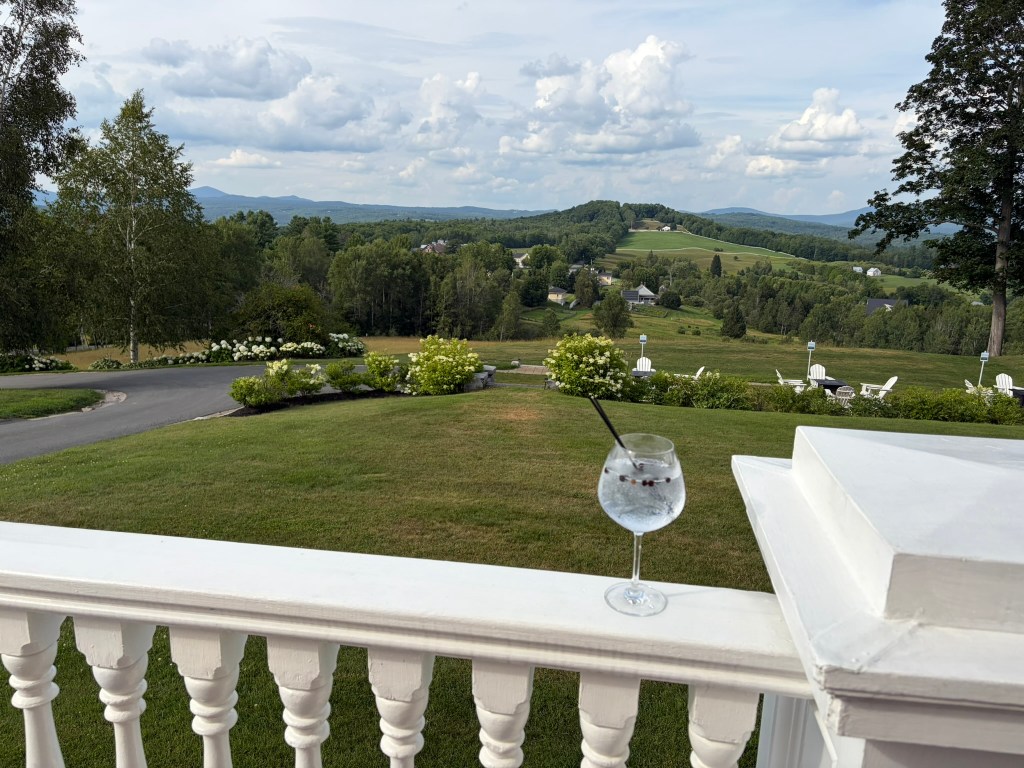
How early summer feels (pic from the porch of The Inn at Burklynn, one of our favorite local spots)
But by early July, after everyone’s rested, it can start to feel like there are too many hours in the day. The novelty of swimming wears off. There’s not as much going on as you’d imagined (I guess we all believe the fun stuff just materializes?). Your wallet feels empty. Lazy mornings become sluggish, irritable afternoons when getting out of pjs and into the car feels like a monumental effort. Whining happens on the daily–“There’s nothing to do!” Or, in my nonspeaking daughter’s case, the day’s incomplete without tears and stomps. If you’ve got kids at home, I’d wager you understand all of this well.
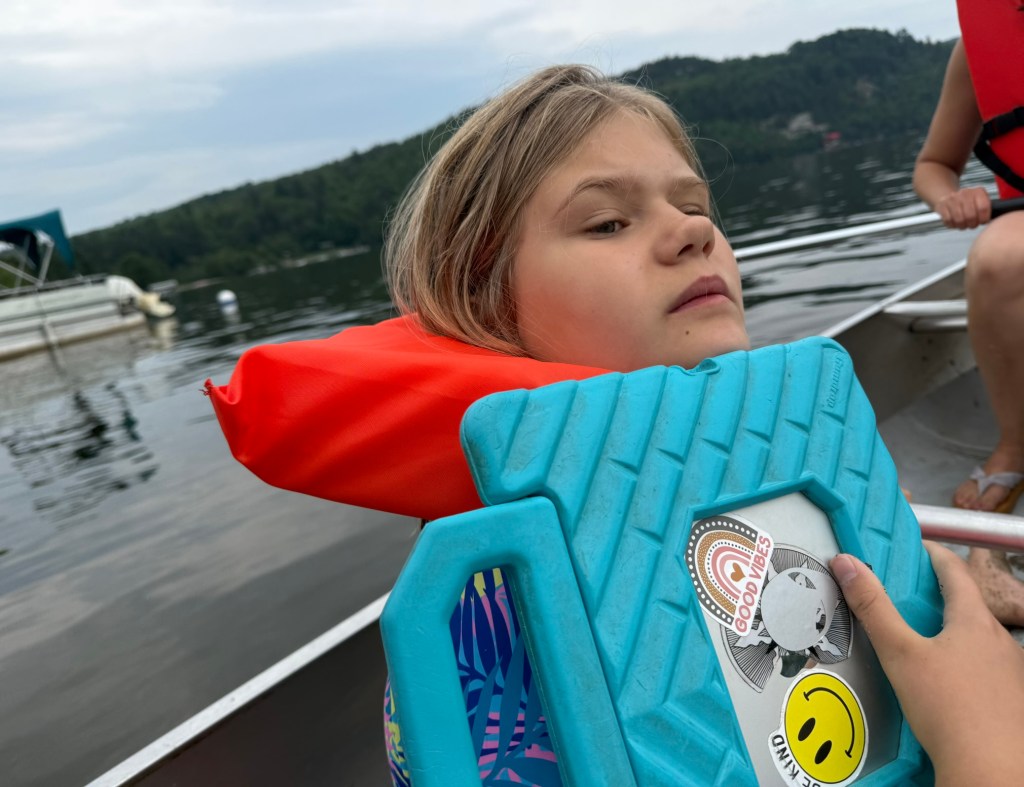
A little nervous canoeing for the first time
That was definitely our experience in previous years. Summers 2023 and 2024 were pretty awful, thanks to our kiddo’s hormonal moodiness plus her difficulties communicating and entertaining herself. To be honest, I wasn’t sure I was going to make it through all those long days without losing my damn mind. I’d really begun to despise the summer months.
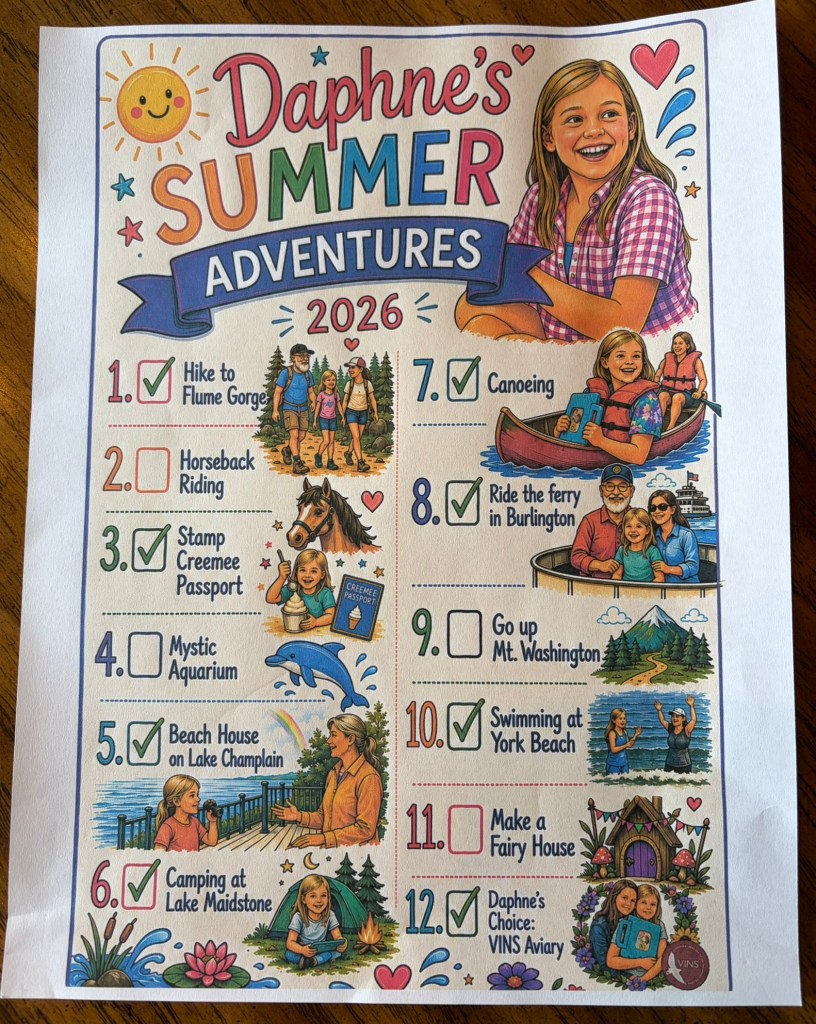
Last year, however, my uber-organized project manager husband came up with a way to combat all this peevish boredom. The solution lay in just a bit more planning, he concluded, so he created the inaugural Daphne’s Summer Adventure Checklist. On it were outings and activities of all kinds, many of them inexpensive and brand-new.
The result was a definite cure for those summertime blues. Those adventures filled our weeks while always giving us something else to look forward to. We did pretty well completing most of the activities, but we didn’t keep a sharp eye on the calendar and ran out of time to enjoy everything.
That wasn’t going to happen this year. This summer, hubby planned even further ahead, scheduling something from Daph’s list for every vacation week even before the break started. Thus, we had a clear schedule ahead of time to go with her list.
I’ll spare you the calendar, but here is that 2026 list:
So many adventures!
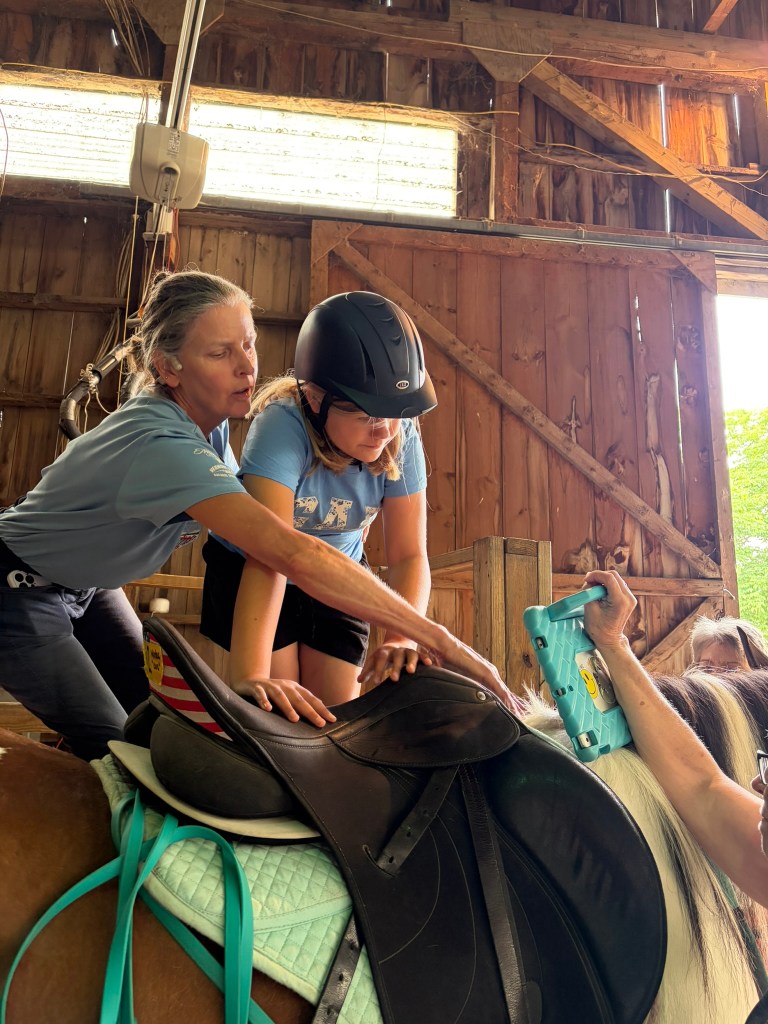
I’m proud to say we’re basically done with everything. We’re traveling to Mystic soon, Daph will have one more riding lesson, and we have the materials for the fairy house ready to go.
The only thing we haven’t scheduled is going up Mt. Washington. The tickets are exorbitant; it will cost $300 for all of us to ride the train up and down. Is it really that beautiful at the top, lol? We’ll probably wait and budget for that one next summer.
All in all, though, it’s been a happy, enriching season, made even better by the ideal weather.
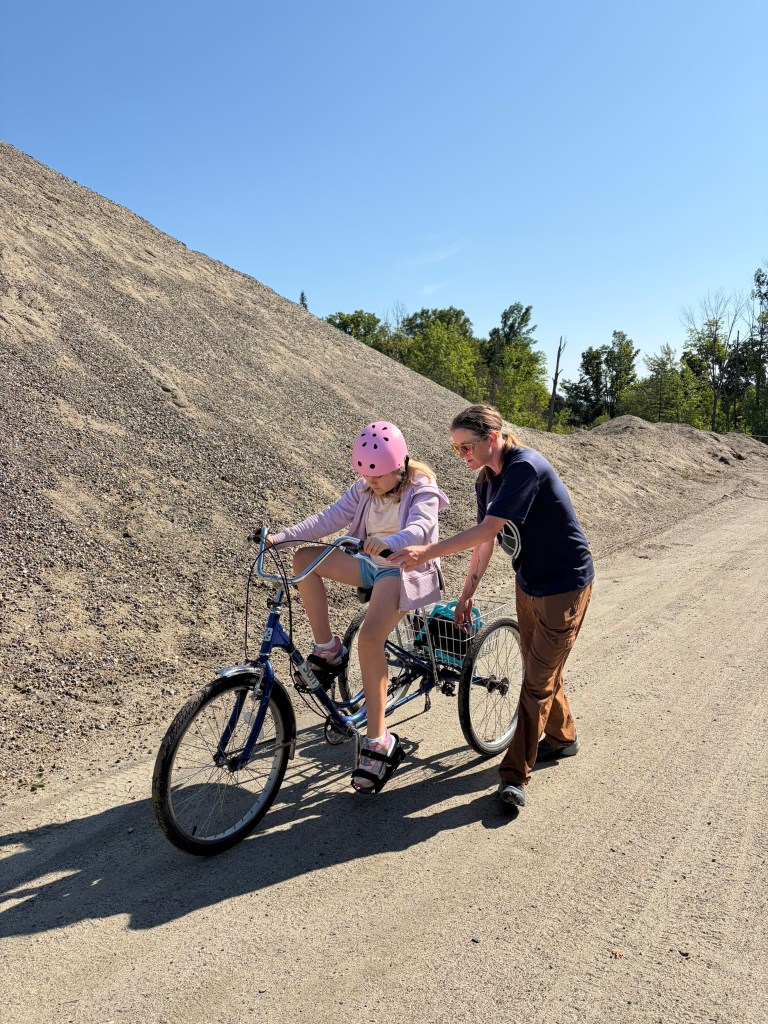
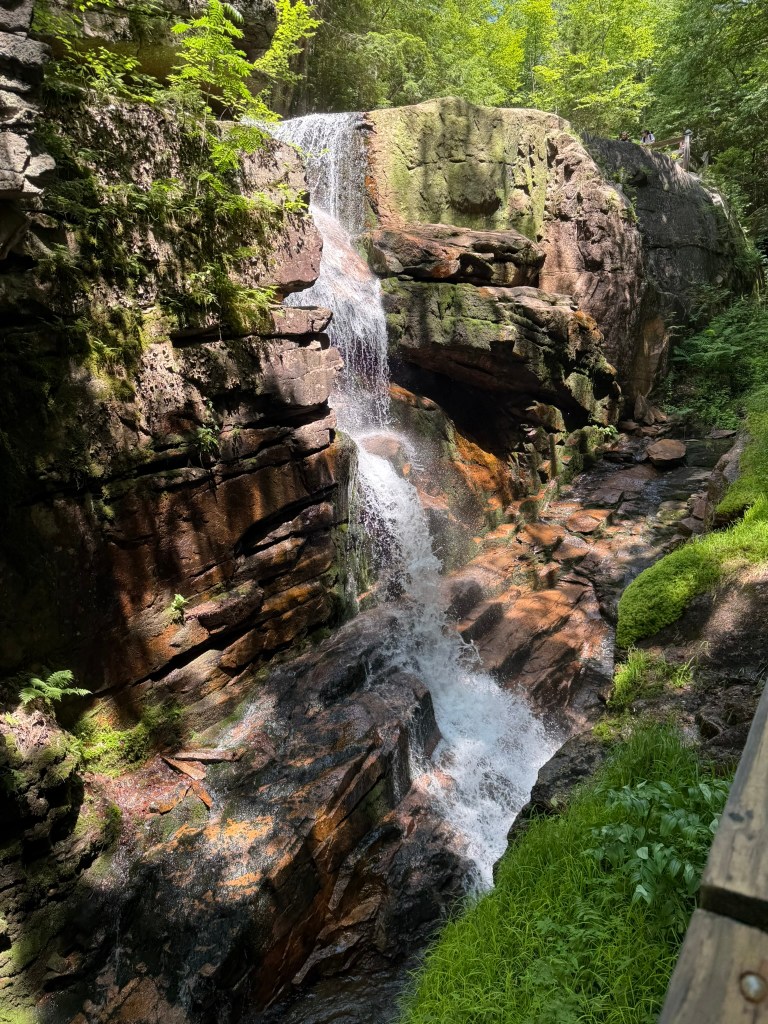
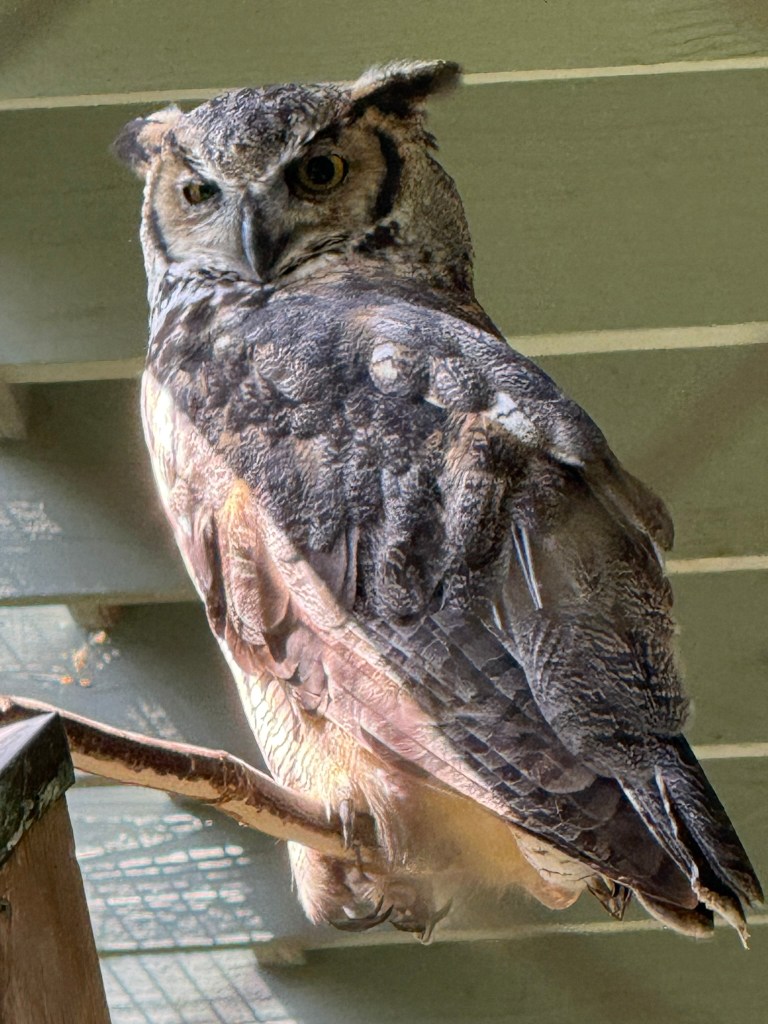
BikeridingThe Flume Gorge in New Hampshire’s Franconia State ParkHorseback ridingOn the ferry heading home from NY via Lake ChamplainSwimming at York Beach in Maine. That water was FRIGID.Vermont Institute of Natural Science (VINS), a wildlife sanctuary and rehabilitation centerAt VINS‘Merica(VINS)From our happy garden
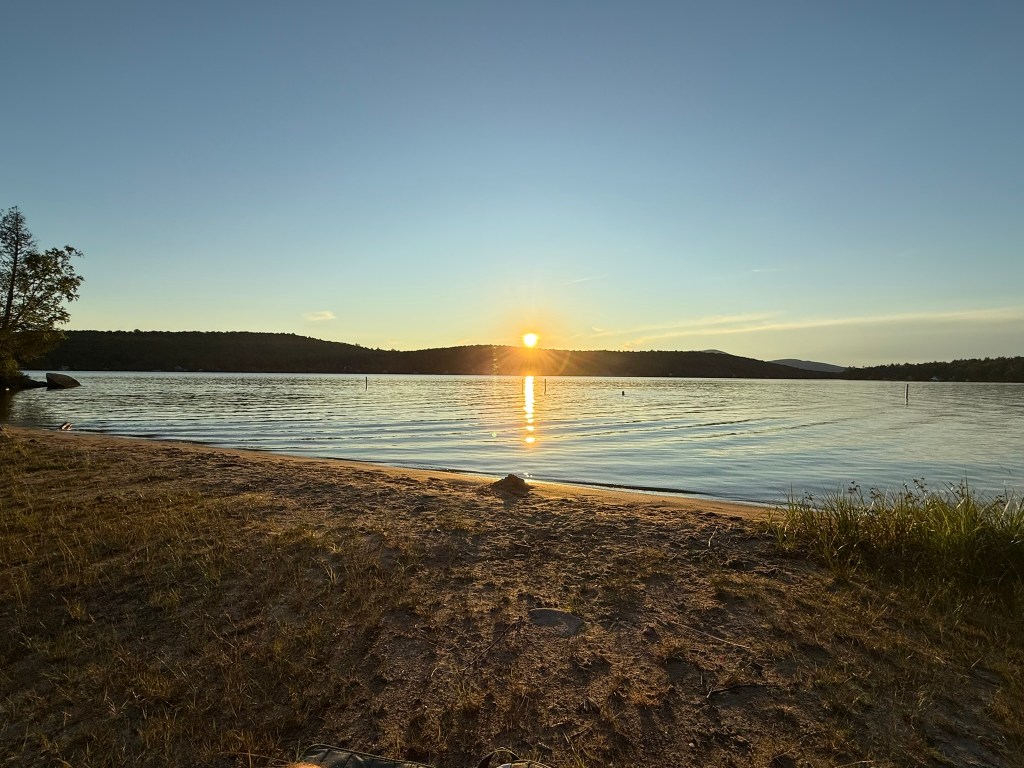
What’s been the highlight for me? Probably our campout at Lake Maidstone. It is a beautifully serene, secluded state park here in the NEK that boasts Vermont’s purest water.
Sunset on Maidstone Lake
The facilities are also top-notch and include a new million dollar bathroom, as the park employee at check-in was thrilled to share. Daphne was a camping pro–she helped us set everything up, then swam that evening before she fell right to sleep, remaining on her own cot the entire night. She popped up the next morning, accident-free, to eat eggs scrambled on our camp stove before swimming another three hours. Then, exhausted but elated, we packed up and headed home.
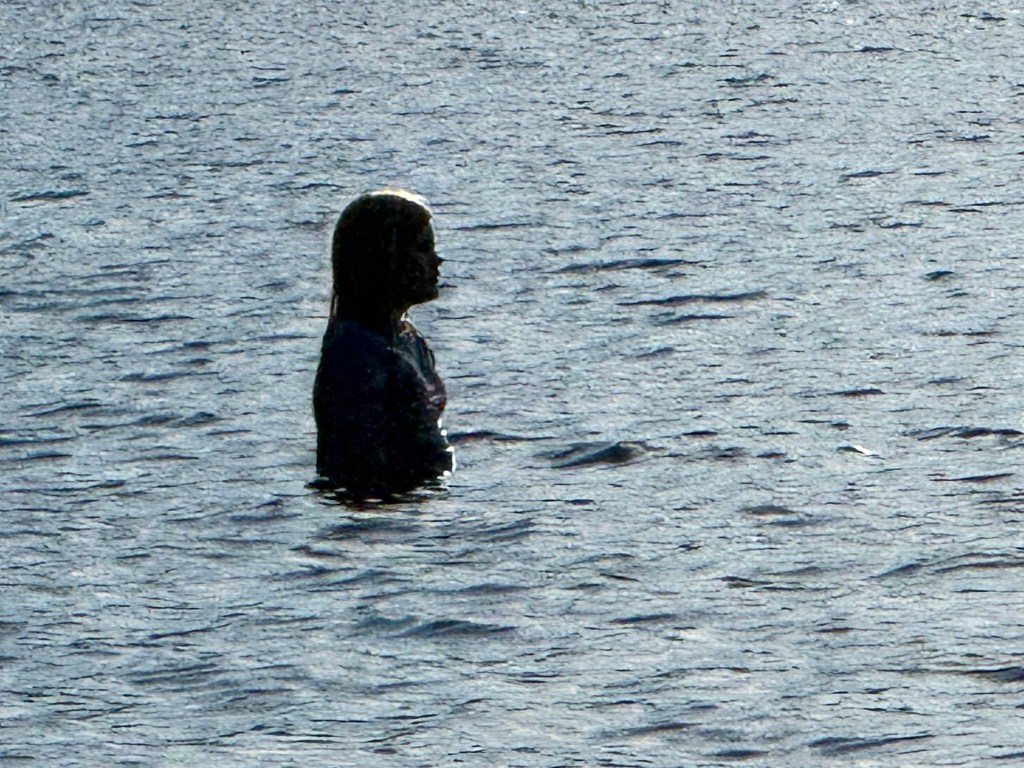
Swimming at Maidstone
I used to be a frou-frou indoor girly girl; I wouldn’t have dreamed I’d enjoy camping. Now, I love lying in my sleeping bag listening to the haunting calls of lake loons and other animal life. Nighttime in the pitch-dark forest, when you’re warm, fed, and safe, is a wonderful, other-worldly experience. (Not so much when you’re lost, as reading Stephen King’s The Girl Who Loved Tom Gordonis underscoring right now.)
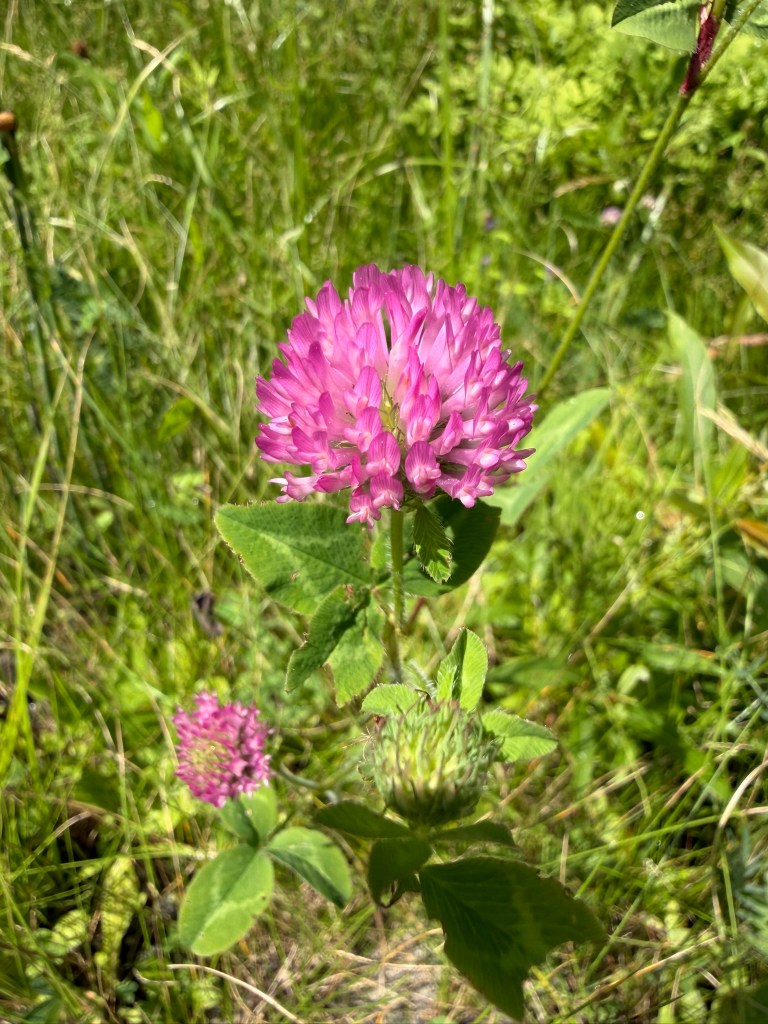
Red Clover, the VT state flower. The wildflowers were abundant this year.
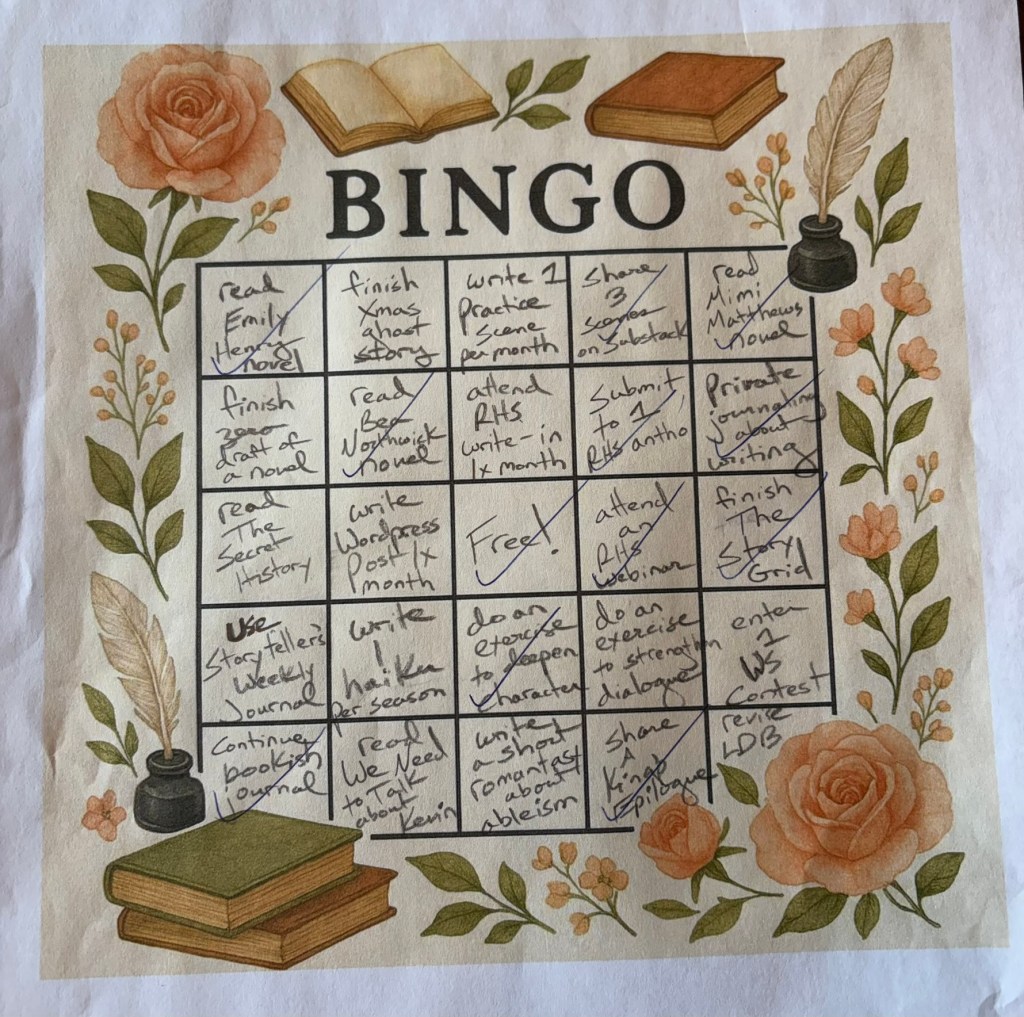
On a writerly note, another checklist that’s worked well for me, even though I haven’t had a lot of free time this summer, is my Bookish Bingo. I got the idea back in January from The Alchemist’s Cabin on Substack, where the creators suggested setting specific, gentle goals for a Writer’s New Year in a way that was fun, like on a bingo card. I took their idea and made my own sheet listing all the lovely literary things I wanted to do this year. Here it is:
Bookish Bingo
I’m close to being done with two columns, and I’ll treat myself once one is complete. But, I feel zero pressure, and that’s the best thing about this. I’ve checked things off as they’ve naturally happened, and it’s showcasing a pleasant, sustainable productivity that might not be so evident otherwise. It’s also helped me think of my writing as inextricable from my reading, and that’s a beneficial perspective. You can’t write well without enjoying lots of good books in the process.
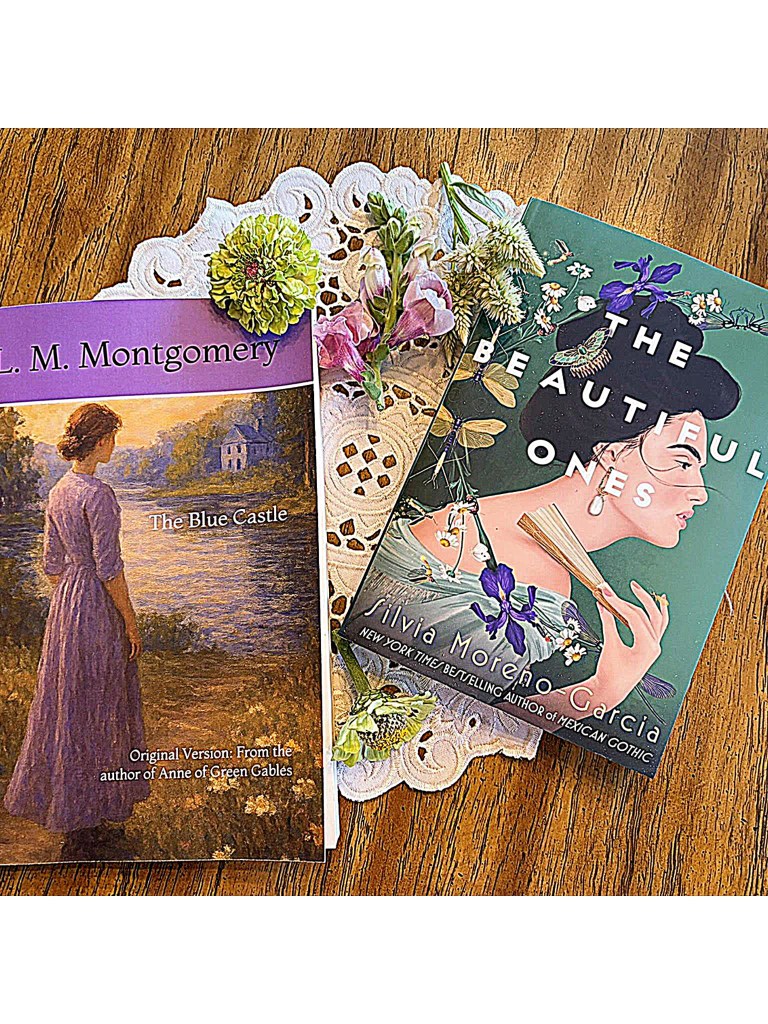
Favorites from this summer’s reading, now books of my heart
It’s funny sharing all of this because I’m not a Type A super planner. I don’t ordinarily make lists–I’m doing well if I type the groceries I need into my Notes app and then make it out of the store without forgetting anything (rare).
I will concede, though, that these lists have been great (Mom, are you reading this?!). Daphne’s first day of fifth grade was Wednesday, August 26, signaling the official end of our summer, and thanks to these lists I could sit down that morning and type, in all honesty, Awesome summer–check!
It really has been our oyster.
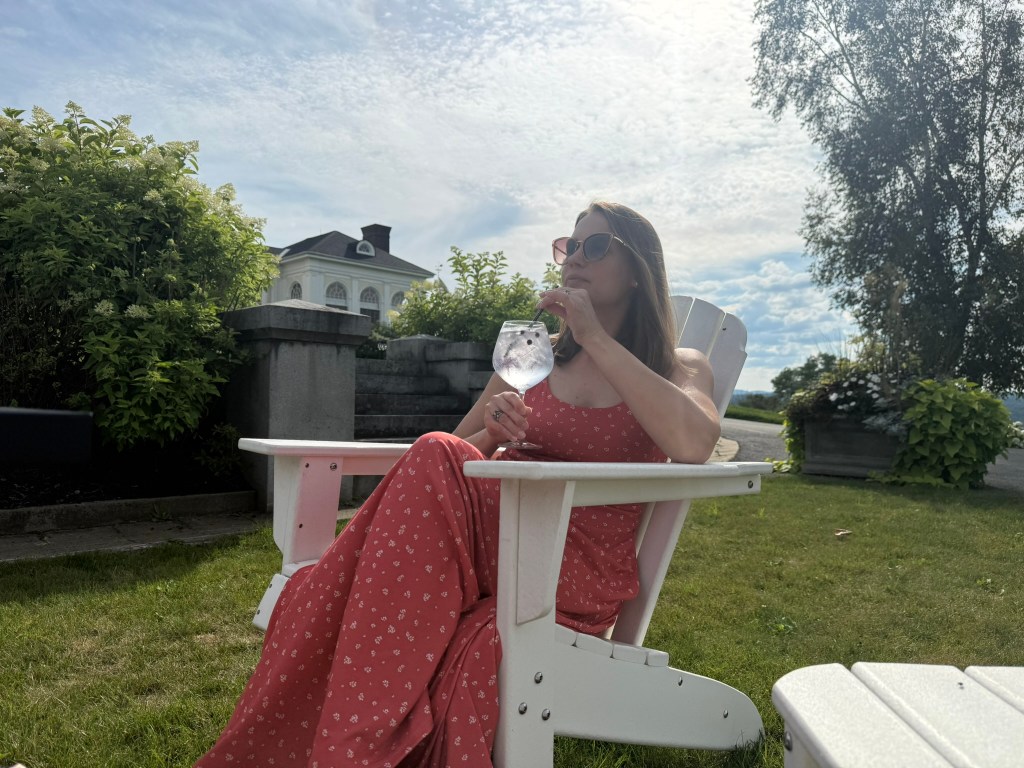
Yep, it was awesome
Now, as the days shorten, the sunflowers and goldenrod gleam, the birds grow quiet (their warbles replaced by the low monotones of crickets), and leaves loosen from the trees, I’m looking forward to the new season.
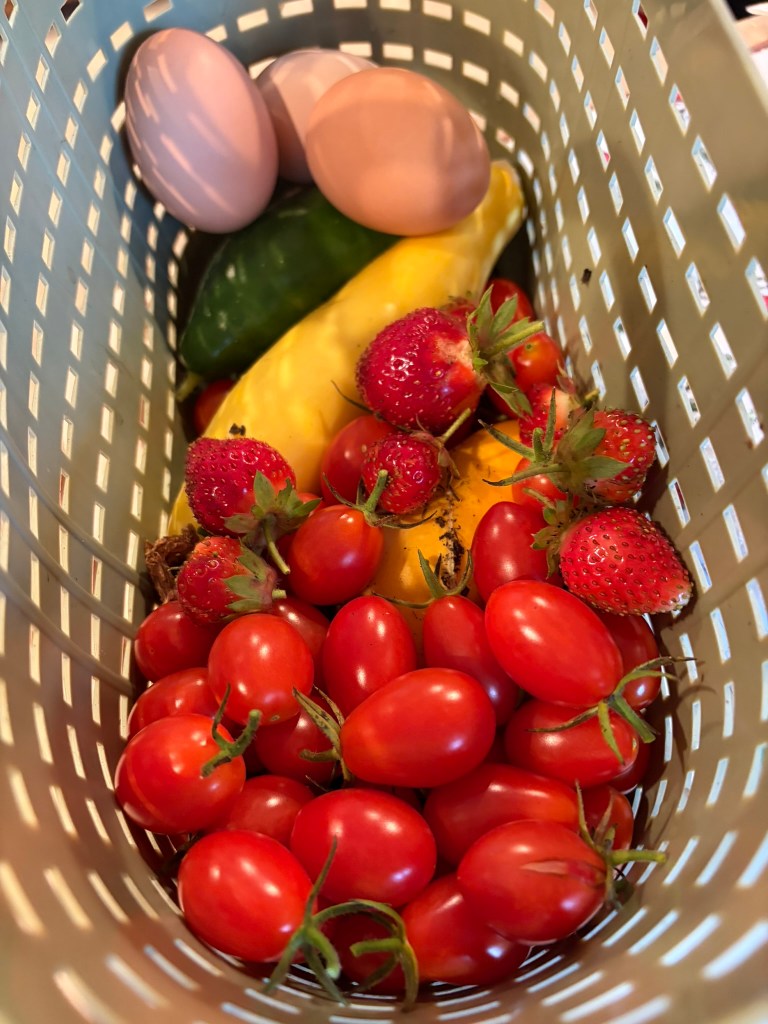
From our farmer’s market
The autumn months will allow a fuller writing schedule, and here on WordPress I plan to share some fun things, including an October-November TBR full of gothic titles, a blurb and teaser for my story in What Hides in the Shadows (releasing Sept 23 and now available for preorder), a post about the underwhelming quality of publication day, some inside looks at my long-form WIP (I’m at 32.9K words), and maybe even a summer-to-fall short story shared exclusively here (and maybe on Substack too, but I still find posting fiction there scary AF). I hope you’ll enjoy it all.
Thank you for reading!
Post-rainstorm sunset on Darling Hill
I hope you’ve had a good season too. I’d love to hear about your own summer adventures or your fall plans.
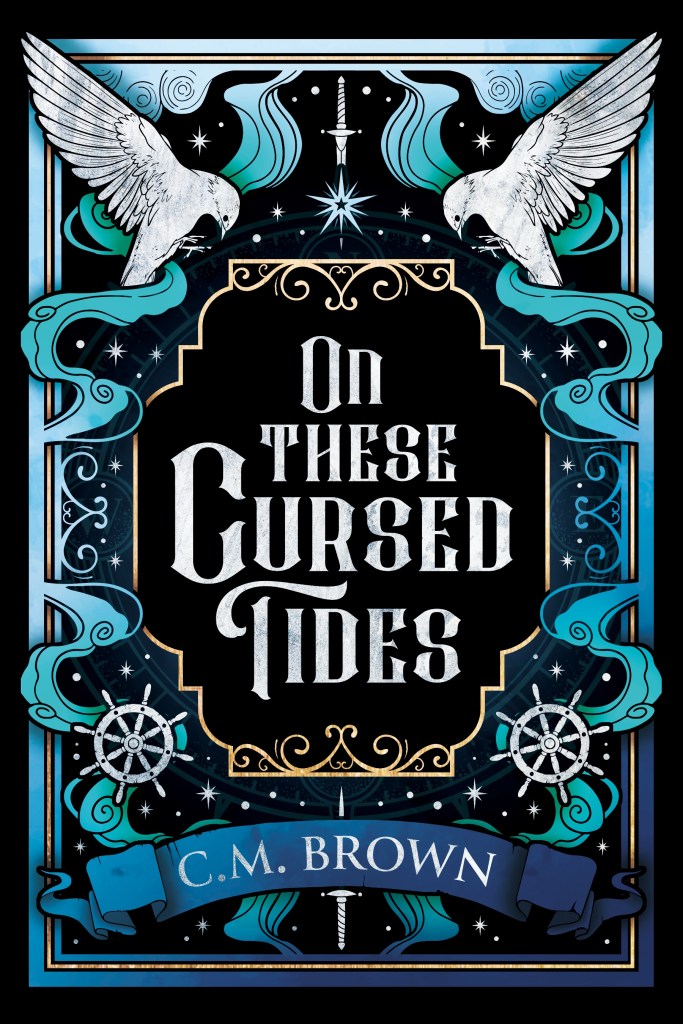
(For a fellow author’s book, not mine. Maybe one day!)
Celestial whirlpools.
That was my answer to my friend and fellow author Colleen Brown’squestion, what is the first word or feeling that comes to mind when you see this cover?
Drop your responses in the comments, and I’ll pass them on to Colleen.
Her teaser for this slow-burn dark pirate romantasy, releasing October 2026, is just as good:
Maeve was made to obey a goddess.
Callum was made into a weapon by a boy who refused to grow up.
And the sea?
The sea remembers everything.
Check out the complete blurb in Colleen’s latest Substack post.
Not only am I a sucker for a fresh fairytale retelling, I also already adore Colleen’s short fiction. She is a master of gorgeous, immersive settings and rich characterizations; her dialogue is exceptional. Of her stories I’ve read so far, my favorite is “A Potion for Forever,” which you can read for free in the e-version of the magic and fantasy anthologySpellbound.
Colleen is also a lovely, supportive, uber-creative, and incredibly-hardworking human being. No one deserves success like she does.
Naturally, I’m stoked for this book, her first published novel! Adds Colleen,
Think Peter Pan, but darker. Think Captain Hook, but morally gray. Think Neverland, but it wants blood.
And apparently, there is “touch her and die energy” with “plenty of spice.”
Sign me up!
On that note, I’m following Colleen’s Kickstarter campaign before launch and will pledge my support in the hope I’ll get my hands on some beautiful special editions to sit beside my other print copies of her work. If you’re interested too, you can find this Kickstarter link in Colleen’s latest newsletter. You can also find her author website here.
Truly, one of my favorite things about being in the book world (however peripheral and tenuous that existence might be) is connecting with fellow creatives. I love learning from and supporting them, and I only recommend authors I whole-heartedly believe in.
Here’s one final tease from Colleen (she made this so easy!):
Welcome aboard the Jolly Roger.
The tides are cursed. The captain is worse. And Neverland is waiting.
Thanks for reading!
I’ll be back soon with some fun end-of-summer updates–never have I loved checklists and bingo cards more! ‘Til then,
Nostalgia is not a cure for what ails us, Scott Galloway said recently in an episode of his podcast with Kara Swisher. On this point, I agree with him.
Nostalgia can be, however, a harmless coping strategy when your country feels bleak and so awfully disappointing. In the chaos and uncertainty of these last few years, exacerbated by all the digital noise and enshittification, my husband and I have routinely reminisced about the relative success and simplicity of the eighties, nineties, and early aughts.
This year especially, I’ve ached with nostalgia. I even wrote a short piece of speculative fiction, forthcoming in an anthology, rooted deeply in this emotion. It’s set in the fall of 1992 and features a ten-year-old protagonist who’s just moved to a new neighborhood (I shared a little about this story back in March). That was my own age and circumstance that same year, which was such a strange, anxious period. I worried about my new school and bought my first YM magazines, wondering vaguely if I could ever look like Nikki Taylor. I was also still playing with dolls and stuffed animals, and I remember asking my mom if that was okay.
But memory has a rosy filter. While working on my submission, I realized I wasn’t only nostalgic for Walkmans, Christopher Pike, and Nick at Nite (my story mentions all of these). I was also nostalgic for the years when I first fell in love with language itself.
In primary school, I developed a fixation with words on the wall. I was lucky enough to attend a richly multicultural, first-rate public elementary in the Houston area, one that for a while had one of the strongest English Second Language (ESL) programs in the state. That meant we enjoyed a print-rich environment—letters and words everywhere, and not just in English. They were all over whiteboards and bulletin boards, in the learning centers set up in the open-concept classrooms, and covering the walls of the library, hallways, and cafeteria. During instruction, my teachers wrote down single words first, then phrases, mostly on the overhead but also on the whiteboards or chart paper. As they asked questions, our classes discussed answers or brainstormed as best as first, second, and third graders could, and our teachers wrote, wrote, wrote, recording our ideas. Their scripts, and the way their voices melded into these lovely symbols that became increasingly recognizable as I learned to decode more and more words—to read!—hypnotized me.
The best part of all this, though, was when we were given blank sentence strips on which to write our own thoughts, usually during an interactive or group activity. Forming those big, wobbly letters with a fat Sharpie, and getting to hold that crisp rectangular paper before it was stapled or taped on a wall somewhere, allowing me to leave my mark, translated the visual appeal of language into something that became wonderfully tactile too. I couldn’t get enough of it. I suppose that was my first experience with publication, in the broadest sense.
Photo by Nihal Demirci on Unsplash
At home, my last years of playing pretend evolved into games of school, where I instructed a dozen plushie pupils. I collected all kinds of materials for my “classroom”—my own little chalkboard and notepads, a cork board, stickers, a pad of blank achievement certificates, whimsical markers, pens, and pencils, and various kinds of paper. When I discovered the local office supply sold overheads, I begged my mom for one, but she always responded with a swift, bemused “No.” What playing school really meant, though, was another opportunity to write stuff down: imaginary rosters, lists, and lots of sentences, even paragraphs (never numbers or math problems, ha), supplemented by read-alouds from my chapter books while mimicking the chastisements my teachers called out mid-lesson, usually to the squirmy boys in class.
Around this time, I also began writing my own little stories, usually in blank journals and occasionally on my parents’ typewriter. I don’t think I ever finished any of these, but I do remember trying to imitate the voices of several middle-grade first person narrators—Tallahassee Higgins from the novel of the same name, or Zoe from Stonewords by Pam Conrad. All these attempts gave me feelings of unlimited possibility and power. This must be why people write books, I thought. Wow, I could make up anything and become anyone (oh, the power of first person POV). Was this what it meant to be godlike?
I also purchased my first craft book, What’s Your Story? by children’s author Marion Dane Bauer, which I still have. I distinctly remember two points from that guide: A story is “about someone struggling,” and there is magic in the number three. Both points continue to serve me well.
First craft book
Fast-forward to high school: I was seventeen, a junior taking my first Advanced Placement classes, including AP English III with Mrs. Guest, an older Southern lady if ever there was one. That first day she didn’t smile as she brusquely reviewed the strict policies and expectations of the course. A bit of a dragon, I thought. She sat us in rows, her table at the front, the chalkboard (which she rarely used) behind her. On the first real day of instruction, highlighters and pencils in hand, we all opened our personal copies of The Scarlet Letter. Mrs. Guest had her own too, proudly telling us this was her annotated text from her American Lit course at the University of Texas (where I now imagine she was well schooled in old fashioned New Criticism). Suddenly, she was a little more human.
After Mrs. Guest read that short first chapter, “The Prison Door,” out loud, she proceeded to verbalize from beginning to end what Hawthorne was doing. She began by pointing out the Puritans’ “sad-coloured,” “grey” clothing, asking us to highlight those words and note their “dismal connotations” (connotationwas a new term for a lot of us). We also highlighted the description of the men’s hats as “steeple-crowned,” suggestive of their theocracy, and Mrs. Guest pointed out how, though this was supposed to be a new “Utopia” (a perfect society, she explained—“Let’s highlight that too, y’all.”), the cemetery and prison were erected first on the colony’s “virgin soil.”
“Why ‘virgin?’” she asked us, turning the tables. “Why would Hawthorne use that word, and not something else like ‘new’ or ‘uncharted’ or ‘wild’? What does ‘virgin’ suggest?”
A few kids snickered. Dare we think what she was getting at?
“Because, before they got there the land was untouched, and what they did was, like, … a violation?” some brave soul ventured.
“Exactly,” she replied, before elaborating on the comment. If I remember correctly, she even got someone to offer how, through “virgin,” Hawthorne feminized the natural world, while the settlement was associated more closely with men. She then connected, as further evidence, that particular idea back to the subordinate placement of the phrase “mixed with women” in an earlier sentence (though we wouldn’t start analyzing sentence structure in earnest until the winter quarter).
And we were off.
Years later, after I’d completed my own teaching certificate, I realized that Mrs. Guest was employing a basic instructional strategy called a think-aloud to model her own thought process so we could understand and use that process ourselves. She used think-alouds and guided annotation on and off all year, and in doing so, she ingrained in us a technical vocabulary and a method. We learned to consider how diction, imagery, figurative language, detail, syntax, and irony created tone, mood, and meaning for a specific audience and purpose. That alone, practiced repeatedly, was enough to demystify the bugaboo called Literary Analysis. I personally came to think of it as, what is the author suggesting, and how is s/he suggesting it? From that day forward, those two questions guided all my close reading.
In the end, Mrs. Guest gave us a rock-solid foundation in college-level textual analysis, which worked for both fiction and nonfiction. Over time, she taught us how to write academic arguments about these texts, too. As high schoolers of the late 90s, we could handle her approach, which was always slow and thorough. We didn’t have Smartphones or social media. Our cell phones (for those of us who had one) weren’t part of our hands; we weren’t endlessly scrolling. We could deal with long, dense 19th century texts if we were guided by a good facilitator. It certainly felt like a simpler time.
More to the point, Mrs. Guest’s instruction blew my young mind. I’d always enjoyed books and stories, but what we were learning in her class was much deeper. Writers had intent! They made choices! When those choices were better than other writers’ choices, the authors were artists–you could feel their genius on the page. This was art!
I thought this love for the power of the written word meant I was supposed to be a teacher. By the time I graduated from high school, I’d forgotten all about creative writing. All I wanted to do was impart knowledge, skills, and, ideally, appreciation to eager students the way my best teachers had given them to me. I completed an English major and history and education minors and began teaching high school, starting as a newb with AP English III of all things.
Photo by MChe Lee on Unsplash
Those first two years were an absolute crucible—I spent most of them covered in stress hives. I’m stubborn, though, and I stuck out that deathly steep learning curve, going on in subsequent years to become a team leader, a supervising teacher for University of Houston teacher candidates, a Building Teacher of the Year, and even an instructional specialist. But the work never felt entirely natural—teaching real school was nothing like playing at it. When the pandemic hit, and my family made the radical choice to move across the country and change almost everything about our lives, I gladly left the profession behind.
And the result is, I’ve gotten back to writing words. What I have now is a solid, consistent writing practice, one that, more than anything else, has proven most satisfying to all my natural inclinations, especially my love for language. My practice is, first and foremost, nourishment for my mind and heart, and I cherish the joy I find in creative striving through the medium of the written word. I compose my fiction, essays, and even a little poetry with an appreciation and care that I owe, in large part, to the wonderful schools and teachers like Mrs. Guest, and it’s comforting to remember these inspirations as some of the best gifts of my life.
Photo by Lauren Mancke on Unsplash
Musing over such things might be impractical, even a little silly, but it’s an indulgence I find harmless, affirming, and even grounding. I’m always curious, too, about what has inspired other creatives: What odd or weirdly specific things compelled or motivated you, especially when you were little? What are you nostalgic about now? Feel free to indulge with me in the comments below.
Ian stirred when Elspeth rose from their marriage bed. In the soft, early light brushing the sill of their window, he watched her silhouette slip its arms through a robe. She moved toward something, an object of some kind, sitting ghostly on that stone sill.
Septimus dies.
The seventh day.
And, they had seven more. Seven more glorious days before the fortnight of their seclusion ended, and they would travel together into the heart of their kingdom. Bound they would be for Ian’s seat of power, with Lord Alistair, Lady Fiona, Alistair’s father, Lord Aitken, and all the most trusted thanes and knights completing their royal procession.
For, Elspeth had said yes. Not just to marrying him, but to ruling beside him.
“You are what I love most,” Ian had told her. “If you do not wish to be queen, I will abdicate my throne before I ever reclaim it.”
Such an action would not be an abandonment, they had decided. They could make this choice carefully, along with Alistair and the council and without most of Ian’s subjects even knowing, for his return was not yet public knowledge. He would do so on one cast-iron condition, however: Alistair must vow, before the bishop, council, and a fairy emissary, to uphold Ian’s end of the bargain with Queen Aine. He must swear to protect forever the freedom and sovereignty of the fae folk.
“Alistair will honor it, I am sure. He will be a just and competent ruler,” Ian had continued, “and I have found that, after all, I do not dislike being an ordinary man.”
In their usual spot before her father’s kitchen hearth, a healthy fire roaring, she had placed light fingers over his lips. He had not resisted parting them, giving that delicate flesh a tiny, hungry kiss.
“Let’s be quiet about that, at last,” she’d said, eyes sparkling in the firelight. She’d chewed her lip, moving back so part of her lovely face fell in shadow.
“How can I ever convey to you,” she finally said, “the anguish all my elders felt when you disappeared? That great ache for a king, an enlightened man, who modeled piety and justice tempered with mercy? Who, in your judicial reforms and promotions of learning and tolerance, gave us all the most benevolent devotion I am convinced any ruler has ever given his people? The relief and hope you brought so many?” She shook her head, her large, sweet eyes appearing delightfully helpless, though he knew better. “How I wish you could have heard how they spoke of you. I cannot do it justice.”
“All of them,” she’d emphasized, when he started to shake his head, “from the orphans and shepherds and scullery servants—” there she’d winked—“to the great thanes?”
“Not so devoted, Elspeth. I should not have left.”
She leaned forward again to place a hand under his bearded chin, gently forcing him to look at her.
“Human, Muir. Ian,” she’d self-corrected, though he had told her to call him whatever she liked. “You are human, marvelously imperfect. But that does not mean you are incapable of greatness, or unworthy of love.”
She’d shushed him again when he’d tried to protest.
“Enough, sweet husband. You were meant to rule. It is God’s will, I know it, so let us cease this… prattle about abdication.”
He’d taken her hand. “Are you sure? You will not be overburdened? Unhappy?”
He saw her contemplation in the shift of her glowing irises. “I’m sure I will be, some days,” she answered. “I would still be, I believe, even if we lived alone as peasants in a woodcutter’s cottage. It is inevitable, I think.”
She leaned toward him, continuing, “The only true salve for that is the knowledge that I’m with you. You’ve shown me much, including the truth that we are stronger than we know, and that we endure. If you and I are together, everything will always prove right, in the end. No matter what occurs.”
Brushing her lips against his, she ended the discussion. It was a gentle, deliberate kiss.
“How you astound me,” he whispered.
Then he’d grown playful, tugging her hand. “Prattle?”
She’d giggled and shrugged.
“You dare accuse your king of prattle?” Making her laugh made Ian happier than anything else.
Before he could capture her, she’d dropped into his lap. In mock apology, she threw her arms around him. Her murmurs were sultry against his neck, where his pulse throbbed. Then she kissed him again, more deeply, their hands roaming each other’s body.
Part of him truly wished they never had to leave that hearth.
But, in that lovely way, Elspeth had made the decision for them. Though, they were giving themselves this final period of privacy. A time of their own before all the world knew of King Ian’s return, and before he gifted them their new queen. And what a marvelous queen she would be.
Now, early this morning, he called out to her. “Is all well?”
His words were low and languid. Elspeth, it turned out, was a passionate woman, avid for all the pleasures he gave her and eager to reciprocate. He was still depleted from another night of marital delights, lush and desperate and wonderfully exploratory.
“Come see this!” She waved an arm. Through the thinning darkness, her countenance beamed.
He swung his legs out of bed and went to her, fully naked and unashamed. He hoped she would soon adopt such complete immodesty too.
Behind her, he wrapped his arms around her waist. Peering over her shoulder, where he rested his chin, he saw in the dimness what looked like a freshly plucked daffodil, potted in—
“Is that a bowl from the kitchen?”
“I believe so.” Elspeth ran a white finger over a petal. “It feels natural. Not like it’s bound in any kind of magic. Just, re-rooted.”
“Where shall you plant it?”
“Oh, the high castle, of course. Have you—we—a royal garden?” She gazed at him, her sweetness evident even in the matin light.
“My mother had a rose garden inside the walls, not far from the herbs. We shall revitalize it.”
The weak light muted the blossom’s yellow hue, but otherwise it appeared firm and healthy. It wasn’t there last night, though they had been rather preoccupied, what with stripping garments from each other’s body before lying down to bed. Perhaps he hadn’t noticed?
Suddenly, things felt more serious.
“Who put that there? And when?” He didn’t like the idea of anyone—servant or otherwise—entering their chamber unknown to them.
She turned to him, her own arms winding about his waist. Her palm slid along his spine. “Are you not cold?”
“Not now.”
“I had a dream last night.” She peered up at him, serious now too. “At least, I thought it was a dream. As I lay on my side, a tiny voice rang in my ear. I didn’t see her, but the voice sounded like the sonorous tones of Lady Fae Rowan.”
“The spring guardian?”
Elspeth nodded. “She whispered to me, ‘I bring a wedding gift.’”
His wife’s breath hitched, and he brought a tender palm to her cheek.
“‘All is well,’ she said,” Elspeth’s voice trembled. “‘Tell your husband too,’ the fairy said. ‘All is well.’”
Emotion dissolved his wife, and she pressed her face into his chest.
He pulled his Beth tightly to him. He stroked the back of her head, though he kept his own fresh revelation to himself. He was not quite ready for Elspeth to see the dampness on his own cheeks.
“Indeed, my love,” he managed to whisper, caressing her soft hair. “Everything is, in fact, truly well.”
Thank you so much for reading! I’ve truly enjoyed sharing this story with you.
If A King’s Epilogue has piqued your curiosity about Rowan’s and Elspeth’s experiences (the first story that inspired this one), you can find their tale in the free e-book Spellbound, a magic and fantasy anthology from The Red Herrings Society. My contribution, Elspeth and the Fairy, has the privilege of opening this collection.
Here, too, are some other wonderful stories in Spellbound that have lingered in my imagination and which you might enjoy:
Crimson Ink by Kathlene Brown (a gothic Bronte retelling featuring the sisters’ brother Branwell)
The Queen of Thieves by Mary E. Dipple (dark fantasy)
A Potion for Forever by Colleen Brown (romantasy)
Raven Song by JM Stradling (horror)
Once Upon a Witch by Aimee Renee (fairytale horror)
Happy spring, and have a wonderful start to your summer!
Alone now, and hollowed out by everything that had transpired, Ian knelt once more at the running brook. His neck and shoulder throbbed like fire. He brought his hands together, cupped the icy water, and splashed his face and eye. Repeatedly, he splashed and scrubbed himself, trembling with cold. Gingerly, he tossed water over his wounded head, neck, and arms; movement hurt. Into his mouth he brought the liquid, where he swirled it, then spit. Then drank. He splashed the places where his tunic appeared stained and torn, rubbing with trembling fingers the best he could in the dark at all the dirt, mucus, and bits of bark that clung to his frame.
Could he ever get clean again?
The water tingled on his exposed skin. It almost felt like healing.
Standing, he sheathed Saltire.
Above him, directly overhead, God lit the sun. With it came warmth. The arbor was tranquil, the forest once more a mere collection of silent, majestic trees. He heard birds; above their many mingled chirps, there sounded the song of a spirited willow warbler.
It must be noon.
Everything was so insanely mixed up, time such a brew of confusion, Ian wasn’t sure how to feel, or how much he should shelter this little flame of hope, even as he heard a placid snort behind him. Turning, he saw Ruadh. The horse stood there, a back hoof cocked, tail swishing lazily. He looked as though he had made up his mind to return and be, simply, patient while his master collected himself.
“There, now. Fine boy,” Ian crooned, going to the horse and stroking his velvety muzzle. “I’m glad you’re all right.”
The horse gazed at him in question.
“No, I’m not sure I am,” the king replied. He chuckled. “Well, what shall we do?”
The horse leaned in, nudging Ian’s arm.
“I think you’re right. All we can do is go on.”
Ruadh licked his shoulder.
“I wish I had some oats for you.” He stroked the stallion between his eyes.
Elspeth often had treats for the livestock somewhere on her person.
“Perhaps your mistress has some hay tucked away in her dress. Let us go find out, shall we?”
Oh, my Elspeth. My great, good love.
On horseback, Ian moved up the hill.
Now, I can believe you might just love me, too.
He did not come again to the waterfall. The brook disappeared, curving away in another direction as its natural geography dictated. The beech carved with the cross did not reappear.
Like a warm hum beneath his skin, Ian felt Elspeth nearby, and his final thoughts, as he approached the woman he loved, were entirely of her. On all the ways he’d always put pressure on her.
First, when she was a child, and he’d begged her, as the condemned, wandering Muir, for food and water. She’d given them freely as she offered him shelter, risking her household’s security and her family’s confidence.
Next, over the years, when he’d looked to her—always wordlessly—for protection from the beatings and poisonings doled out by the other servants, who were always disgusted and fearful of him. He’d been shocked by how repugnant his differences and vulnerabilities were to others, and his own tolerance for such things had grown after he’d found himself in that lowly position, though he’d always been merciful.
Elspeth had learned to deal firmly yet fairly with such cruelty under her roof. She’d dismissed those who might never find work elsewhere, holding fast to the edict that no harshness would be tolerated where he, Muir, was concerned—no matter how terribly these brutes had wailed. She might grant them mercy once, but after a second offense, she did not hesitate to banish them. It had made the management of her father’s house harder, when she ought to have been reading, embroidering, or taking long walks to gather wildflowers or pinecones. She ought to have been allowed the freedom and gaiety of youth, the way her older sister had enjoyed it. But Muir had prevented that; the knowledge stung him.
Yet, she had also made him, Muir, happy. Truly content, though he’d been stripped of all power, imprisoned in a terrible bestial form, and reduced to awful labor. Reflecting on that stretch of experience now, as the horse moved steadily beneath him, and beneath that sting of guilt, Ian felt a quiet and undeniable fondness. It was already the past, and he was oddly nostalgic for it.
Finally, when the kingdom was threatened with crime and invasion following the presumed heir Alistair’s affliction, he, as Muir, had put the ultimate burden on Elspeth. He had indirectly suggested she seek out the fairies to plead on Alistair’s behalf—and to continue combating his, Muir’s, own curse, though of course she could not know that. This had been by far the hardest choice for Ian. Though he’d believed Elspeth the likeliest to succeed unharmed against the fae, given her earnestness and purity, he had still quaked for her safety. It had been the moral agony of his life, and he had worried himself ill once she’d finally set out. The risk had paid off, of course. In the end, his faith in her had proven true. But oh, how it tested her. How it had pained her.
He remembered the hollow darkness under Elspeth’s eyes, in those days after Alistair regained proper function of his senses. The young man’s vision restored, he had looked upon both sisters for the first time. Whether by Elspeth’s bargain or, worse, his own natural inclination, he had fallen instantly in love with Fiona, forsaking Elspeth, the one who had cared for him in his affliction.
Ian remembered how he, Muir, had watched, from doorways, Elspeth push food around her plates. Wrap her arms around herself when she thought no one was looking.
“I know you are lonely,” he had said, struggling to comfort her. “But you are not alone.”
In those days, she’d hardly looked at Muir. Once, when he’d remarked, in dull terms, on her exceptional selflessness—he’d run through all the permissible ways he could think of to tell her she was special—she’d sealed her lips. They were a pale, thin slash, like she was fighting to hold back all acerbic words. It underscored yet another of his sins where she was concerned: he’d placed her on a towering pedestal. But, she was human and, he sensed, achingly desperate for a love of her own. To have the freedom, perhaps, to be just a little bit selfish.
It was the closest Elspeth ever came to snapping at him, and he’d fretted over the distance it might put between them. He’d been the one, after all, to encourage her seemingly ill-fated quest.
And now, once more, he was requiring too much of her.
But what other choice was there? Was this oath he had given Aine not the highest form of love and trust? Did Elspeth’s soul deserve any less?
To love someone deeply yet resist that desire to shelter them. To act rather on courage and faith in them, to push them or let them go as needed—this lay at the marrow of life’s difficulty. These were the true trials given to him, to all, by God. The gods.
All he could do now was hold onto his faith and believe that Elspeth would be alright. That he would be alright, too.
If this did not work—if she did not truly love him as he loved her—well, Ian would rather endure the truth and let Elspeth live her life in the way it most suited her, no matter how it might hurt him. He would go on, do his best to rule conscientiously, resisting Aine and her legion as humanely as possible, holding on to all the lessons he’d learned. Knowing in his heart he was a better, truer servant of God—the gods—for all of it.
That was still the great gift Elspeth would have given him.
He would not let it go to waste.
He could survive it.
Couldn’t he?
There at the top of that high, great hill, the trees thinned out. He spotted her, at last, and she was real to him, deep in his bones.
She stood with her back to him. Beyond her, above the panorama of tiered green mountains, floated the grey-blue line of a distant, undulating horizon.
It was one of the most magnificent views in all his realm. But now, he only saw Elspeth.
The reins were slippery in his hands. His body thinned, disappearing into itself. He wanted to pull the horse back, turn him around, thunder away. The desire was so powerful Ian believed he might completely disappear.
Instead, he let Ruadh carry him forward, solid and visible.
Then he noticed Elspeth’s position, and his fear for himself vanished.
She was standing too close to the edge. Arms limp at her sides. She was looking down, at the great fall below.
Oh, God.
Had they all been wrong? Again?
Despite her choices, or in fact because of them, did she despair?
Is that why Aine had cackled so? Had she foreseen this?
Would Elspeth leap?
Her head tilted; she was looking up.
Still, too close, too close.
Ian wanted to raise his voice. Command her to step back.
But, he was not her father, or her God.
Around them, the spring birds sang a celestial chorus. Bright, vital sunshine warmed the earth from its azure dome.
“Elspeth.” His voice was calm.
She spun around, gaping at him.
Though thinner now, her hair sheened at the unwashed roots, her eyes bruised from lack of sleep, her face had a subtle golden hue that did not pale. She moved away from the ledge, a few steps toward him.
She had never looked more breath-taking.
He dismounted, giving his horse a discreet pat, and stood several feet from his beloved. He forced himself to breathe.
His mouth filled with phrases, sentences, paragraphs—an entire exposition, or confession, of all the things he needed to utter. Who he was, who he’d been, what had happened, what it signified, and most of all what she meant to him. But she did not know him.
Even when she finally gasped, “Your Majesty!,” she did not know him.
He wasn’t just Ian, he was Muir, too. All of it. How could he convey that?
She had to love all of him.
The full, barbed truth filled his throat, and it was too great—he choked on it. He could not communicate it all. It was far too complicated, too much.
Then, there entered his mind like a spell, the magic of a memory. Elspeth’s own words.
I tried to remind Alistair… I stepped up to him and asked him to close his eyes… I stood so close he might sense the daffodils he once claimed were my perfume, and I sang…
Once more, she saved him.
The thought of Fiona’s own reaction to his unconscious repetition earlier that day—the same day?—strengthened Ian’s epiphany.
“Close your eyes,” he said, his voice clear yet gentle. “Please.”
When she did, he knew what to say.
“Beth. My Beth.”
What he’d always called her, of course. That simple endearment encapsulated everything.
“Muir!”
It was enough.
That golden hue on her face blazed into a light of recognition. Into something deeper, more tender too.
She let him come to her. She trusted him to place his hands on her precious face, to touch his forehead to hers, so warm. She brought her own delicate hands to his elbows. He’d never been so close to her, and a waft of daffodil stirred him.
He did not think his sleeves were torn now; his wounded eye did not sting or run; his shoulder did not throb. His words came easily, simply.
Relaying the story of his departure from his kingdom, of the witch’s curse, of the fairy queen’s conditional release based on a test of a subject’s three virtues, Ian ended with “… It was you, dearest Beth… You saved us all. In the meantime, you made me so wonderfully, unexpectedly happy.”
With the pads of his thumbs, he wiped away her tears, though they were precious to him as pearls. Blind as Aine was to the chambers of their hearts, the fae queen could not ask for better evidence.
“Oh, my king! My Muir!” Elspeth ran her fingers through his hair, and lightning of the deepest, purest desire struck through him.
“I love you.”
Finally, he could say it, as solemnly as a vow. He could share that truth right there, on that highest hill overlooking their kingdom, among all the fresh, fragrant greenery of a new spring.
He kissed her. Repeatedly, though he did his best to restrain the full extent of his passion. She returned his ardor, parting her lips for him, welcoming the brush of his tongue. Her mouth was soft and warm, her lips perfectly firm. She tasted just the tiniest bit like honey. He could not get enough of her. He would never get enough.
When his excitement grew so great he could not trust himself, he gently broke their kisses, stepping back to give his beloved a complete breath. He needed a moment, too, so everything might cease its spinning. But Elspeth stepped into his arms, squeezing him tightly, pressing her darling head against his broad chest. The fullness of her steadied him.
Here, like this, they could protect each other.
For the first time since he’d been restored, he felt natural again in this larger, stronger body. That phantom weight of his crown lifted, for he would not rule alone. He was never meant to.
“I can feel your heart, my Muir,” Elspeth whispered. Then, more tentatively, “My Ian… It’s frantic as a bluebird.”
He clung to her. Under the sun’s full rays, desire and deepest devotion engulfed them both in a serene, holy flame.
Does this feel like God?
Hoc facit.
It does.
“That is all for you,” he said. “Only ever, entirely for you. God knows, you are the most precious jewel, my Beth, under Heaven.”
When Ian reached twenty, the air over the monster’s carcass swirled. Like a terrible dark eddy it twisted, faster and tighter, sucking away at him. He stood up against it, pressing his heels back to ground himself. He mouthed another prayer as he lifted Saltire.
Just as the whirlpool sucked the air from his exhausted lungs, the eddy let go. It burst into an explosion of orange light, the brightness piercing his vision, stinging his wounded eye. Through frantic blinks, Ian saw the light crackle and shimmer. It softened into pale white, falling like lightning-snow, and when it had dissolved just above the dark ground, a figure stood in its place, illuminated. The monster’s remains had vanished.
The figure’s brightness did not sear his vision, and Ian looked fully upon Aine, High Queen of the Fairies.
“Put that away, wretch,” she said, nodding at his sword, her pearlescent hands folded low in front of her. Unlike his encounter with her a decade ago, she did not tower over him. They stood now eye level with each other.
He sheathed his sword.
“Bow,” she said.
“I will not.” His voice was calm. “Where is Elspeth?”
“She is unharmed. I am many things, but I am not unprincipled. She has done nothing to incite my wrath.”
“Where is she?” An edge crept into his voice.
Though aged—and fairies were slow to show their ages, so Aine must be ancient—the fairy queen was resplendent as ever. A long, shadowy gown of moss and fern draped her frame, the bodice lined with leaves of deep reds and oranges, nestled between bundles of coneflower, columbine, bluebell, and butterfly weed. Woven into her gauzy, snow-white hair, piled high on her head, were iced holly and fir sprigs as well as spiral, fan, and conical seashells. A thin necklace of periwinkle shells graced her neck, and earbobs of small blossoms swung from her lobes. Behind her rose immense, sparkling wings.
A veritable personification of seasons and elements was she, exuding as much quiet strength as ever, despite the thin tendons from which her skin hung on her neck, forming a dark hollow beneath her chin. Her argent complexion brought Fiona’s own to mind, and Ian wondered, for an odd, fleeting moment, about the sisters’ maternal lineage.
Aine’s face belied much of her elderly beauty, however; it was sunken and skeletal, with hard, thin lines etched into her forehead and around her eyes and mouth.
Time itself must have wrought such wear. Ages of her own burdens and miseries.
Were it not for this evidence of strife, and her bitterness and cruelty, she might be judged an angel of the earth.
The fae queen tilted her head just slightly, a corner of her solemn mouth lifting. “How awfully you would like to know where your fair maiden is.”
“Tell me!”
Head straightening, she said, “She is in another time. Or rather, you are.”
“Why do you keep me from her? Why summon these horrors to impede me?” His voice was a blade, and he struggled to control it. “Do you believe you add, somehow, to your victory, or do you merely spoil mine?”
“Need you ask, you prideful pathetic man?” She scowled at him. “Did I bother to ask your father or grandfather that same question when they sent their priests and soldiers against my own, butchering and driving out all the fae they could not capture or burn? Do you still not comprehend the agonies you all have caused?” Her livid eyes blackened. “Do not you know how it brings me the greatest pleasure to see you writhe in all your just deserts?”
“I forbade my people from harming yours. You know this.”
“Was it enough?” Her voice rose. “How could you not realize that, soon as you stepped foot beyond your lands in your ridiculous crusade,” she spat the last word, “your people, in all their insecurities, their terrible, frightful dogma, would begin again to harass mine? Did you care to stay and tend that fragile peace?”
His chest froze.
“No,” she continued, taunting. “You grew bored, and in your hubris you sought beyond your mandate. And in your great lust—” she snickered—”for that wily woman Sithia, you forgot even your idiotic mission. You are a terrible king. I only show you the truth.”
“Why did you banish me from my own people, then?” he cried. “How did that help yours? No, you were out to make your own conquest!”
“Idiot man, you banished yourself! When you languished in that witch’s cottage, enjoying all your carnal pleasures, you allowed her to entrap you. It was her spell, not mine. I saved you. With those trials, I gave you a way out.” She stabbed a finger into her chest, crushing a blossom.
Her words pierced him. Hotter, sharper than anything that monster might have done. His spirit bled.
He could only say, after an agonized pause, “And, I was punished. An epic punishment worthy of Job, and I have been humbled; I have repented. Do you truly believe I am the same man now?”
The fairies had certain odd powers, among them a degree of prescience and even omniscience. It was said the most powerful among them could gaze within a man or woman, reading their deepest secret thoughts. Of course, Aine must know his mind. Yet, for her, his penitence was not enough.
When she did not answer, Ian nodded. “Alright. I will ask you something simpler. What did Elspeth do to break the curse?”
“What if I lie to you?”
“I trust you will not.”
She tilted her head downward, studying him.
“Tell me,” he pressed. “What happened?”
“When she disturbed that daffodil, it brought her to a young guardian of mine,” Aine began. “This foolish fae believed she understood Elspeth perfectly. That she could tempt her into her own demise, thus breaking Elspeth’s progress in my test.
But that guardian, called Rowan, was arrogant and naïve; she could not see deeply enough into the girl’s truest desires.” The fae queen swallowed, her hollow throat quivering. “The wound of losing Alistair, though deep enough to bleed, did not prove fatal to Elspeth’s soul.”
“Yes, yes, I know most of this.” Anger stained his words. “You know I know it.” Even now, Aine obstructed him.
Yet, understanding, and fresh hope, shimmered before him. He needed it confirmed. “She suffered in her surrender of Alistair’s love, but what precisely came next?” he asked. “What was the third proof of her virtue?”
His heart fluttered.
“Rowan—stupid thing—made her another offer: to trade faces with her sister, Fiona, at the cost of nothing to her own kind even as it secured Alistair’s affection.” Aine spit, and it was almost amusing, it was so human. “That was not temptation enough.”
Ian’s chest rose and fell. His heart was a bird batting mad wings against the cage of his breast. “Why not?”
The fae queen sealed her lips.
“Tell me!” He lunged forward, going for his sword.
Aine looked away.
Something dawned on Ian.
“You didn’t foresee it either, did you?”
She pressed her lips together.
“You can read minds, but not hearts.”
She cast a wary eye at him.
“That power belongs to God alone, does it not?”
“To the gods,” Aine corrected him. “All of them.”
The bird’s wings beat harder.
“What could you surmise, then, when Elspeth refused this young fae’s final offer?”
Again, Aine was mute.
“SPEAK!”
“In her mind, she thought of you.”
He could hardly form the question. “How so?”
“She thought of your words. What you might say to her if she made the wrong choice. Your moral disapproval.” The fairy lifted her chin, as though to retain a certain pride. “You had become the voice of her conscience, and she did not want to lose you.”
The bird—a bluebird—burst forth from Ian’s chest.
“She chose me over him?”
A beat of silence. Heavy, grudging.
“She did.”
Losing all breath, he reeled yet again. Stepping back, he leaned forward. Rested his weight on his sword. His throat sealed, and he resisted the impulse to squeeze his burning eyes shut.
Let them fall.
His tears ran.
Let yourself be.
Sobs coursed through him. A catharsis now, of all the silent anguish that had churned, trapped, within him for too long. It was like being bled by a physician, only now a torrential hemorrhage of those darkest humors which, having never moved past his lips, had stayed in his body to sicken and torment him.
Torment.
A new image came into his mind, unbidden. It did not feel like the psychic manipulation of this bitter queen but rather a product of his own free thoughts. Or perhaps, his heart.
A female figure, in a dark dungeon, her upper body obscured by shadow. He could see, however, bruises and dried blood marring her white legs, rusted chains cuffed to swollen ankles. Feel the trembles of her body and hear the low sound of her weeping. The silhouette of only one remaining wing.
“This is what undoes you?” Aine taunted.
Ian’s sobs had washed his spirit clean. Now, a deep, aching echo replaced them.
At last, he said, “Not undone.”
The outpouring had chafed his throat, but his voice was steady. He straightened his posture but did not swipe his sticky cheeks. While he held the image of Elspeth’s face ever dearer, it was now this young fae, Rowan, who took hold of his heart.
“What has become of that guardian?”
“Why do you care?”
“I need to know.”
“She is being punished.”
“She suffers?”
“Of course.”
In the cage of his chest, the wretched fairy tore at him.
“Release her, Aine,” he said.
“Why?” She cut her eyes at him. “I do not understand this preoccupation. She is not one of yours. Your subjects have won.”
Ian could not revel in the concession.
“Because I can feel her,” he said. “I understand her remorse. I understand her suffering.”
It was a fresh, desperate bleed in him now, almost as desperate as his fight against the monster or his passion for Elspeth.
“I understand her frailty.”
The fairy queen’s eyes came alive. A light brightened her ancient face.
“Please, Queen Aine.” King Ian lowered himself onto one knee, letting go of his sword to lay a palm on his chest. “I beseech you to soften.
She tried again: “I don’t under—”
“You don’t need to,” he said, “I only ask you to listen. My pain for her is real. This… empathy is real.” He dropped his head. “I humble myself before you as I implore mercy for her.”
He could feel the fae queen staring hard at him. Assessing, scanning deep into his mind.
“This fae—Rowan?—she is God’s creature, too,” he said.
“Do you want her to convert her?” she asked. “Do you want her soul?”
He shook his head. “You misunderstand me. She remains your subject, and a worshiper of her gods. I only want her suffering to end.”
A minute passed in silence.
“What will you give me?”
Ian laughed, a harsh sound; he could not help it. “An exchange. Always an exchange.” He lifted his head as he stood. “Perhaps that is the real difference now between you and me. Now, I am ready to give freely. But, I will play this game with you.”
“What will it be?” Her features grew impassive again.
“A renewed promise of peace. No molestations of any kind from my people. And—” his mind worked. “All the peripheries of my kingdom. This forest, the northern mountains, the eastern and southern moors. I will return them all to you. The fae folk need not hide below ground any longer.”
“What of the farmers and soldiers who reside there?”
“I will relocate and compensate them well. It will be my first act as king again, and I will be clear and honest in my justifications for it.”
She pursed her lips. “Will you swear an oath?”
“I will.”
“On what?”
Soaring still on this new crest of hope, he did not need to think.
“On the strength of my love for Elspeth.”
He added, after only the briefest moment, “And her love for me.”
The fairy queen’s mouth trembled. She broke into a wide smirk, which erupted into a cackle.
“Done!” She clapped her liver-spotted hands. “So will it be! You will leave my subjects in peace as you give them back these territories. In return, I will heal and release the guardian Rowan and let your own people alone—on the condition that Elspeth loves you as deeply as you love her.” Aine’s brows stretched toward her wispy hairline. “That she loves you, Ian—not Muir. And it must be immediate.”
His stomach clenched. “Meaning…?”
“When I allow you to approach her at the top of this hill where she stands, reflecting, she must love you as soon as she knows who you are. You have only those first moments. If her feelings be any less than the deepest, most ardent love, I will slow Rowan’s torture, and our animosities will continue.” Ever the bitter old matriarch, she added, “Indefinitely.”
Oh, Deus. Carissime Deus…
Dearest God…
He had not foreseen this.
Queen Aine cackled again. Her shoulders shook; she buried her mouth under her wrinkled hands. Squeezed her eyes shut in the ecstasy of her mirth.