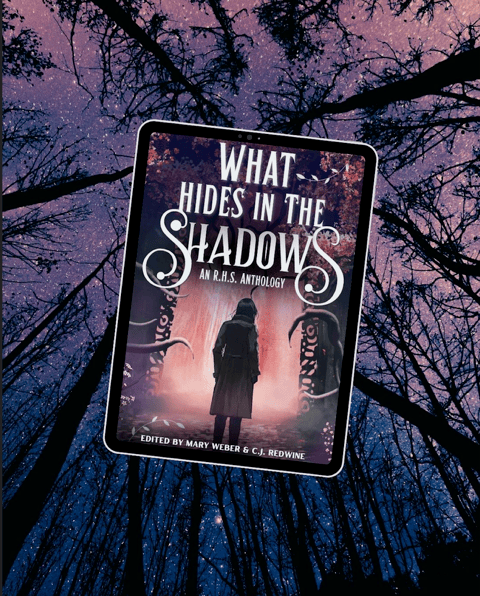
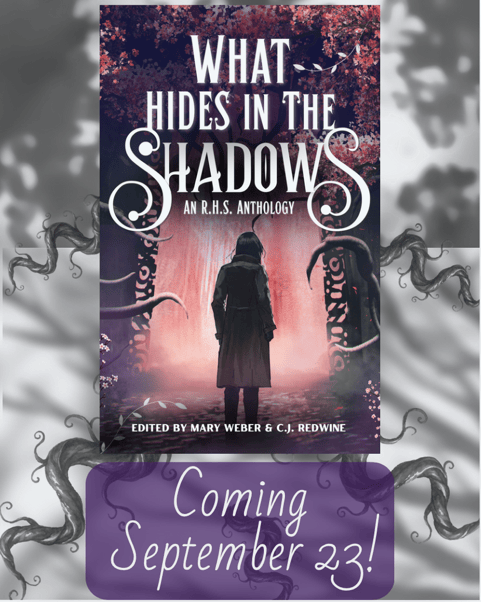
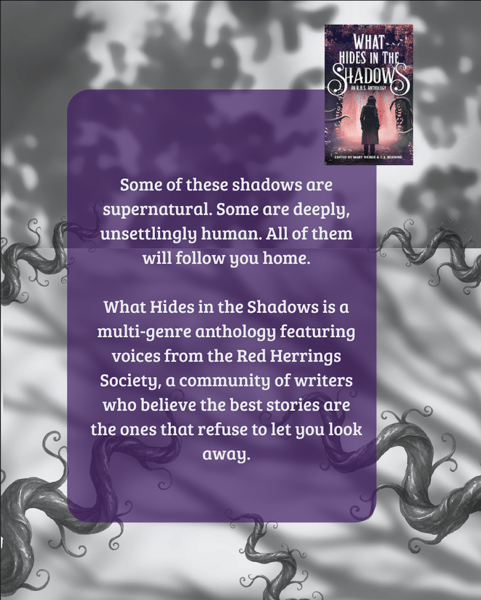
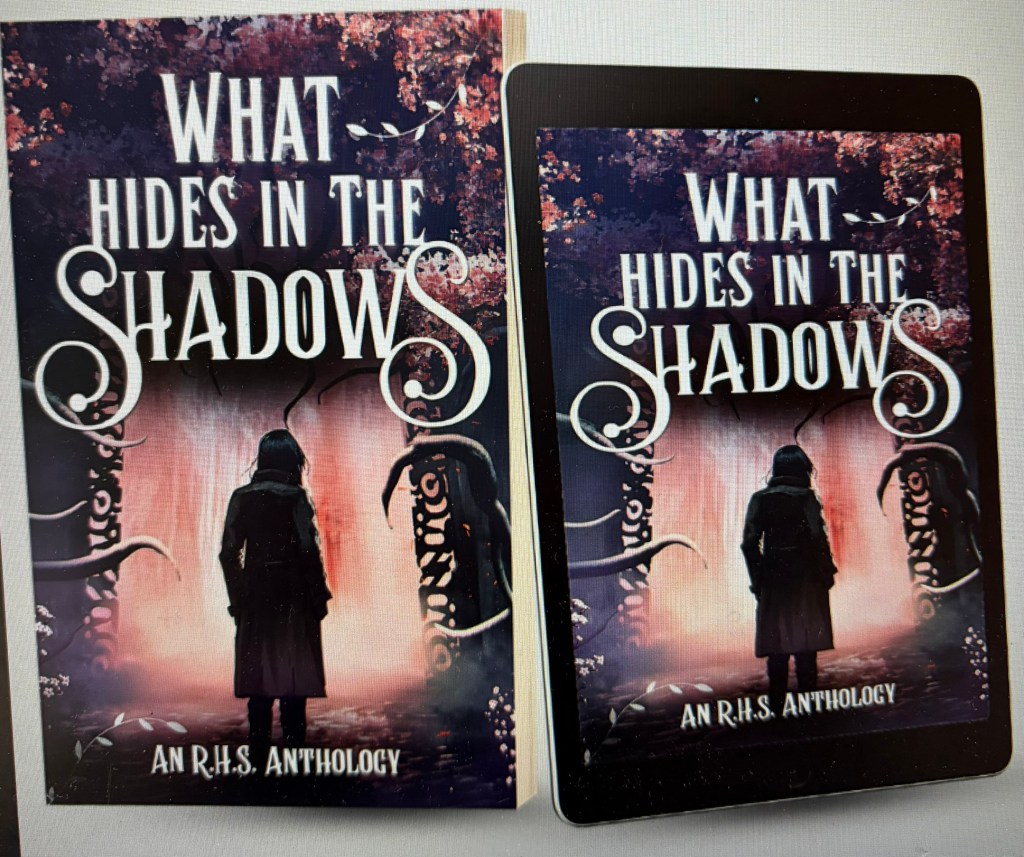
Today, September 23, is release day for the Red Herrings Society’s spooky anthology What Hides in the Shadows.
Image design by Andi L. Gregory and Julie Fugate
You can find short blurbs for several of the stories in this collection here. When I posted these last week, I don’t think I emailed them out, so you probably didn’t see them. If you like creepy stories, take a peek!
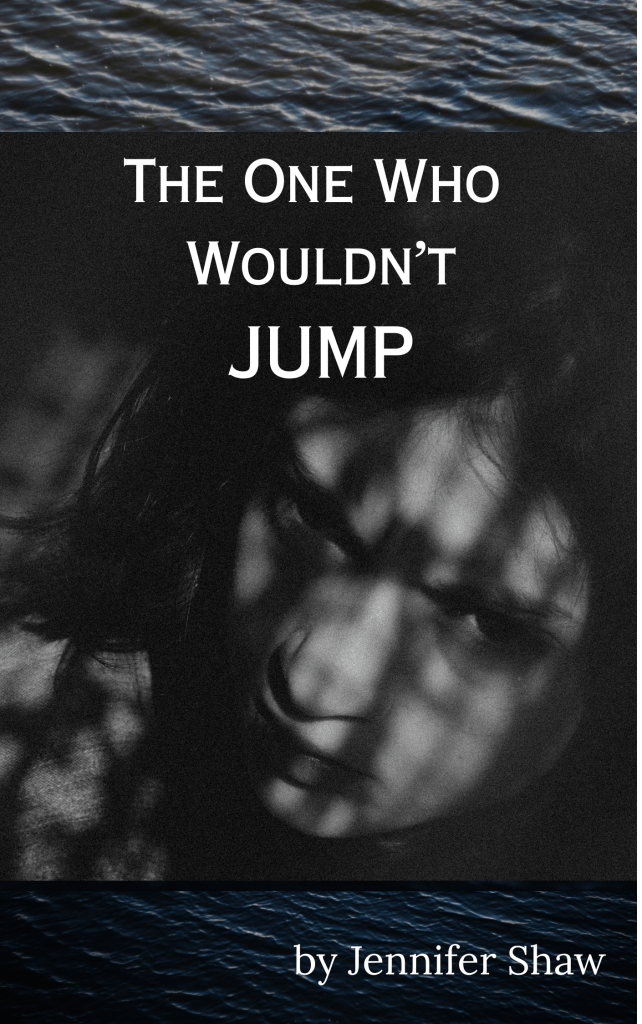
Below, you’ll find an excerpt from my contribution, “The One Who Wouldn’t Jump.”
Designed on Canva; photo by Alue Carrizo on Unsplash
When I was a kid, I thought I’d love that big, new room of mine. It sat at the end of a second hallway, like a private wing separate from the rest of the old ranch-style house. It also had one massive, full-length window, but at night, a streetlamp shone through the pane, and that orange light sliced across the shag carpet and did strange things.
Shelves, toys, books, and an overloaded rocking chair morphed into eerie mounds and sticks of shadow—menacing creatures with grasping skeletal arms. Sometimes, it even looked like one of them moved.
Squeezing my eyes shut—there’s nothing there—I’d turn over, pull the covers up to my chin, and will myself to sleep.
“Close the drapes at night,” my mother said when I told her, in late August, that something was wrong in my bedroom. “Then there won’t be any light to cast weird shadows.”
“But too much darkness might be worse!”
“Jess…” She was considering a kitchen renovation, and she paused her contemplation of the 1960s cabinets to look at me. “You’re letting your imagination tell you tales. It’s been a rough few months since the divorce, I know. We’ve made a big change starting over like this, so it’s okay to be anxious. You’re so sensitive.” She ran a tender thumb along my cheek. “But you’ll get to spend the weekend with Dad soon. And …” she looked back at the planked wooden doors and colonial wrought-iron pulls. I thought they were ugly, but they reminded her of her own mother’s cabinets growing up. “There’s nothing wrong with this house. It is superb.”
Mom was happily indulging in her new freedom, and she wouldn’t hear me. So, I stopped complaining.
But things in my room got worse.
One night, something else appeared.
I lay curled up facing the window, just under the surface of sleep, when the floor creaked with the weight of something shifting on the carpet. A stink of weedy, putrid water wafted across my bed.
I lifted my head. A new silhouette stood at the foot of my bed, entirely separate from everything else. An ink-black figure my height. Rounded at the top like it bore a head, something longish—hair maybe?—plastered against its coal-dark face.
I blinked.
Just your mind telling tales.
It stared at me. It felt eerily familiar.
Silly, stupid imagination!
Something else moved over the top of the bed frame. Fingers curling over the bar.
“You—” it hissed.
My heart exploded.
***
Thanks for reading!
I loved writing this one, especially when it came to creating the eerie and nostalgic vibes. It’s set in 1992, so if you’re an early Millennial like me, you’ll probably enjoy the references. It’s definitely a work of fiction, but the main character, Jessica, is a lot like I was at that age (and still am, sometimes), so giving her these struggles, choices, and consequences was personally cathartic.
You can download an e-copy of What Hides in the Shadows for $.99 here. All proceeds will go to a literacy fund. The paperback will be available soon. If you enjoy the anthology, please consider leaving a review on Amazon. Reviews help other readers find this book.
Designed by Andi L. Gregory and Julie Fugate
If you’re not already all in on Spooky Season, consider this your friendly invitation. What else are you planning to read this season? Let me know in the comments!
I have a new story coming out soon, and I’m excited to share teasers from this macabre yet moving anthology.
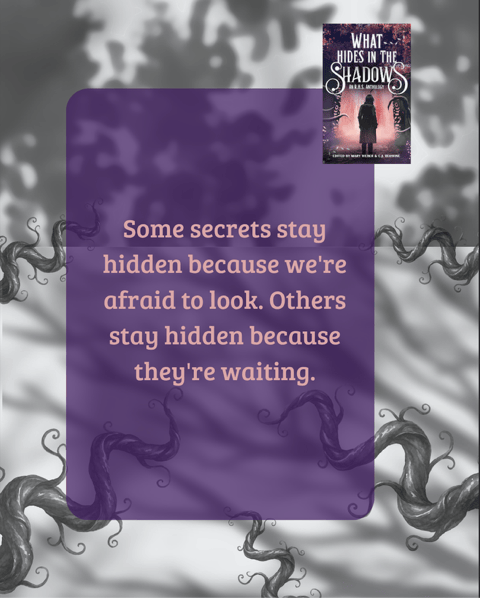
Image design by Andi L. Gregory and Julie Fugate(Gregory and Fugate)(Gregory and Fugate)(Gregory and Fugate)(Gregory and Fugate)
Here are glimpses of a few ghoulish gems inside this collection:
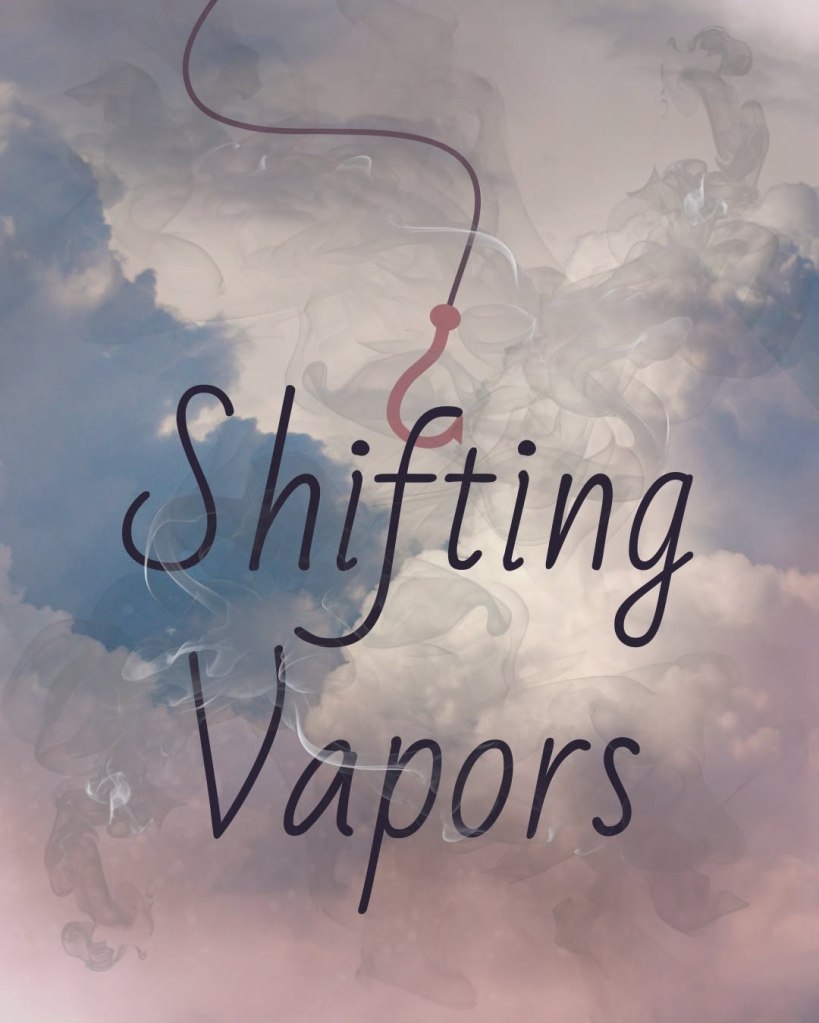
“Shifting Vapors” by Andi L. Gregory
Although Virga visits Tropos World Park almost daily, envious of the park rangers’ ability to create pathways among the clouds, when she reveals her accursed talent to save a child, she knows she’ll never be welcome at Tropos again.
The blurb alone tugs at my heart. Poor Virga!
And what exactly is going on at Tropos?
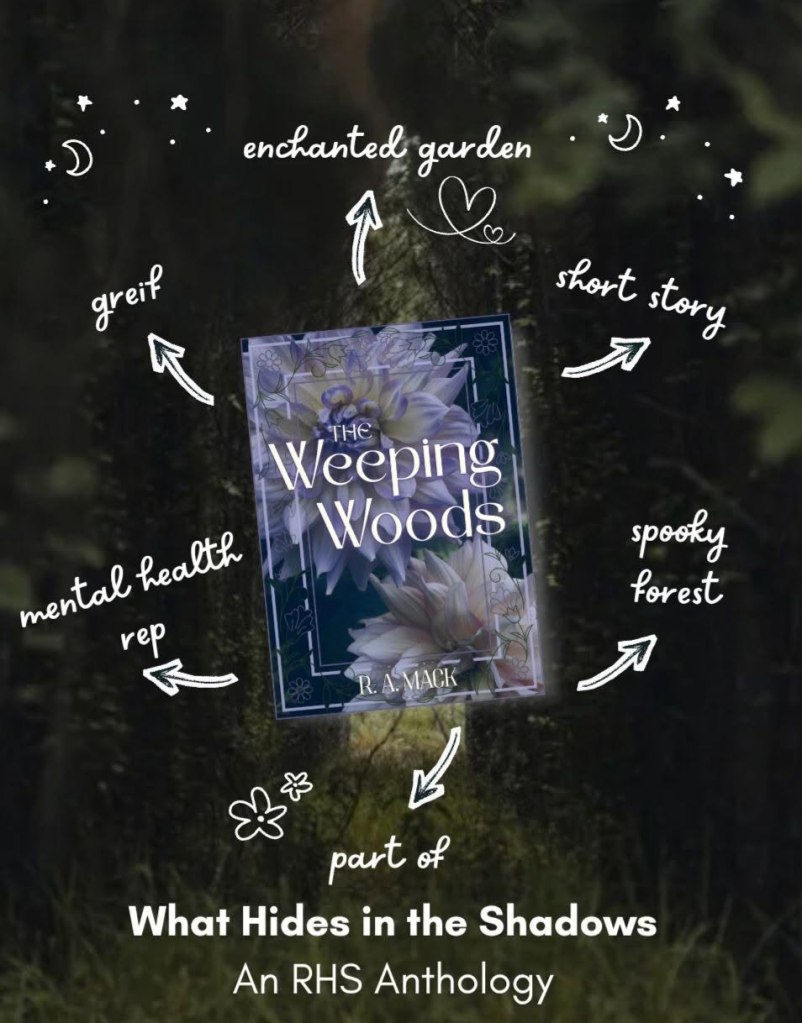
“The Weeping Woods” by R.A. Mack
Desperate to rid herself of the grief from her mother’s passing, Margot takes a chance on a local legend. Depending on who you ask, the Weeping Woods will either take away your pain, or pull you in and never let go. But the forest holds many secrets, and when Margot loses her way, she finds that escaping her grief, and the woods themselves, won’t be an easy task. When she stumbles into a hidden grove, she’ll have to place her trust in the mysterious stranger there, or risk being lost to the woods forever.
This is so intriguing (I’m getting TheSecret Garden vibes), and I love how it includes mental health as a theme–so important!
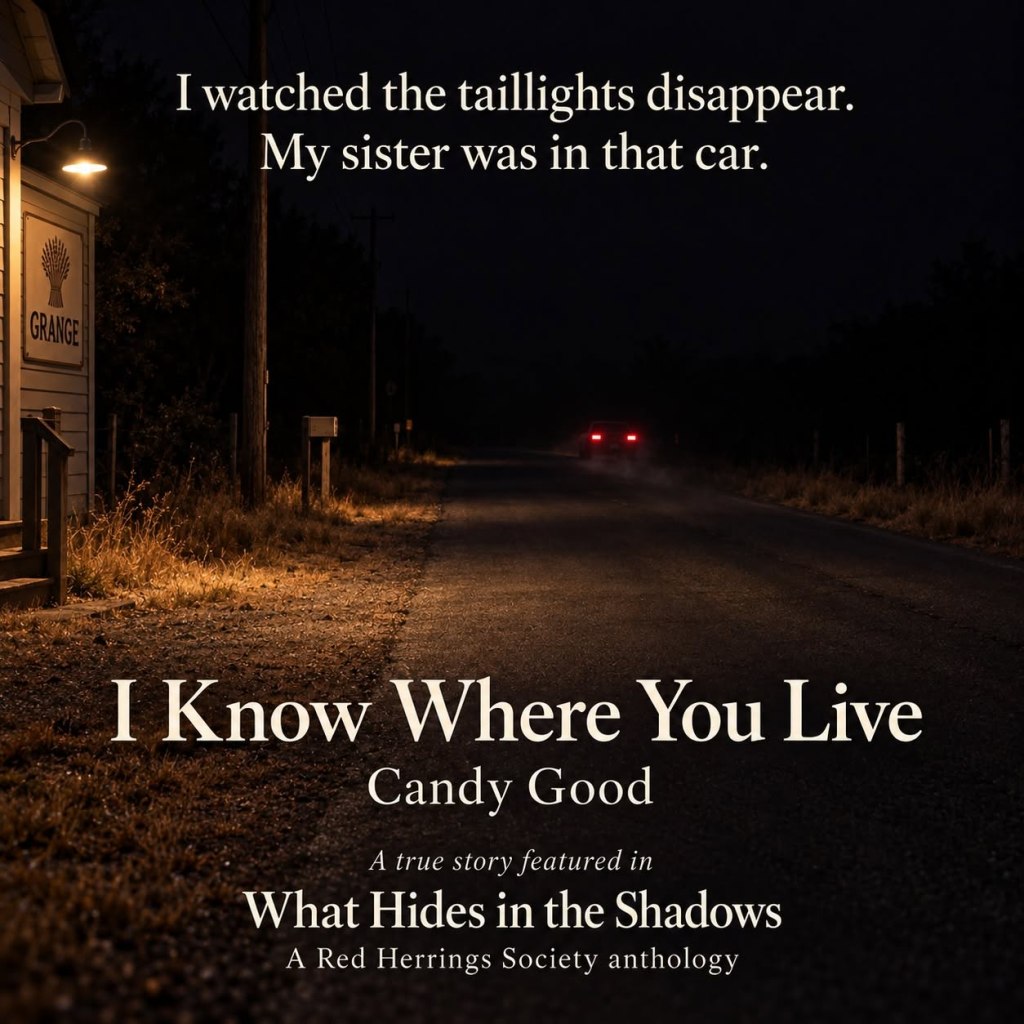
“I Know Where You Live” by Candy Good
For sixteen-year-old Candy, Saturday night means dancing at the Grange Hall. Then her sister shows up outside with a stranger.
Something about him feels wrong. Before they leave, Candy gives him a warning: “Take good care of her. ’Cause I know where you live.”
He doesn’t laugh.
As his red taillights disappear into the darkness, Candy goes back inside to finish her dance.
I’m excited to read all of these stories, but holy hell this is like catnip for me! Right or wrong, I love true crime (I just finished four Morbid episodes about the Green River Killer). I’m crossing my fingers and holding my breath, though, that Candy’s tale ends well.
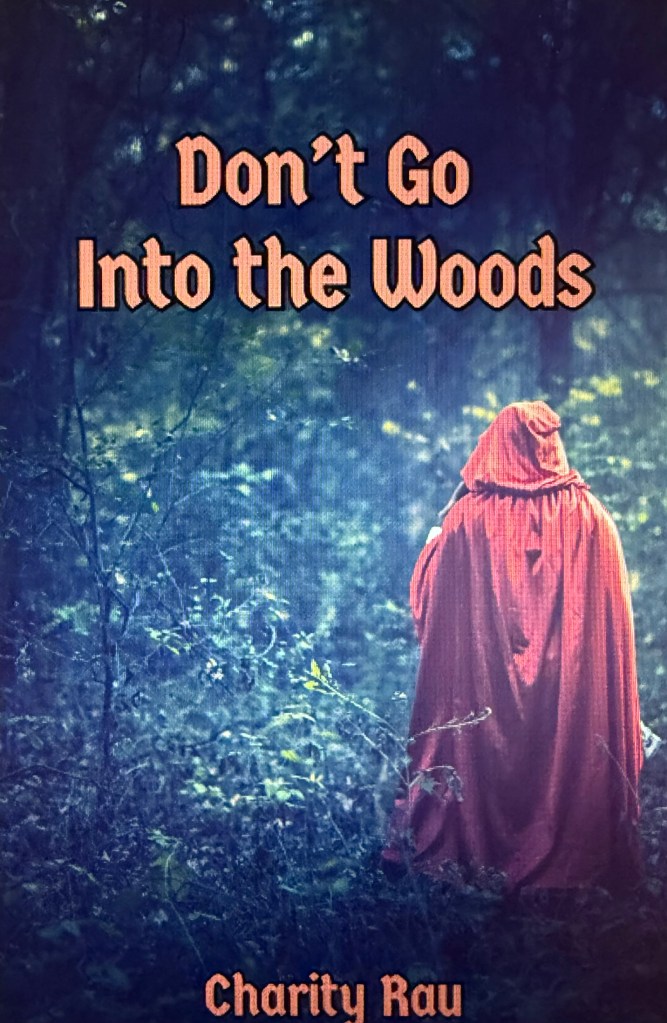
“Don’t Go into the Woods” by Charity Rau
Sienna lives in a town gripped by fear. A shadowy entity haunts the woods—the same entity that took Sienna’s fiancé, Phelan, and others after they ventured into the forest. But when a note appears from Phelan pleading for help, Sienna determines to make the dangerous trek to find him. Once there, she must figure out how to defeat the darkness, or it will cost both Phelan and herself their lives.
Sienna sounds like a strong, admirable woman, and I love the Little Red Riding Hood vibes (also hinted at in the FMC’s name). Charity is a lover of fairytales, so I’m anticipating a satisfying new take on an old favorite.
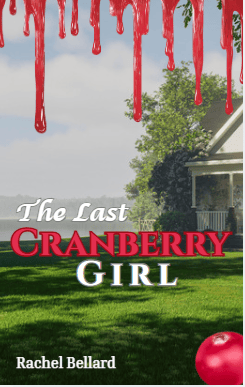
“The Last Cranberry Girl” by Rachel Bellard
New house. New town. Again.
Staci’s parents chase fixer-uppers from town to town, and she has stopped bothering to make friends. As summer fades, their latest project brings them to Cranberry Lake House in Carver, Massachusetts. Staci finds something jammed beneath the porch floorboards: a handkerchief stitched with three initials. L.J.W. It’s the first clue in a trail left by a girl who vanished decades ago, a girl who knew every corner of this property. Someone wanted Lenora “Lenni” Jean Whitmore forgotten. Lenni had other plans.
What a fabulous title, and what an uncanny mystery awaits us in this one! I’m hoping it’s a tale of a girl’s friendship (and alliance) with a ghost because one of my favorite books when I was little featured just such a pair of unforgettable characters. We shall see!
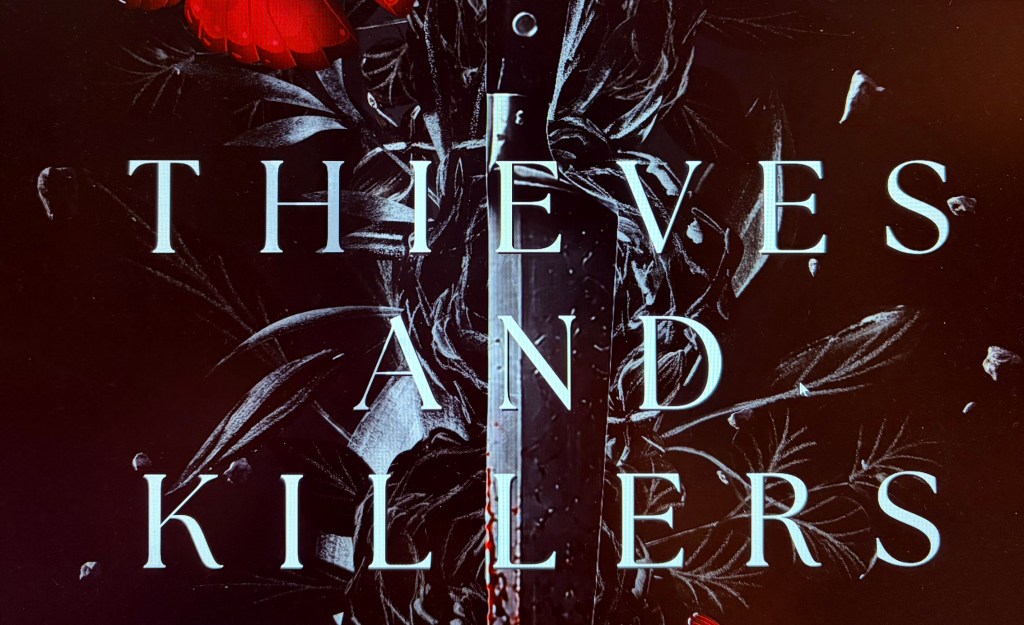
“Thieves and Killers” by Julie Fugate
After turning in her serial killer mother, teenager Layla may have avoided prison, but she still had to deal with the haunting memories of her training. Then, a wealthy benefactor offers her a place in a program for those who don’t deserve redemption. It’s a chance for her and those like her to make amends for the death and pain they’ve caused. Except on her first mission, she finds herself falling for the seemingly perfect boy she’s supposed to recruit. Everyone has secrets. Some are just more killer than others.
This sounds like a killer romance! (Terrible, I know.) But seriously, I love dark romantic tales, and I’m eager to dive right into this one. Plus, we get more serial murderers! And that gorgeous cover!! *chef’s kiss* Though, I could only capture part of it because I was struggling to convert the image from a pdf, which is an absolute failure on my part.
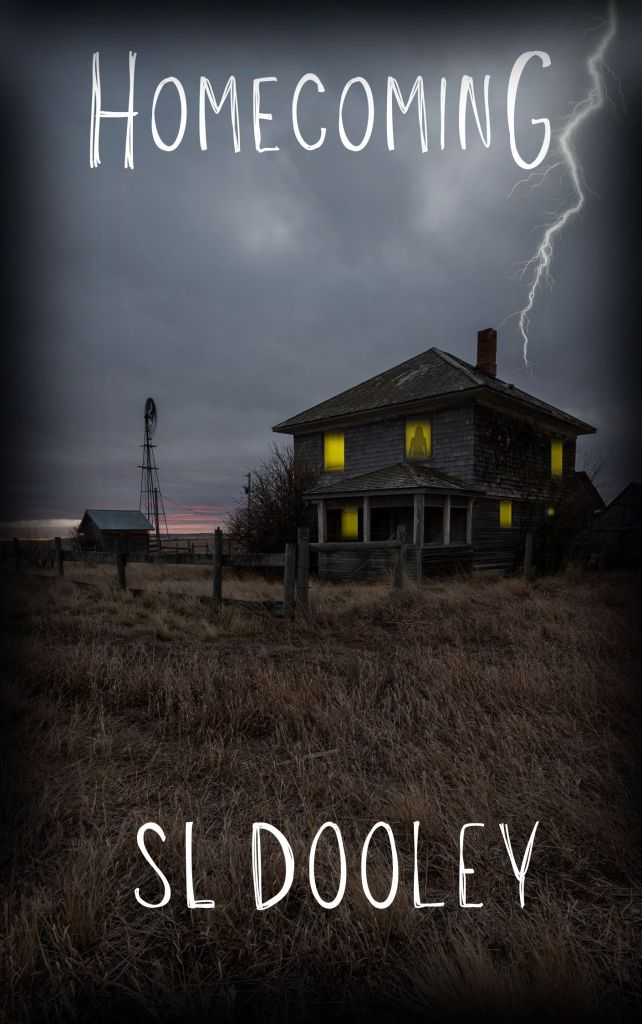
“Homecoming” by Stephanie Dooley
Returning to her childhood farmhouse and the ghosts she thought she had left behind, Frankie must confront a horrific past that just won’t stay hidden.
Oh, this sounds like a classic haunted house story, and one I can personally relate to because odd things happen in our old farmhouse. That image is so creepy, too! I already love this!
Photo by Trac Vu on Unsplash
“Don’t Touch Those, Baby” by Amy Fortenberry
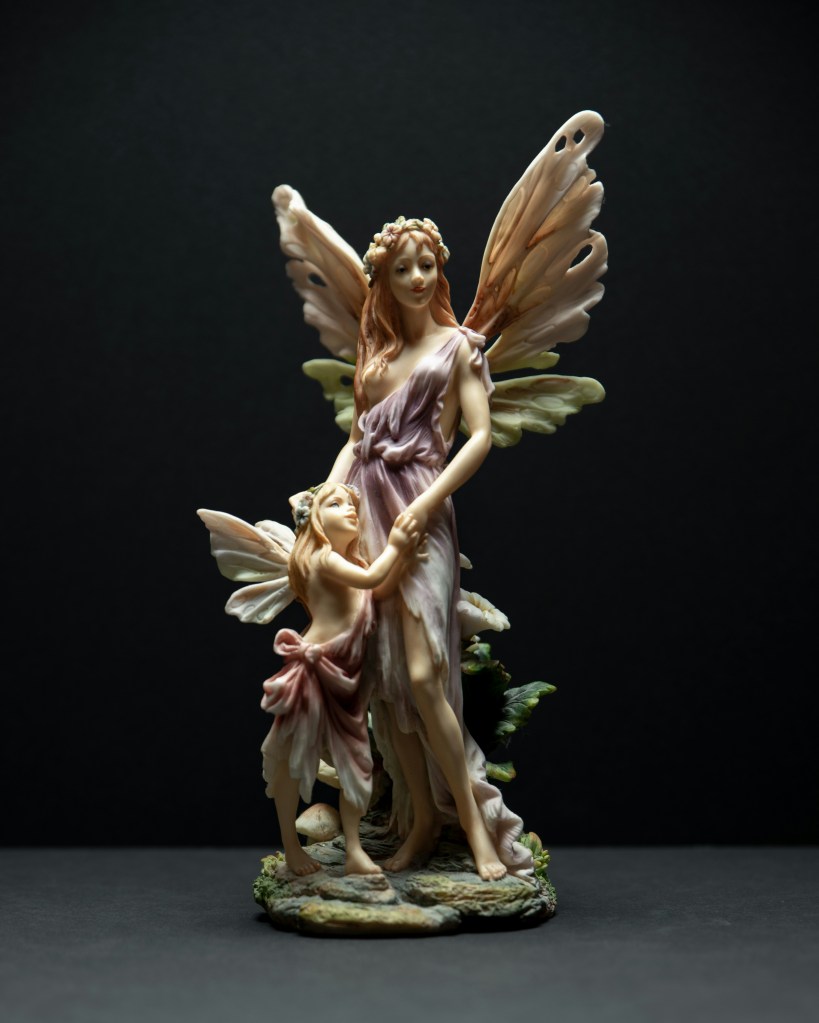
Marley Jones came to her grandmother’s Mississippi farmhouse for a birthday, not a haunting. But when she arrives to find Memaw has performed a sixty-five-years-in-the-making banishing one day too soon, Marley comes face-to-face with the three haints once trapped inside the china fairy figurines she was never allowed to touch. Now the wrinkled, bickering trio wants her youth, and with only a thinning line of salt holding them back, it’s up to Marley to put a lifetime of Memaw’s folklore to use.
This sounds like such a clever, amusing little folkloric story. Amy, a Southern writer, has a wonderful voice and sense of humor, and I know this piece will be a delight. It might also provide some much-needed levity among all the pathos.
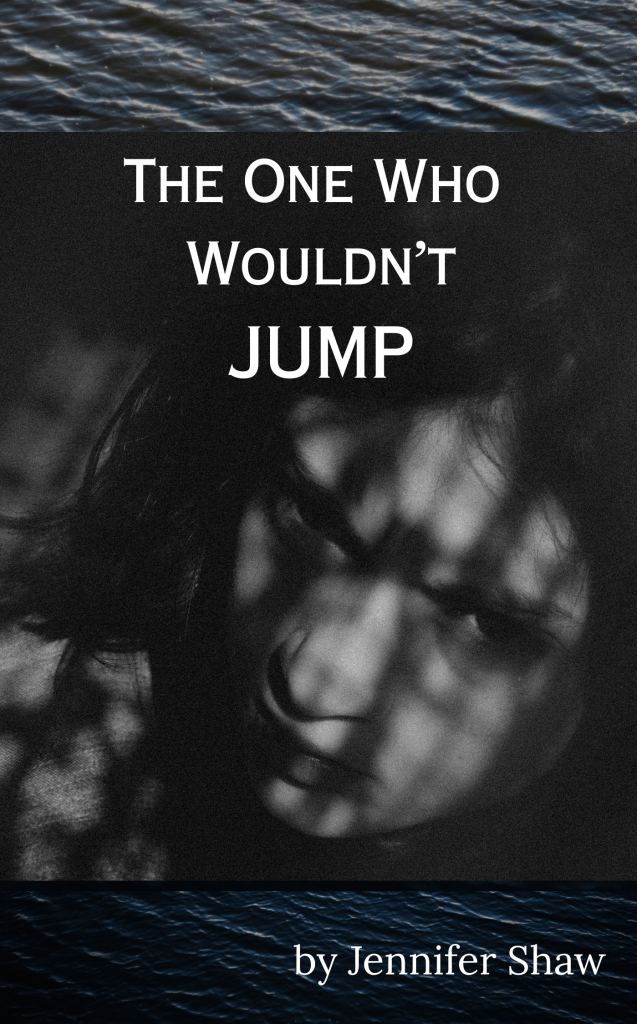
Finally, a little about my own story, “The One Who Wouldn’t Jump.”
A lonely girl. A flooded quarry. A warning from the darkness.
“The hard stuff’s behind us,” her mother insists.
But ten-year-old Jessica isn’t so sure. Her parents are divorced, she’s lonely in a new neighborhood, and the uncertainty of a new school hangs over her. If all that weren’t enough, Jess is haunted by a mysterious figure that appears in her bedroom at night–an impossible presence that smells of rot and whispers words too terrifying to bear.
As autumn deepens and Jessica finds friendship among a small group of neighborhood kids, The Figure’s message becomes increasingly urgent. Can Jess overcome the paralyzing fear this awful shadow evokes, or will The Figure render her helpless, destroying more than she can ever imagine?
Both haunting and hopeful, “The One Who Wouldn’t Jump” is a story about fear, fate, first love, and the moments that shape the people we become.
An early reader called my contribution “a beautiful, eerie story with a great deal of heart.”
Thanks for reading! I hope you’ve enjoyed these.
I, for one, can’t wait to dive into my e-copy when it lands on my iPad a week from today. What a fun way to usher in Spooky Season! Also, all stories are “PG-13,” as we in RHS like to say, so they’re suitable for adolescent readers too.
Publication day is September 23, and the e-book is available for preorder now ($.99). All proceeds will go to a literacy charity, and the paperback will be available soon.
A big thanks to my fellow contributors for sharing their teasers. All images and blurbs were created by the authors themselves.
Hi, friends. My family got home from our Labor Day trip to seaside Mystic, Connecticut, on September 7th.
Zoomed in view of the little bay where we stayedAnother shot
For me, that means we officially crossed the seasonal threshold.
Basking in the coastal sunshine
Now, it’s autumn, and here in northern Vermont, Mother Nature agrees with me.
First foliage
Leaves are turning crimson and gold. Crab apples litter the ground outside my kitchen window. I’ve found feathers in our nest boxes–some of our hens are beginning to molt. I’m wearing my bathrobe downstairs on these chillier mornings.
September has always felt like a second fresh start, a late New Year of sorts. A shedding, a do-over if needed. We’re back indoors, school’s in session, students are setting academic goals, and schedules are settling once more into stricter routines. This shift inspires many of us to buckle down, to refocus, or to aim higher. As we enter the calendar’s homestretch, many of us exert ourselves in a final, even urgent, burst of concentrated effort. Let this year not be wasted, we tend to think.
In this spirit, I’m offering a September short story. It’s a piece of contemporary fiction just under 4k words, a realistic coming-of-age tale inspired by many things: the time I spent on a pre-professional ballet track, my later years teaching in a richly multicultural, low SES public school (with all its challenges and surprises), and finally my experiences as a mother.
This story, titled You Should Have Stayed, is different from the other work I’ve shared here, especially A King’s Epilogue and Flight. So, if something more modern and literary-leaning isn’t your jam, I totally understand. I like to stretch myself, however, as I aim for versatility, and I’d like to give this piece a home.
I did not email the story because I’m planning other posts and don’t want to clutter your inboxes, but if you’re interested, you can read it here. I’ve also included it on my new page, Fiction Shared Here.
If you read this story, I hope you like it. If anything, I hope it leaves you pondering this question: Who, if anyone, is to blame?
Thanks for reading! Happy fall, and let me know what you’re up to in the comments.
It’s easy to romanticize summer vacation. Gone are the early mornings and strict schedules. In their places shimmer long, free, languid days, all inviting endless opportunities for fun: water activities, warm-weather sports, cookouts, family visits, road trips, festivals, camps. Early in the season, when obligations are suddenly few, it’s all one giant, sun-soaked promise. June-August is your oyster.
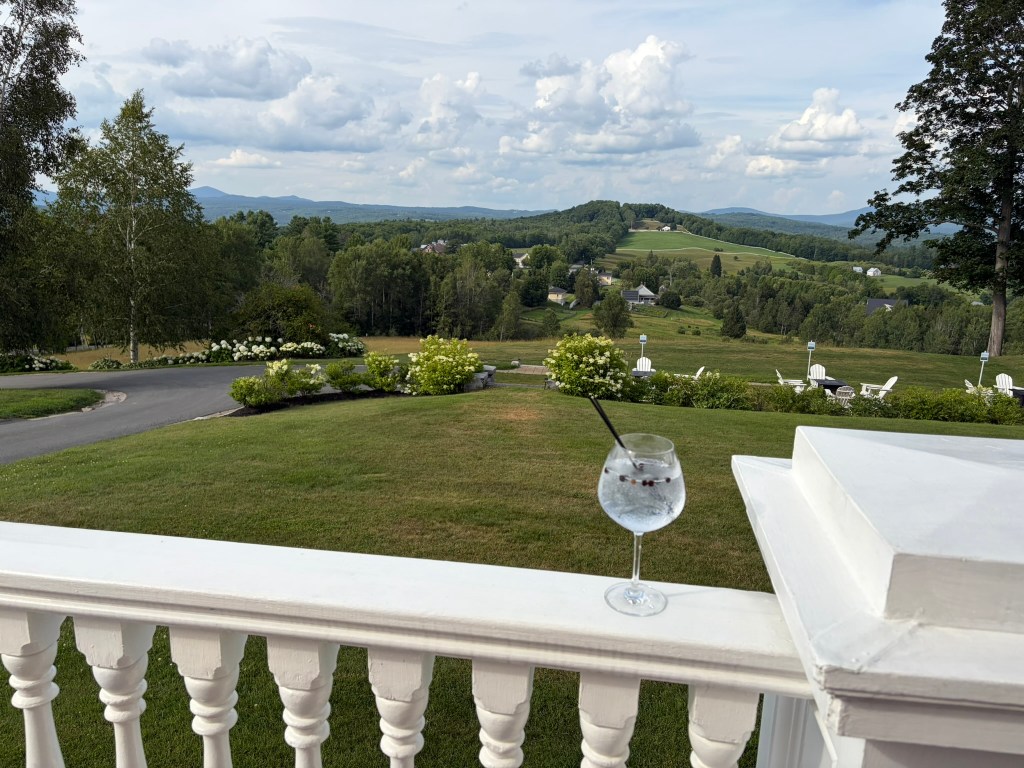
How early summer feels (pic from the porch of The Inn at Burklynn, one of our favorite local spots)
But by early July, after everyone’s rested, it can start to feel like there are too many hours in the day. The novelty of swimming wears off. There’s not as much going on as you’d imagined (I guess we all believe the fun stuff just materializes?). Your wallet feels empty. Lazy mornings become sluggish, irritable afternoons when getting out of pjs and into the car feels like a monumental effort. Whining happens on the daily–“There’s nothing to do!” Or, in my nonspeaking daughter’s case, the day’s incomplete without tears and stomps. If you’ve got kids at home, I’d wager you understand all of this well.
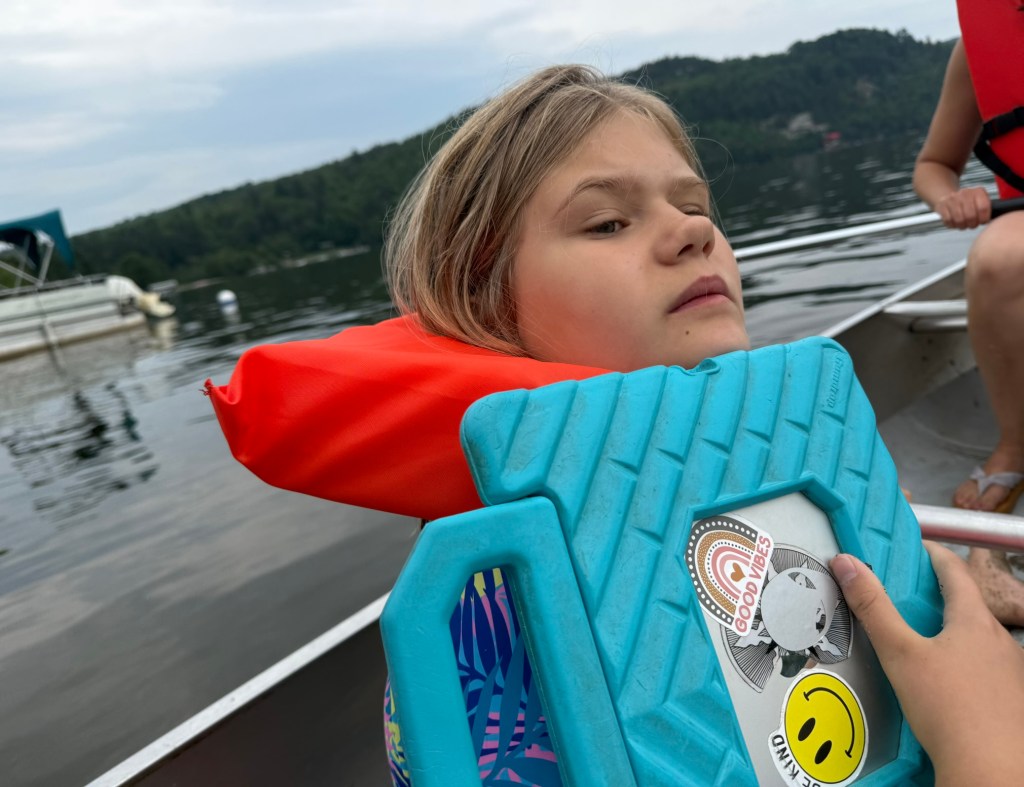
A little nervous canoeing for the first time
That was definitely our experience in previous years. Summers 2023 and 2024 were pretty awful, thanks to our kiddo’s hormonal moodiness plus her difficulties communicating and entertaining herself. To be honest, I wasn’t sure I was going to make it through all those long days without losing my damn mind. I’d really begun to despise the summer months.
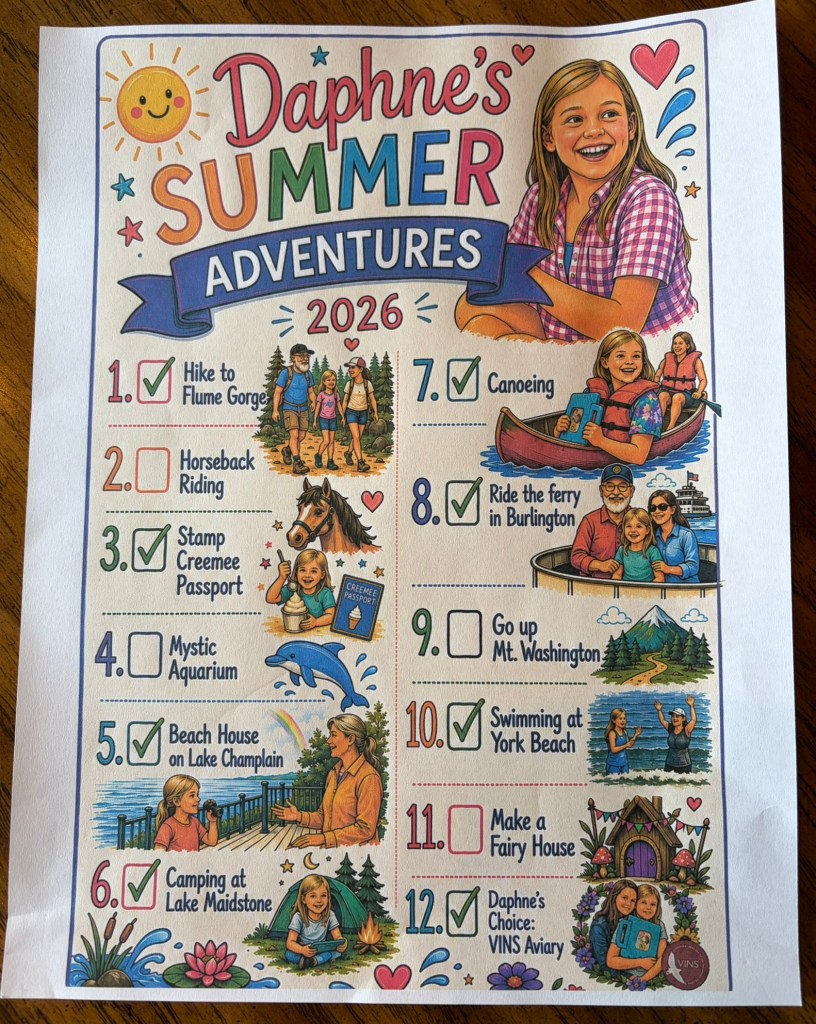
Last year, however, my uber-organized project manager husband came up with a way to combat all this peevish boredom. The solution lay in just a bit more planning, he concluded, so he created the inaugural Daphne’s Summer Adventure Checklist. On it were outings and activities of all kinds, many of them inexpensive and brand-new.
The result was a definite cure for those summertime blues. Those adventures filled our weeks while always giving us something else to look forward to. We did pretty well completing most of the activities, but we didn’t keep a sharp eye on the calendar and ran out of time to enjoy everything.
That wasn’t going to happen this year. This summer, hubby planned even further ahead, scheduling something from Daph’s list for every vacation week even before the break started. Thus, we had a clear schedule ahead of time to go with her list.
I’ll spare you the calendar, but here is that 2026 list:
So many adventures!
I’m proud to say we’re basically done with everything. We’re traveling to Mystic soon, Daph will have one more riding lesson, and we have the materials for the fairy house ready to go.
The only thing we haven’t scheduled is going up Mt. Washington. The tickets are exorbitant; it will cost $300 for all of us to ride the train up and down. Is it really that beautiful at the top, lol? We’ll probably wait and budget for that one next summer.
All in all, though, it’s been a happy, enriching season, made even better by the ideal weather.
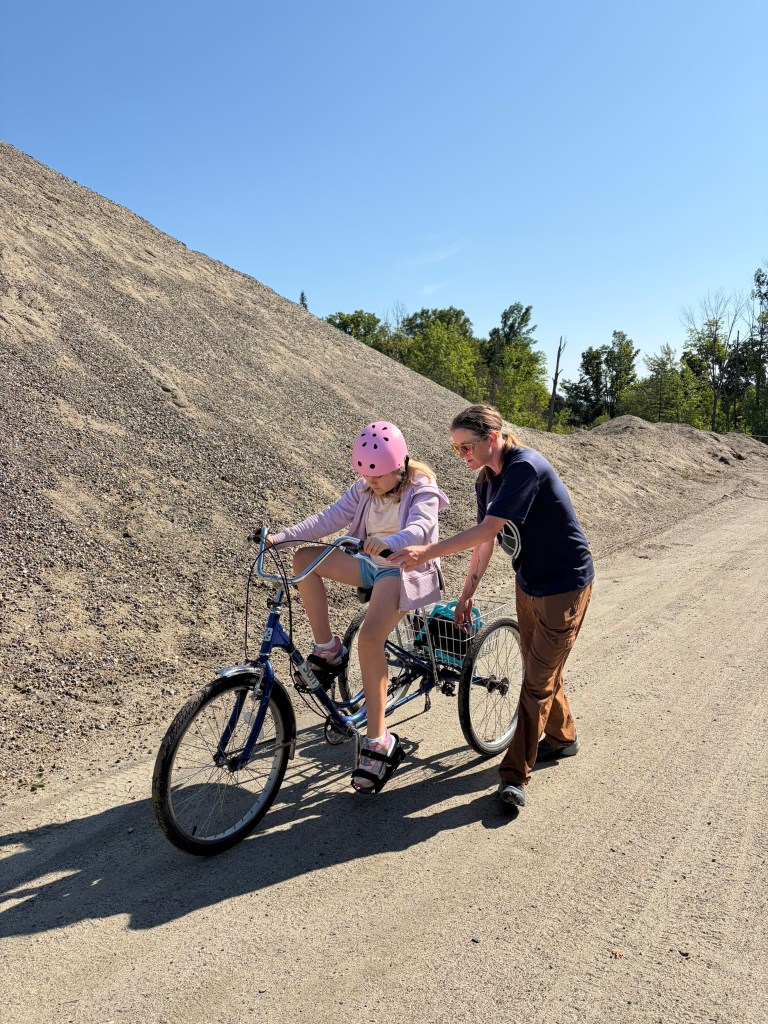
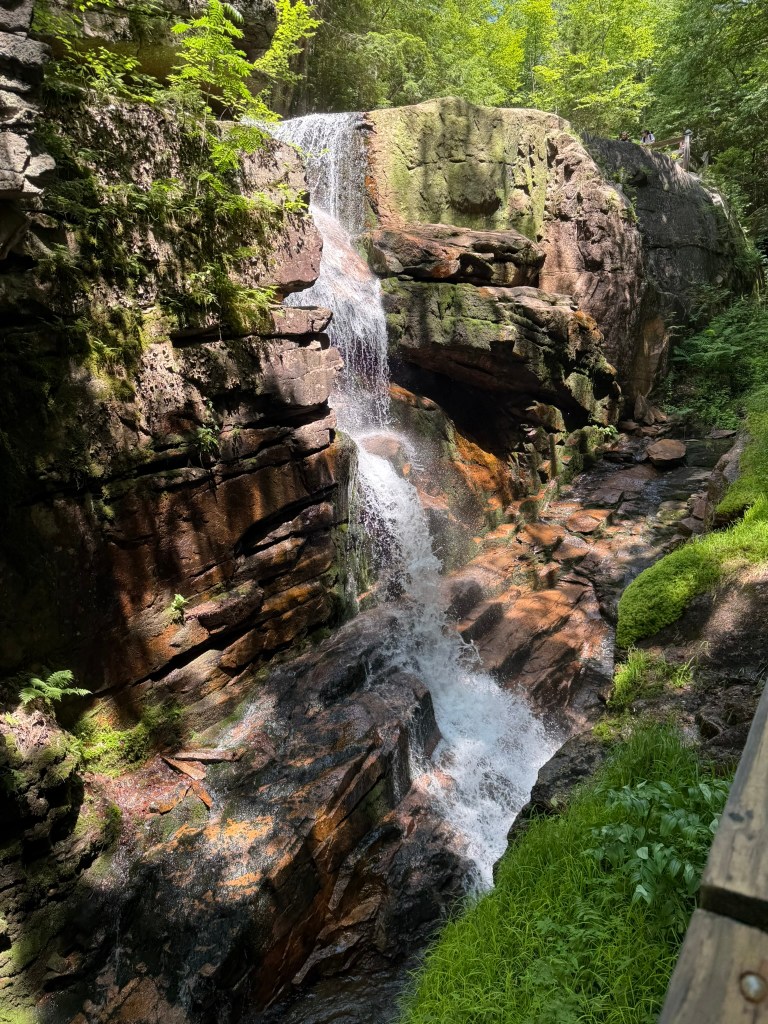
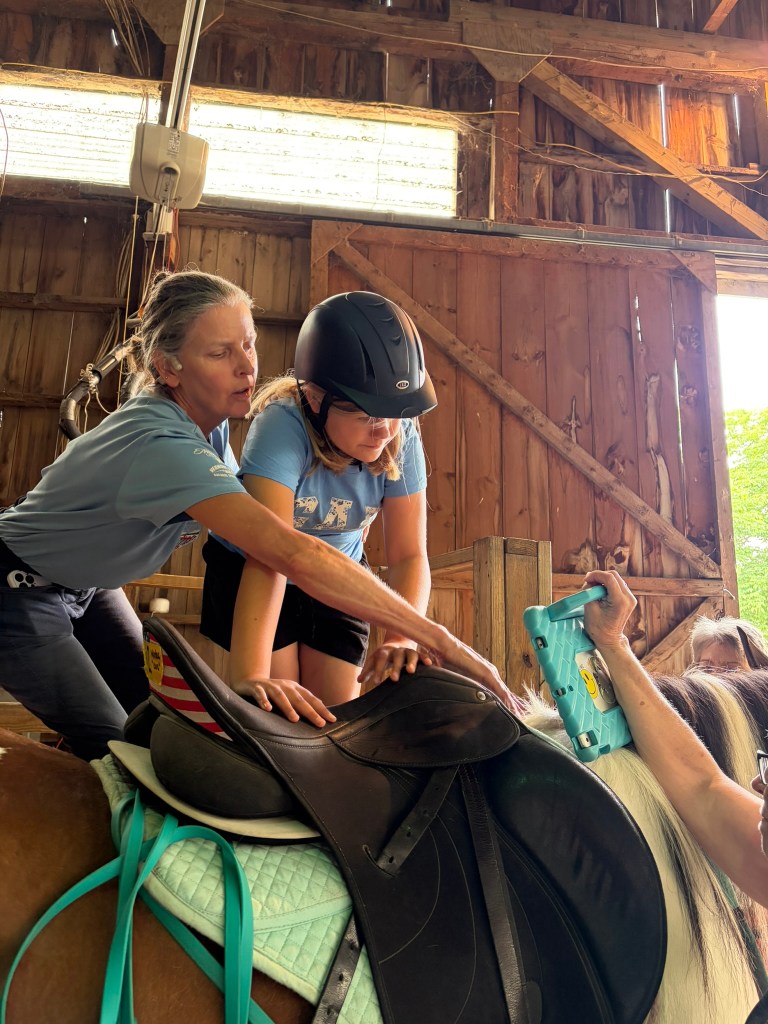
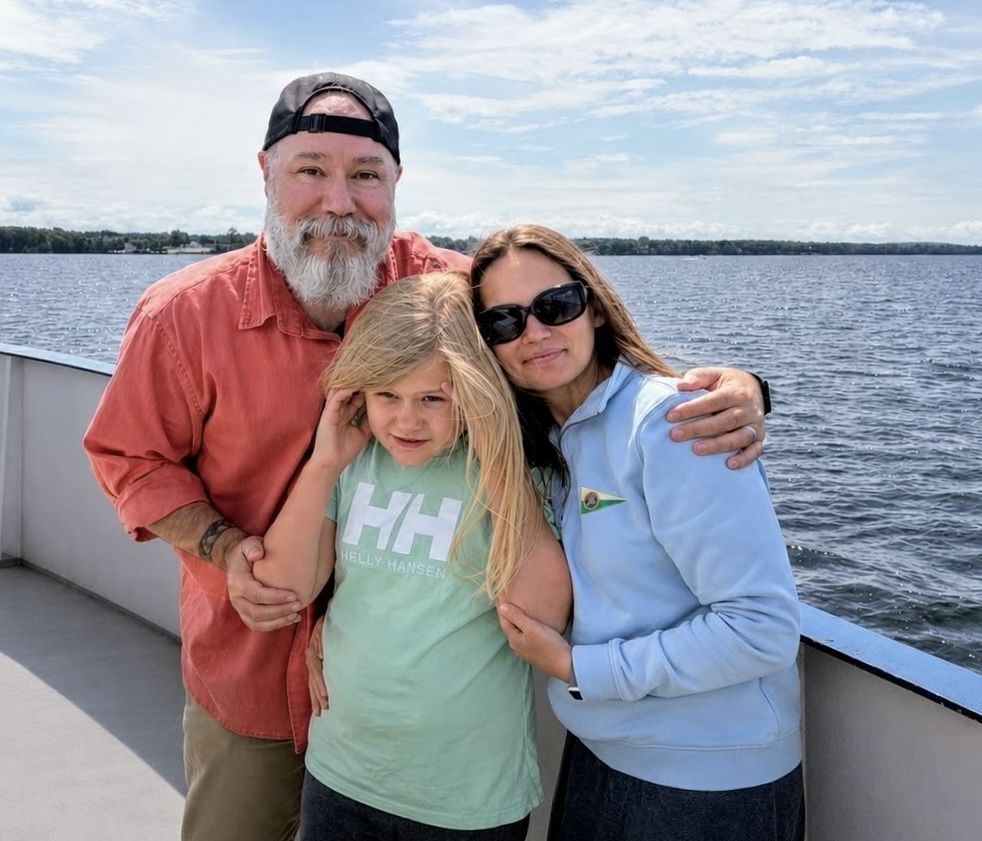
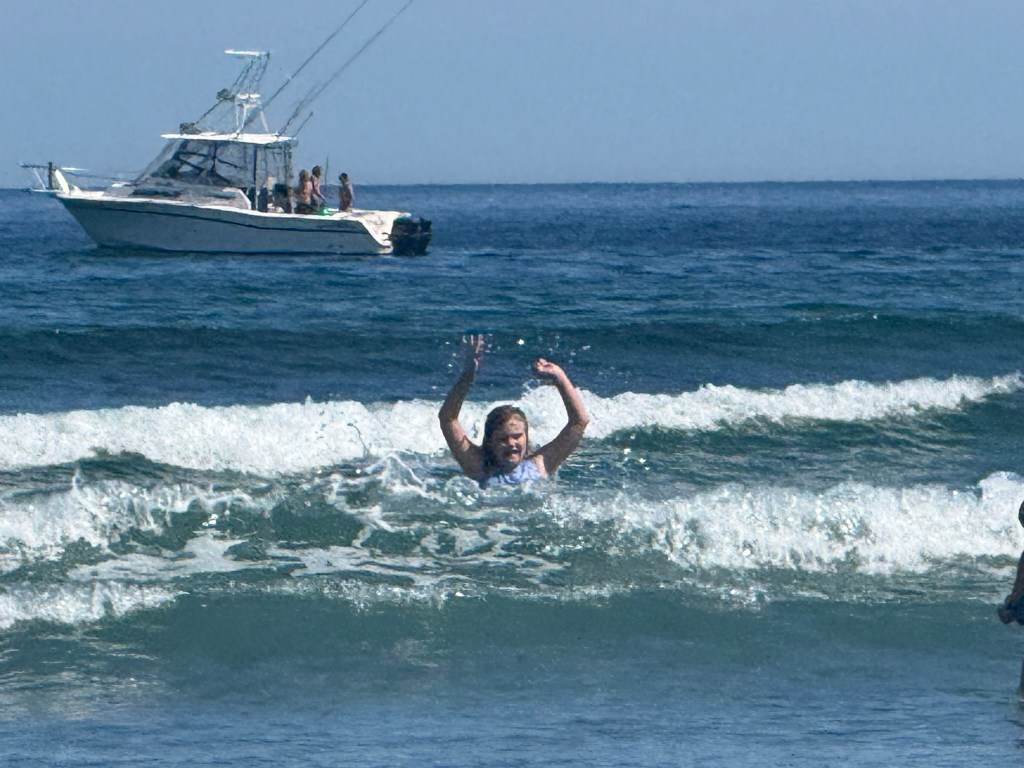
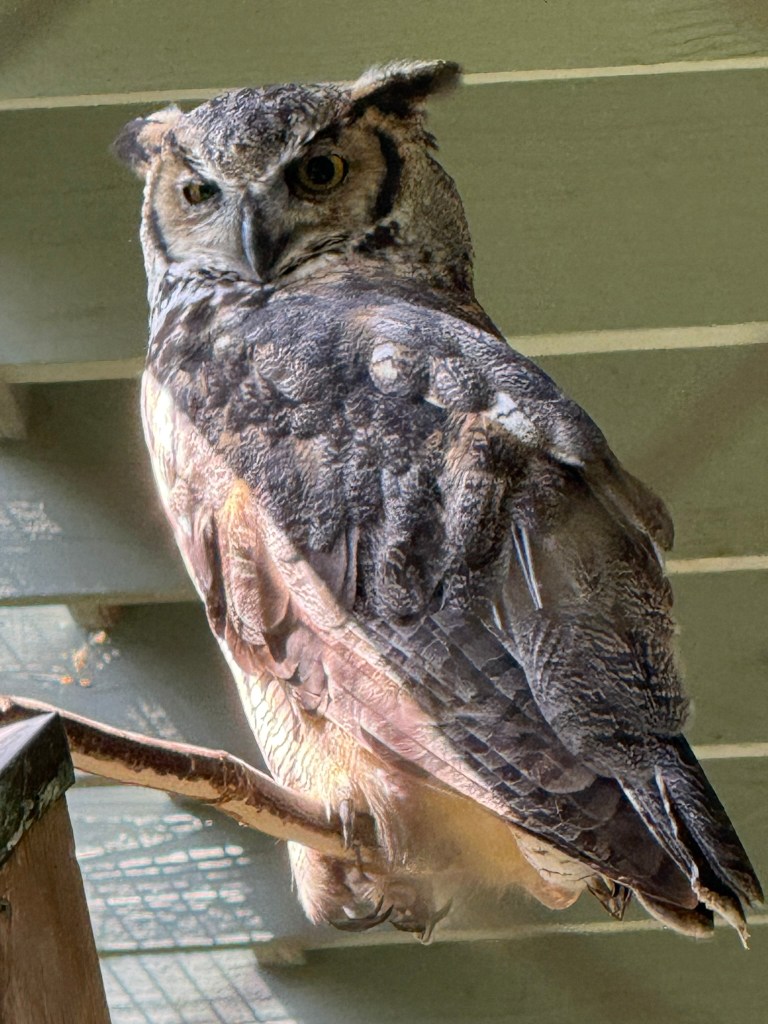
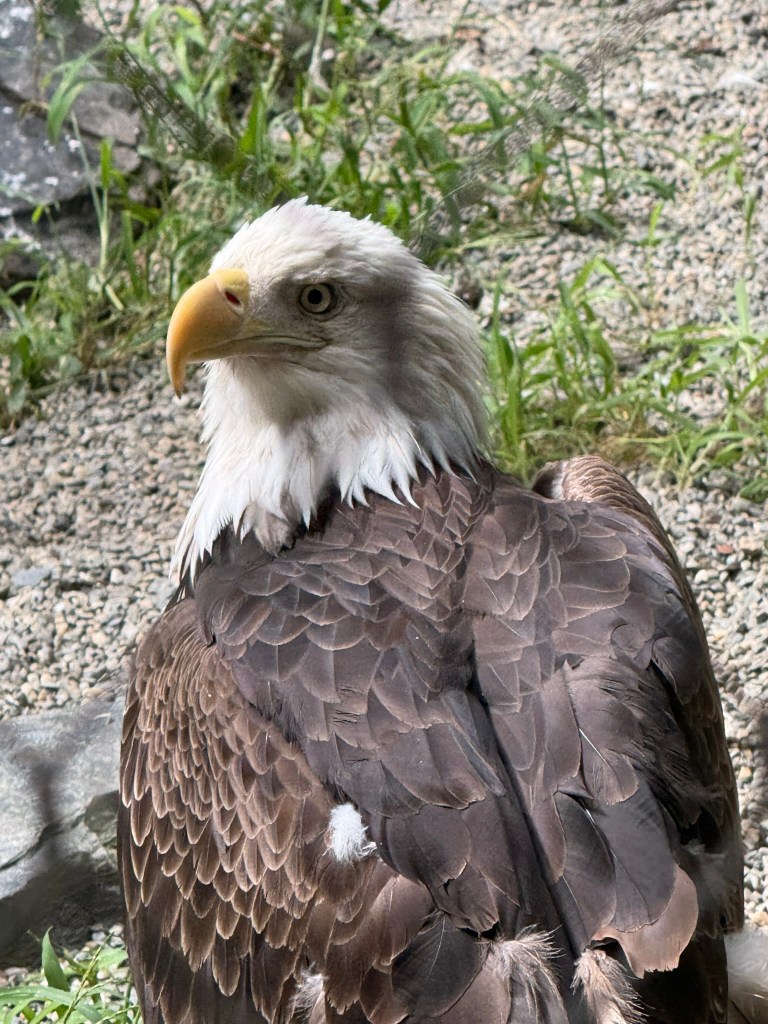
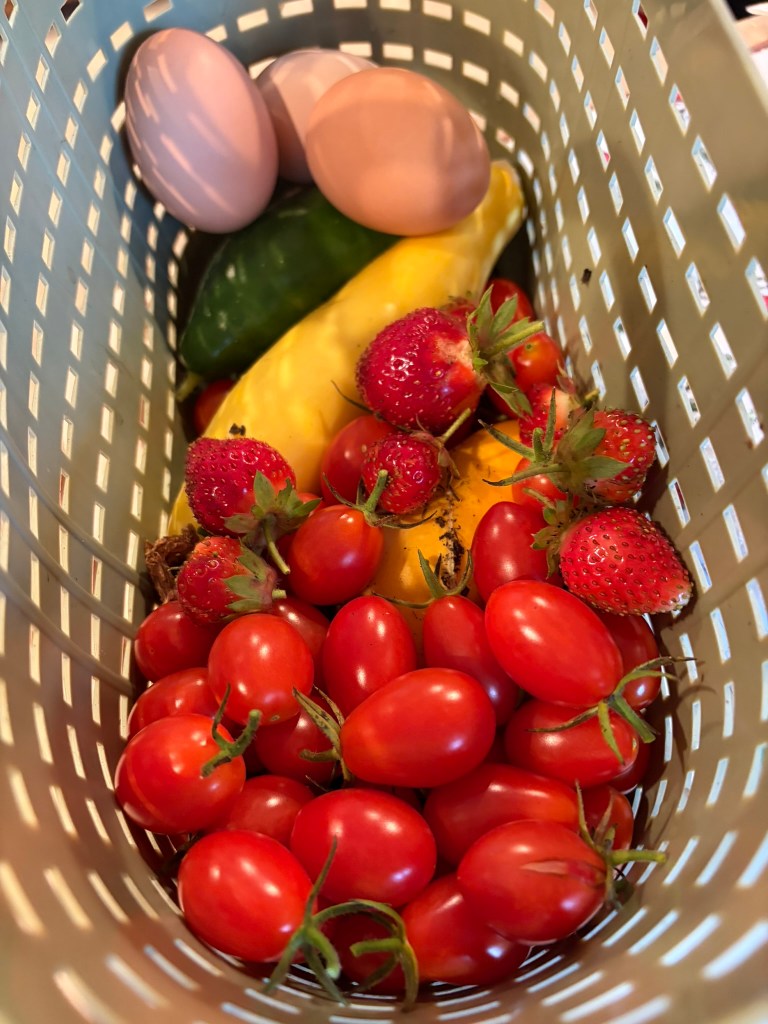
BikeridingThe Flume Gorge in New Hampshire’s Franconia State ParkHorseback ridingOn the ferry heading home from NY via Lake ChamplainSwimming at York Beach in Maine. That water was FRIGID.Vermont Institute of Natural Science (VINS), a wildlife sanctuary and rehabilitation centerAt VINS‘Merica(VINS)From our happy garden
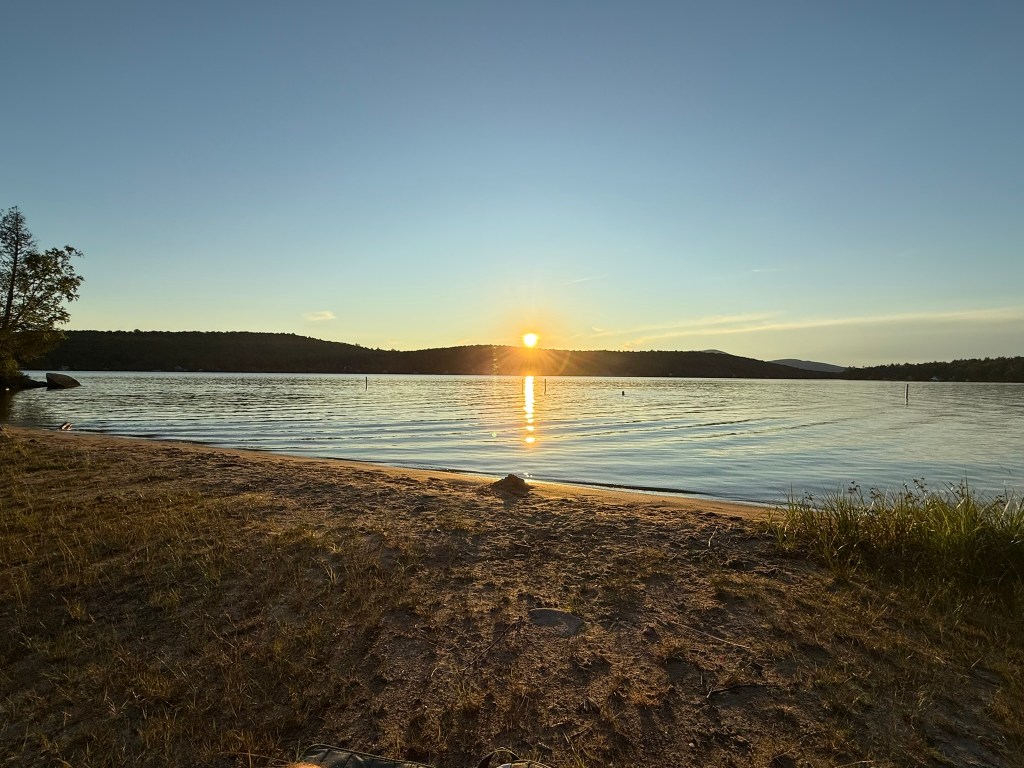
What’s been the highlight for me? Probably our campout at Lake Maidstone. It is a beautifully serene, secluded state park here in the NEK that boasts Vermont’s purest water.
Sunset on Maidstone Lake
The facilities are also top-notch and include a new million dollar bathroom, as the park employee at check-in was thrilled to share. Daphne was a camping pro–she helped us set everything up, then swam that evening before she fell right to sleep, remaining on her own cot the entire night. She popped up the next morning, accident-free, to eat eggs scrambled on our camp stove before swimming another three hours. Then, exhausted but elated, we packed up and headed home.
Swimming at Maidstone
I used to be a frou-frou indoor girly girl; I wouldn’t have dreamed I’d enjoy camping. Now, I love lying in my sleeping bag listening to the haunting calls of lake loons and other animal life. Nighttime in the pitch-dark forest, when you’re warm, fed, and safe, is a wonderful, other-worldly experience. (Not so much when you’re lost, as reading Stephen King’s The Girl Who Loved Tom Gordonis underscoring right now.)
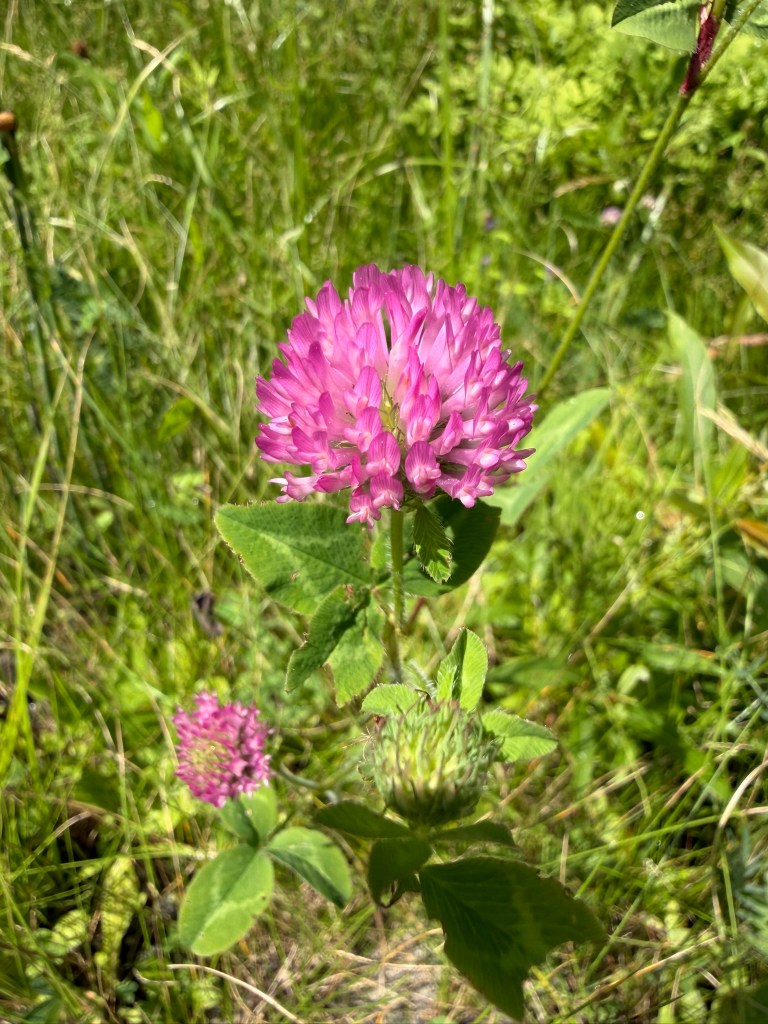
Red Clover, the VT state flower. The wildflowers were abundant this year.
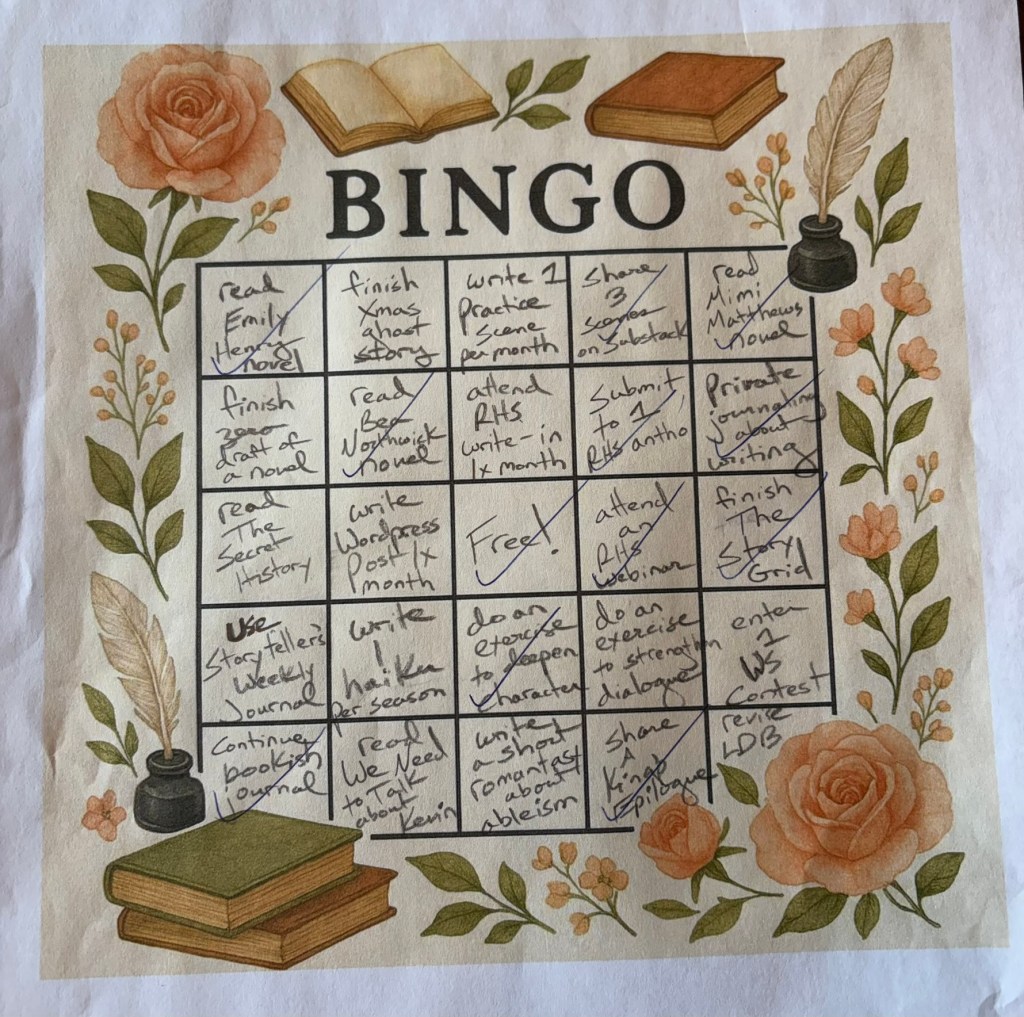
On a writerly note, another checklist that’s worked well for me, even though I haven’t had a lot of free time this summer, is my Bookish Bingo. I got the idea back in January from The Alchemist’s Cabin on Substack, where the creators suggested setting specific, gentle goals for a Writer’s New Year in a way that was fun, like on a bingo card. I took their idea and made my own sheet listing all the lovely literary things I wanted to do this year. Here it is:
Bookish Bingo
I’m close to being done with two columns, and I’ll treat myself once one is complete. But, I feel zero pressure, and that’s the best thing about this. I’ve checked things off as they’ve naturally happened, and it’s showcasing a pleasant, sustainable productivity that might not be so evident otherwise. It’s also helped me think of my writing as inextricable from my reading, and that’s a beneficial perspective. You can’t write well without enjoying lots of good books in the process.
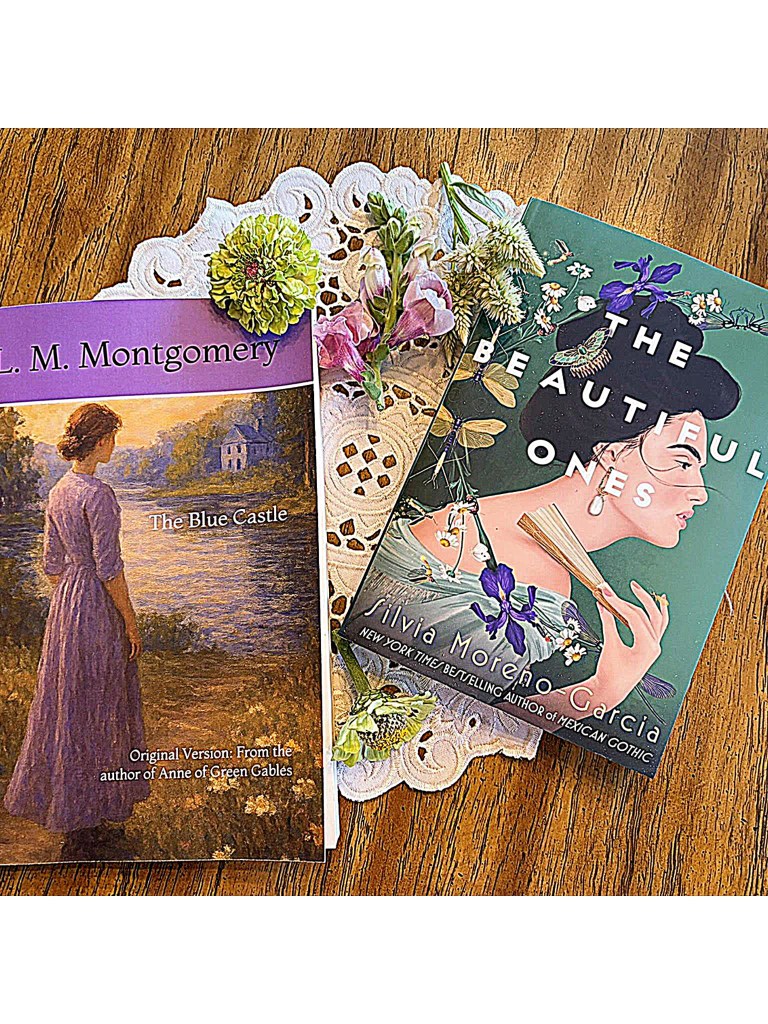
Favorites from this summer’s reading, now books of my heart
It’s funny sharing all of this because I’m not a Type A super planner. I don’t ordinarily make lists–I’m doing well if I type the groceries I need into my Notes app and then make it out of the store without forgetting anything (rare).
I will concede, though, that these lists have been great (Mom, are you reading this?!). Daphne’s first day of fifth grade was Wednesday, August 26, signaling the official end of our summer, and thanks to these lists I could sit down that morning and type, in all honesty, Awesome summer–check!
It really has been our oyster.
Yep, it was awesome
Now, as the days shorten, the sunflowers and goldenrod gleam, the birds grow quiet (their warbles replaced by the low monotones of crickets), and leaves loosen from the trees, I’m looking forward to the new season.
From our farmer’s market
The autumn months will allow a fuller writing schedule, and here on WordPress I plan to share some fun things, including an October-November TBR full of gothic titles, a blurb and teaser for my story in What Hides in the Shadows (releasing Sept 23 and now available for preorder), a post about the underwhelming quality of publication day, some inside looks at my long-form WIP (I’m at 32.9K words), and maybe even a summer-to-fall short story shared exclusively here (and maybe on Substack too, but I still find posting fiction there scary AF). I hope you’ll enjoy it all.
Thank you for reading!
Post-rainstorm sunset on Darling Hill
I hope you’ve had a good season too. I’d love to hear about your own summer adventures or your fall plans.
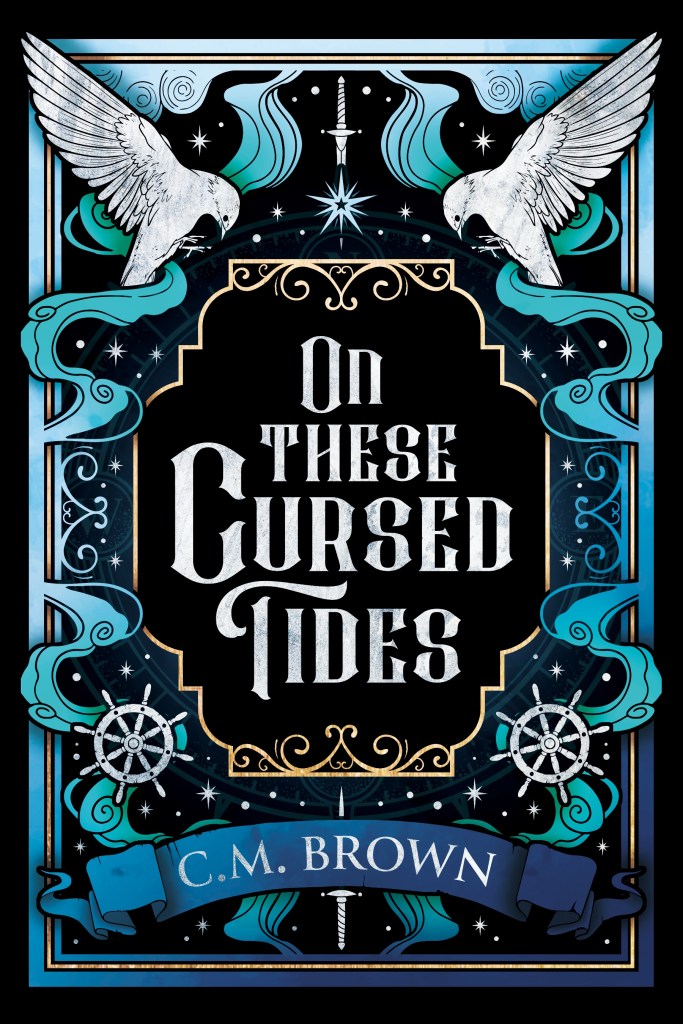
(For a fellow author’s book, not mine. Maybe one day!)
Celestial whirlpools.
That was my answer to my friend and fellow author Colleen Brown’squestion, what is the first word or feeling that comes to mind when you see this cover?
Drop your responses in the comments, and I’ll pass them on to Colleen.
Her teaser for this slow-burn dark pirate romantasy, releasing October 2026, is just as good:
Maeve was made to obey a goddess.
Callum was made into a weapon by a boy who refused to grow up.
And the sea?
The sea remembers everything.
Check out the complete blurb in Colleen’s latest Substack post.
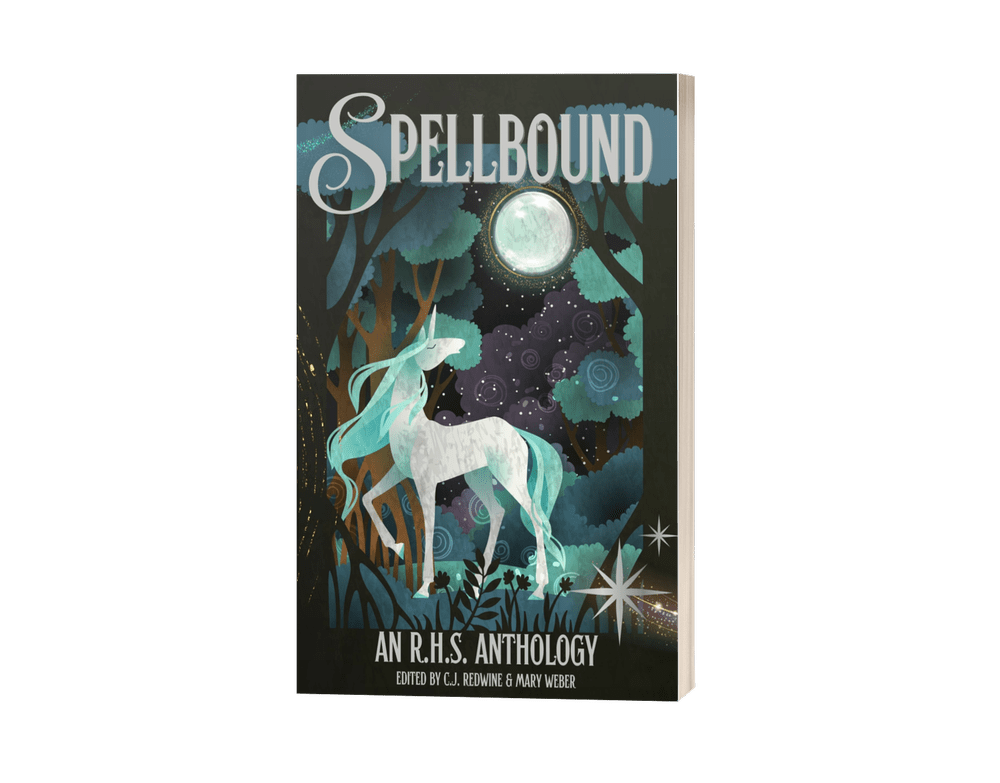
Not only am I a sucker for a fresh fairytale retelling, I also already adore Colleen’s short fiction. She is a master of gorgeous, immersive settings and rich characterizations; her dialogue is exceptional. Of her stories I’ve read so far, my favorite is “A Potion for Forever,” which you can read for free in the e-version of the magic and fantasy anthologySpellbound.
Colleen is also a lovely, supportive, uber-creative, and incredibly-hardworking human being. No one deserves success like she does.
Naturally, I’m stoked for this book, her first published novel! Adds Colleen,
Think Peter Pan, but darker. Think Captain Hook, but morally gray. Think Neverland, but it wants blood.
And apparently, there is “touch her and die energy” with “plenty of spice.”
Sign me up!
On that note, I’m following Colleen’s Kickstarter campaign before launch and will pledge my support in the hope I’ll get my hands on some beautiful special editions to sit beside my other print copies of her work. If you’re interested too, you can find this Kickstarter link in Colleen’s latest newsletter. You can also find her author website here.
Truly, one of my favorite things about being in the book world (however peripheral and tenuous that existence might be) is connecting with fellow creatives. I love learning from and supporting them, and I only recommend authors I whole-heartedly believe in.
Here’s one final tease from Colleen (she made this so easy!):
Welcome aboard the Jolly Roger.
The tides are cursed. The captain is worse. And Neverland is waiting.
Thanks for reading!
I’ll be back soon with some fun end-of-summer updates–never have I loved checklists and bingo cards more! ‘Til then,
Nostalgia is not a cure for what ails us, Scott Galloway said recently in an episode of his podcast with Kara Swisher. On this point, I agree with him.
Nostalgia can be, however, a harmless coping strategy when your country feels bleak and so awfully disappointing. In the chaos and uncertainty of these last few years, exacerbated by all the digital noise and enshittification, my husband and I have routinely reminisced about the relative success and simplicity of the eighties, nineties, and early aughts.
This year especially, I’ve ached with nostalgia. I even wrote a short piece of speculative fiction, forthcoming in an anthology, rooted deeply in this emotion. It’s set in the fall of 1992 and features a ten-year-old protagonist who’s just moved to a new neighborhood (I shared a little about this story back in March). That was my own age and circumstance that same year, which was such a strange, anxious period. I worried about my new school and bought my first YM magazines, wondering vaguely if I could ever look like Nikki Taylor. I was also still playing with dolls and stuffed animals, and I remember asking my mom if that was okay.
But memory has a rosy filter. While working on my submission, I realized I wasn’t only nostalgic for Walkmans, Christopher Pike, and Nick at Nite (my story mentions all of these). I was also nostalgic for the years when I first fell in love with language itself.
In primary school, I developed a fixation with words on the wall. I was lucky enough to attend a richly multicultural, first-rate public elementary in the Houston area, one that for a while had one of the strongest English Second Language (ESL) programs in the state. That meant we enjoyed a print-rich environment—letters and words everywhere, and not just in English. They were all over whiteboards and bulletin boards, in the learning centers set up in the open-concept classrooms, and covering the walls of the library, hallways, and cafeteria. During instruction, my teachers wrote down single words first, then phrases, mostly on the overhead but also on the whiteboards or chart paper. As they asked questions, our classes discussed answers or brainstormed as best as first, second, and third graders could, and our teachers wrote, wrote, wrote, recording our ideas. Their scripts, and the way their voices melded into these lovely symbols that became increasingly recognizable as I learned to decode more and more words—to read!—hypnotized me.
The best part of all this, though, was when we were given blank sentence strips on which to write our own thoughts, usually during an interactive or group activity. Forming those big, wobbly letters with a fat Sharpie, and getting to hold that crisp rectangular paper before it was stapled or taped on a wall somewhere, allowing me to leave my mark, translated the visual appeal of language into something that became wonderfully tactile too. I couldn’t get enough of it. I suppose that was my first experience with publication, in the broadest sense.
Photo by Nihal Demirci on Unsplash
At home, my last years of playing pretend evolved into games of school, where I instructed a dozen plushie pupils. I collected all kinds of materials for my “classroom”—my own little chalkboard and notepads, a cork board, stickers, a pad of blank achievement certificates, whimsical markers, pens, and pencils, and various kinds of paper. When I discovered the local office supply sold overheads, I begged my mom for one, but she always responded with a swift, bemused “No.” What playing school really meant, though, was another opportunity to write stuff down: imaginary rosters, lists, and lots of sentences, even paragraphs (never numbers or math problems, ha), supplemented by read-alouds from my chapter books while mimicking the chastisements my teachers called out mid-lesson, usually to the squirmy boys in class.
Around this time, I also began writing my own little stories, usually in blank journals and occasionally on my parents’ typewriter. I don’t think I ever finished any of these, but I do remember trying to imitate the voices of several middle-grade first person narrators—Tallahassee Higgins from the novel of the same name, or Zoe from Stonewords by Pam Conrad. All these attempts gave me feelings of unlimited possibility and power. This must be why people write books, I thought. Wow, I could make up anything and become anyone (oh, the power of first person POV). Was this what it meant to be godlike?
I also purchased my first craft book, What’s Your Story? by children’s author Marion Dane Bauer, which I still have. I distinctly remember two points from that guide: A story is “about someone struggling,” and there is magic in the number three. Both points continue to serve me well.
First craft book
Fast-forward to high school: I was seventeen, a junior taking my first Advanced Placement classes, including AP English III with Mrs. Guest, an older Southern lady if ever there was one. That first day she didn’t smile as she brusquely reviewed the strict policies and expectations of the course. A bit of a dragon, I thought. She sat us in rows, her table at the front, the chalkboard (which she rarely used) behind her. On the first real day of instruction, highlighters and pencils in hand, we all opened our personal copies of The Scarlet Letter. Mrs. Guest had her own too, proudly telling us this was her annotated text from her American Lit course at the University of Texas (where I now imagine she was well schooled in old fashioned New Criticism). Suddenly, she was a little more human.
After Mrs. Guest read that short first chapter, “The Prison Door,” out loud, she proceeded to verbalize from beginning to end what Hawthorne was doing. She began by pointing out the Puritans’ “sad-coloured,” “grey” clothing, asking us to highlight those words and note their “dismal connotations” (connotationwas a new term for a lot of us). We also highlighted the description of the men’s hats as “steeple-crowned,” suggestive of their theocracy, and Mrs. Guest pointed out how, though this was supposed to be a new “Utopia” (a perfect society, she explained—“Let’s highlight that too, y’all.”), the cemetery and prison were erected first on the colony’s “virgin soil.”
“Why ‘virgin?’” she asked us, turning the tables. “Why would Hawthorne use that word, and not something else like ‘new’ or ‘uncharted’ or ‘wild’? What does ‘virgin’ suggest?”
A few kids snickered. Dare we think what she was getting at?
“Because, before they got there the land was untouched, and what they did was, like, … a violation?” some brave soul ventured.
“Exactly,” she replied, before elaborating on the comment. If I remember correctly, she even got someone to offer how, through “virgin,” Hawthorne feminized the natural world, while the settlement was associated more closely with men. She then connected, as further evidence, that particular idea back to the subordinate placement of the phrase “mixed with women” in an earlier sentence (though we wouldn’t start analyzing sentence structure in earnest until the winter quarter).
And we were off.
Years later, after I’d completed my own teaching certificate, I realized that Mrs. Guest was employing a basic instructional strategy called a think-aloud to model her own thought process so we could understand and use that process ourselves. She used think-alouds and guided annotation on and off all year, and in doing so, she ingrained in us a technical vocabulary and a method. We learned to consider how diction, imagery, figurative language, detail, syntax, and irony created tone, mood, and meaning for a specific audience and purpose. That alone, practiced repeatedly, was enough to demystify the bugaboo called Literary Analysis. I personally came to think of it as, what is the author suggesting, and how is s/he suggesting it? From that day forward, those two questions guided all my close reading.
In the end, Mrs. Guest gave us a rock-solid foundation in college-level textual analysis, which worked for both fiction and nonfiction. Over time, she taught us how to write academic arguments about these texts, too. As high schoolers of the late 90s, we could handle her approach, which was always slow and thorough. We didn’t have Smartphones or social media. Our cell phones (for those of us who had one) weren’t part of our hands; we weren’t endlessly scrolling. We could deal with long, dense 19th century texts if we were guided by a good facilitator. It certainly felt like a simpler time.
More to the point, Mrs. Guest’s instruction blew my young mind. I’d always enjoyed books and stories, but what we were learning in her class was much deeper. Writers had intent! They made choices! When those choices were better than other writers’ choices, the authors were artists–you could feel their genius on the page. This was art!
I thought this love for the power of the written word meant I was supposed to be a teacher. By the time I graduated from high school, I’d forgotten all about creative writing. All I wanted to do was impart knowledge, skills, and, ideally, appreciation to eager students the way my best teachers had given them to me. I completed an English major and history and education minors and began teaching high school, starting as a newb with AP English III of all things.
Photo by MChe Lee on Unsplash
Those first two years were an absolute crucible—I spent most of them covered in stress hives. I’m stubborn, though, and I stuck out that deathly steep learning curve, going on in subsequent years to become a team leader, a supervising teacher for University of Houston teacher candidates, a Building Teacher of the Year, and even an instructional specialist. But the work never felt entirely natural—teaching real school was nothing like playing at it. When the pandemic hit, and my family made the radical choice to move across the country and change almost everything about our lives, I gladly left the profession behind.
And the result is, I’ve gotten back to writing words. What I have now is a solid, consistent writing practice, one that, more than anything else, has proven most satisfying to all my natural inclinations, especially my love for language. My practice is, first and foremost, nourishment for my mind and heart, and I cherish the joy I find in creative striving through the medium of the written word. I compose my fiction, essays, and even a little poetry with an appreciation and care that I owe, in large part, to the wonderful schools and teachers like Mrs. Guest, and it’s comforting to remember these inspirations as some of the best gifts of my life.
Photo by Lauren Mancke on Unsplash
Musing over such things might be impractical, even a little silly, but it’s an indulgence I find harmless, affirming, and even grounding. I’m always curious, too, about what has inspired other creatives: What odd or weirdly specific things compelled or motivated you, especially when you were little? What are you nostalgic about now? Feel free to indulge with me in the comments below.
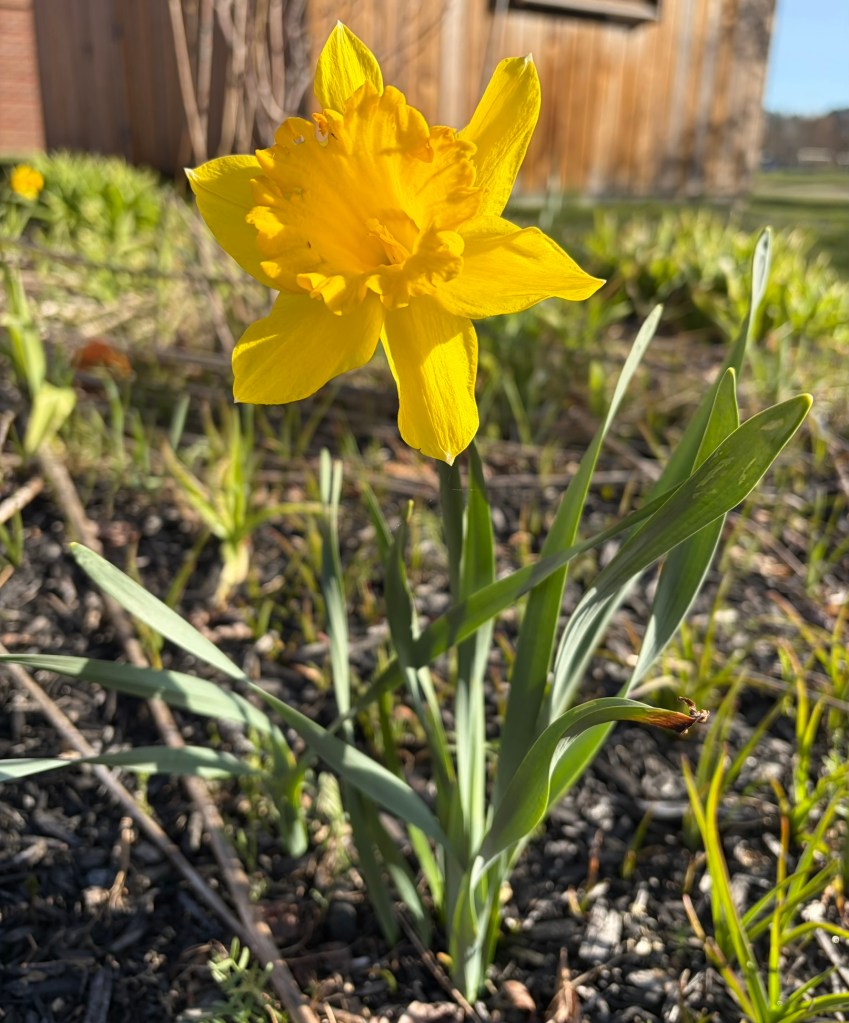
It’s probably been warm and verdant for a while where you are. Here, we’re just on the cusp (though the temp was 33F this morning). Our grass is green, the daffodils and dandelions have sprung, and several of the trees have delicate new leaves, lime and chartreuse in shade, they’re so bright! In a week or so, everything will pop. (Please, God, Yahweh, Allah, Odin, Krishna, Ra, Cernunnos, Danu… don’t let it freeze overnight! I want our lilac tree in full bloom this year.)
Daffodils in the school yard
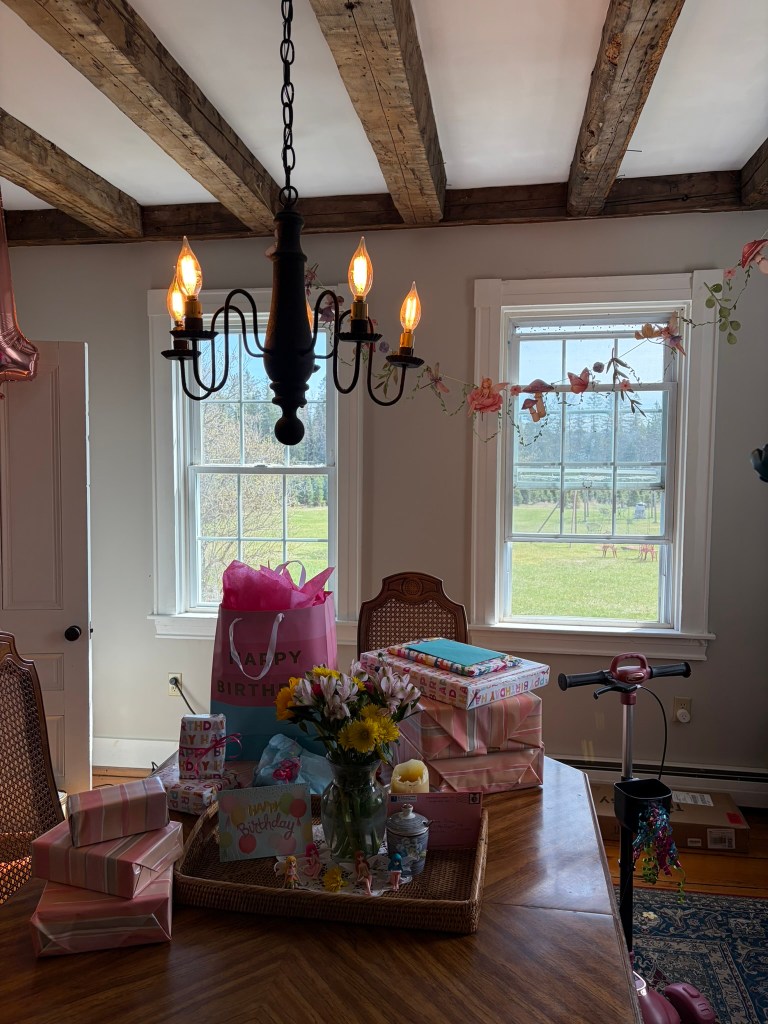
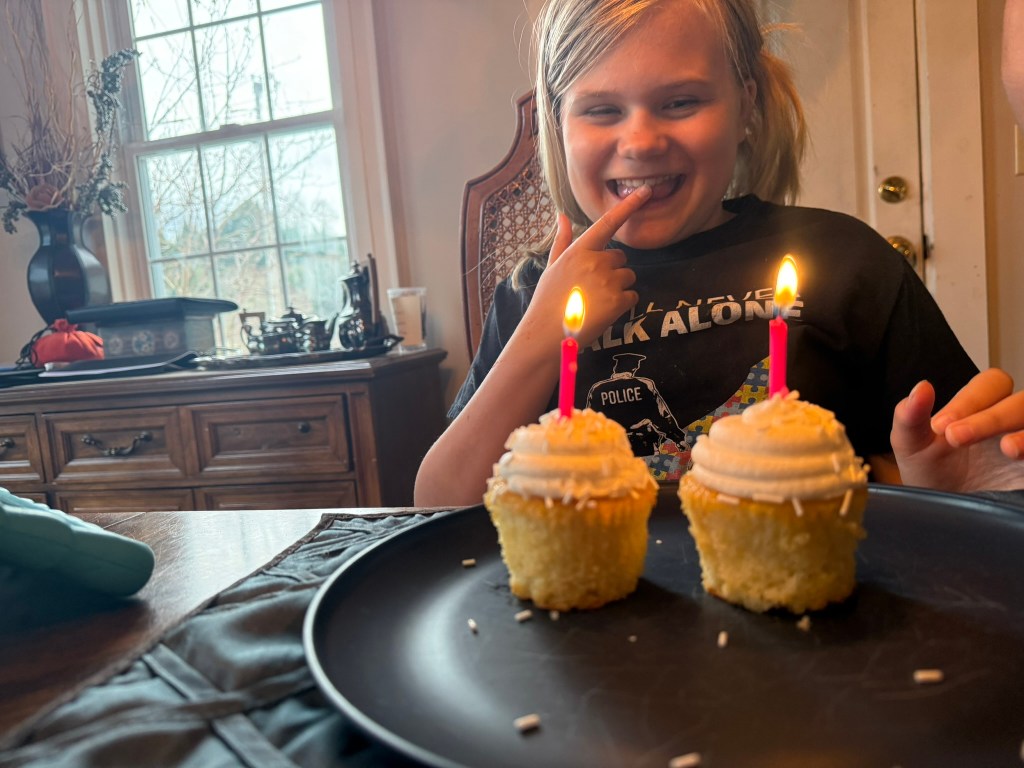
Daphne enjoyed her birthday on April 28th. She had a fabulous day at school where her classmates sang to her, made her cards, and everyone enjoyed a cupcake.
Spring theme
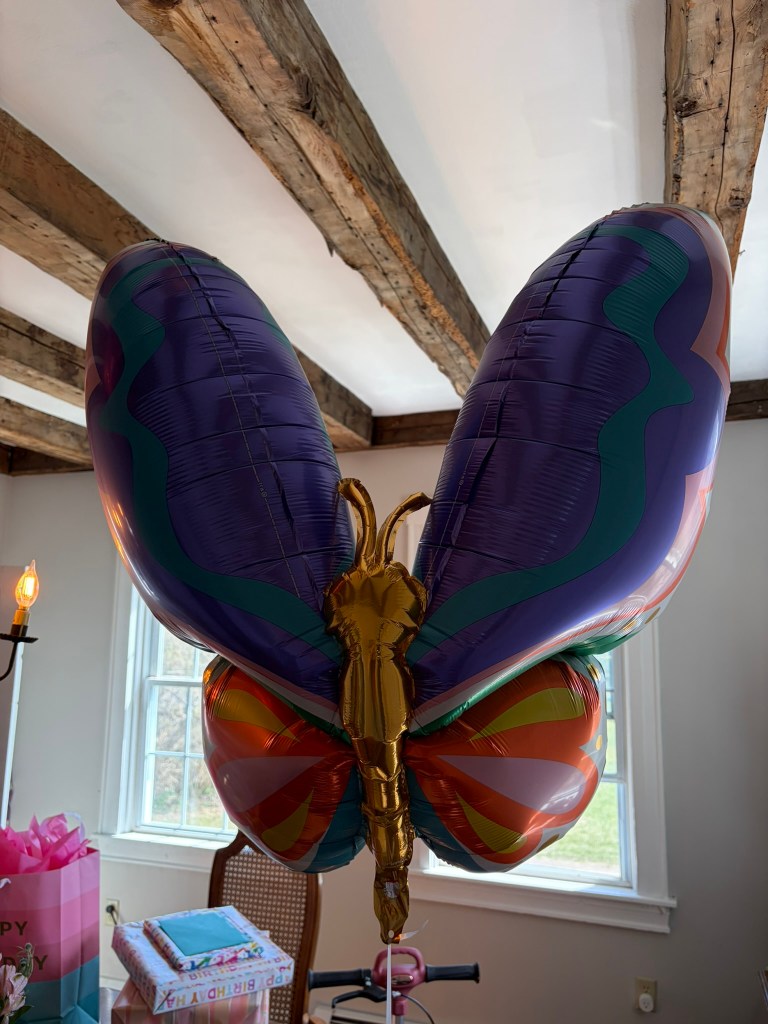
At home, we decorated the dining room in a spring and fairy theme, since lately she’s been into her little garden figurines. She devoured two more cupcakes that evening after we gave her our gift, a scooter.
Nothing better than a cupcake, except twoThe balloons were probably her favorite things, aside from the cupcakes
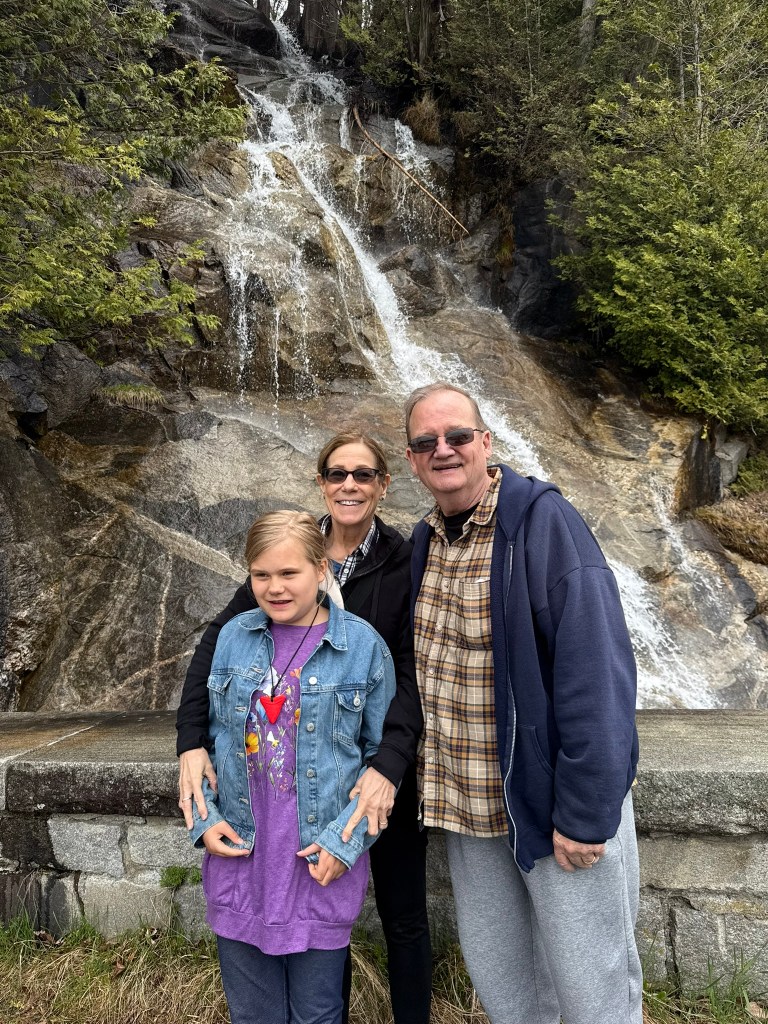
We also had a little party that Saturday, after her Grandma and Grandad arrived for their first 2026 visit from Texas.
Grandparents always make a birthday more special
Her dad made a delicious cake, and she opened the rest of her presents.
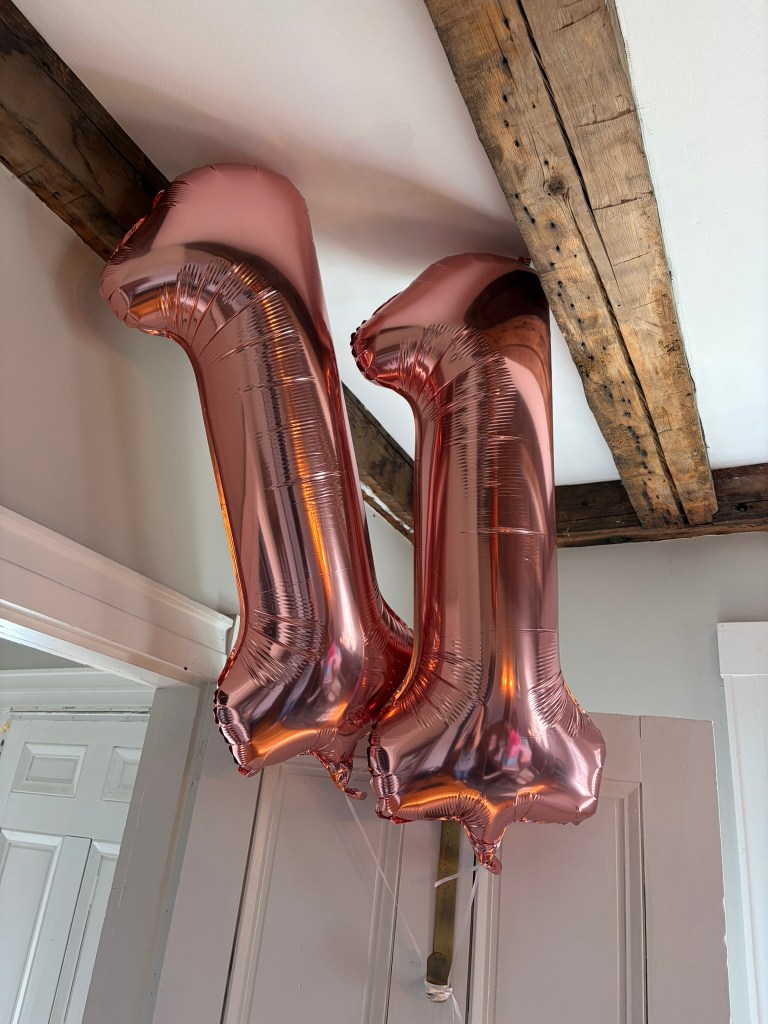
She turnedeleven!
This was the first year she seemed to truly understand what a special day it was, and she was cheerful all week, a win-win for everyone.
I’ll share more about that in a later post, but suffice it to say, she loves it. I do, too.
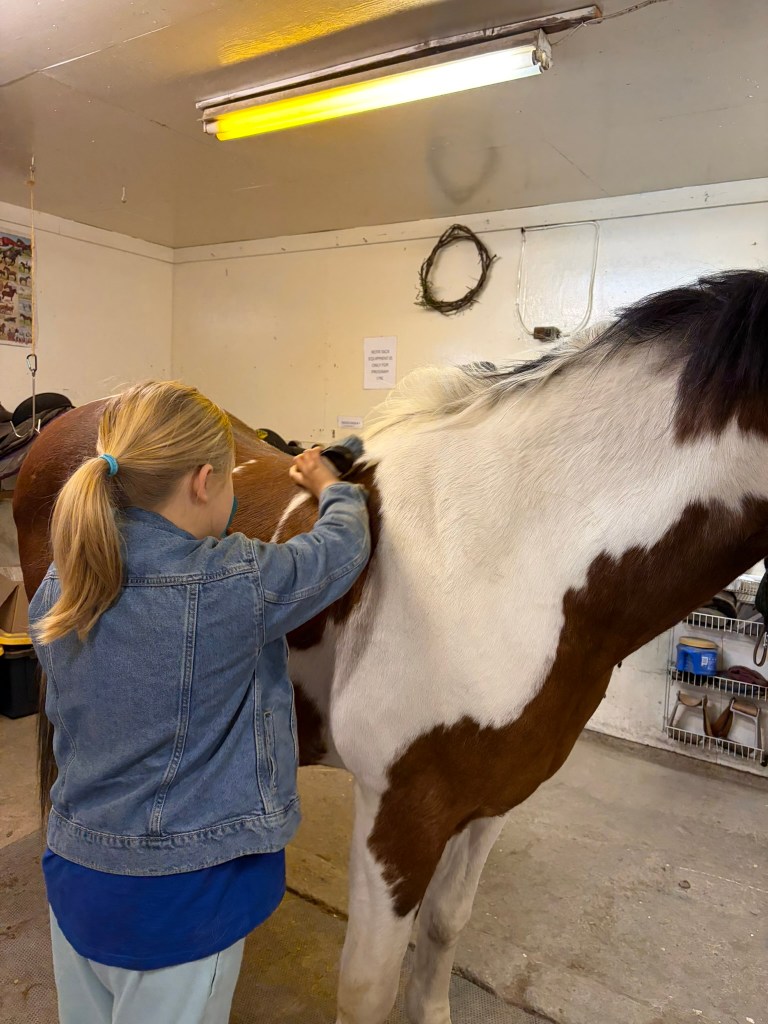
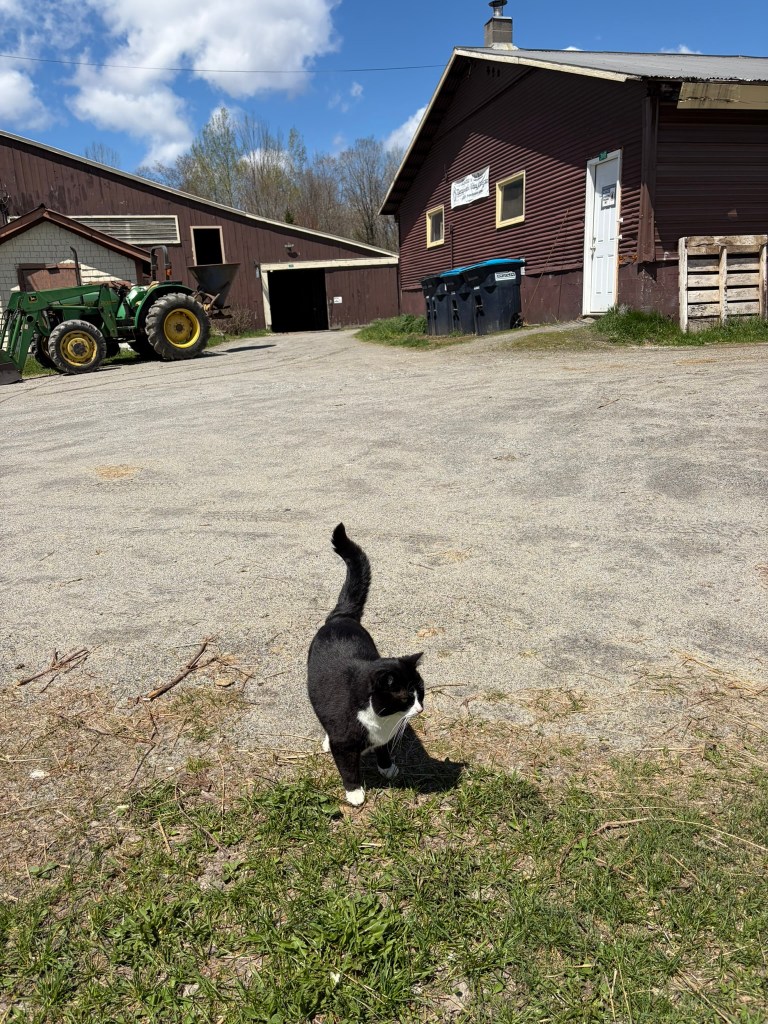
Brushing Ellie, a paint mareThis barn kitty followed us all over the farm
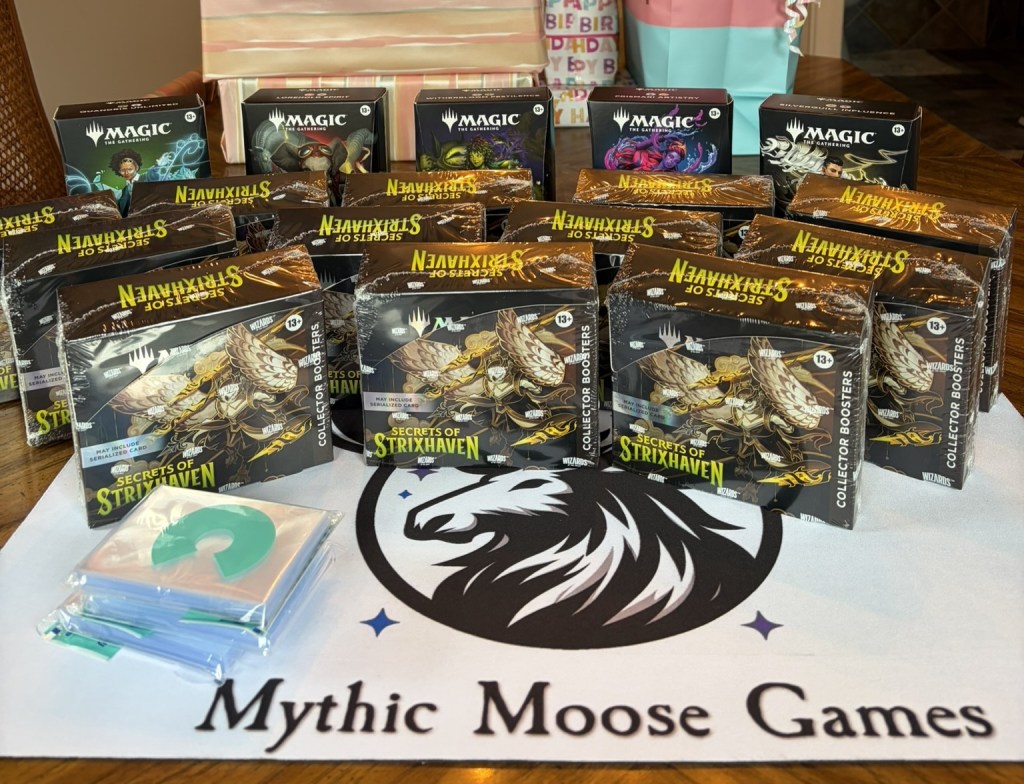
Hubby and I have been busy filling orders, mostly for Secrets of Strixhaven cards, in our online card game shop, Mythic Moose.
New stockAll in a day’s work
I’m back into the swing of my Pilates practice, and my speculative short story, The One Who Wouldn’t Jump, was accepted for publication in the forthcoming anthology What Hides in the Shadows.
Cover!
Its structure and pacing need a little TLC, though, so I’m going to dive into those developmental edits as soon as I get this post drafted.
Finally, beginning this Friday, May 15th, I’ll be sharing my latest novelette here on WordPress.
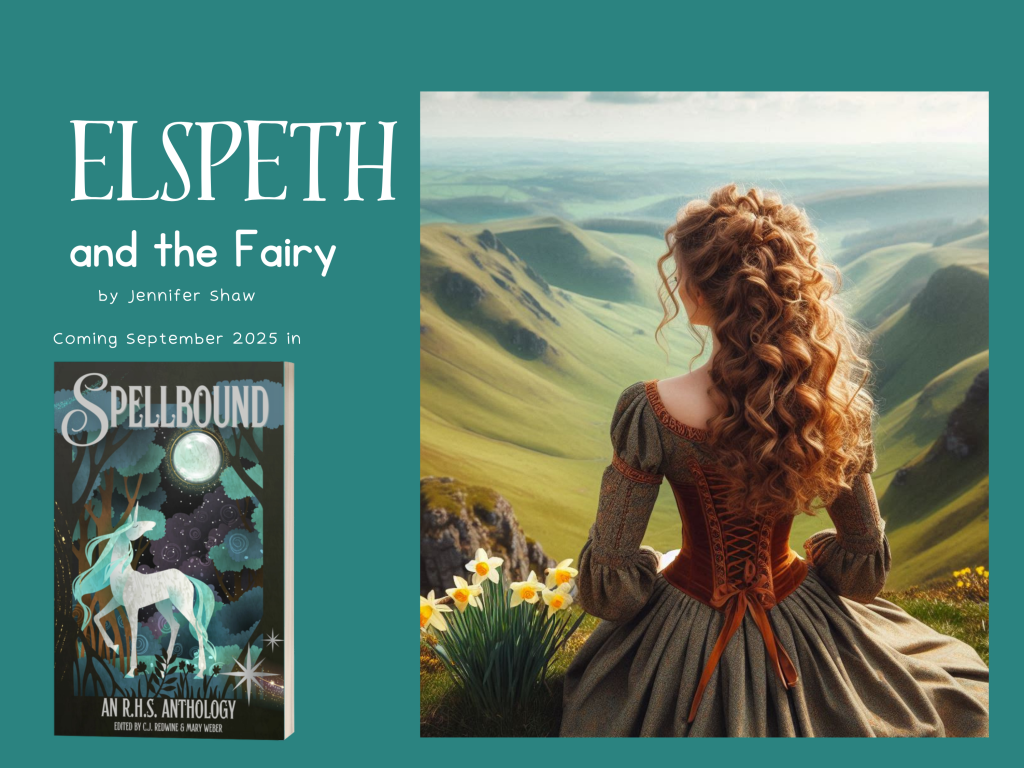
It’s a companion story to my Celtic-inspired fairytale, Elspeth and the Fairy, which, though published last September, is at its heart a celebration of spring, of new life and hope.
Something I tried to make in Canva
I loved working on this romantic, optimistic little tale of steadfastness, renewal, and resilience (you can download it in the free e-copy of the anthology here). It helped me combat the anxiety and dread many of us were facing in the wake of current events.
On Elspeth’s publication day, I felt a strange ache. I simply wasn’t ready to be done with this story.
So, the day after it came out, I sat down to write the same ending but from a different perspective. I wanted to explore the POV of another important character, one who I only had room to present as stoic and serene in Elspeth, but who struggled with much more beneath the surface. What were things like for him? What exactly did he go through? How did he grow? How did he change? How might that add to the richness of the first story?
Unlike Elspeth, however, which is a simpler composition (a fairytale through-and-through), this novelette is a more detailed romantic historical (or historical-ish) fantasy. It involves more intense emotional stakes with magical, world-altering fantasy elements, including a fight scene between the protagonist and a monster (my first!). Its motifs include class disparity, hidden identity, and a beauty-and-the-beast type of forbidden love.
(If I were better at Canva I’d insert a cute little mock book cover here, with all those tropes and arrows. Alas, I suck at that program, and messing around with the free version, or paying for an upgrade with more template options, just isn’t how I want to spend my time or money.)
I wrote this novelette first and foremost for myself, and I wanted it to have an older feel than most fantasies currently have. This piece is an attempt, therefore, at a kind of spiritual-romantic mythmaking, and a central driving question is, who truly sees another soul?
I also wanted to keep everything in scene, so that’s how this story ended up the length it did. It’s approximately 13k, divided into four parts with seven chapters total.
(If you’re not familiar with “in scene,” that simply means grounding everything in real time through action, dialogue, and sensory details, as opposed to summarizing events. It’s what develops a story into an immersive experience, what makes it feel real and immediate.)
Here’s my plan for posting:
Part I, Restoration: May 15 Ch 1, May 18 Ch 2
Part II, In the Forest: May 21 Ch 3, May 24 Ch 4, May 27 Ch 5
Part III, On the Hilltop: May 30 Ch 6
Part IV, A Wedding Gift: May 31 Ch 7
A chapter will drop every three days until the end of May. After that, things will quiet down again, I promise.
Ultimately, working on this novelette has been another wonderful learning experience, and I will share it here as a simple offering for spring. Right now, I’m keeping its title to myself so I don’t spoil anything for anyone who might want to read Elspeth first.
If you try this novelette, I hope you enjoy it. Though I do believe you will have a richer, fuller experience if you read Elspeth and the Fairy beforehand, I did work hard to make this novelette a stand-alone. You should be able to understand everything without reading Elspeth’s side of things first.
As always, I hope all is well with you. I’d love to see anything you’d like to share in the comments.
Hi, friends! I hope you’re enjoying early spring. Texas peeps, this is when your weather’s best, so I hope you can get outside as much as possible.
Early spring here means fluctuation, or a battle of seasonal wills. It’s really nothing more than winter pushing back when the longer days grow defiant enough to climb above 32F. We’ve had a lot of snow melt and mud (and happier hens) and now another bout of freezing temperatures and snow.
This isn’t entirely dismal, though–it’s what makes the best maple syrup in the country possible. Late winter/early spring is sugaring season, when freezing nights and warmer, above-freezing days create the pressure necessary for sap to flow. So, it might not look like much is stirring yet out in nature, but the truth is, sweet things are happening.
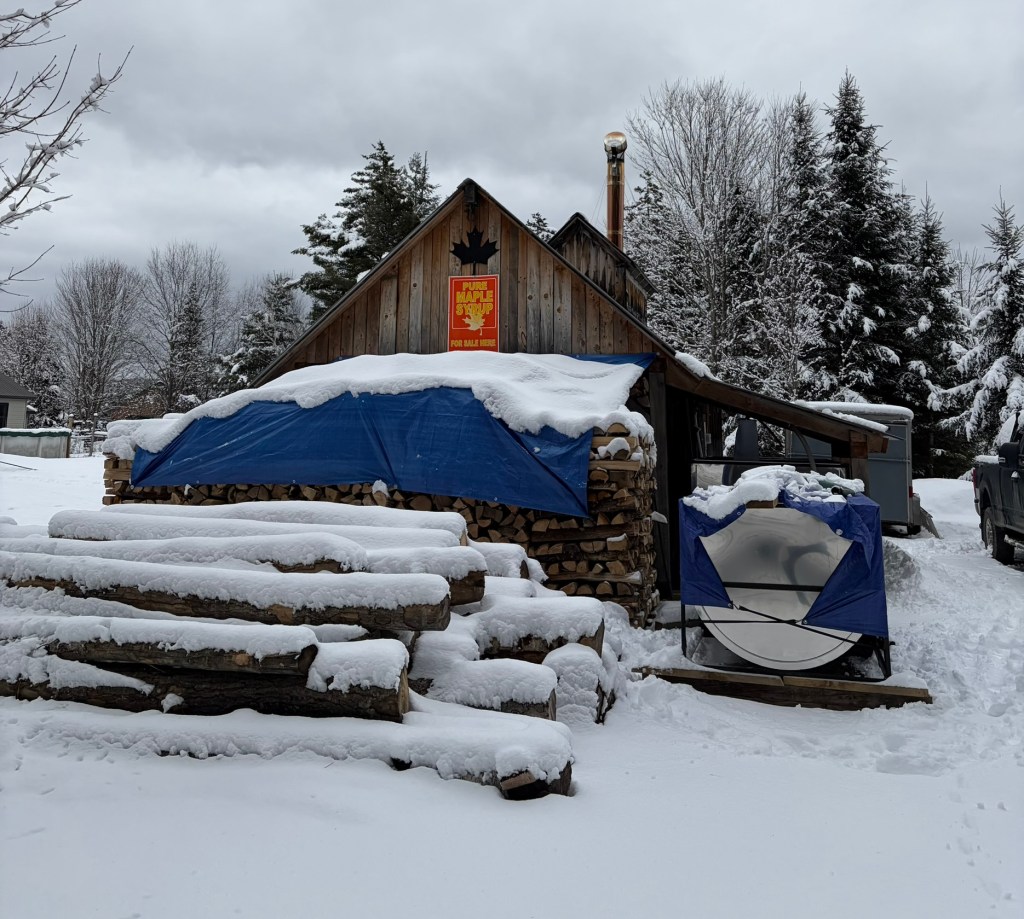
A sugar house just down the road here in the NEK of Vermont
On a similar note, I’ve been quieter here and on Substack, but that doesn’t mean I’ve quit. Instead, I’m making more time, and head-space, to read and write fiction, and it’s been refreshing.
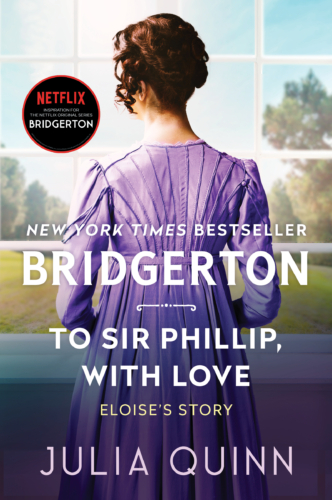
I’m currently reading To Sir Philip, With Love by Julia Quinn (Bridgerton Book #5).
After finishing Season 3 on Netflix in preparation for Season 4, I realized it’d been a few years since I’d read one of the books. So, I picked up where I left off in the historical romance series and am now thoroughly enjoying Eloise’s story. She’s my favorite character in the show, played brilliantly by Claudia Jessie.
Writing-wise, I have three current works-in-progress (WIPs). That’s unusual for me; I tend to hyperfocus on one creative piece at a time. This state of things feels manageable, though, and I’ve just finished a working draft of one WIP and plan to complete the other two by the end of May. Here’s a look at each one:
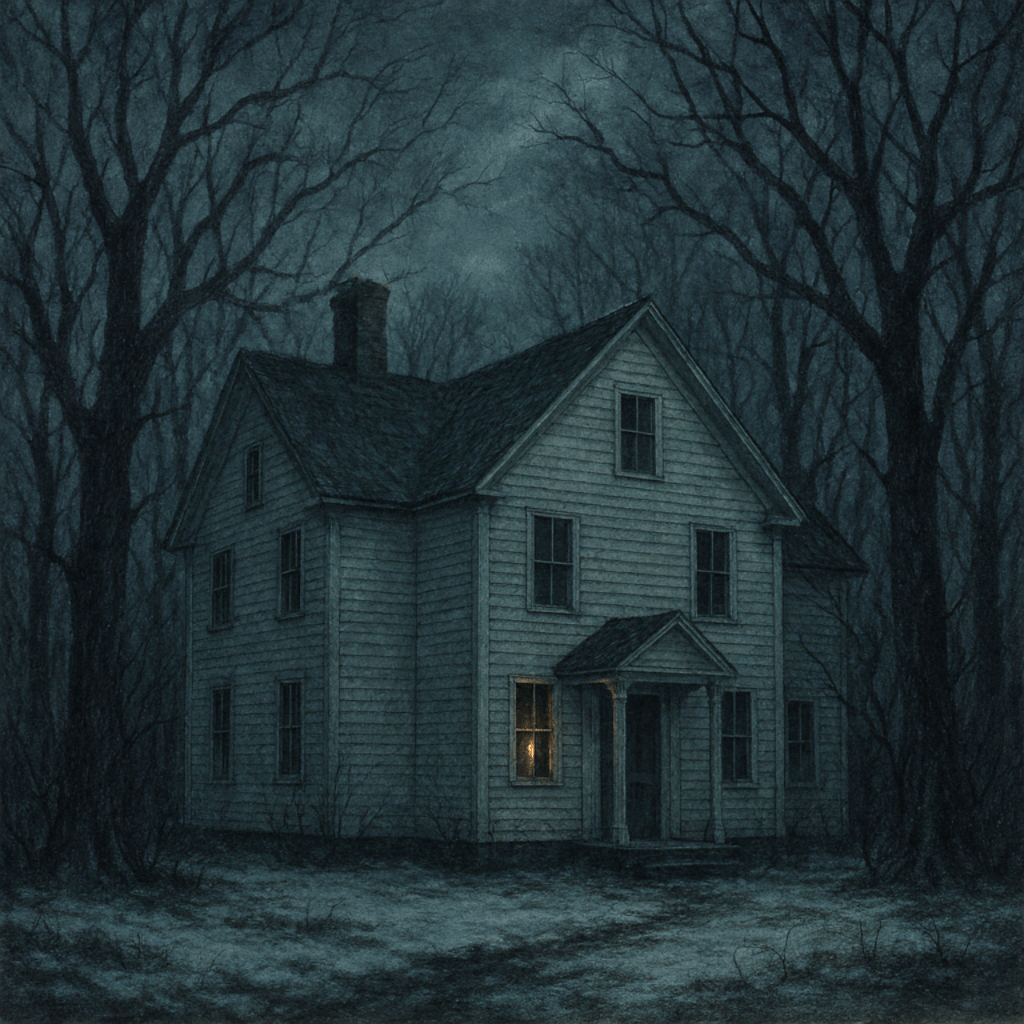
Untitled winter gothic story
Image by Microsoft Designer
A widower dairy farmer in 1900 tries to make a fresh start, but unresolved issues prevent him from taking any real action to move his life forward. Specifically, he can’t quite allow himself to court the local schoolteacher with whom he’s falling in love. On a bleak, sub-zero Christmas Eve, however, he rescues a lost young woman drawn to his farmhouse by a single lit candle, and this encounter changes everything.
All I have left to draft for this novelette is the resolution, so I’ll have that done fairly quickly. Then, I’ll let it sit until September before I attempt any edits. Once it’s edited, I will probably share it here as a multi-part Christmas story.
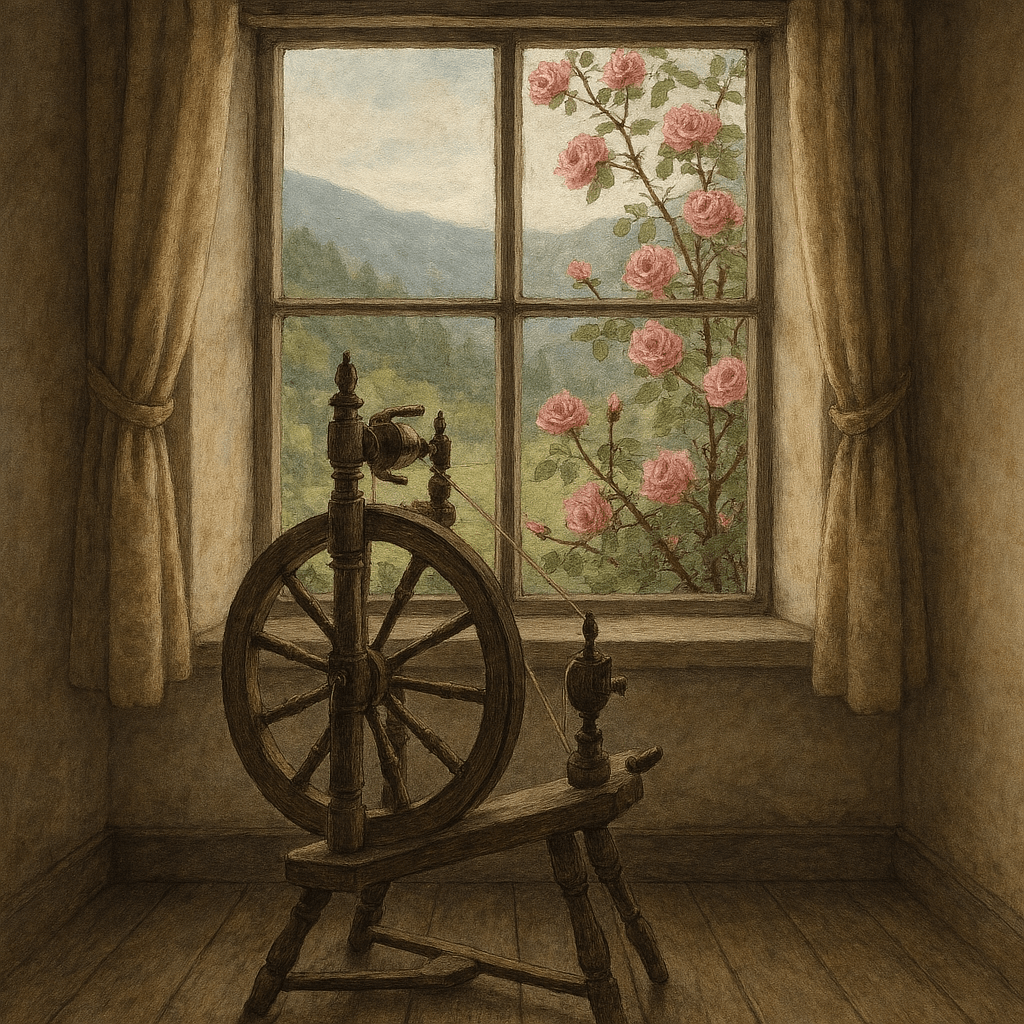
Slumber Sickness: A Dark Sleeping Beauty Retelling
Image by Microsoft Designer
This one is a historical fiction fairytale retelling, set in the mid-1920s on a wealthy American family’s vacation estate in the Catskill Mountains. The morally-gray protagonist is Malina, the Romani-Irish daughter of the family’s personal spiritualist and the childhood friend to its heiress, the beautiful Miss Rose Van Ackeren.
Mal and Rose’s relationship is tested, however, when an Austrian baron arrives to court Rose, who then falls ill to a mysterious disease of violent fits and catatonic sleep. In the wake of everything, Mal finds herself torn between her love for Rose and her anger and sense of betrayal, which ultimately fuels her dangerous desire to both protect Rose and seek revenge for certain unspeakable acts committed by this family.
This piece was inspired by the true story of the encephalitis lethargica epidemic, which affected Europe and North America from roughly 1919-1930. Compared to the Spanish Influenza, this sickness is a footnote in history, but it’s a fascinating one that remains a medical enigma to this day.
And while the first draft of this particular story is shaping up as a novelette that I’ll probably post here this summer, it has the most potential to grow into a novella or short novel. I really need to get back to long-form writing, and this might be a piece to develop. The research it would require intimidates me, though. We’ll see.
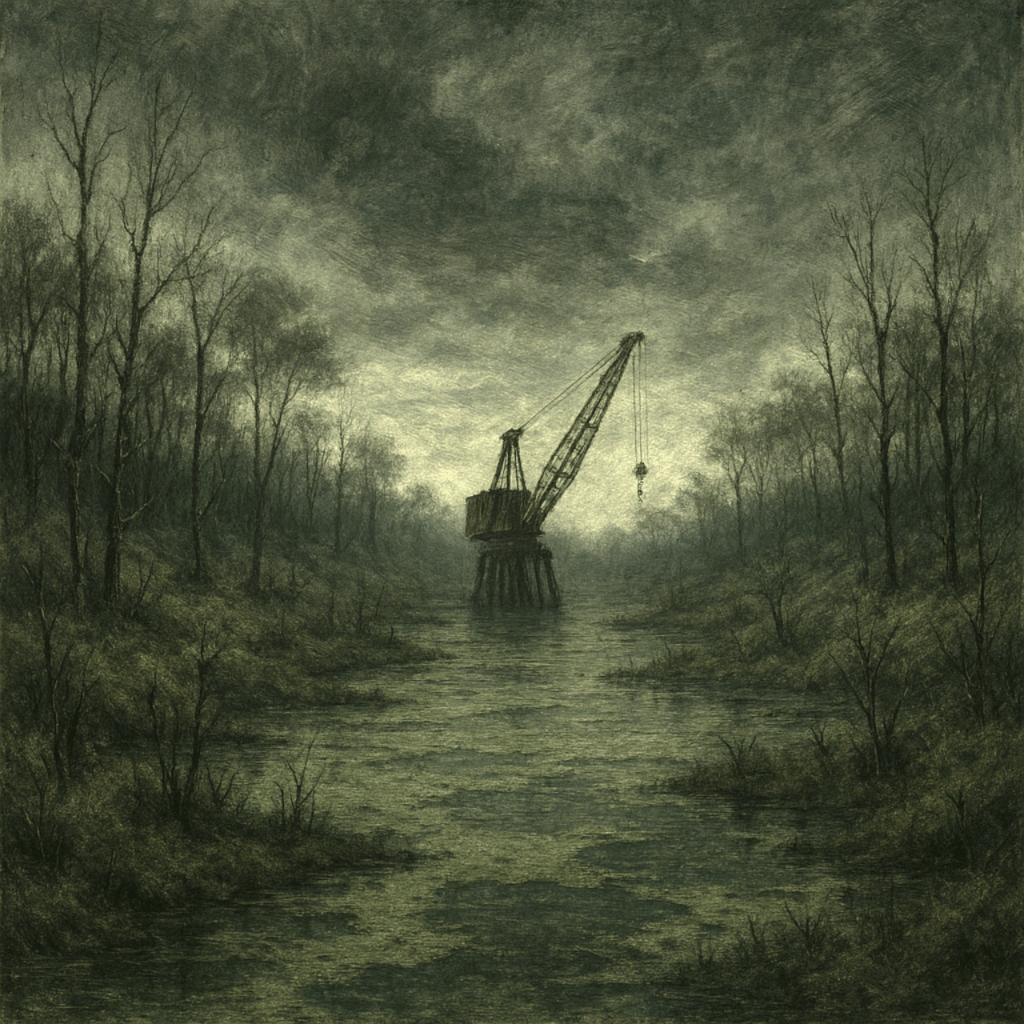
The One Who Didn’t Jump
Image by Microsoft Designer
This is a short work (4.2 k words) of speculative fiction. It’s set in the fall of 1992 and features Jessica, a little girl who’s just moved into a new house with her divorced mother, but things in her large, private bedroom aren’t right. She’s haunted by a frightening figure that keeps appearing at the foot of her bed, and she wants nothing more than for it to go away.
At the same time, she’s eager to fit in with her new group of friends who enjoy swimming in a local quarry. There, years ago, a construction site flooded when the crew hit an aquifer, and all the equipment remains underwater (this was inspired by a real place where my husband and other local kids in Katy, Texas, used to swim, and where some pretty awful things happened). Prone to dark thoughts, Jess cannot resist the feeling that something terrible awaits her beneath that green opaque water.
This story is finished and self-edited. I wrote it for a publication opportunity, and I need to submit it by April 7th. It was probably the most fun to write–it’s both creepy and nostalgic. I had a blast including little period details about the things Jess, an early Millennial like me, was wearing, reading, watching, and listening to. Please cross your fingers that it gets accepted.
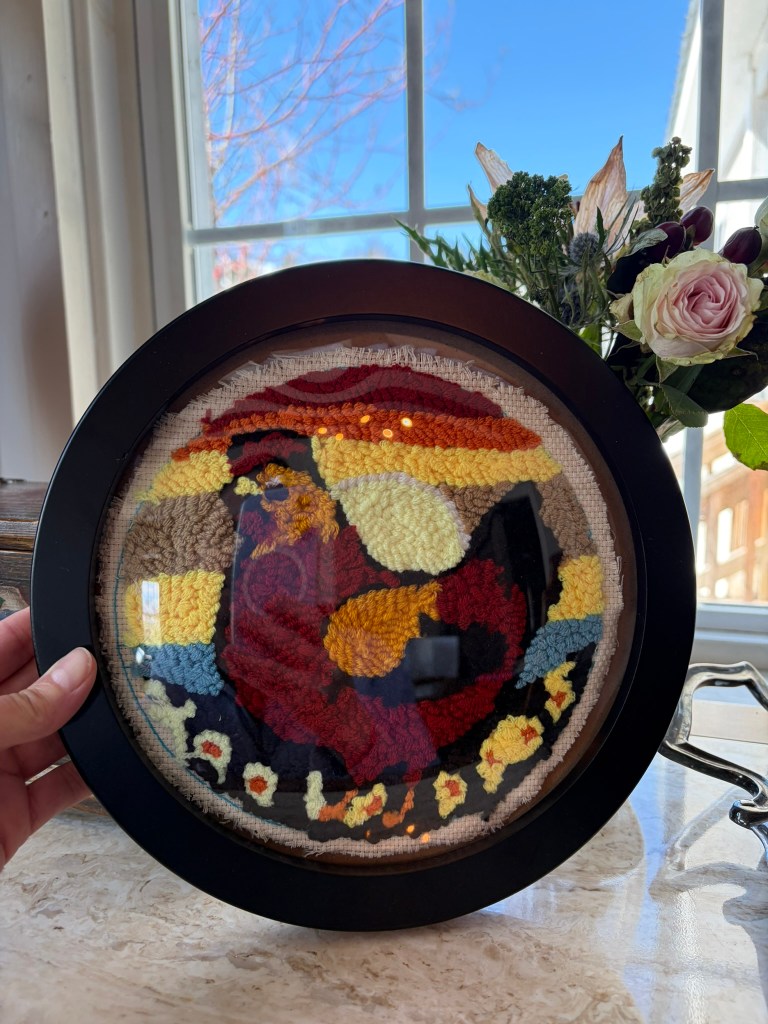
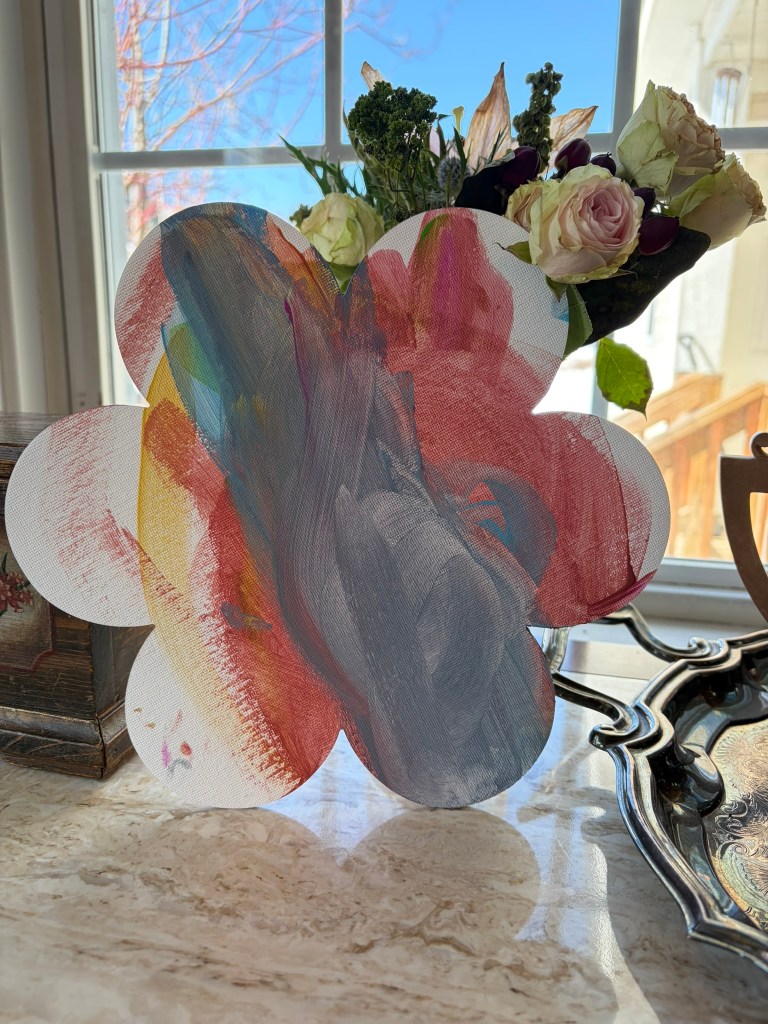
In other creative news, I’ve finished my first punch needle project, and Daphne has done some more painting.
Don’t look too closely. It’s my first attempt and it’s rough, but it was fun!Daphne’s latest. I love the colors she chose.
It really is true that “artistic expression brings happiness, purpose, self-worth, and balance… [it is] an essential piece of a rich, productive life” (Deb Caletti, from Writer’s Digest July/August 2015).
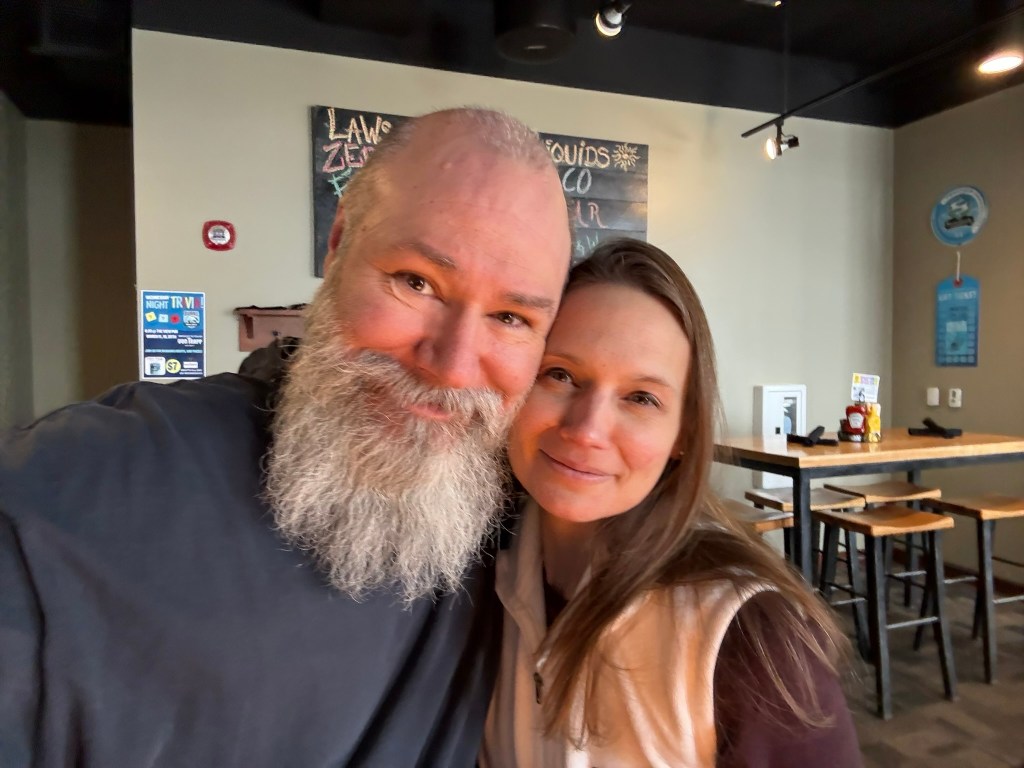
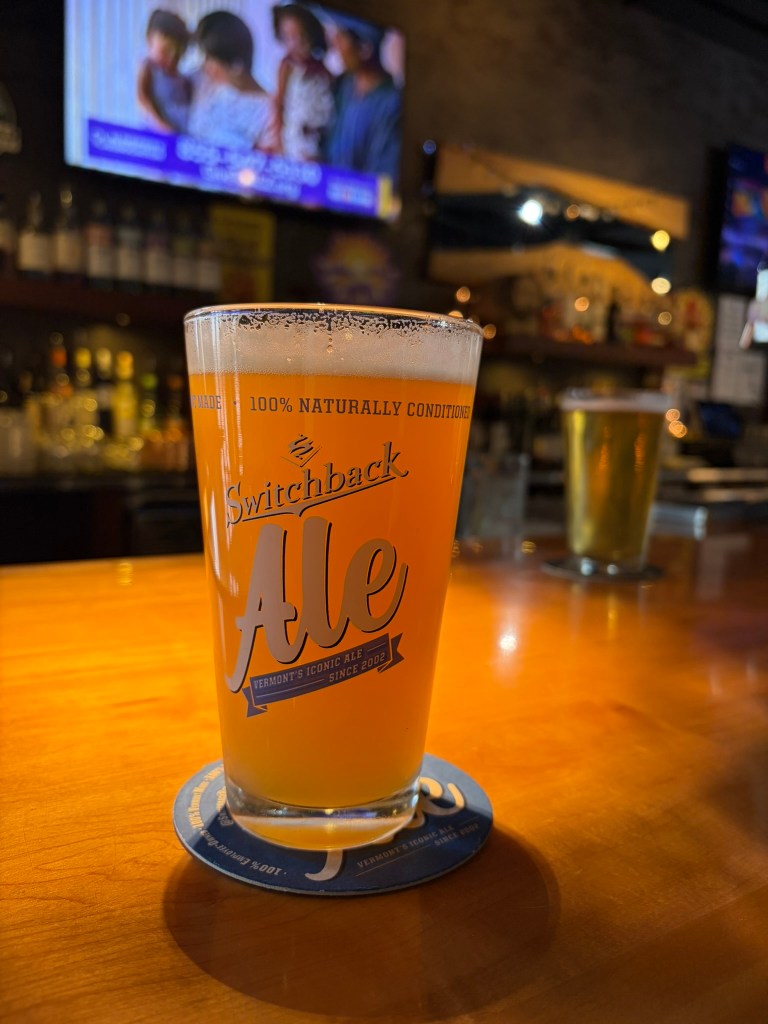
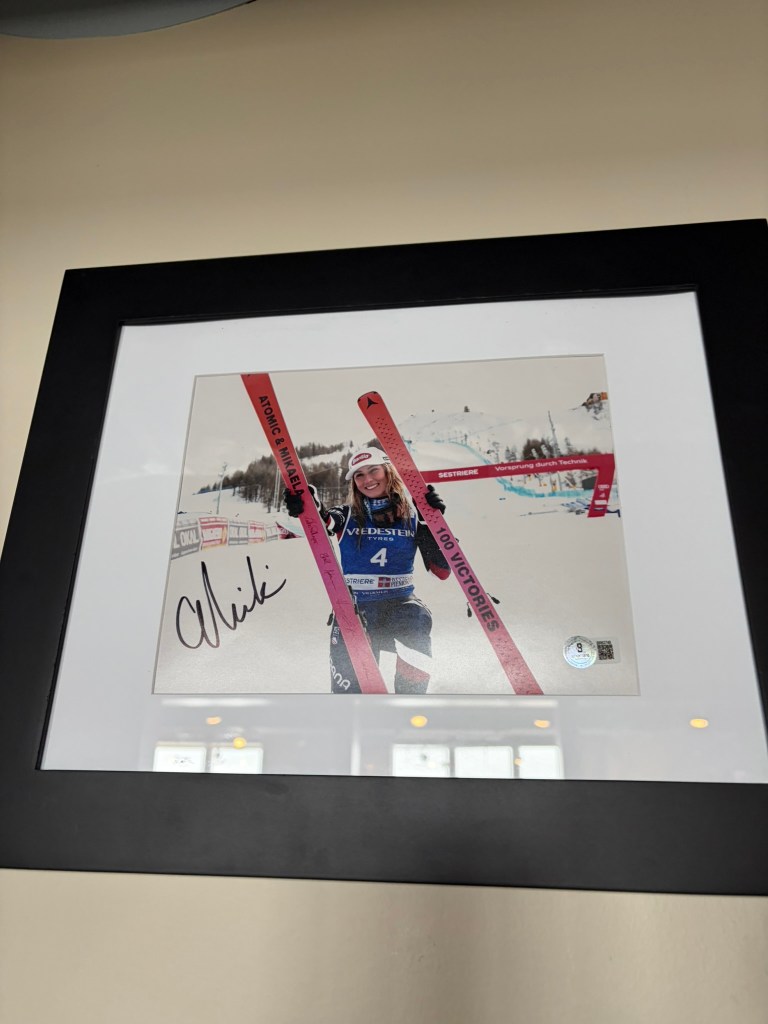
On a personal note, I turned 44 on March 23. It was a beautiful day–skiing on Burke Mountain followed by an apres of craft beer and lunch with Jer at Burke’s The View Pub.
Apres selfieMy beer was actually a Phaze IPA on tap from VT’s Four Quarters BrewingThis pic of Mikaela Shiffrin hangs in the Burke Mt Hotel lobby; she’s an alum of the Burke Mountain Academy
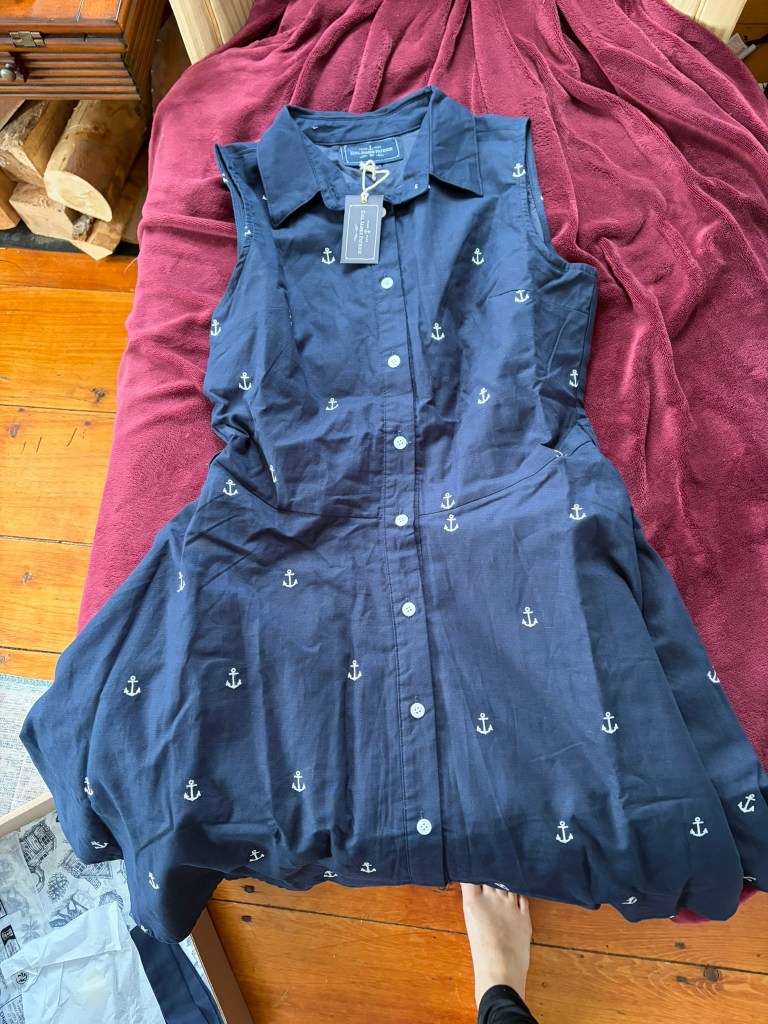
That evening, I opened my gifts: a lovely summer dress from KJP and seven new punch needle projects.
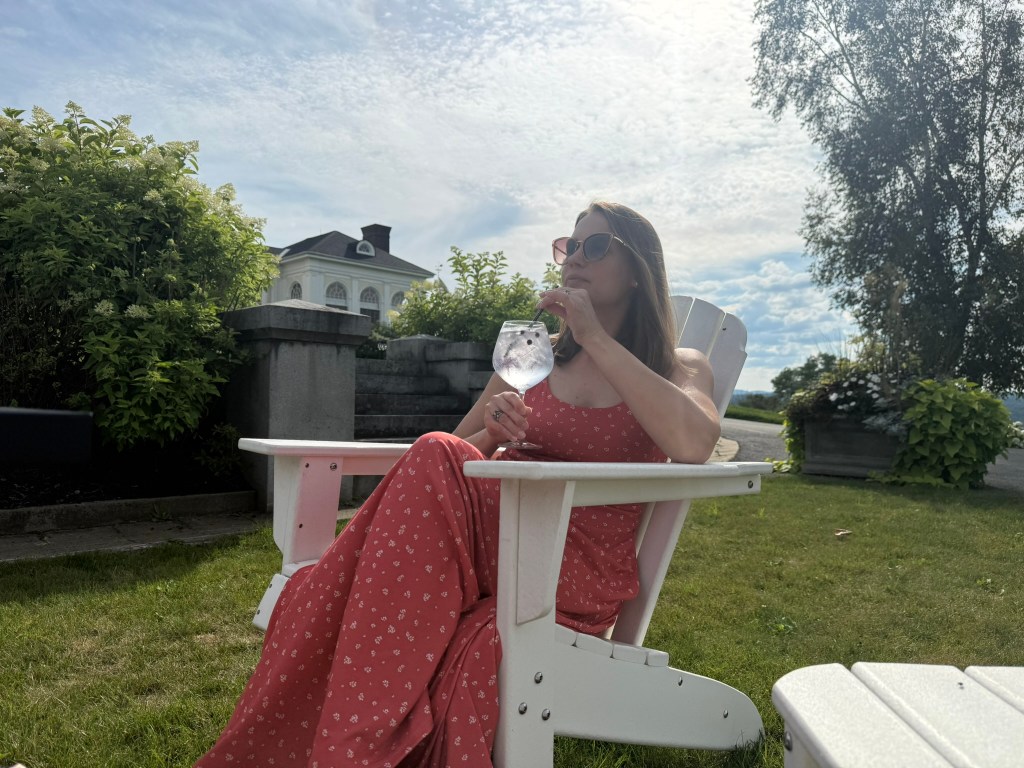
Perfect new dress for seaside cocktailsin an Adirondack chair
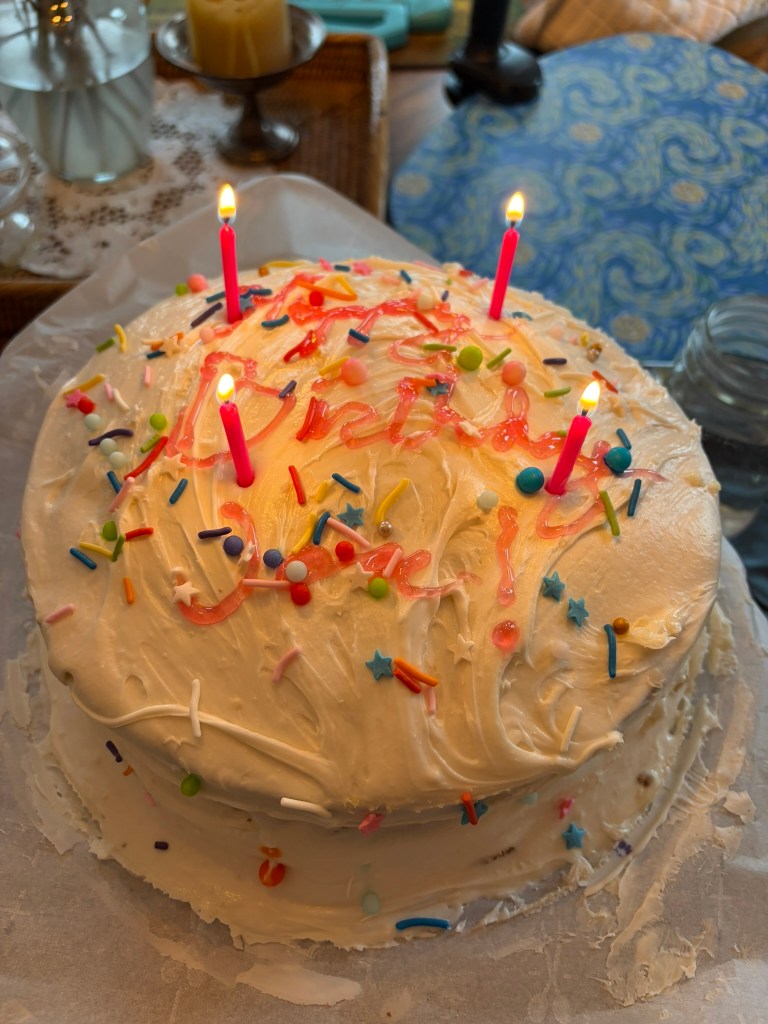
We also enjoyed a delicious cake my husband baked himself, and I’ve had a blast spending an Amazon gift card from my in-laws and buying a package of Pilates classes with the money from my own parents. I have been absolutely spoiled.
So delicious!
Daphne started physical therapy two weeks ago and is doing well all the way around. I’ll post more about that soon.
Thank you for taking the time to catch up with me! I’d love for you to share any of your own updates in the comments. Enjoy the springtime!
It’s been a tough year for many of us, for a lot of reasons.
So, to end on a positive note, I’m offering my own list of favorite bookish things among all the others shared on blogs and social media this time of year. I’ve always found these lists a great way to discover amazing new people and things and to celebrate what we’ve loved.
So, without further ado, here are my favorites:
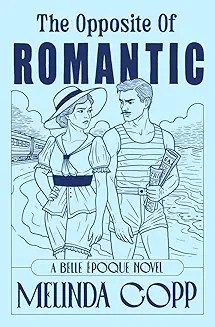
FAVORITE INDIE AUTHOR: Melinda Copp
Copp writes historical romances set in Belle Epoque France, and among other aspects of her work, I find her choice of setting refreshing. I adored Love and the Downfall of Society and Complications in Paris, where we meet the circle of modern, admirable women on whom the books center.
This novel is a swoony, well-paced, and surprisingly sweet story considering how thorny Vanessa, the main character, is. The novel’s singular, first-person point of view (a departure from Copp’s dual third-person POVs) works well in this one, giving Vanessa, a rising female journalist, a fresh and honest interiority. It allows readers a deeper insight into her feisty personality, and for this reason, I couldn’t dislike her, even though she’s initially selfish and does some cruel things.
She’s an orphan, having lost her entire family when only a teenager, so we understand that her apparent callousness and cold ambition—now also threatened when her newspaper is bought by a rival publication—are a shield behind which she tries to protect herself. So often, she acts out of fear—some of it valid, some of it inflated in her own mind—and it takes a truly good man like Benoit Levin, plus some lovely female friends, to help her open her heart to new vulnerability, wisdom, and deep, surprising love.
Her first kiss with Benoit is magnificent! I love it when the first kiss is done well in a romance (a mediocre one is tough to rebound from), and I find this one an absolute delight! Of course, the book’s title is ironic—it is highly romantic.
The setting is also an especially lush escape. The descriptions of the sea and sky at Cabourg on La Manche (the English Channel) are beautiful, and I particularly enjoyed them as we are resigning ourselves to a cold, early winter here in northern New England.
Benoit might be arguably too perfect, but you know what? Nearly perfect men do exist; I’m married to one. Benoit is a good foil to Vanessa, and he does make the mistake of keeping something important from her, so he’s not totally infallible.
Finally, I appreciate how Copp makes Benoit’s domestic life messy—it forces Vanessa to take an even further step beyond herself when considering a future with this man, and I found that realistic. So many of us have challenging home situations ourselves, and for me, this detail made the book especially relatable.
Copp is finding her stride with these characters and their world, and I can’t wait for her next Belle Epoque title! I hope it’s Catherine’s story; I need to know what precisely is up between her and her almost-stepbrother, Henry. Talk about messy!
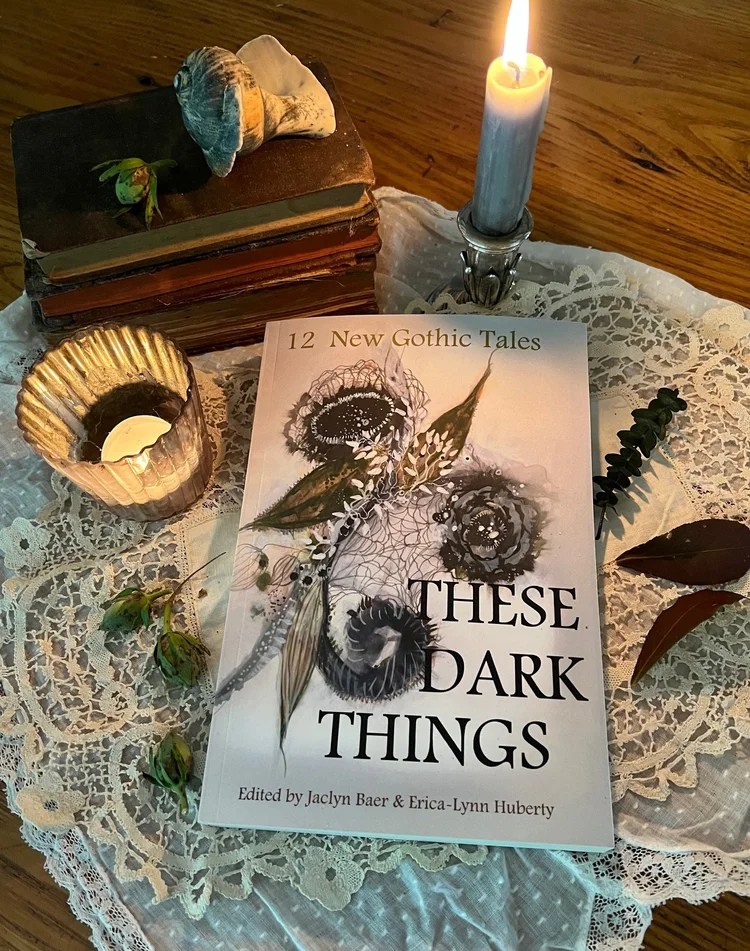
FAVORITE BOOK FROM A SMALL PRESS: THESE DARK THINGS
I was so impressed with this anthology of modern gothic short fiction, edited by Jaclyn Baer and Erica-Lynn Huberty and published by Briar Press New York. It’s a strong collection of well-crafted psychological horror, often quiet in tone and approach but bold in themes and effects. For a more thorough look, see my blog review from January.
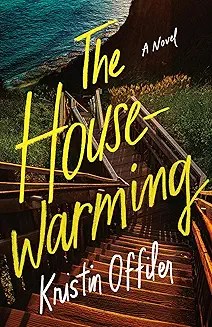
FAVORITE DEBUT NOVEL: THE HOUSEWARMING by Kristin Offiler
The Housewarming is a strong debut that combines elements of women’s fiction with psychological thriller. Offiler writes well about early motherhood and female friendships, but I especially appreciated her treatment of true crime fandom. It’s a relevant ethical issue, and it made me think twice about my own love for true crime podcasts.
This beachy, summery book is set on Block Island and in Newport, RI, which I have a personal connection to through my husband’s family. In fact, we just spent Thanksgiving in Newport, and as we window shopped, I found myself thinking a lot about the story, which has lingered with me longer than I anticipated.
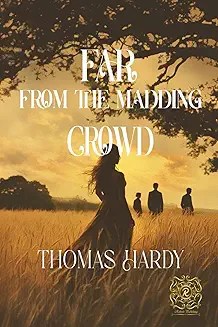
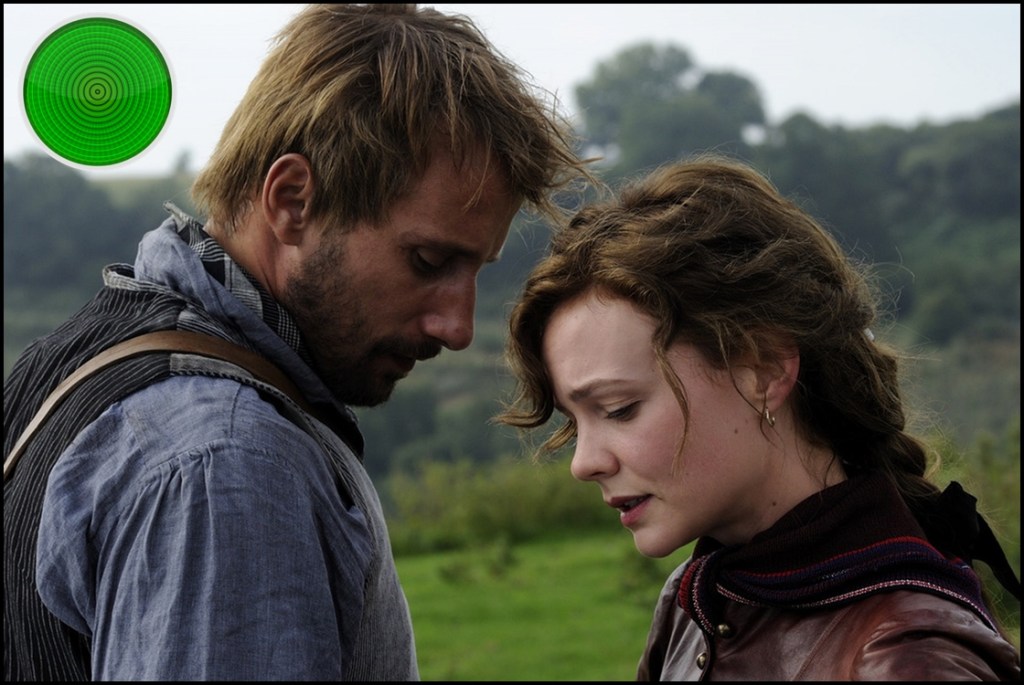
I try to read at least one classic every year. I love Hardy and hadn’t read anything by him in years, and I gravitated to this title because I now live in the countryside so I thought I’d find his work even more engaging. Plus, I’d seen clips from a movie adaptation staring Cary Mulligan floating around on Instagram, and the story looked beautiful. When I started the novel, though, I was bracing myself for tragedy–Hardy can break your heart like no one else, considering his masterpieces Tess of the D’Urbervilles and Jude the Obscure.
I was surprised and delighted, then, with the joyful, deeply satisfying ending of Madding Crowd. It is a perfect testament to what mature romantic love and marriage is–selfless respect and steadfast partnership, through and through.
Despite being initially rejected, the humble, grounded shepherd Gabriel Oak stands by his former sweetheart and current employer Bathsheba Everdene through hardship and heartbreak. When she is finally free to recognize how much she needs him–how much she loves him, in fact–he is there to return her love openly, and the emotional triumph is well earned for both characters. I found myself in tears, floating on a cloud of elation, as I finished this book, marveling at the universal truth of certain human experiences, no different despite a hundred-plus gap in years.
Then I went and gave my husband a big hug.
Hubby and I at The Nutcracker at Rosecliff in Newport, RI, 11/26
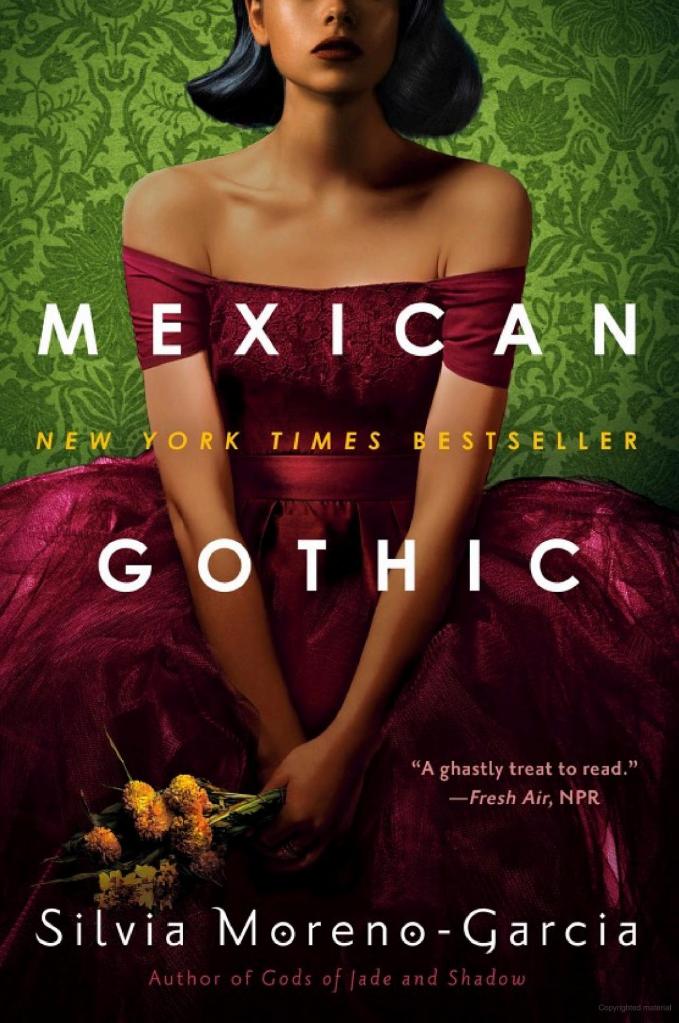
OVERALL FAVORITE NOVEL: MEXICAN GOTHIC by Silvia Moreno-Garcia
Back in July, when I closed Mexican Gothic for good, I felt an immediate pang. Though the story disturbed me, I already missed it. It had wormed its way so gorgeously and insidiously into my imagination that it hurt to think there wasn’t another chapter to devour, another act to get gorgeously, frightfully tangled up in. That there was nothing new to contemplate.
If you are a fan of gothic fiction and haven’t yet read this contemporary masterpiece of the genre, please do so right away. Author Silvia Moreno-Garcia does absolutely “get it right,” as the Telegraph claims in the opening testimonials in my print copy.
Everything is there—the driving arch plot of a single, modern, stubborn heroine out to defeat a seductive, all-consuming, patriarchal evil, even as she proves to herself her own depth and mettle. The enormous, isolated old house is perfectly neglected and rotting from within yet very much alive and grasping. The Doyle family is everything you can ask for in an antagonistic gothic clan—insular, incestuous, despairing in some cases, and depraved in others.
The style and plot develop beautifully in the author’s pacing, beginning with a creepy setting and that odd, creepy family shackled to the past. It develops in small, deceptively simple details here and there to suggest all is not right, despite the protagonist Noemi’s rational worldview. It builds in the surreal, fragmented, nightmarish dreams she begins to suffer, and finally drives the reader relentlessly through crises and a climax of literal events harrowing and developed enough to reveal that terrible potential fate worse than death. The ending, thus, if not entirely surprising, is fully cathartic, especially as love and perseverance win the day.
Yet, brilliantly, Moreno-Garcia does not end this tale with unqualified optimism. There are fears planted in the main characters, foreboding seeds of doubt which suggest the thematic question, can one ever truly recover from trauma? Can one ever escape their nature, whether that nature is real and inherent or a misperception of the victim’s, ripe enough for a self-fulfilling prophecy? It is a resolution left open just enough to leave room for some doubt, providing readers with a final, meditative shiver. It is also a resolution that pays respect to the depth and complexity of traumatic experience and how it might ultimately impact victims.
Essentially, that’s what this novel is about, in my opinion—trauma. Specifically, the trauma of domestic captivity, for both women and men. For the female characters, that suffering manifests especially as sexual abuse by a sadistic patriarch (without being too difficult and graphic to read), supported by the terrible compliance of the matriarch. That is the essential horror—a real life one, tragically—that firmly roots this fantastic, speculative tale into our everyday world and makes it so terribly compelling and real.
So there you have it–my favorites. Thanks for reading! I’m planning to take a break from all writing, basically, but I’ll be back here on WordPress in January.
Thank you, too, to anyone who visits this site regularly. I’ve enjoyed sharing my thoughts, hopes, joys, and struggles with you, and I hope you’ll come back for more, even if it’s just the occasional scan.
Happy holidays! Have a wonderful, restful break doing all the things you love with friends and family. All my best wishes to you.
Daphne wishes you a happy holidays, too!
I hope we can end this year with a measure of peace and joy as we brace for another, which will no doubt include its share of political chaos and general uncertainty. I plan, however, to continue leaning into all the people and things I love and being grateful for what I have. Thank you for being part of that.
Last year, I discovered how awesome it felt to have an artist illustrate a picture for my work.
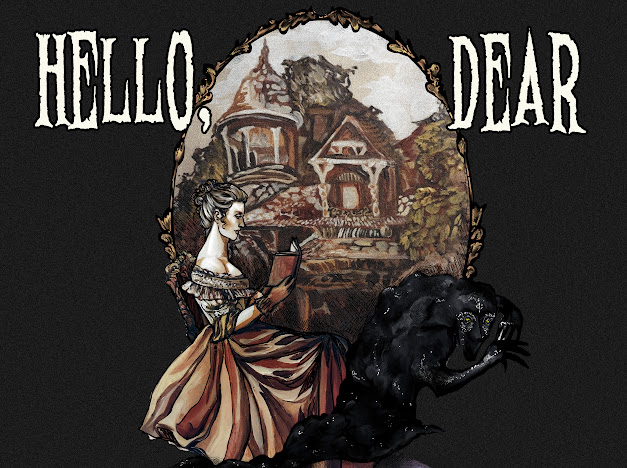
Artist and writer Sybil Wainwright created the above for my feminist ghost story “Hello, Dear,” published by Amaranth in September of last year. I love how she chose sepia tones to mimic the look of an old photograph.
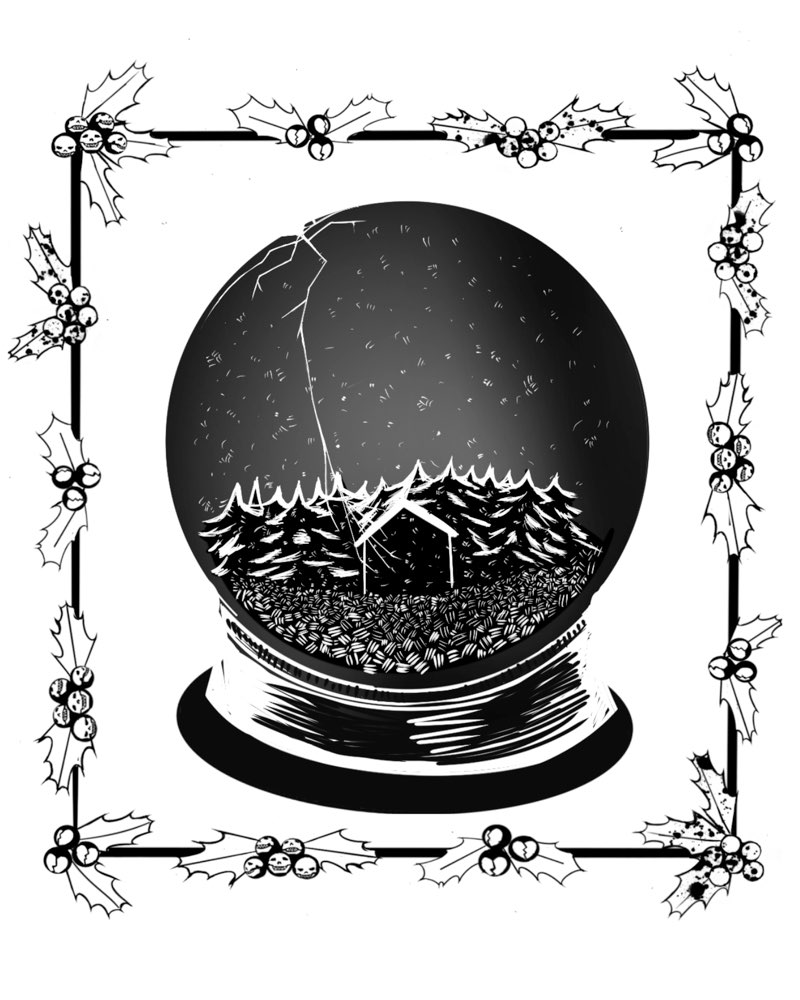
Artist Khareese Orr created this one for “So Many Fragile Things,” a Christmas horror story with dark fantasy elements, published by Amaranth in December. The crack in the glass suggesting a hand seizing the house is perfect. I also appreciate the little images inside the holly berries.
This year, no one is commissioning work for any of my pieces. It’s looking like I’ll end 2025 with only one story published, though I believe I’ve improved in my craft. That’s how it goes sometimes, I suppose.
I decided, however, on whims of rebellion and self-love, that I would commission something for myself. Why not?
I was also curious about how that process worked. How does the writer communicate their vision to the artist? What are the details of a contract? What does the creative process look like? Commissioning book art, especially cover work, is a key piece of self-publishing, which is something I’d like to learn more about.
So, after being taken by the beauty of Marta Into the Forest’s gorgeous, gothic-y medieval creations, I reached out to her via Substack.
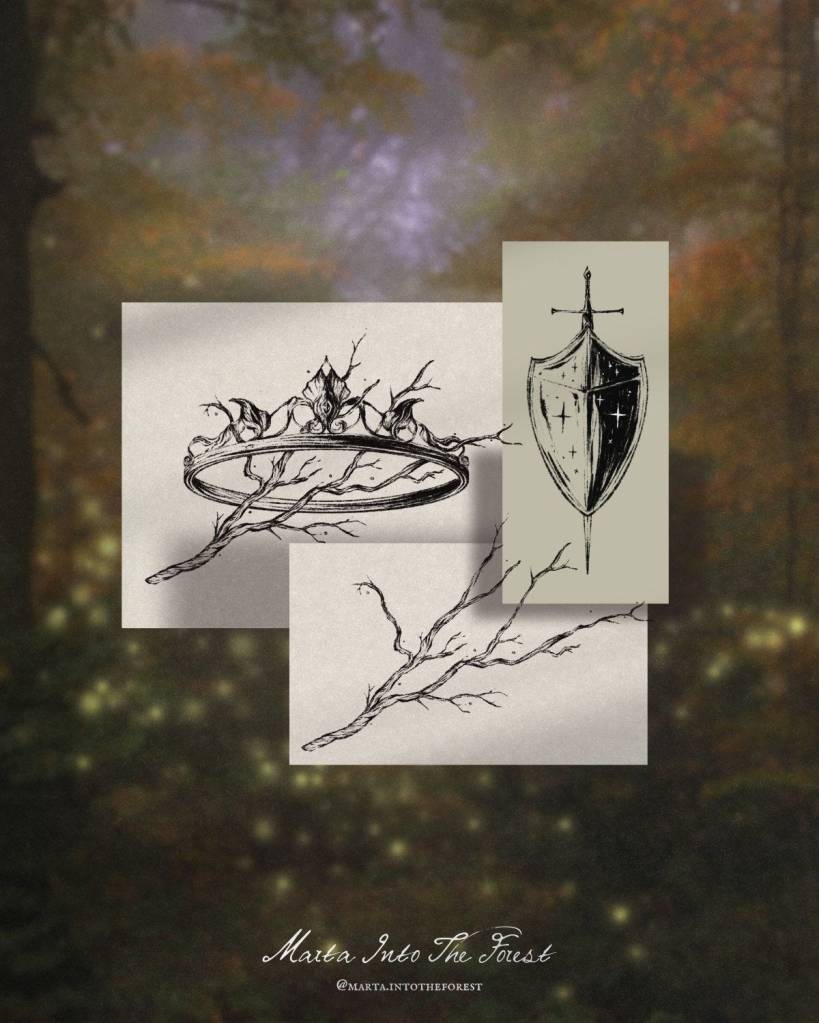
Here’s a small sample of the work she’s shared there:
Samples of internal book art
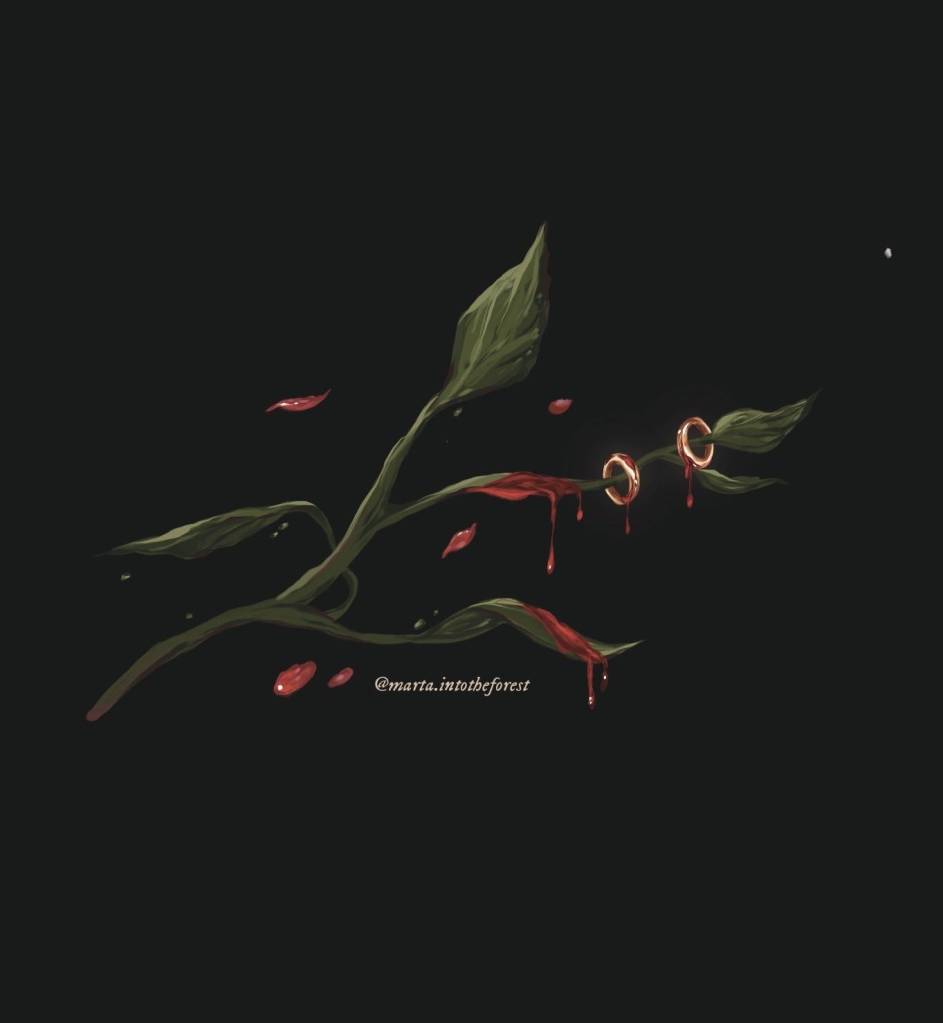
Titled “The Blood Rings,” ominously beautiful. There’s a definite narrative here, probably a commission from a writer.
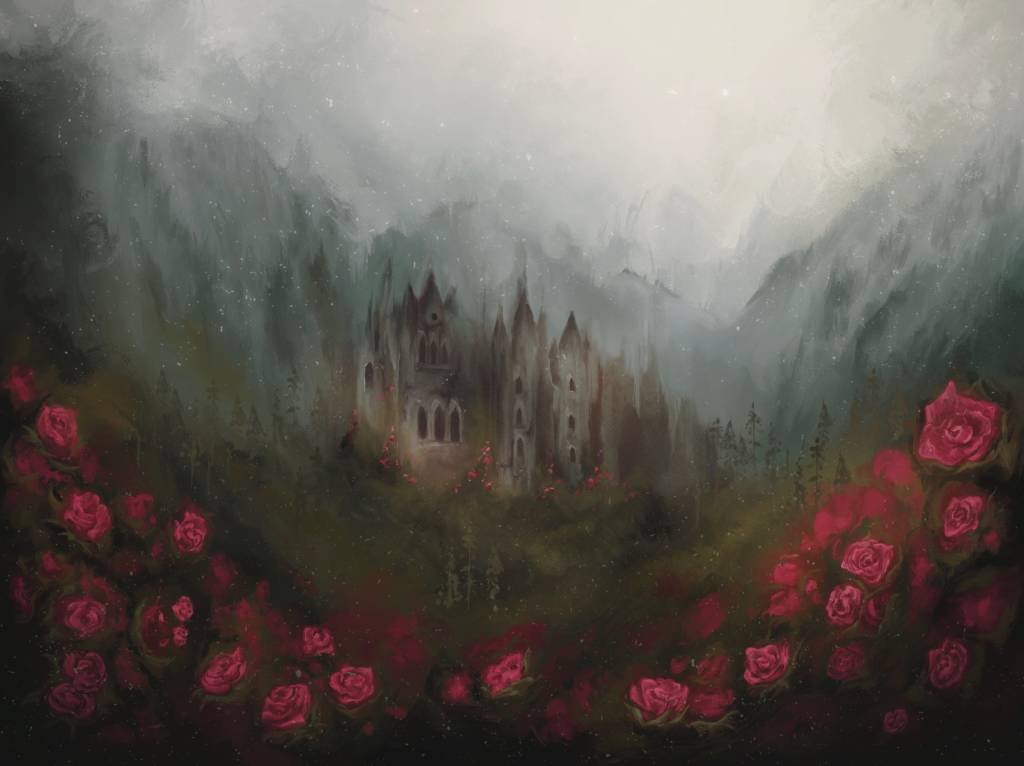
Holy hell, look at this gorgeous end paper… hauntingly impressionistic. Done for author K.M. Davidson’s book “Sundered Heavens”
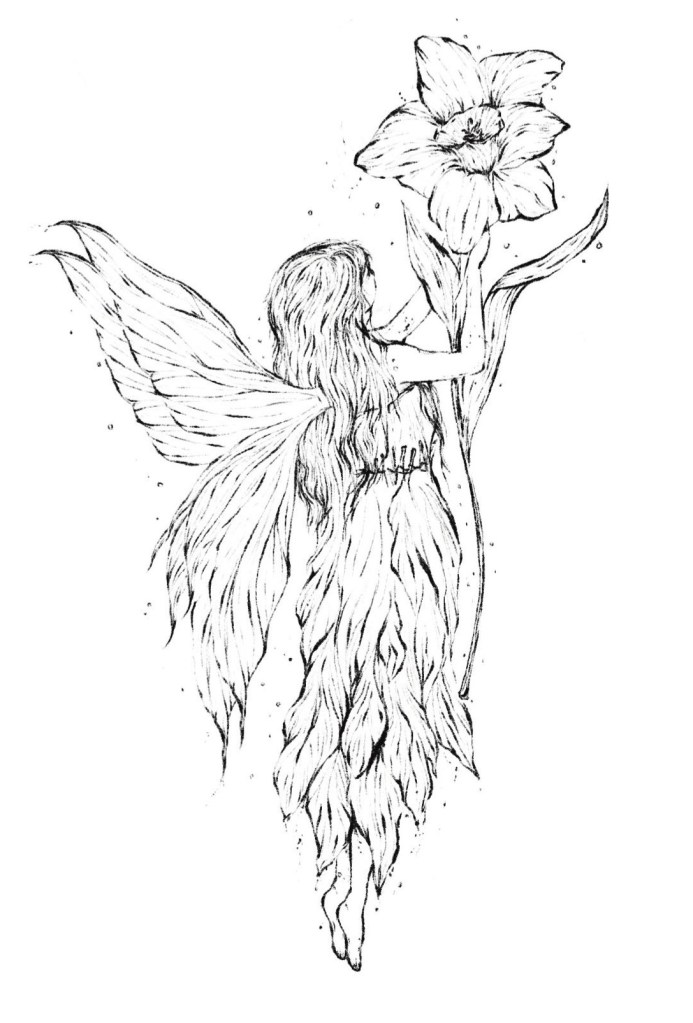
Marta was warm and quick in her response. She had openings starting in October, so on the first of the spooky month, I sent her a short description of my vision for an internal art design inspired by “Elspeth and the Fairy.” I relayed how the character was a fairy with pointy ears and long dark hair, but her ears didn’t have to show. I visualized her holding a daffodil (significant to the story) and wearing a gown of woven leaves, as she’s described in the tale. I explained she is beautiful but haughty and antagonistic. I also said I would defer to Marta as the artist–whatever she thought would look best, I was game to see.
I paid the fee–a very reasonable one–upfront and signed the contract with Marta. I agreed to limited rights, allowing Marta to retain the image for her own portfolio and marketing purposes, basically, and she got started. She sent me samples of her work-in-progress for feedback along the way (as outlined in the contract), and they were like little pop-up treats for my in-box.
If you’re not familiar with the term, an internal art design is a small sketch or symbol found inside the pages of a novel or story collection/anthology, often at the top of a chapter or above a section break within a chapter or story. It adds a little flair to the book’s format, an additional little aesthetic appeal.
Marta worked fast, finishing my commission in about two weeks. So, without further ado, here it is…
Cue drumroll…
Image by @marta.intotheforest
Isn’t she gorgeous?! She is Lady Rowan, a fairy guardian of early spring and antagonist to Elspeth in my fairy tale, published in Spellbound in September of this year.
I left a fair amount up to Marta, and I love how she chose not to show Rowan’s face. This is common in book and especially cover art, as I understand it, the idea being that readers get to envision the exact look or beauty of the character in their own minds. It’s arguably more universally appealing, and I can understand that notion.
Happily, this image works well not only for “Elspeth and the Fairy” but even better for the fictional piece I just completed, a novelette and sequel to “Elspeth” in which Rowan makes a brief appearance at the very end.
Again, if you’re not familiar with the term, a novelette is a fictional work longer than a typical short story but shorter than a novella. It ranges in word count from 7,500 to 17,500 words.
I wrote my 12.5 k sequel, quite simply, because I just wasn’t ready to be done with the story’s world. In fact, I started it the day after Spellbound was released.
I was intrigued by the idea of writing another version of the same ending, from a different character’s perspective. How could I flesh him out? What were things like through his eyes? How precisely did he feel? What exactly did he grapple with, and how did he change? How could I develop the love story itself, unfettered by word count and completely free for me to write exactly what I wanted to?
I call this piece (more a historical fantasy romance than a fairy tale) a sequel because it does extend the story a little way beyond the first tale’s end, but really it might just be a companion piece.
And you know what? Writing it was deeply satisfying.
In fact, it turned into my unexpected passion project for the year.
I did not write it with an eye toward publication (though now I’m considering what I could do with it on my own terms), and that proved meaningful because it reminded me why I devote most of my free time to this fiction thing in the first place.
I do it because I love challenging my imagination through the medium of language. I love the act of writing itself, regardless of the outcome.
It is, first and foremost, my ultimate act of self-care.
I’m no longer a working professional strategizing and problem-solving on a daily basis. So, writing keeps my mind sharp and my creativity nourished. It allows me a healthy escape and even a way to manage difficult emotions. It gives me a purpose beyond my domestic life and even something toward which to aspire (as long as I remain firmly rooted in its primary purpose). When I’m in that delicious flow state, it gives me a way to transcend myself, even when I’m writing utter dog crap.
It’s magic, in short. And not just magic in the metaphorical sense but in the literal, if we define magic as “the practice of moving natural energies to effect needed change… a tool to improve ourselves and the world in which we live” (Scott Cunningham, from Wicca: A Guide for the Solitary Practitioner).
My new novelette does have a working title, but I don’t want to include it here in case anyone reading this post hasn’t read “Elspeth and the Fairy;” I don’t want to give too much away.
I will share a blurb for it, however:
A curse breaks.
A second chance reigns.
A first chance aspires to love.
For ten years following a witch’s spell, the mysterious Muir has labored as a wretched half-man, half-goat in the scullery of a minor lord, his true identity unknown. Only a maiden of the household, the brave and sympathetic Lady Elspeth, has shown him protection and care. In return, he has done his best to guide her on her quest to save the man she adores, the afflicted Lord Alistair, heir presumptive, from the fairies wreaking havoc in a kingdom without a monarch.
Now, having proven victorious in her trial, Elspeth has not only saved Alistair but someone else… And Muir, restored to his former glory, is now free to pursue all that’s his, including his beloved Beth.
But first, he must find her while wrestling deep, new shadows in the dark heart of the forest. Can he reach his maiden in time, even as he confronts his greatest failures? And if he finds her, will she even want him?
Can he prove himself worthy of her?
This blurb is definitely a draft and little cringey, but hey, it’s early. Thanks for letting me share it with you! If I can work up the courage, I might share the very first scene of Chapter One in a new post tomorrow.
I hope you’ve enjoyed this one full of beautiful images. And I hope your November is going well. Thank goodness the government has reopened…
To wrap up, here are the latest additions to my list of things I’m thankful for, each one inspired by the goings on of that particular day. This list covers Nov 8 through today, Nov 13:
8. A sweet daughter who still loves spending her Saturday with Mom and Dad
9. Morning cuddles in bed with coffee while the first snow falls outside our witch’s window
10. Doing housework leisurely while T Swift sings through my earbuds (I’m currently obsessed with the acoustic version of her new song “The Fate of Ophelia”)
11. Wonderful mother-in-laws who spoil our kiddo with things like hot air balloon windsocks just because Daphne took a fancy to these particular aerial vehicles. Happy birthday, Julie! Cary, we love you too!
12. A long To-Be-Read (TBR) list and being able to swap book recs with my own amazing mama. I just got her to read Mexican Gothic.
13. A husband who knows how to buy me THE. PERFECT. XMAS. GIFT: A Nov 26th performance of The Nutcracker by the Newport Contemporary Ballet, done in one of the Gilded Age Newport RI Mansions, Rosecliff (where parts of the Robert Redford Great Gatsby were shot). Apparently, the audience will walk room-to-room for the first act and then enjoy the second act in the grand ballroom. I *cannot wait* for the Sugar Plum’s grand pas de deux under those chandeliers!!!
Thank you for reading. Do you have any news? Anything you’re particularly grateful for? Or any insight into commissioning artwork, if you’re an author?
Feel free to pop anything in the comments.
See you tomorrow, maybe. Next week, for sure.
XOXO,
Jenn
Download a free e-version of Spellbound to read “Elspeth and the Fairy,” which has the privilege of opening this collection of fantasy/magic stories.