Do you remember the first story that made you fall in love with a different time and place?
For me, that book was The Witch of Blackbird Pond by Elizabeth George Speare. It ranks #2 in the top three childhood titles that shaped my bookish tastes and, eventually, my writerly aspirations.

Here’s a synopsis of this wonderful historical novel, published in 1958 and winner of the prestigious Newbery Medal:
Orphaned Kit Tyler knows, as she gazes for the first time at the cold, bleak shores of Connecticut Colony, that her new home will never be like the shimmering Caribbean island she left behind. In her relatives’ stern Puritan community, she feels like a tropical bird that has flown to the wrong part of the world, a bird that is now caged and lonely. The only place where Kit feels completely free is in the meadows, where she enjoys the company of the old Quaker woman known as the Witch of Blackbird Pond, and on occasion, her young sailor friend Nat. But when Kit’s friendship with the “witch” is discovered, Kit is faced with suspicion, fear, and anger. She herself is accused of witchcraft! (from Goodreads)
I first read this book on my own when I was in fifth grade. I was introduced to it when I was out with a school friend at The Galleria, Houston’s biggest, fanciest mall at the time, right off the ritzy 610 Loop.

I’d spent the night with her, and her mom dropped us and her teenaged sister off there for the day (Jeez, can you imagine a parent dropping off ten-year-olds now to be anywhere alone in public?!). We walked around, bought candy at the fancy sweets shop, ate lunch like big girls at Birraporetti’s, and spent the remainder of our time inside one of the multiple book shops, maybe the Walden Books (ah, my Houston nostalgia is panging hard right now). We both spent most of our mad money on novels, and one of the titles Kelly grabbed was Speare’s famous book.
This was the cover on that particular copy:
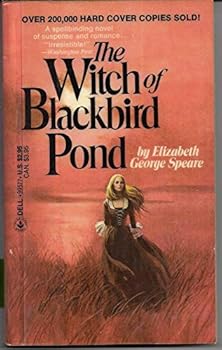
Isn’t that gorgeous? I was taken by it.
Others have been, too. Last year, Briar Press NY featured this one in a brief reel of their favorite old-school gothic books covers.
I can’t remember if I bought my own copy that day, but regardless, I read the book not long after that.
And, over the years, I read it again and again. It was even our English class’s novel study in eighth grade, the same year we first had American History.
What an impression it made on me.
Katherine “Kit” Tyler was a wonderful heroine–impulsive, determined, yet kind and easily chagrined. She was also homesick, which paralleled some of my own feelings because we had moved recently to a new neighborhood in a different suburb of Houston, and I had started at a new school and was making new friends. I sympathized with Kit’s feelings of loneliness and alienation.

I was also fascinated by the community described in the book. The New England Puritans, I understood, were a strict and strange religious people, and I remember thinking how awful it was for Kit to sit for hours every Sunday listening to a never-ending sermon as the pew “bit into her thigh” (that line has lingered). But the people of Weathersfield also enjoyed a strong sense of community and managed to work in some fun when it was appropriate. I learned about the village dame school, where Kit assists, Puritan courting rituals, and husking bees, for example. Later, when I studied Puritanism in more depth, memories of this story gave me a strong foundation for understanding, as children’s historical fiction ought to.
I also remember some of the imagery Speare uses to describe Kit’s first experience with the breathtaking fall foliage: “jewels” or “jewel-colored,” I believe were the words, and I thought how amazing it would be to see that for myself. (So glad I now can, every autumn!)
I liked the dynamic with her cousins, too: Judith and Mercy were quite the foils to each other as Judith was the town beauty and Mercy the quieter, kinder, more spiritually-centered model daughter. A Puritan household of three teenaged girls was an amusing situation, even if the liveliness was restrained.
Then, there was the romantic element.
The multiple romances develop quietly and naturally, well-aligned with Speare’s lovely, spare style. The central love story belongs to Kit and her sailor friend Nat, who serves as First Mate on his father’s ship that brings Kit from Barbados after her grandfather dies to Weathersfield, Connecticut, to live with her aunt and uncle.
Though Nat and his family hail from nearby Saybrook and our New Englanders themselves, they are people of the sea first. They have a worldliness and wisdom most of the other Puritans do not, so Nat understands why Kit dives into the water in the opening chapter to rescue a little girl’s dropped doll. Though irritated as he automatically jumps into the icy harbor after her, he isn’t shocked the way her fellow passengers are, once he realizes she can stay afloat. He understands that people from warmer climates often swim, that it’s not a sign of witchcraft, as the Puritans believe.
Thus, he is one of the few characters who seems to understand Kit–her habits, attitudes, and the world of tropical England from which she hails. He is her only lifeline to home; he is also a friend of Quaker Hannah’s, like Kit. It is there, in Hannah’s home on the outskirts of the village, helping out this gentle, loving elderly lady, that Kit and Nat are reacquainted and their friendship deepens.

When Kit is arrested on charges of witchcraft–not long after poor old Hannah herself–guess who rescues them both?
It is when the novel resolves, however, when Kit is safely back in her aunt and uncle’s home and Nat is gone on another long voyage, that she aches deeply for him. She realizes she must love him and fears she will never see this nonchalant, happy-go-lucky, yet noble young sailor again. In the novel’s final scene, when she is visiting the docks looking for his father’s returned ship, she notices a new “trim little ketch” tied up, and a man in a bright, blue coat bent over checking cargo. It is Nat, and before she can restrain herself, she cries out for him. They run to each other, clasping hands. It is their first and only act of physical intimacy in the story, but it is hard-won and deeply satisfying. Nat tells Kit he wants to speak to her uncle and refuses to take her onboard the new ship that is now his own. When she protests, he tells her: “When I take you on board The Witch, it will be for keeps.”
Wow, did that make my little preteen heart swoon!
Another notable romance in the story happens quickly and unexpectedly between John Hale, a young minister, and Kit’s quiet, overlooked cousin Mercy (who I believe had a limp, if I recall correctly. Yay to Speare for including a character with a disability, long before inclusivity was lauded as a key value in children’s literature). John returns from an expedition fighting Indians. Having risked his life, he goes straight to Mercy, not Judith, who he’d been pressured into courting after Kit unintentionally caught the eye of the man, William, who had previously courted Judith. There, he puts his head in Mercy’s lap. That tender, honest moment, so rare for these two proper, people-pleasing characters, also made me want to leap for joy.
By the end of the novel, all three girls in Kit’s household are engaged to be married. Judith does find her way back to William, thankfully.
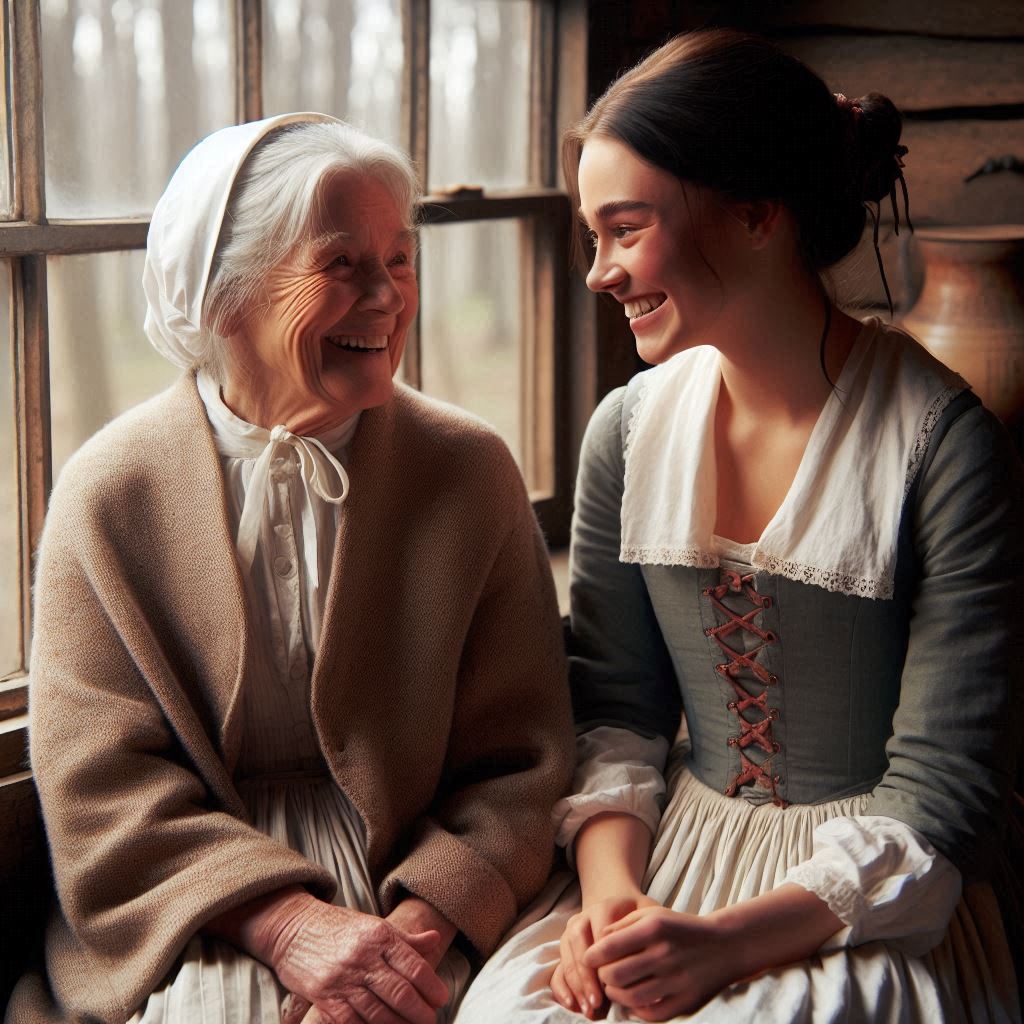
These are the attributes that stood out to me in my childhood. The book’s greater value, however, lies in its message of kindness and acceptance, particularly of those who are different from us, who we might not understand immediately. Old Hannah, a Quaker, has spent her life being dangerously judged and alienated by the righteous and indignant Puritan community. Yet, she remains a generous, virtuous soul, and Kit recognizes this truth, even as she faces a similar situation. Hannah is another friend and ally for Kit when she needs love and acceptance most, and together, Hannah and Nat represent a powerful found family for this novel’s heroine. New connections, friendships, and love are always possible, the novel also suggests.
Though published long ago, this book still has so much value. I have no idea if it’s still taught in schools. I suspect not, given that it probably appeals more to girls than boys, and best literacy practices suggest that material appealing to both sexes is more effective. Plus, it does not represent people of color, so its diversity is arguably limited. It’s also potentially problematic in that Kit comes from a Barbados plantation that would have had slaves; her beloved grandfather would have been a slave owner, and that’s not a topic addressed in the story. So, I understand if this “old fashioned” book is overlooked in favor of more modern, representative titles, and there are so many of quality out there.
However, Goodreads’ statistics give me hope. According to their website, 2,431 people are currently reading The Witch of Blackbird Pond, and 85,197 people want to read it. They’re probably all adults, and that’s totally okay. These numbers are impressive for a children’s novel published 67 years ago, and they cement Elizabeth George Speare’s legacy in historical fiction.
What was a favorite historical title of yours when you were young? What did you learn from it?
See you next week, when I plan to fill you in on the craziness of our June.
XOXO,
Jenn
 Jennifer Shaw