Hello, rejection, my old friend. I’ve come to talk about you again.
But, as promised, this post is brighter.
Last week I lamented a difficult rejection I got early in July. Suffice it to say, it was for a short horror-romance I felt good about. I’d worked hard on it, and I thought it had a good shot. I also really wanted the validation from that particular small press.
This week, I’m feeling better. The sting is almost gone, and after three weeks reflecting, I’m reenergized for two reasons.
First, I get more time to make my story better.
If I still like it, then I’ll dive back in to make it more tense and propulsive, particularly at the beginning. If the editors only read the first few paragraphs of each submission, I can see how they might have thought mine was too slow.
Having listened to a fabulous podcast on effective scene work, I’ve already considered how I might intensify the conflict in that initial scene while still laying the foundation for the female main character’s arc. Right now, things are nearly perfect for Carly in those opening paragraphs; I think there’s a lack of effective tension.
Such revisions could also improve Curran, Carly’s love interest and the story’s primary antagonist. Right now, I suspect he’s rather bland, especially at the beginning where he’s just pleasing Carly. That’s a definite failing because his awful backstory and inner struggle (despite the glow-up he’s experienced) make him absolutely ripe for deeper characterization, even in the story’s first section of dialogue. There’s opportunity for him to resist Carly because he desires her yet senses there’s something deeply wrong with him, so he wants to protect her, too.
Honestly, this challenge excites me. If anything, it will be fabulous practice for writing well at the scene level, even if this story never gets published.
Conflict! Conflict is the key, always. It’s the driving force, what compels the story forward, what gets readers turning pages. There needs to be enough of it, even at the very beginning. Even if it’s subtle.
More time also means the opportunity for professional feedback. I’d love to have a minor (translation: available and affordable) developmental editor who specializes in adult horror/speculative fiction review this story and tell me whether or not it lands. If it doesn’t (it probably doesn’t), someone who can tell me what might enable it.
What might ensure the story’s ultimate resonance and target reader’s satisfaction? Is either the A story or B story not clear enough? Is the horror element not awful enough? Is it missing a romance beat? Is the pacing off? Is there too much focus on one aspect and not enough on another? Does it suggest insensitivity regarding either of its harder topics (bullying, erotic asphyxiation/sexual assault)? Does this genre mashup just not work?
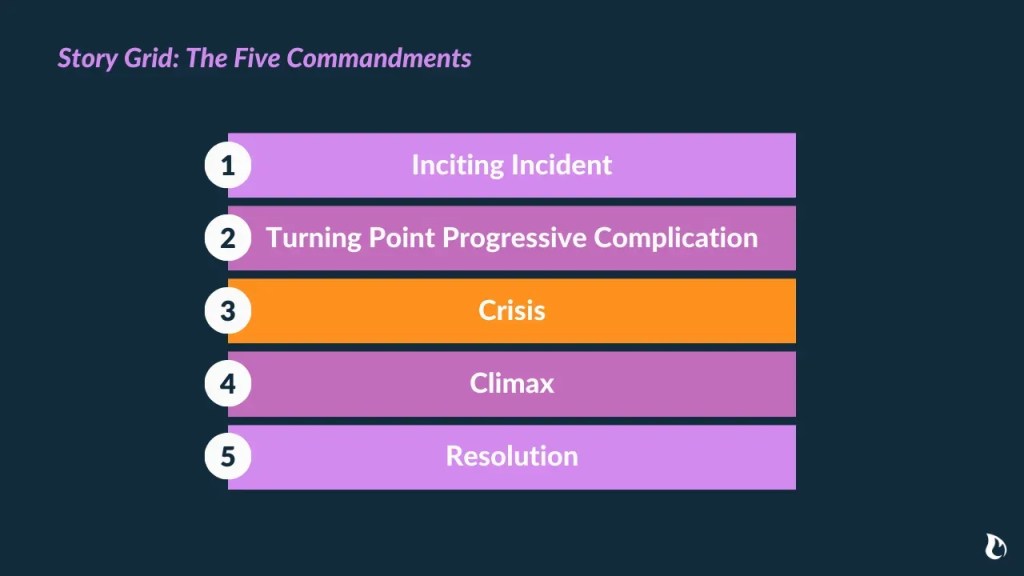
I truly think I can make this piece memorable and gratifying, and I’d love to start down a horror-romance path as a possible niche, if there’s promise here. While I can make additional self-edits with fresher eyes, ultimately I’d rather not rely solely on my own judgement, even as I’m reading Shawn Coyne’s The Story Grid right now (a method he claims can help writers edit their own work more objectively). I feel like I’m doing what he’s describing, but this self-perception could be totally distorted. It wouldn’t be the first time. I’d love a professional to weigh in, somehow.
So, there it is. More time, in this case, is a gift.
The other reason I’m feeling better is broader, more philosophical.
Generally speaking, rejection is protective.
Not just for the publication, but for the writer too. It hurts one’s credibility if a piece is published when it’s not ready, or the author herself isn’t ready. Even on a small scale, we want effective work out there in the world; we really only have one shot with a reader.
I already have some experience knowing a piece is in print when it needed more time. It’s not a good feeling. If we’ve already put in the effort to create something thus far, we ought to muster the patience to keep going, if that’s what the story needs. We need to delay that instant gratification, digging deep if necessary, to keep the big picture in mind, that long game. Our later selves will thank us for it.
And sometimes, rejection exists to remind us of that. Though it might feel like a slap, it’s not. It’s a pat on the head and a “shoo” out the door: Thank you, but go, please. Make this better.
I’m reminded of some advice from author Clare Beams, which I have printed and taped into my writer’s portfolio (yes, I’m the nerd who does stuff like that):
“Be as patient as you possibly can–and then try to be one degree more patient than that. This path is a wonderful one in many ways, but it is long, and will feel long, for just about everyone at one point or another. Taking the time to get the work itself exactly right–to craft the absolute best possible version of this piece of writing that this version of yourself is capable of producing–is something you will never, ever regret.”
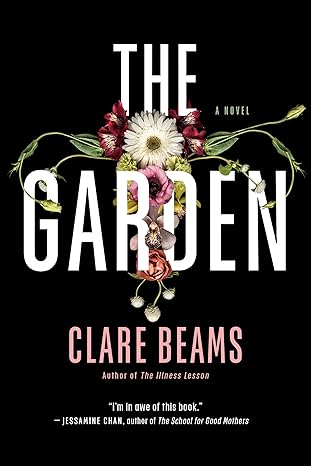
Beams goes on in this same Writer’s Digest interview to describe the time and revisions it took to get her novel The Garden just right:
“The first glimmers of the idea for this book came to me in late 2018. I sold it as a partial manuscript to my editor in early 2021, and submitted a full draft to her about a year later. She and my agent and I then all jointly decided the book was sapping some of its own hauntedness by dipping into the wrong head for big swaths (at that time the book had two main points of view), and that the whole thing needed to be told from Irene’s perspective. This was absolutely the right course of action, though it was daunting—I wouldn’t say it represented any kind of change in my original vision for the novel, but rather a change in my sense of how best to capture that vision. The various subsequent rewrites took about a year.”
This is a fabulous example: a single novel six years in the making, involving a collaboration that resulted in major, “daunting” revisions to improve its execution. The praise for this book, however, speaks volumes about the value of that time and effort. Though I’m a newb to all this, I don’t think what Beams describes is exceptional. I think such time and effort are the professional norm.
So, I am hopeful. Rejection is normal, even beneficial, and my armor is getting sturdier, my patience better. I plan to get back into this horror-romance soon, while Daphne still has one more week of extended school year and I still have some time to myself on these summer mornings.

If, in the long run, anything interesting develops for this project, I will be sure to update you.
In the meantime, please feel free to share any other reasons why rejection is good. I’m sure I’m overlooking something.
I hope you are enjoying your summer!
XOXO,
Jenn

 Jennifer Shaw