A couple months ago, I hopped on this bandwagon and began writing about my favorite novels from childhood, the ones that sealed my love of reading and proved the most formative in my literary tastes and aspirations.
To recap:
Number Three: Wait Til Helen Comes by Mary Downing Hahn
Number Two: The Witch of Blackbird Pond by Elizabeth George Speare
And, here is Number One. The book with the most enduring influence, the one I loved most as an introverted, bookish kid learning to adore all things creepy yet beautiful.
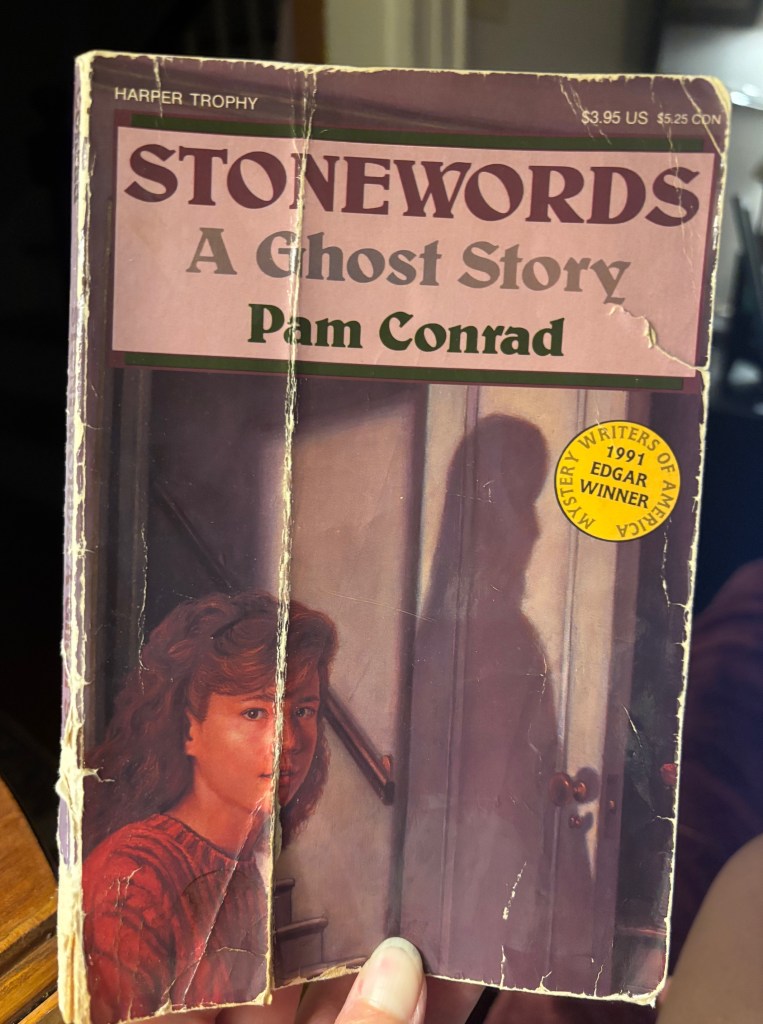
Stonewords: A Ghost Story by Pam Conrad (published by Harper Trophy Books in 1991)
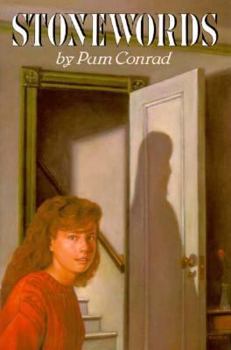
The first time Zoe met Zoe Louise, Zoe was four years old. Zoe Louise was more than 100. From that day on — living in the same house, separated by a staircase and a century — Zoe and Zoe Louise have been an important and permanent part of each other’s lives.
Now Zoe is older. And although Zoe Louise never grows up, she is changing in dreadful, frightening ways. Time is running out for Zoe’s best friend — and Zoe is the only one who can help her. To do so, she must travel back 100 years in time and somehow alter the past. But in changing the past, must she also change the present? If she saves her friend’s life, will she lose Zoe Louise forever?
An “eerie and gripping time fantasy.” (Blurb and quote from original printing, c/o Amazon.com)
Oh, this novel. I’m not sure I can do justice to how much I loved it, and how much it has affected me.
It is so perfectly and profoundly bittersweet, a love story about friendship. Zoe does in fact alter the past by saving Zoe Louise’s life. The consequence, however, is that the portal bridging their times closes for good, and Zoe never sees her first, and best, friend again. I loved that resolution–it was the right one, the inevitable one. It needed to happen, but it also made my chest ache. I understood even then, it was a story about the hard sacrifices of real love.
Isn’t that so apt for a story about growing up?
This novel also uses first-person point of view, though its narration is less immediate than Hanh’s in Wait Till Helen Comes. Rather, I remember it being more reflective. It’s the older main character Zoe looking back on her experience, and that more distant, wiser frame gives the language a simple yet sophisticated, lyrical quality. It’s been described as “spare,” which I agree with, but I remember thinking it was gorgeous and haunting. I began to absorb a lot about how word choice and point of view create tone and effect, thanks to Conrad’s style.
This book also included details delicious to a little girl like me. Zoe, who lives with her grandparents, enjoys an impressive playhouse that her Pop-Pop added as a kind of outdoor annex to their actual house. Inside is a child-sized kitchen and living room, which blew my mind. I would have sold my soul for something like that. I believe Zoe meets Zoe Louise, the ghost from the past, for the first time in that playhouse, where they become friends. I also loved that–I would have killed for a permanent playmate, someone who could show up randomly, at any time, in my own home, to be my companion and mine alone.
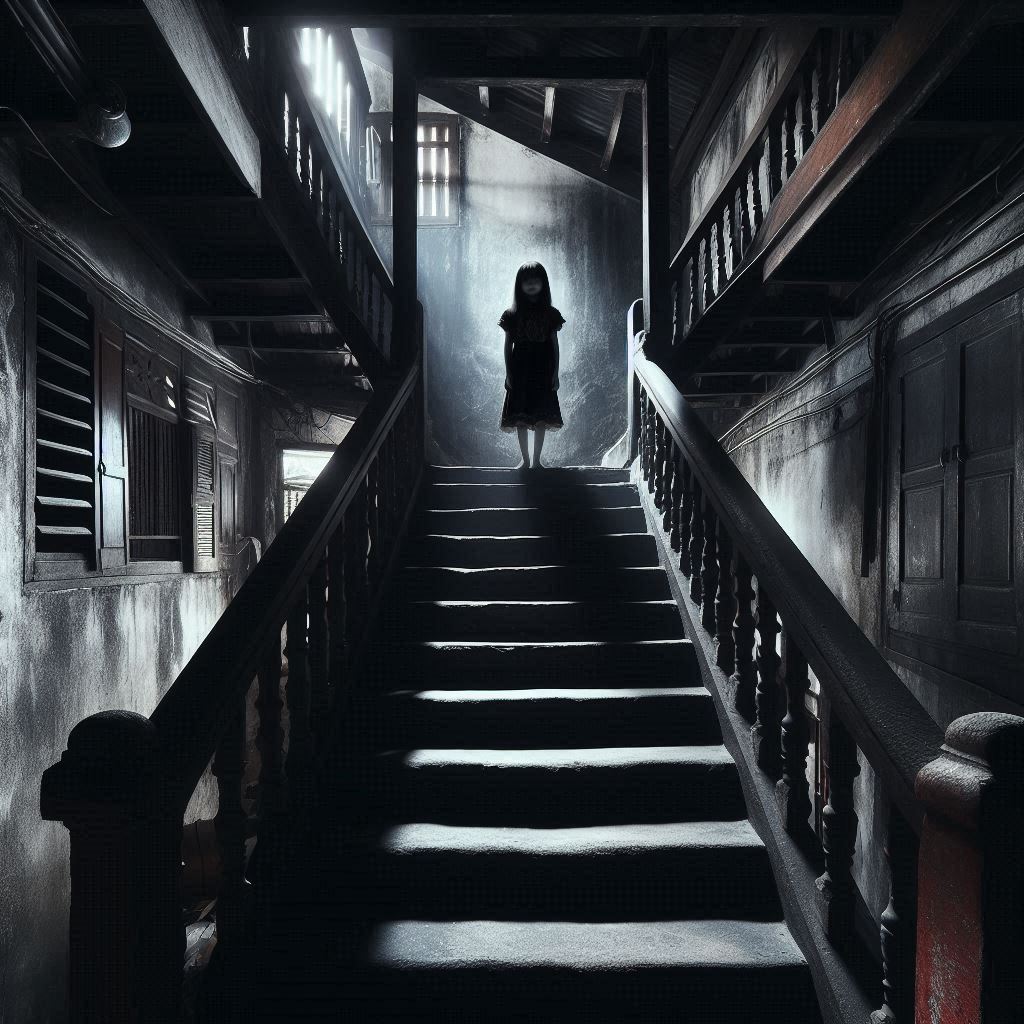
I realize now, as an adult better versed in literary subgenres, that this story has a definite gothic element. The past is very much alive and at play in events, and the house itself, or at least that magical back staircase, has an eerie energy of its own. It seems to facilitate events, as if the universe wants little Zoe Louise’s life to be spared. There’s even a macabre scene where Zoe Louise visits Zoe in the present time (as usual), except she’s rotting. Her body drips fluid, certain bones are visible, and this causes Zoe to realize she must act soon to save her friend from something terrible. In short, this book provided my first literary experience with gothic elements, and I absolutely ADORE gothic tales now, thanks in large part to this YA masterpiece capturing my heart.
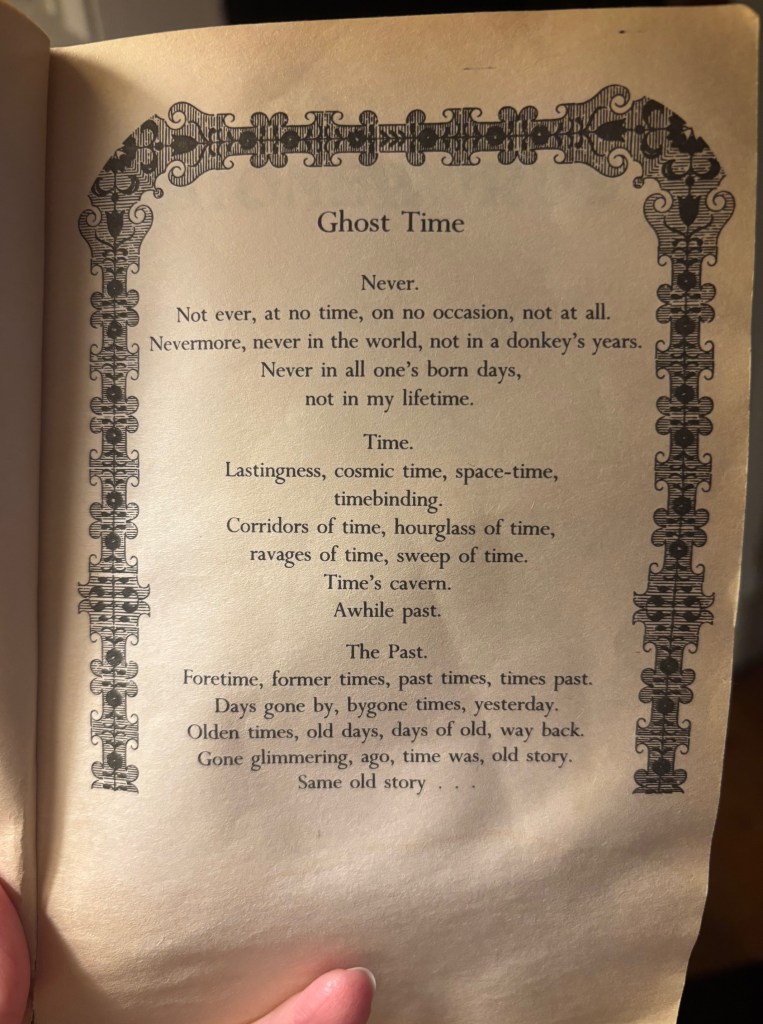
The best aspect of Conrad’s book, however, is how respectful it is to young readers. It seems she wrote it on the premise that even adolescents can draw deep conclusions on their own and handle grown-up references. For example, it opens with a meditative, ambiguous poem about ghosts, the past, and time.
At another point in the story, Zoe’s grandmother says their pug looks “like Emily Dickinson.”
There’s even a moment when older, pre-teen Zoe is visiting the past, her presence invisible to all except Zoe Louise, and finds herself in her friend’s parents’ bedchamber. There, she reaches out to stroke Zoe Louise’s father’s cheek. The man, after all, is young and handsome, and Zoe is growing up, feeling urges toward the opposite sex for the first time, though that is strictly implied (and something I didn’t get until much later, on a third or fourth reading). Feeling Zoe’s touch, the father lifts his hand to his cheek, in true haunted fashion.
I read this book multiple times.
The first time, I was nine, and I loved the playmate and playhouse details best.
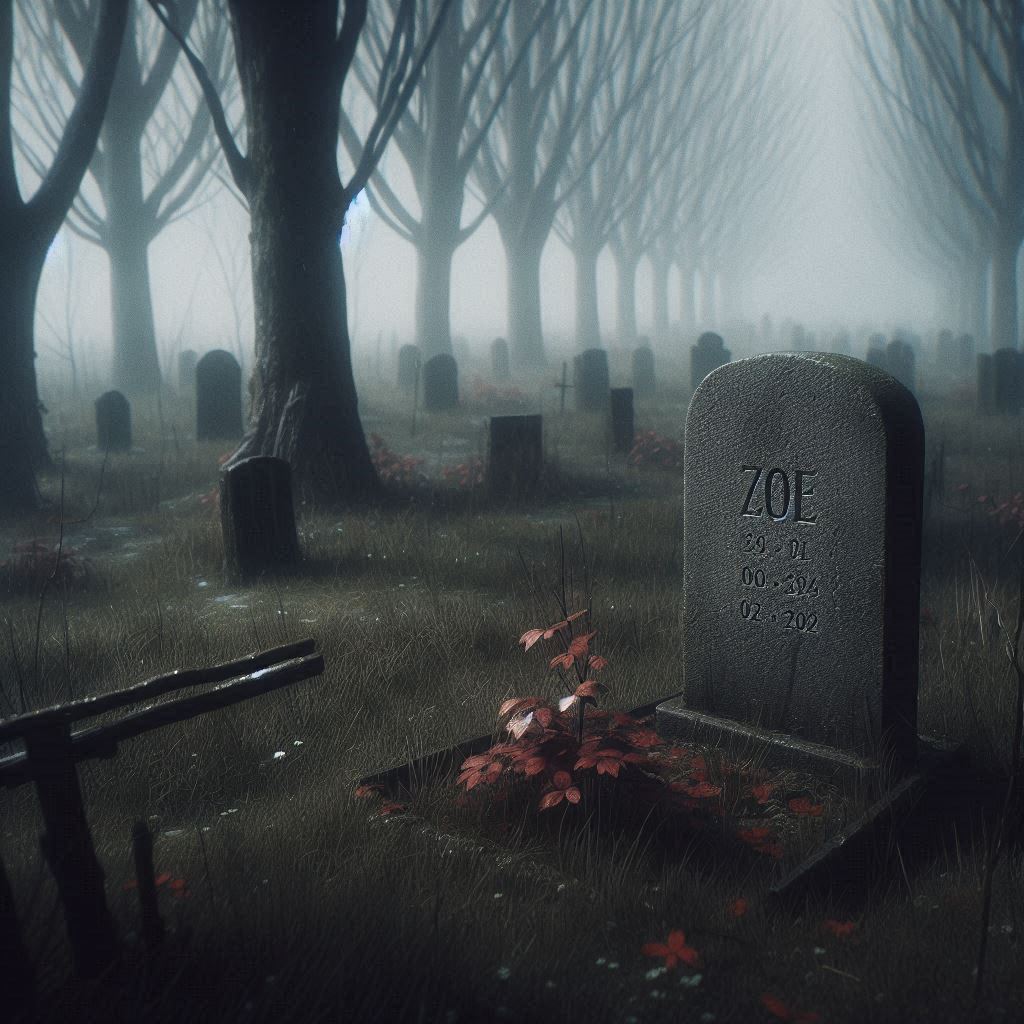
Then, as I got older and continued to reread it, I was better able to make all the meaningful inferences Conrad intended. It takes Zoe (and readers) a while, for instance, to realize Zoe Louise is actually a ghost. Readers are also left to realize on their own, that Zoe the main character is actually named after Zoe Louise, since main character Zoe’s mother adored the name on the headstone in the local cemetery and–oh wow–that headstone actually belongs to Zoe Louise herself (though the “Louise” part is worn away).
There are more instances of implication, though I can’t specifically cite any others off the top of my head. There’s not a lot that’s explicit in this book, actually, and that made it a wonderfully layered, resonant, and sophisticated reading experience. Stonewords was a book I could revisit again and again and always derive from it something fresh. I didn’t have another deep reading experience like that until I was much older and began studying Joyce Carol Oates’s short masterpiece Where Are You Going, Where Have You Been?
That says a lot about Conrad’s achievement.
This novel deserved the many awards it won: Edgar Allan Poe Award for Best Juvenile Mystery (1991), Boston Globe-Horn Book Honor Book (1990), & Mystery Writers of America’s Best Juvenile Mystery Award (1991), among others (Google).
I think it might also be out of print, but like Hanh’s and Speare’s novels, it’s still available for purchase on Amazon and in a few other places like Thriftbooks.com.
I’m so glad I still have my childhood copy.
***
These three books were not the bestselling sensations that JK Rowling’s, Suzanne Collins’s, and Stephanie Meyer’s were, but their fascinating premises, emotional themes, and beautiful language made such powerful impressions on me that I strive to write similar material now. Skill-level aside, the only real exception between my work and theirs is, I write my stories for adults because, hey, I want the same gorgeous, gothy, haunting vibes but with at least a dash of sex and romance.
We’re all grownups now, after all.
While writing these particular posts I realized, writing aside, how these books have even influenced my general life choices. I live in New England now, like Kit in Witch of Blackbird Pond, in an old, possibly-haunted house like Molly and Zoe both do, and my husband is a handsome former sailor, similar to Nathaniel Eaton, Kit’s love interest in WoBP and my first book crush.
That’s a lot of similarity, too much to be purely coincidental.
I’d love to hear about the most powerful childhood book that shaped you. What was it, and why?
See you again soon!
XOXO,
Jenn
 Jennifer Shaw