Jennifer Shaw

A writer's musings in the mountains

Category: books

  • It’s been a tough year for many of us, for a lot of reasons.

    So, to end on a positive note, I’m offering my own list of favorite bookish things among all the others shared on blogs and social media this time of year. I’ve always found these lists a great way to discover amazing new people and things and to celebrate what we’ve loved.

    So, without further ado, here are my favorites:

    FAVORITE INDIE AUTHOR: Melinda Copp

    Copp writes historical romances set in Belle Epoque France, and among other aspects of her work, I find her choice of setting refreshing. I adored Love and the Downfall of Society and Complications in Paris, where we meet the circle of modern, admirable women on whom the books center.
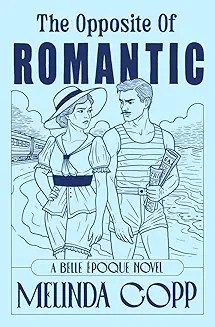
    Image from amazon.com

    However, my favorite so far is her most recent title in this series, The Opposite of Romantic.

    This novel is a swoony, well-paced, and surprisingly sweet story considering how thorny Vanessa, the main character, is. The novel’s singular, first-person point of view (a departure from Copp’s dual third-person POVs) works well in this one, giving Vanessa, a rising female journalist, a fresh and honest interiority. It allows readers a deeper insight into her feisty personality, and for this reason, I couldn’t dislike her, even though she’s initially selfish and does some cruel things.

    She’s an orphan, having lost her entire family when only a teenager, so we understand that her apparent callousness and cold ambition—now also threatened when her newspaper is bought by a rival publication—are a shield behind which she tries to protect herself. So often, she acts out of fear—some of it valid, some of it inflated in her own mind—and it takes a truly good man like Benoit Levin, plus some lovely female friends, to help her open her heart to new vulnerability, wisdom, and deep, surprising love.

    Her first kiss with Benoit is magnificent! I love it when the first kiss is done well in a romance (a mediocre one is tough to rebound from), and I find this one an absolute delight! Of course, the book’s title is ironic—it is highly romantic.   

    The setting is also an especially lush escape. The descriptions of the sea and sky at Cabourg on La Manche (the English Channel) are beautiful, and I particularly enjoyed them as we are resigning ourselves to a cold, early winter here in northern New England.

    Benoit might be arguably too perfect, but you know what? Nearly perfect men do exist; I’m married to one. Benoit is a good foil to Vanessa, and he does make the mistake of keeping something important from her, so he’s not totally infallible.  

    Finally, I appreciate how Copp makes Benoit’s domestic life messy—it forces Vanessa to take an even further step beyond herself when considering a future with this man, and I found that realistic. So many of us have challenging home situations ourselves, and for me, this detail made the book especially relatable.   

    Copp is finding her stride with these characters and their world, and I can’t wait for her next Belle Epoque title! I hope it’s Catherine’s story; I need to know what precisely is up between her and her almost-stepbrother, Henry. Talk about messy!

    FAVORITE BOOK FROM A SMALL PRESS: THESE DARK THINGS
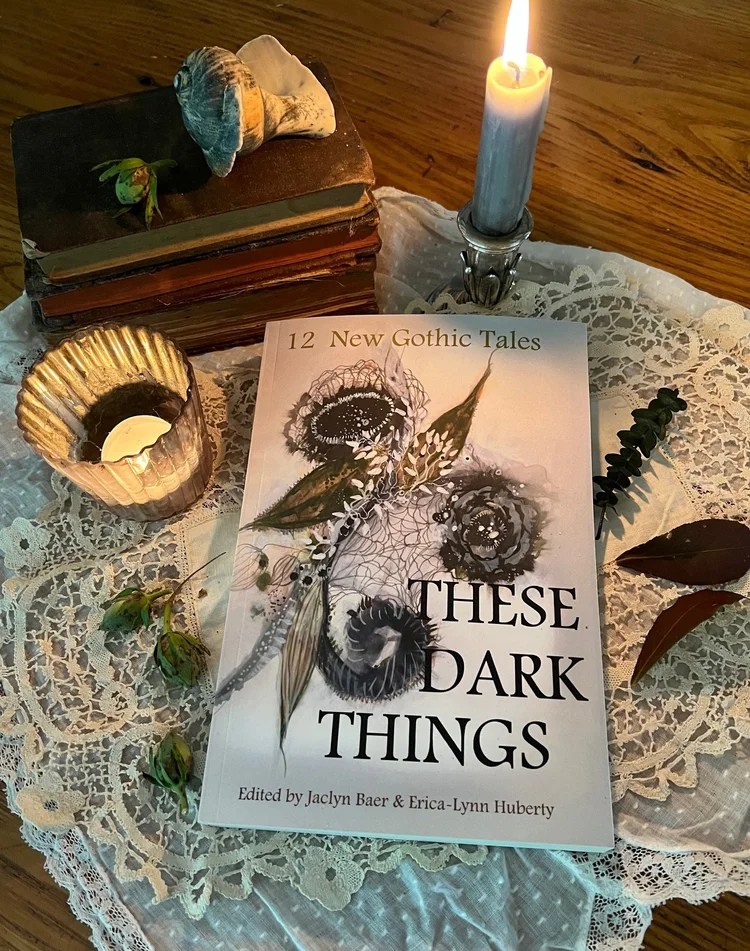
    Image from briarpressny.com

    I was so impressed with this anthology of modern gothic short fiction, edited by Jaclyn Baer and Erica-Lynn Huberty and published by Briar Press New York. It’s a strong collection of well-crafted psychological horror, often quiet in tone and approach but bold in themes and effects. For a more thorough look, see my blog review from January.

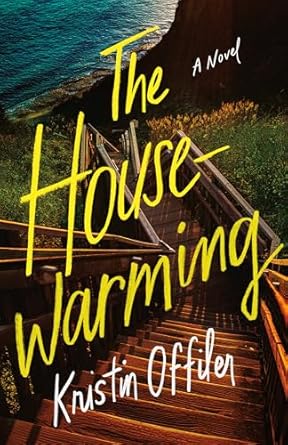
    FAVORITE DEBUT NOVEL: THE HOUSEWARMING by Kristin Offiler
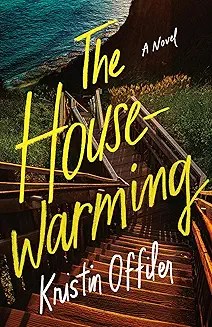
    Image from amazon.com

    The Housewarming is a strong debut that combines elements of women’s fiction with psychological thriller. Offiler writes well about early motherhood and female friendships, but I especially appreciated her treatment of true crime fandom. It’s a relevant ethical issue, and it made me think twice about my own love for true crime podcasts.

    This beachy, summery book is set on Block Island and in Newport, RI, which I have a personal connection to through my husband’s family. In fact, we just spent Thanksgiving in Newport, and as we window shopped, I found myself thinking a lot about the story, which has lingered with me longer than I anticipated.

    See my blog post from July for a deeper look.

    FAVORITE LOVE STORY: FAR FROM THE MADDING CROWD by Thomas Hardy
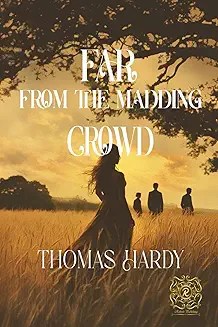
    Image from amazon.com

    I try to read at least one classic every year. I love Hardy and hadn’t read anything by him in years, and I gravitated to this title because I now live in the countryside so I thought I’d find his work even more engaging. Plus, I’d seen clips from a movie adaptation staring Cary Mulligan floating around on Instagram, and the story looked beautiful. When I started the novel, though, I was bracing myself for tragedy–Hardy can break your heart like no one else, considering his masterpieces Tess of the D’Urbervilles and Jude the Obscure.

    I was surprised and delighted, then, with the joyful, deeply satisfying ending of Madding Crowd. It is a perfect testament to what mature romantic love and marriage is–selfless respect and steadfast partnership, through and through.
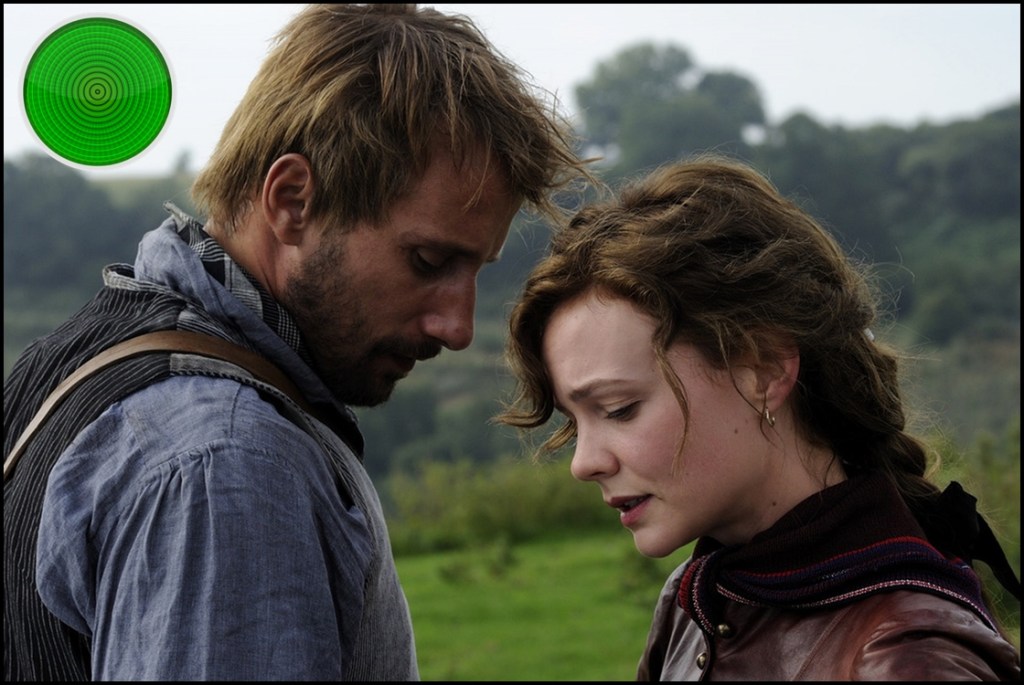
    Image from flickfilosopher.com

    Despite being initially rejected, the humble, grounded shepherd Gabriel Oak stands by his former sweetheart and current employer Bathsheba Everdene through hardship and heartbreak. When she is finally free to recognize how much she needs him–how much she loves him, in fact–he is there to return her love openly, and the emotional triumph is well earned for both characters. I found myself in tears, floating on a cloud of elation, as I finished this book, marveling at the universal truth of certain human experiences, no different despite a hundred-plus gap in years.

    Then I went and gave my husband a big hug.

    Hubby and I at The Nutcracker at Rosecliff in Newport, RI, 11/26

    OVERALL FAVORITE NOVEL: MEXICAN GOTHIC by Silvia Moreno-Garcia
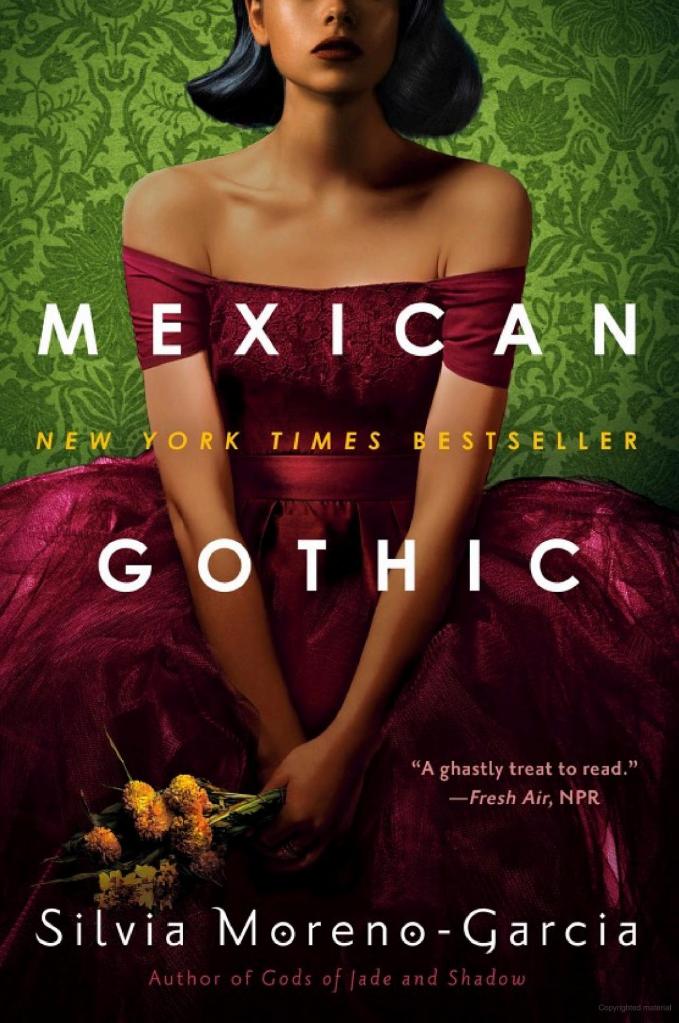
    Image from amazon.com

    Back in July, when I closed Mexican Gothic for good, I felt an immediate pang. Though the story disturbed me, I already missed it. It had wormed its way so gorgeously and insidiously into my imagination that it hurt to think there wasn’t another chapter to devour, another act to get gorgeously, frightfully tangled up in. That there was nothing new to contemplate.

    If you are a fan of gothic fiction and haven’t yet read this contemporary masterpiece of the genre, please do so right away. Author Silvia Moreno-Garcia does absolutely “get it right,” as the Telegraph claims in the opening testimonials in my print copy.

    Everything is there—the driving arch plot of a single, modern, stubborn heroine out to defeat a seductive, all-consuming, patriarchal evil, even as she proves to herself her own depth and mettle. The enormous, isolated old house is perfectly neglected and rotting from within yet very much alive and grasping. The Doyle family is everything you can ask for in an antagonistic gothic clan—insular, incestuous, despairing in some cases, and depraved in others.

    The style and plot develop beautifully in the author’s pacing, beginning with a creepy setting and that odd, creepy family shackled to the past. It develops in small, deceptively simple details here and there to suggest all is not right, despite the protagonist Noemi’s rational worldview. It builds in the surreal, fragmented, nightmarish dreams she begins to suffer, and finally drives the reader relentlessly through crises and a climax of literal events harrowing and developed enough to reveal that terrible potential fate worse than death. The ending, thus, if not entirely surprising, is fully cathartic, especially as love and perseverance win the day.

    Yet, brilliantly, Moreno-Garcia does not end this tale with unqualified optimism. There are fears planted in the main characters, foreboding seeds of doubt which suggest the thematic question, can one ever truly recover from trauma? Can one ever escape their nature, whether that nature is real and inherent or a misperception of the victim’s, ripe enough for a self-fulfilling prophecy? It is a resolution left open just enough to leave room for some doubt, providing readers with a final, meditative shiver. It is also a resolution that pays respect to the depth and complexity of traumatic experience and how it might ultimately impact victims.  

    Essentially, that’s what this novel is about, in my opinion—trauma. Specifically, the trauma of domestic captivity, for both women and men. For the female characters, that suffering manifests especially as sexual abuse by a sadistic patriarch (without being too difficult and graphic to read), supported by the terrible compliance of the matriarch. That is the essential horror—a real life one, tragically—that firmly roots this fantastic, speculative tale into our everyday world and makes it so terribly compelling and real.           

    So there you have it–my favorites. Thanks for reading! I’m planning to take a break from all writing, basically, but I’ll be back here on WordPress in January.

    Thank you, too, to anyone who visits this site regularly. I’ve enjoyed sharing my thoughts, hopes, joys, and struggles with you, and I hope you’ll come back for more, even if it’s just the occasional scan.

    Happy holidays! Have a wonderful, restful break doing all the things you love with friends and family. All my best wishes to you.
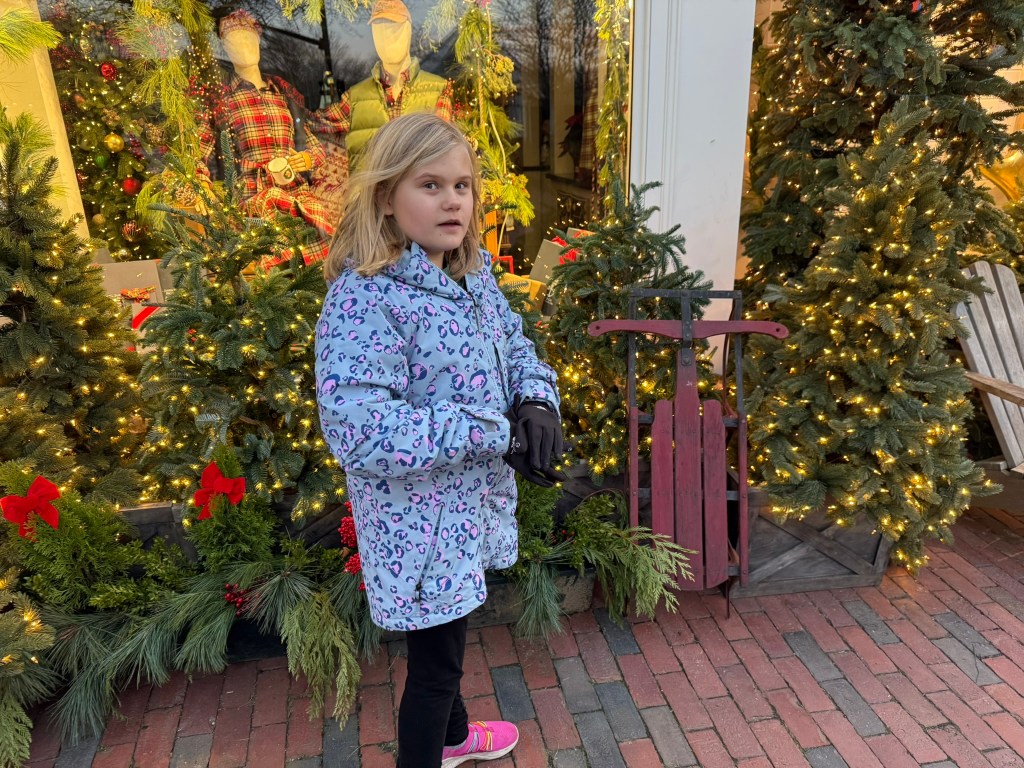
    Daphne wishes you a happy holidays, too!

    I hope we can end this year with a measure of peace and joy as we brace for another, which will no doubt include its share of political chaos and general uncertainty. I plan, however, to continue leaning into all the people and things I love and being grateful for what I have. Thank you for being part of that.

    XOXO,

    Jenn

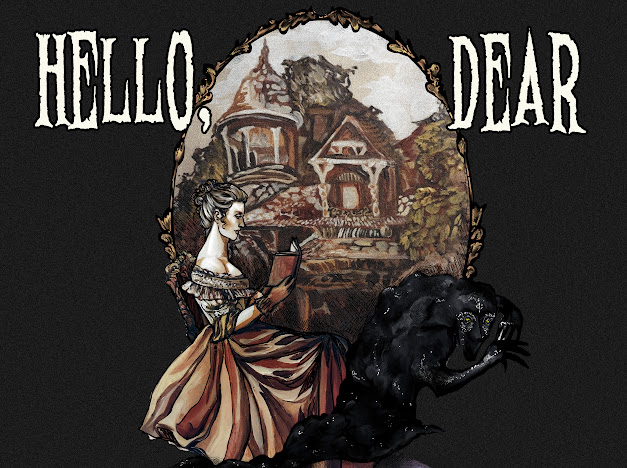
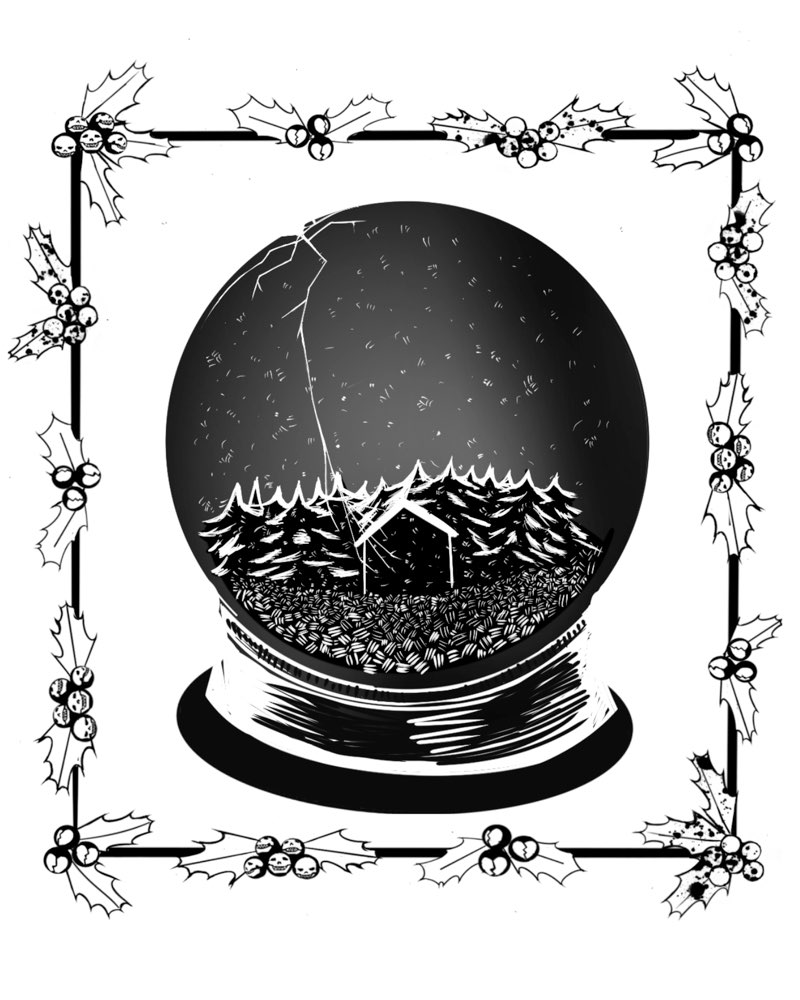
  • Last year, I discovered how awesome it felt to have an artist illustrate a picture for my work.

    Artist and writer Sybil Wainwright created the above for my feminist ghost story “Hello, Dear,” published by Amaranth in September of last year. I love how she chose sepia tones to mimic the look of an old photograph.

    Artist Khareese Orr created this one for “So Many Fragile Things,” a Christmas horror story with dark fantasy elements, published by Amaranth in December. The crack in the glass suggesting a hand seizing the house is perfect. I also appreciate the little images inside the holly berries.

    This year, no one is commissioning work for any of my pieces. It’s looking like I’ll end 2025 with only one story published, though I believe I’ve improved in my craft. That’s how it goes sometimes, I suppose.

    I decided, however, on whims of rebellion and self-love, that I would commission something for myself. Why not?

    I was also curious about how that process worked. How does the writer communicate their vision to the artist? What are the details of a contract? What does the creative process look like? Commissioning book art, especially cover work, is a key piece of self-publishing, which is something I’d like to learn more about.

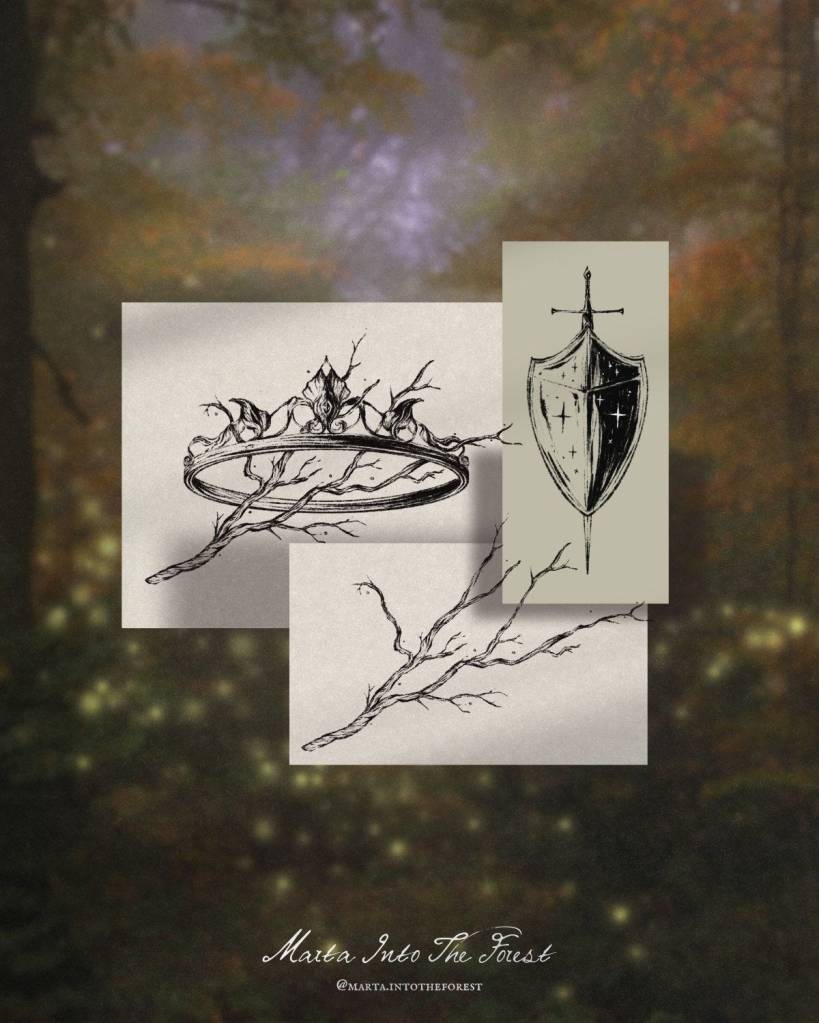
    So, after being taken by the beauty of Marta Into the Forest’s gorgeous, gothic-y medieval creations, I reached out to her via Substack.

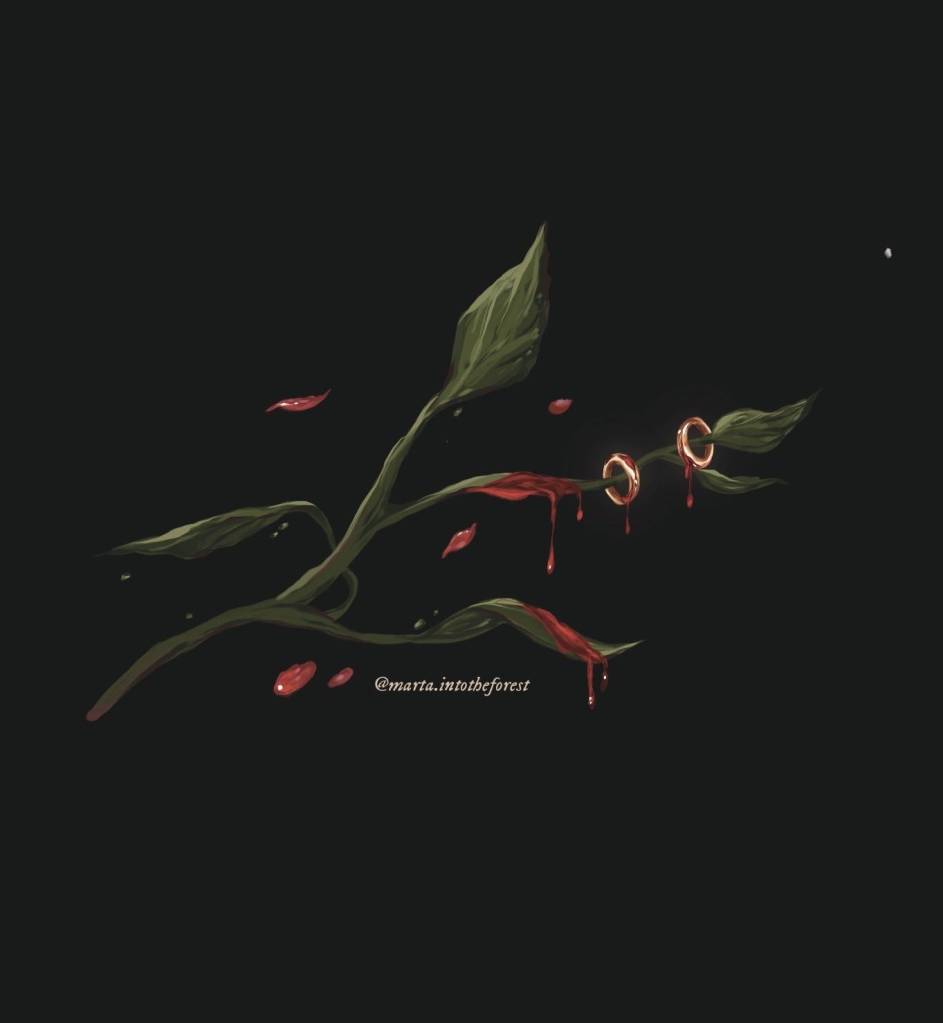
    Here’s a small sample of the work she’s shared there:

    Samples of internal book art

    Titled “The Blood Rings,” ominously beautiful. There’s a definite narrative here, probably a commission from a writer.

    Holy hell, look at this gorgeous end paper… hauntingly impressionistic. Done for author K.M. Davidson’s book “Sundered Heavens”

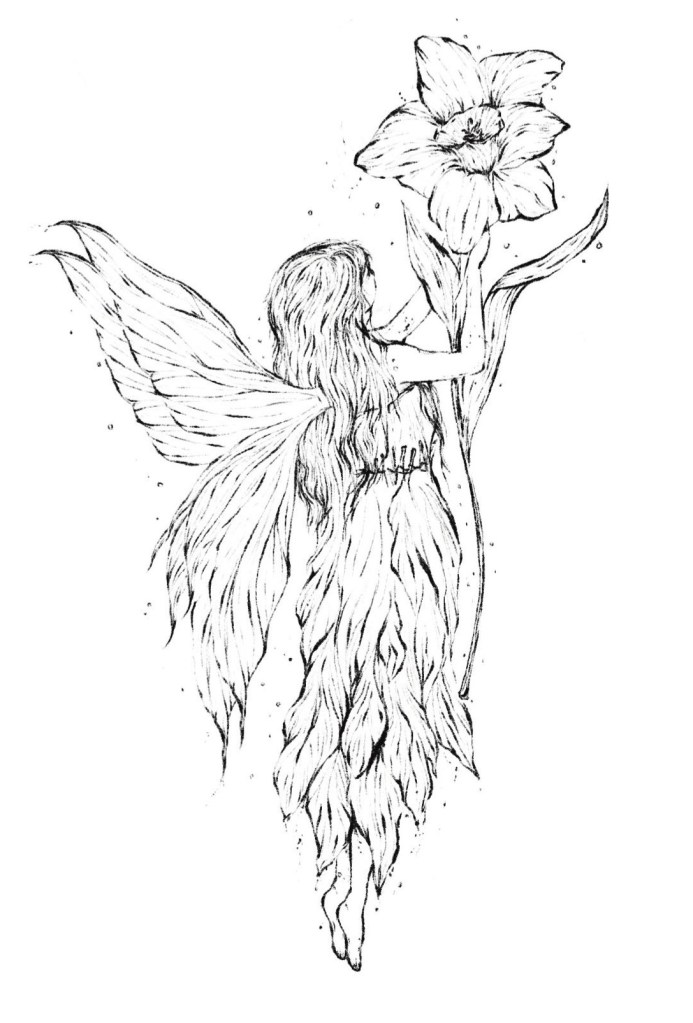
    Marta was warm and quick in her response. She had openings starting in October, so on the first of the spooky month, I sent her a short description of my vision for an internal art design inspired by “Elspeth and the Fairy.” I relayed how the character was a fairy with pointy ears and long dark hair, but her ears didn’t have to show. I visualized her holding a daffodil (significant to the story) and wearing a gown of woven leaves, as she’s described in the tale. I explained she is beautiful but haughty and antagonistic. I also said I would defer to Marta as the artist–whatever she thought would look best, I was game to see.

    I paid the fee–a very reasonable one–upfront and signed the contract with Marta. I agreed to limited rights, allowing Marta to retain the image for her own portfolio and marketing purposes, basically, and she got started. She sent me samples of her work-in-progress for feedback along the way (as outlined in the contract), and they were like little pop-up treats for my in-box.

    If you’re not familiar with the term, an internal art design is a small sketch or symbol found inside the pages of a novel or story collection/anthology, often at the top of a chapter or above a section break within a chapter or story. It adds a little flair to the book’s format, an additional little aesthetic appeal.

    Marta worked fast, finishing my commission in about two weeks. So, without further ado, here it is…

    Cue drumroll…

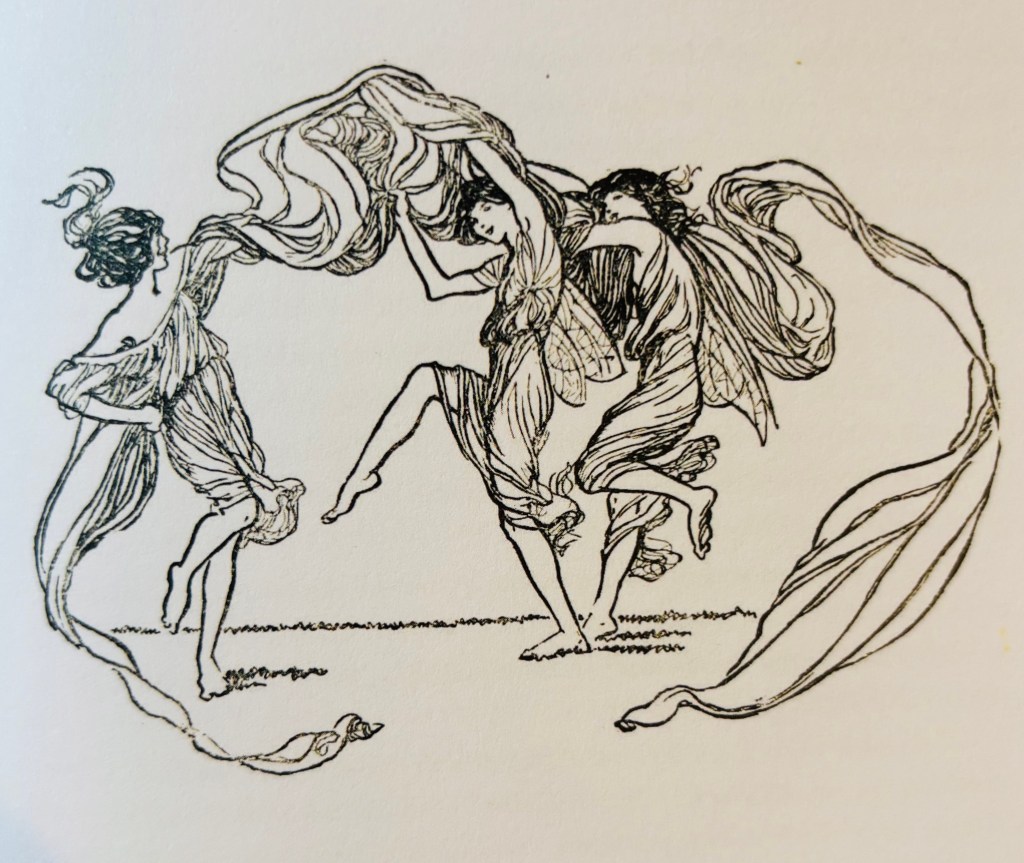
    Image by @marta.intotheforest

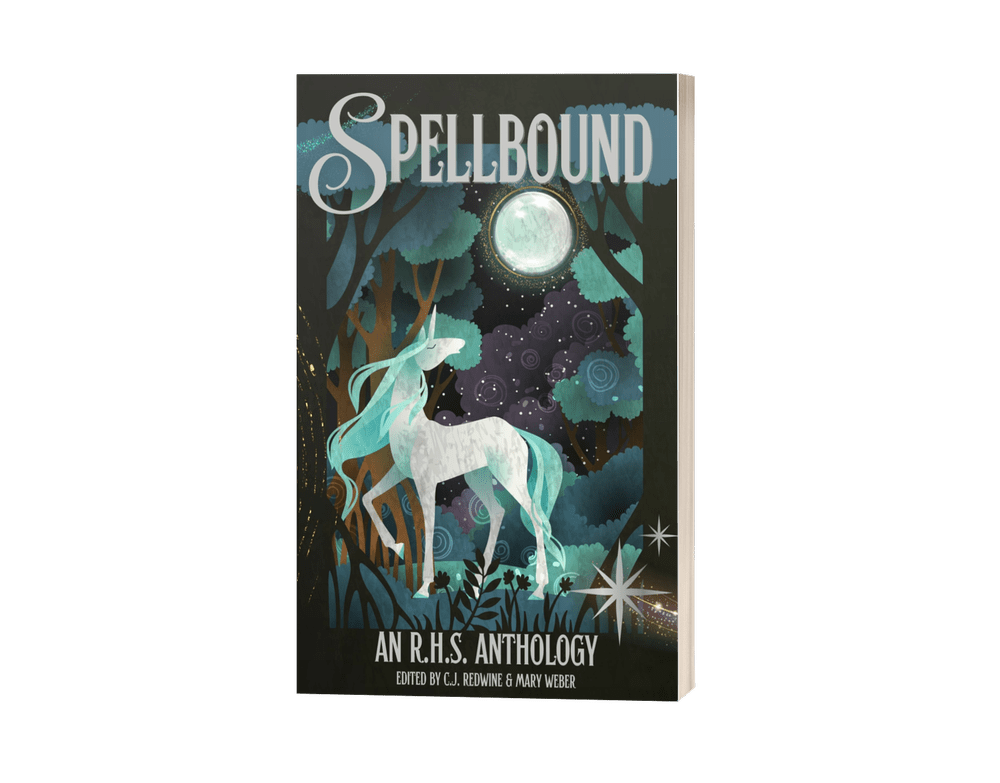
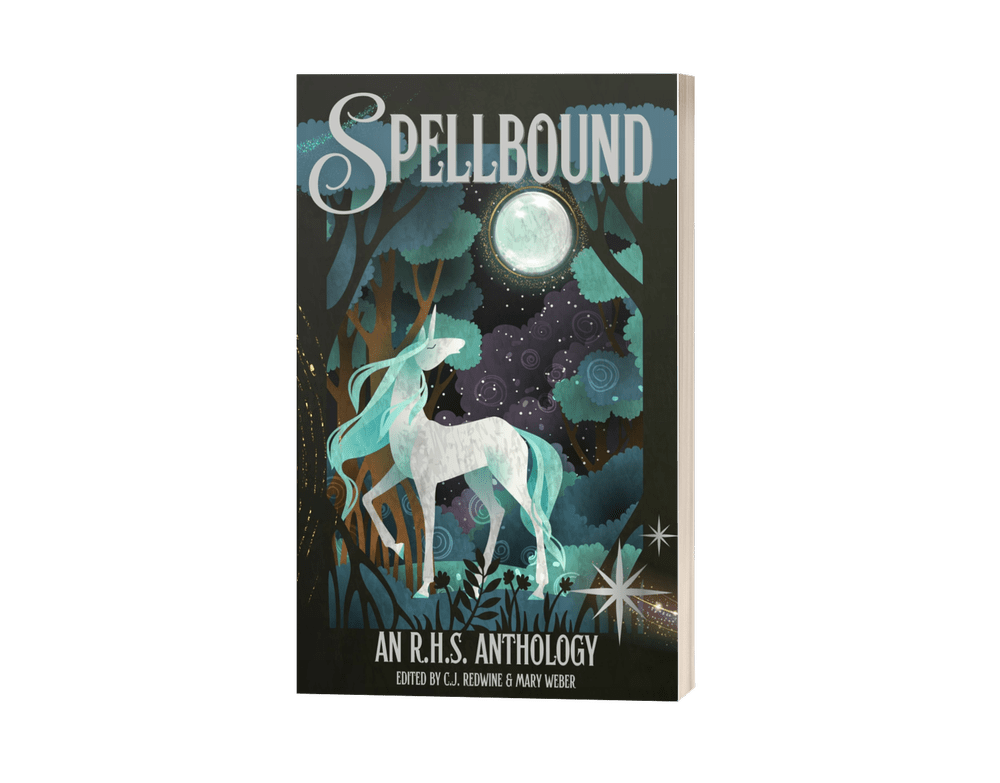
    Isn’t she gorgeous?! She is Lady Rowan, a fairy guardian of early spring and antagonist to Elspeth in my fairy tale, published in Spellbound in September of this year.

    I left a fair amount up to Marta, and I love how she chose not to show Rowan’s face. This is common in book and especially cover art, as I understand it, the idea being that readers get to envision the exact look or beauty of the character in their own minds. It’s arguably more universally appealing, and I can understand that notion.

    Happily, this image works well not only for “Elspeth and the Fairy” but even better for the fictional piece I just completed, a novelette and sequel to “Elspeth” in which Rowan makes a brief appearance at the very end.

    Again, if you’re not familiar with the term, a novelette is a fictional work longer than a typical short story but shorter than a novella. It ranges in word count from 7,500 to 17,500 words.

    I wrote my 12.5 k sequel, quite simply, because I just wasn’t ready to be done with the story’s world. In fact, I started it the day after Spellbound was released.

    I was intrigued by the idea of writing another version of the same ending, from a different character’s perspective. How could I flesh him out? What were things like through his eyes? How precisely did he feel? What exactly did he grapple with, and how did he change? How could I develop the love story itself, unfettered by word count and completely free for me to write exactly what I wanted to?

    I call this piece (more a historical fantasy romance than a fairy tale) a sequel because it does extend the story a little way beyond the first tale’s end, but really it might just be a companion piece.

    And you know what? Writing it was deeply satisfying.

    In fact, it turned into my unexpected passion project for the year.

    I did not write it with an eye toward publication (though now I’m considering what I could do with it on my own terms), and that proved meaningful because it reminded me why I devote most of my free time to this fiction thing in the first place.

    I do it because I love challenging my imagination through the medium of language. I love the act of writing itself, regardless of the outcome.

    It is, first and foremost, my ultimate act of self-care.

    I’m no longer a working professional strategizing and problem-solving on a daily basis. So, writing keeps my mind sharp and my creativity nourished. It allows me a healthy escape and even a way to manage difficult emotions. It gives me a purpose beyond my domestic life and even something toward which to aspire (as long as I remain firmly rooted in its primary purpose). When I’m in that delicious flow state, it gives me a way to transcend myself, even when I’m writing utter dog crap.

    It’s magic, in short. And not just magic in the metaphorical sense but in the literal, if we define magic as “the practice of moving natural energies to effect needed change… a tool to improve ourselves and the world in which we live” (Scott Cunningham, from Wicca: A Guide for the Solitary Practitioner).

    My new novelette does have a working title, but I don’t want to include it here in case anyone reading this post hasn’t read “Elspeth and the Fairy;” I don’t want to give too much away.

    I will share a blurb for it, however:

    A curse breaks.

    A second chance reigns.

    A first chance aspires to love.

    For ten years following a witch’s spell, the mysterious Muir has labored as a wretched half-man, half-goat in the scullery of a minor lord, his true identity unknown. Only a maiden of the household, the brave and sympathetic Lady Elspeth, has shown him protection and care. In return, he has done his best to guide her on her quest to save the man she adores, the afflicted Lord Alistair, heir presumptive, from the fairies wreaking havoc in a kingdom without a monarch.

    Now, having proven victorious in her trial, Elspeth has not only saved Alistair but someone else… And Muir, restored to his former glory, is now free to pursue all that’s his, including his beloved Beth.

    But first, he must find her while wrestling deep, new shadows in the dark heart of the forest. Can he reach his maiden in time, even as he confronts his greatest failures? And if he finds her, will she even want him?

    Can he prove himself worthy of her?

    This blurb is definitely a draft and little cringey, but hey, it’s early. Thanks for letting me share it with you! If I can work up the courage, I might share the very first scene of Chapter One in a new post tomorrow.

    I hope you’ve enjoyed this one full of beautiful images. And I hope your November is going well. Thank goodness the government has reopened…

    To wrap up, here are the latest additions to my list of things I’m thankful for, each one inspired by the goings on of that particular day. This list covers Nov 8 through today, Nov 13:

    8. A sweet daughter who still loves spending her Saturday with Mom and Dad

    9. Morning cuddles in bed with coffee while the first snow falls outside our witch’s window

    10. Doing housework leisurely while T Swift sings through my earbuds (I’m currently obsessed with the acoustic version of her new song “The Fate of Ophelia”)

    11. Wonderful mother-in-laws who spoil our kiddo with things like hot air balloon windsocks just because Daphne took a fancy to these particular aerial vehicles. Happy birthday, Julie! Cary, we love you too!

    12. A long To-Be-Read (TBR) list and being able to swap book recs with my own amazing mama. I just got her to read Mexican Gothic.

    13. A husband who knows how to buy me THE. PERFECT. XMAS. GIFT: A Nov 26th performance of The Nutcracker by the Newport Contemporary Ballet, done in one of the Gilded Age Newport RI Mansions, Rosecliff (where parts of the Robert Redford Great Gatsby were shot). Apparently, the audience will walk room-to-room for the first act and then enjoy the second act in the grand ballroom. I *cannot wait* for the Sugar Plum’s grand pas de deux under those chandeliers!!!

    Rosecliff ballroom, image from Threads

    Thank you for reading. Do you have any news? Anything you’re particularly grateful for? Or any insight into commissioning artwork, if you’re an author?

    Feel free to pop anything in the comments.

    See you tomorrow, maybe. Next week, for sure.

    XOXO,

    Jenn
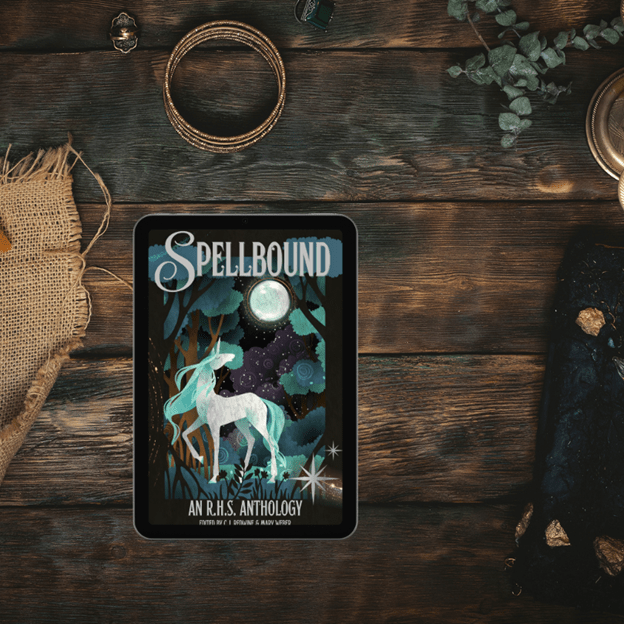
    Download a free e-version of Spellbound to read “Elspeth and the Fairy,” which has the privilege of opening this collection of fantasy/magic stories.

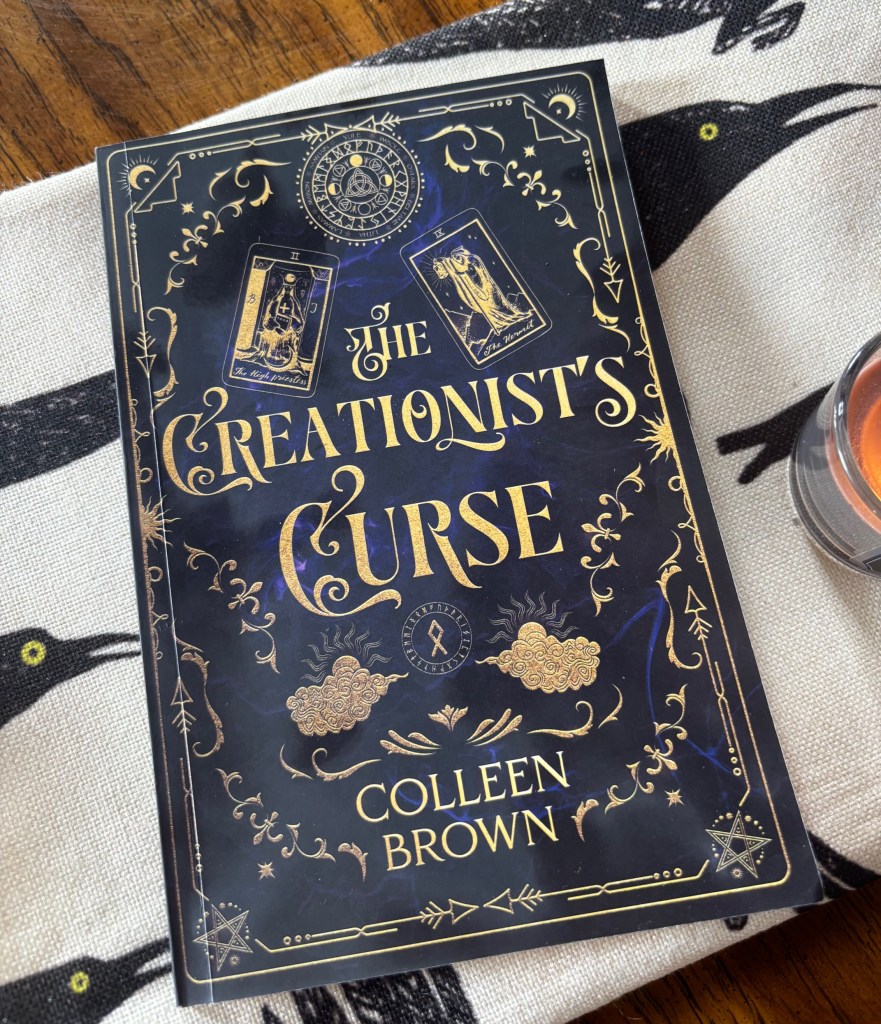
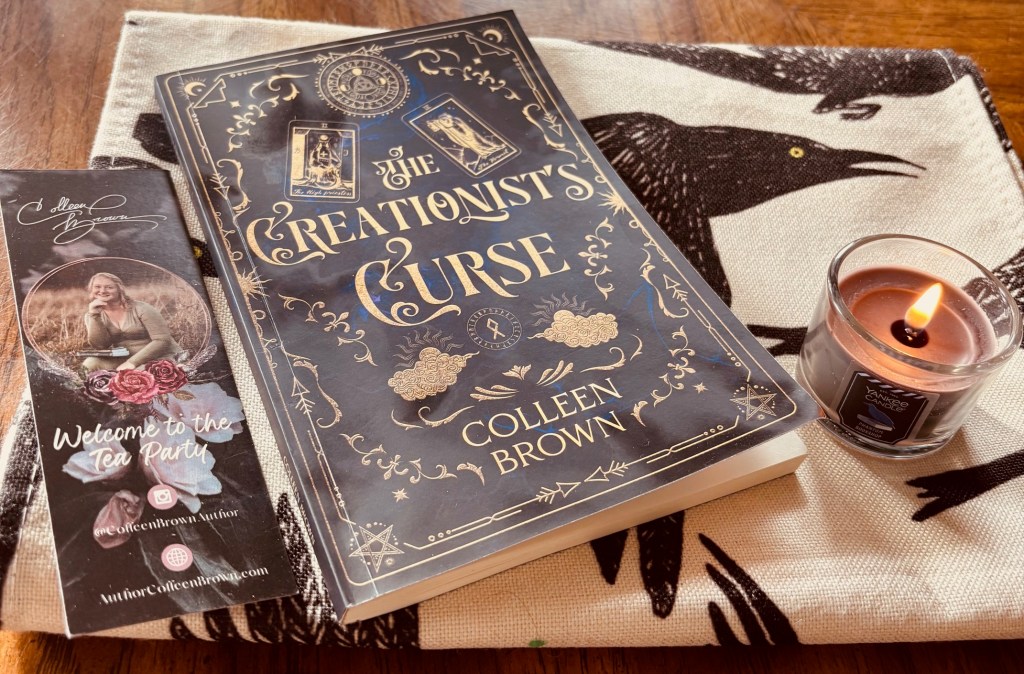
  • A while back, my talented writing friend Colleen Brown gifted me a print copy of her expanded short story The Creationist’s Curse, published in May of this year and available in e- and print copies and on Kindle Unlimited.

    Isn’t that gorgeous?

    From the back cover:

    When Evelyn Awbrey, Curator of Arcane Books and the Occult, discovers a long-lost tarot deck linked to the infamous Creationist, Elvira, ancient magic stirs–and something begins to awaken. With the autumn equinox fading, dark forces hunt the relic, eager to tear apart the city of Margoza.

    Evelyn will do anything to keep it hidden. To protect her daughter. To bury the truth.

    But secrets refuse to stay buried. And the deeper she digs, the clearer it becomes: the curse isn’t just in the cards–it’s in her blood.

    The Creationist’s Curse is a darkly enchanting tale of forbidden magic, deadly secrets, and how far a mother will go to protect what she loves… even if it destroys her.

    She can hide the relic, but she can’t outrun the Creationist’s Curse.

    A fabulous fall read

    I loved this story the first time I read the original in the RHS anthology Meet Me at Midnight. In fact, it was my introduction to Brown’s work, the first time I realized she has the kind of prose you just want to sink into–fresh, lush, and especially sensory. It’s dark and gorgeously immersive without overwhelming you. No matter which story it is, you’re there, entirely in the scene she’s created, and the effect is as gratifyingly otherworldly as the subject of magic itself, which weaves its spells through all of Brown’s tales.

    Now, in this latest version of Creationist, I appreciate how Brown has further developed certain characters in this deeply atmospheric, dark academia fantasy.

    In it, readers understand more about the antagonist Nathaniel Brown/Huxley, the protagonist’s second husband and stepfather to her daughter. He is also an ancient, dark figure in disguise, as Evelyn has realized, secretly out to seize for himself the most powerful aspect of the Creationist Elvira’s tarot deck, which Evelyn works desperately to hide before it’s too late.

    As Evelyn scrambles to secure the most powerful part of the deck before Nathaniel/Huxley can wrest it from her, she worries about the effect he’s had on her daughter all these years, before any of them realized his malevolence. What has he suggested to her child? What kind of influence has he wielded, when no other adult has been around? What things might he do in the years to come? Can she always be there to protect Mina?

    This struck a raw chord for me; it’s a real-world anxiety many parents experience when they realize someone close to their child isn’t who they thought they were. I found this newly developed part, as such, especially effective–one of those moments in this genre that truly transcends all the fantasy, reminding us we are indeed reading a story about real human experience, the human condition.

    Brown also develops Alaric’s character, an older gentleman and platonic friend to the protagonist who’s been gone for a while but is now mysteriously back, called forth, it’s suggested, for some larger purpose. It is in Alaric’s dialogue with another of Evelyn’s friends, the strong and admirable Martha, a colleague of Evelyn’s, that readers sense Alaric’s positioning as a mentor-to-be to young Mina, Evelyn’s daughter, and Brown lights a candle of hope for the larger story to come.

    Finally, in this expanded version readers get to meet Evelyn’s child, little Mina, though only briefly. This precocious eight-year-old wakes at the story’s end, just before 1 am, to a strange sense of foreboding. In the surprise arrival of a crow and the abbreviated whispers between her stepfather and a man she’s never met (Alaric), Mina senses an ominous shift in her circumstances though she can barely understand any of it, and that tugged right on my heartstrings.

    In short, the entirety of this expanded, newly-published version of The Creationist’s Curse is a delightful teaser, planting deeper suggestions about who these characters are plus the seeds of what’s to come for the larger narrative. This slim, gorgeous book serves, essentially, as an appetizer for a duology of dark fantasy novels with Mina at their center, and I cannot wait for Brown to publish them.

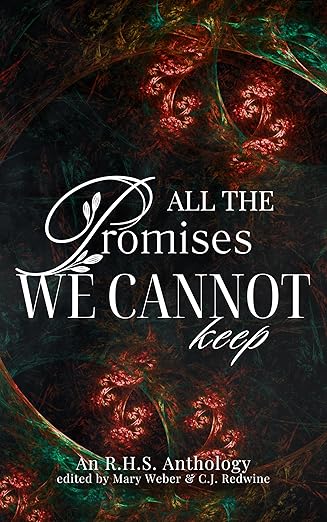
    If you’re a fan of dark fantasy, dark academia, and/or lush, immersive prose, I recommend The Creationist’s Curse as well as any of Colleen Brown’s other short fiction, especially “The Crimson Trials” in Scales, Tales, and Tiaras; “What Goes Unkept” in All The Promises We Cannot Keep; and “A Potion for Forever” in Spellbound; all of which I adored. They’re all great autumnal stories to boot.

    Free to download

    Free to download

    Thank you, Colleen, for your generosity and the gift of your work to the world.

    Truly, I will not be surprised to find, one day, a novel of yours on the Bestseller shelf at Barnes and Noble, and I’ll be able to brag that I knew you when…

    ***

    Before wrapping up, I also want to share my first seven days of November gratitude, in the spirit of this season of thankfulness. Each of these was inspired by the goings-on of that particular day, Nov 1 through today, Nov 7.

    1. Healthy parents who can still travel to visit us
    2. An adoring husband other women flirt with
    3. Extra money to commission art that fuels my creativity (more about that next week!)
    4. Time to devote to a specific passion project (more about that to come)
    5. Writer friends who both inspire and support me, with everything from feedback/moral support to simply reading and commenting on my posts. If any of you see this–thank you Gloria, Colleen, Robyn, Kathlene, and Melinda!
    6. Fellow Substackers to discuss the books I love with
    7. Mythic Moose, which is more than a side hustle–it’s a sweet family endeavor

    Scanning this list reminds me, yet again, how wonderfully privileged I am, especially when it comes to the people in my life, near and far.

    Photo by Ksenia Philippova on Unsplash

    Happy November! As always, thank you for reading, and please share anything you’d like in the comments–a bit of thankfulness or anything else.

    XOXO,

    Jenn
  • Spooky season is here! I just adore this time of year, maybe even more so than Christmas.

    Happy spooky season! Image from Microsoft Design

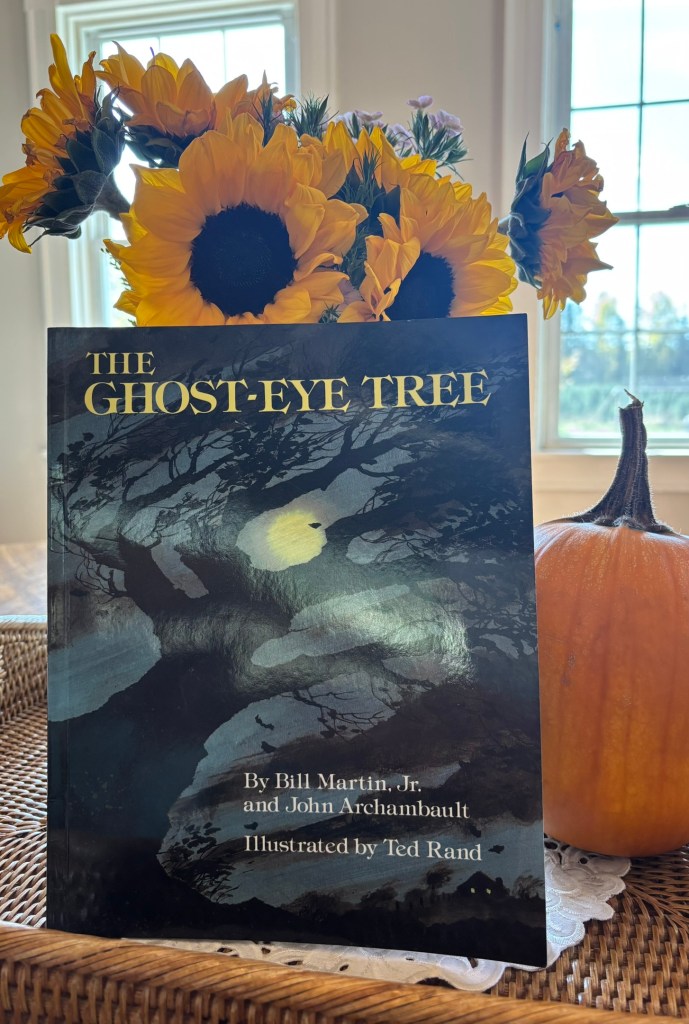
    The first thing I did to celebrate was pull out Daphne’s Halloween books. We started reading them right away, including The Ghost-Eye Tree by Bill Martin Jr. and John Archambault, with illustrations by Ted Rand.

    One dark and windy autumn night when the sun has long gone down, a young boy and his older sister are sent to the end of town to get a bucket of milk. As they walk down the lonely road, bathed in eerie moonlight, all the boy can think about is the ghost-eye tree...What will happen when they come to the tree? Can they run past it or will it reach out and grab them? (Blurb from amazon.com.)

    This is one Daphne hasn’t always been partial too, but this year, the rhymes caught her attention, and now we’re reading it regularly.

    This one is special to me, too, because I remember it from read-aloud in Mrs. Connelly’s first grade. I found it creepy then and loved the pictures.

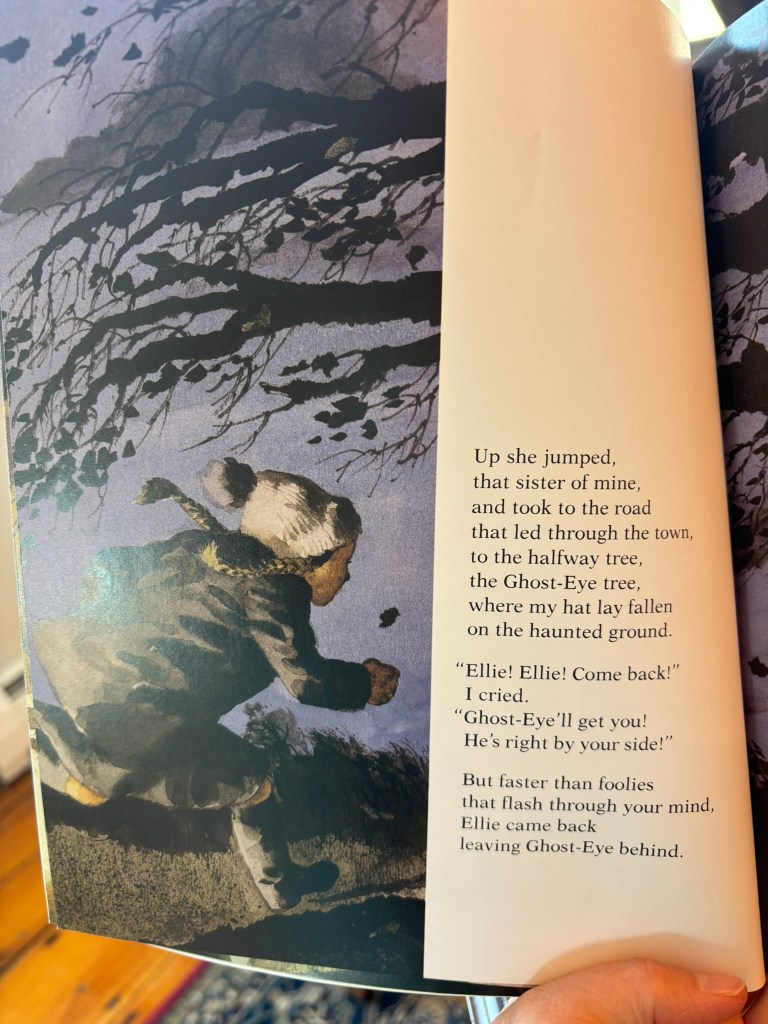
    Don’t you just want to sink into those lines?

    Now, I appreciate the folksy rhythm of the verse and the sweetness of the underlying story, what it’s really about–two siblings experiencing a surprising moment of tenderness. Ellie, the narrator’s sister, runs back to the terrifying ghost tree to rescue her little brother’s special hat, blown off his head when the tree scared them on their way home from fetching milk.

    A good sister

    The story captures one of those rare moments many of us can relate to, when we realize our awful brother or sister actually does love us and maybe isn’t so awful after all.

    The story’s atmosphere and pictures are also meaningful now because they look so much like where we live. Rand’s artwork accurately evokes the deep darkness of the countryside, where the utter lack of electric light makes the black so thick it feels tangible.

    I can also appreciate the eyes in the tree, having seen ghostly, creepy eyes myself right in our own backyard. They’re only animals, of course. In our case, we sometimes see the eerie green of does’ eyes when we flash our high-powered flashlight over the fir trees on our way out to lock up the hens. In the book, the eyes in the old oak probably belong to an owl. But, from a child’s perspective–or even a fanciful adult’s–who’s to say for sure?

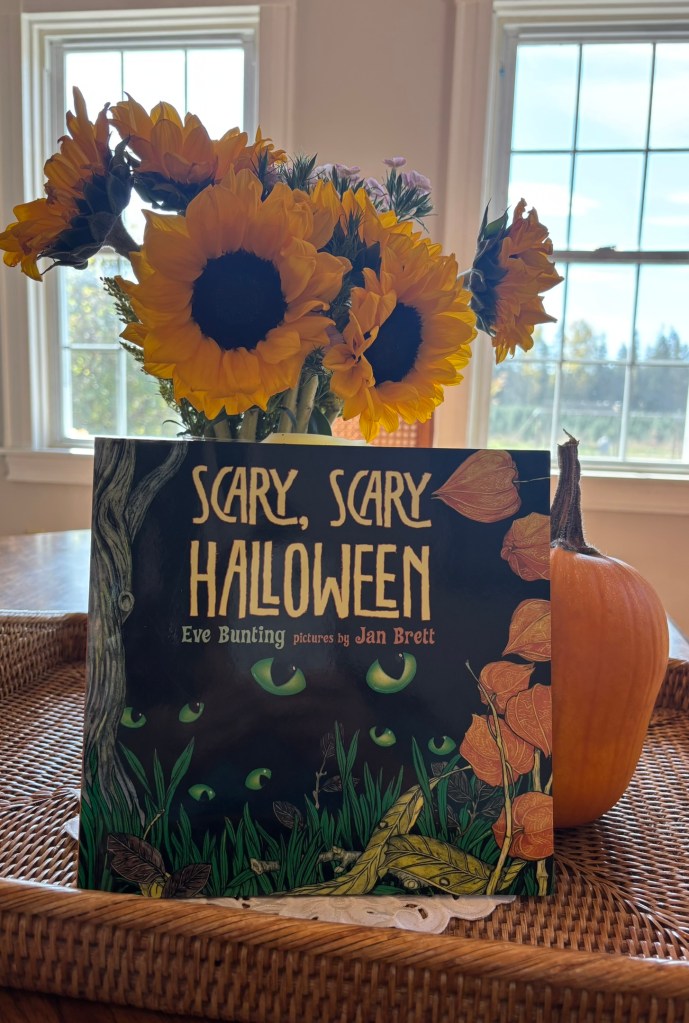
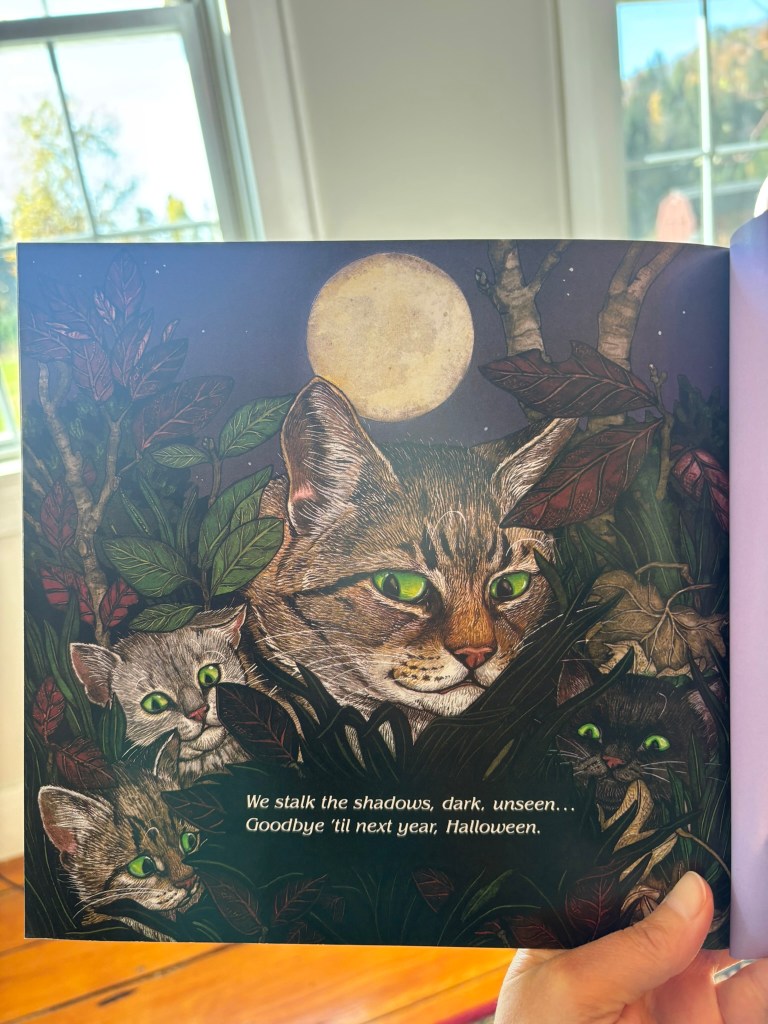
    I also pulled out Scary, Scary Halloween by Eve Bunting, with pictures by Jan Brett.

    Four pairs of eyes stare from the blackness to watch fearsome creatures trick-or-treat. (from amazon.com)

    We haven’t read this one yet this year, but it’s also one of my favorites. I don’t remember it from school; I only know it as an adult, and I adore the delightful, surprising point of view from which it’s written–that of a mama cat keeping her kittens safe under the porch on Halloween night as all the strange ghoulies and creatures come and go.

    Eight eyes indeed, and the real message–Halloween delights us all

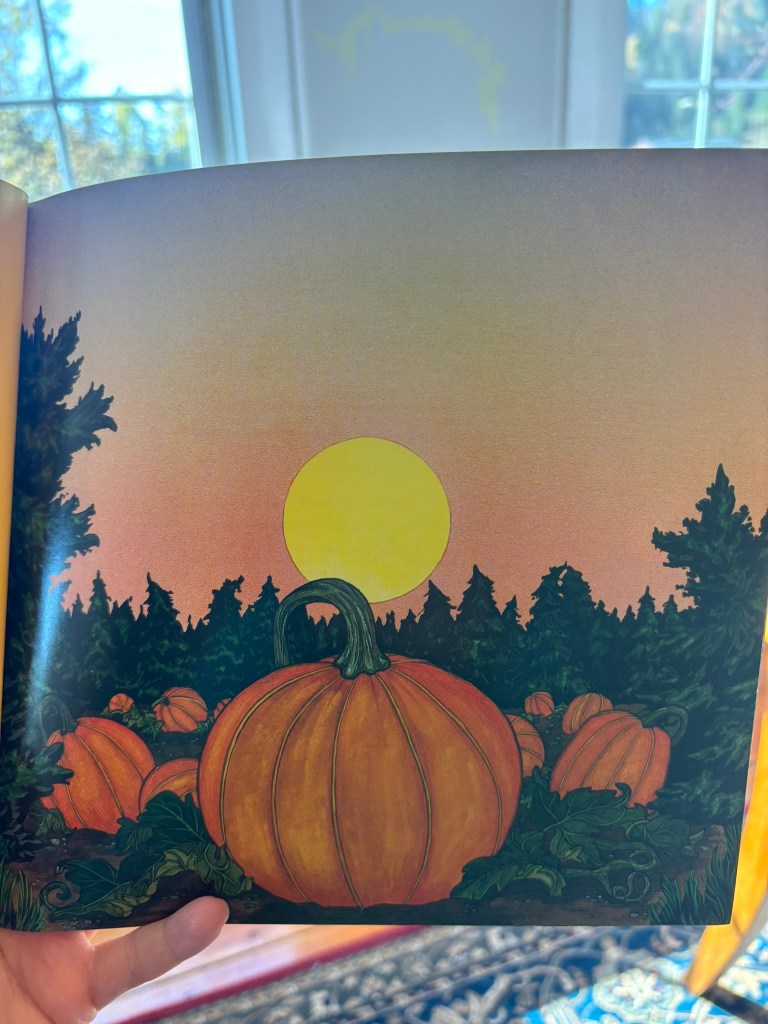
    It is also written in rhyming verse (all the way through unlike Ghost-Eye), so it also has that atmospheric sing-song quality, and its pictures are just gorgeous–also very much like Vermont, where we live.

    Yep, looks familiar

    When I used to read this book to Daphne back in Texas, I daydreamed about what it would be like to spend Halloween in countryside like this one. Well, now I do, and it is absolutely wonderful, giving our spooky days a deeper, more stirring autumn vibe.

    The old English teacher in me can’t help myself when I read these picture books, either. I imagine all the ways these rich texts could be used in a Halloween unit: for inferencing, rhyming, understanding point of view, etc. It almost makes me want to develop a lesson, complete with a creative writing and art component. Like, how might you rewrite The Ghost-Eye Tree from the point of view of the owl up in that old oak? How would you illustrate it?

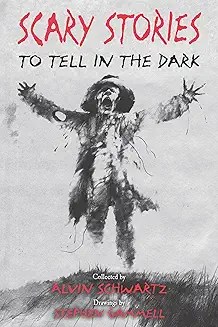
    I also downloaded a couple old favorites for myself: Scary Stories to Tell in the Dark, Books 1 & 2 by folklorist Alvin Schwartz, complete with the original horrifying artwork by Stephen Gammell. I ate these up as a kid, as did several of my elementary classmates; I think we all bought our copies at the Scholastic Book Fair (way before they were banned), and of course the pictures were what first caught everyone’s eye. I still find them delightfully nightmarish.

    Cover image from amazon.com

    Schwartz’s collection was also my introduction to a lot of American folklore–creatures like the wendigo, and urban legends like “The Babysitter” and “High Beams”–ugh, that one really got under my skin.

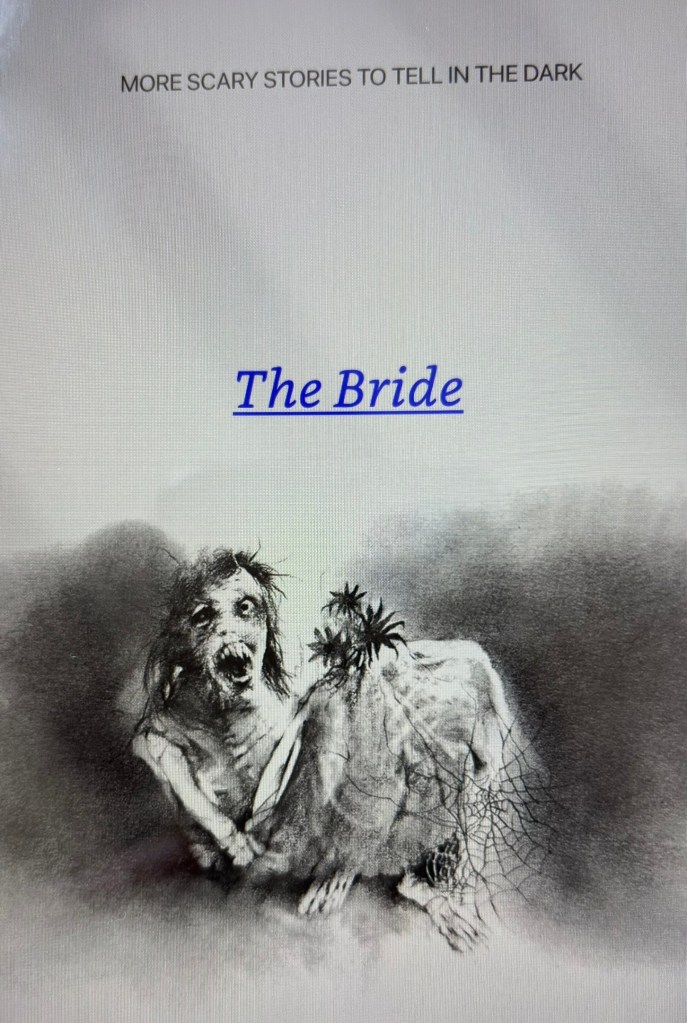
    It wasn’t pure nostalgia that led me to purchase these digital copies. I have an idea for a little scary story of my own, a new spin on “The Bride,” a tale about a young woman who goes missing on her wedding day. She turns up dead years later in a trunk in her father’s attic, presumably after climbing in while playing hide and seek and getting trapped inside. It’s a variation on the old buried alive theme.

    This artwork still chills me. Picture by Stephen Gammell

    I’m considering setting my version in an old Vermont farmhouse that has a witch’s window; that window would play a significant role, of course. And, maybe, what happened to the bride wasn’t actually an accident…

    I came up with the idea after coming across a call online for a themed issue of a horror magazine, and I wanted to revisit the original version before doing any drafting. I realized Schwartz’s book would be good source material.

    We’ll see if I get a chance to write it. I might not be able to do anything with it, given time constraints and how it might actually turn out (I’ve been hard at work on something else, a short story epilogue to “Elspeth and the Fairy”), but getting this creepy story down would be good practice regardless. Who knows? Maybe I’ll just share it here for Halloween.

    Tonight, while I enjoy an adult beverage, I plan to decorate the house.

    What are your favorite titles for spooky season? I always love recs!

    See you next week!

    XOXO,

    Jenn
    Download a free e-book to read my latest published story!

  • It is officially fall.

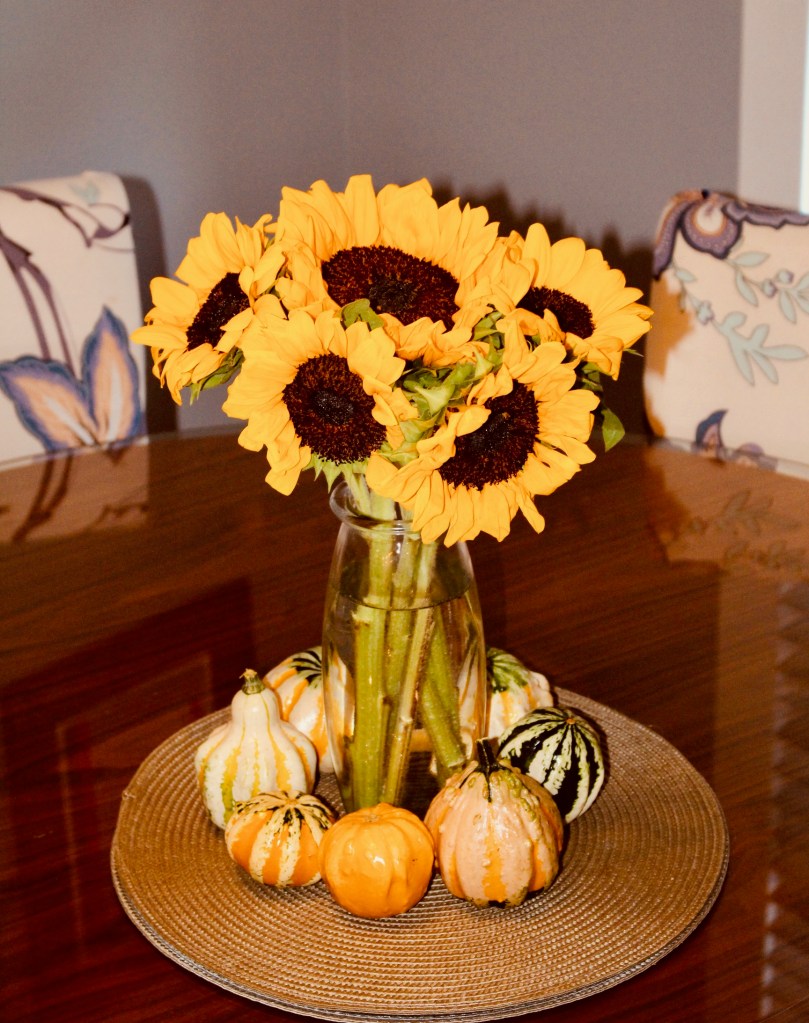
    Sunflowers I arranged in our Mystic airbnb

    The autumnal equinox occurred on Monday, and with it Mabon, the pagan celebration of balance–between dark and light, night and day. It is also a day of gratitude for the year’s abundance as observers celebrate a second harvest and prepare for the colder, darker times ahead.

    Image from Desert Rose

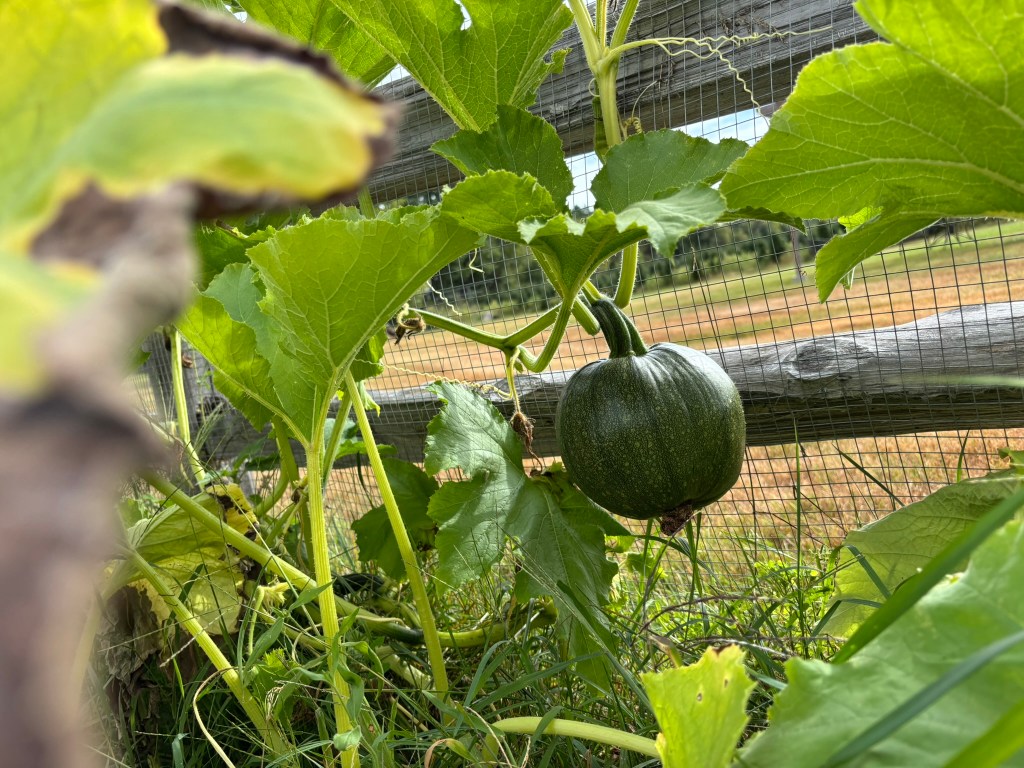
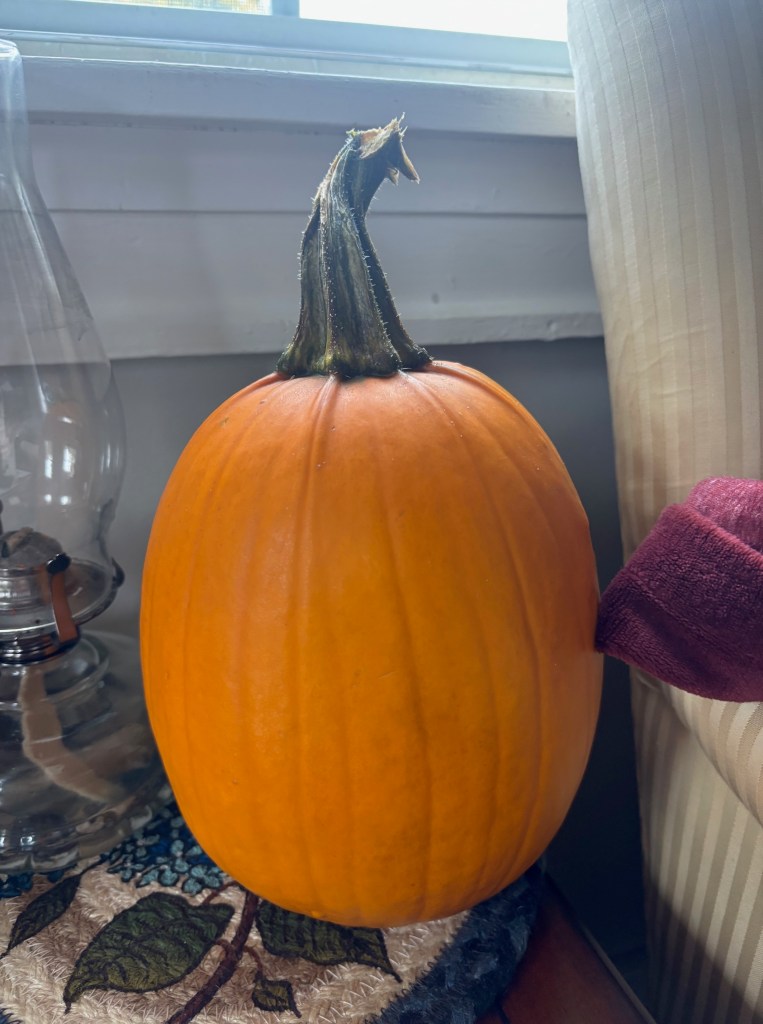
    I admit, I didn’t do anything special for it. My casual Wiccan rituals–more a way to meditate than anything–have gone by the wayside this year, but recently I’ve spent a lot of time outdoors, enjoying the cooler weather and jewel-hued beauty of this season. I harvested the first pumpkins from our garden on Tuesday, and that was a fun way to appreciate what the soil has given us.

    Pumpkin I grew

    Truly, happiness is cutting your own pumpkins from your very own patch. It’s the little things, right?

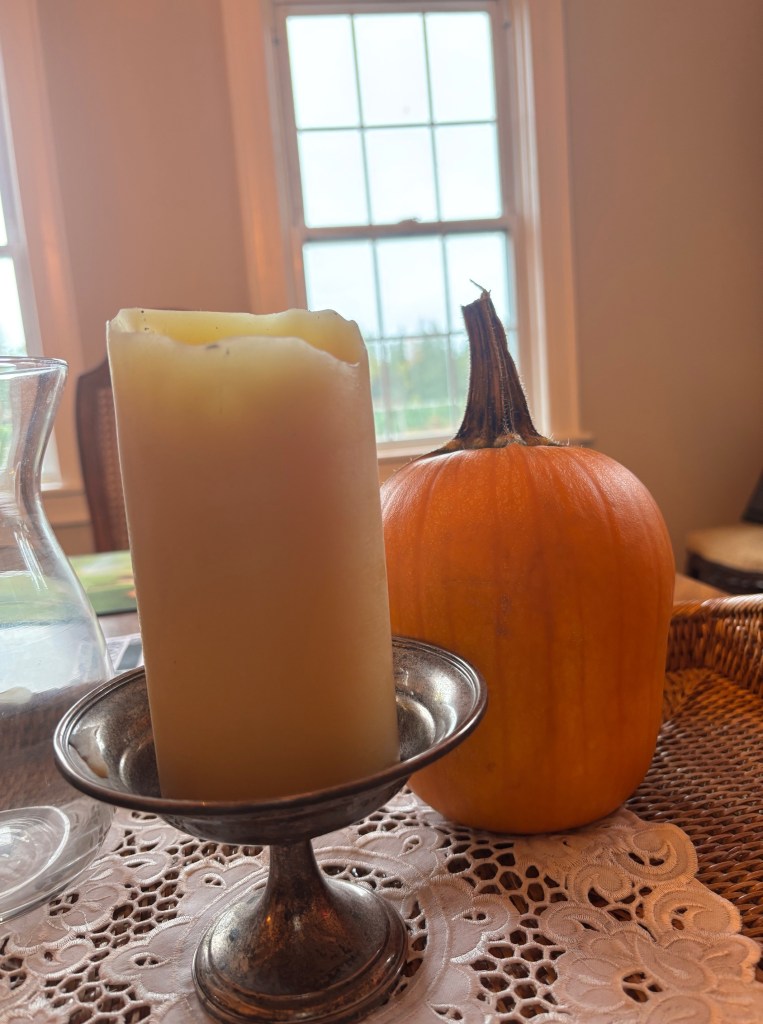
    And another one

    Speaking of dark and light, while I’ve continued to enjoy my writing practice, I’ve suffered some creative anxiety this year.

    I don’t think it’s anything unusual; the more I read from other writers and artists, the more it sounds like we all enter this phase once we’re far enough along in our experiences. We’re wise enough to better understand the nuances and challenges of our crafts and how truly difficult it is to do them well–or even define what doing them “well” means, since there is a subjective element to all of it.

    I’m reminding myself, however, not to rush anything. Creativity is a process–you must undertake it in order to learn from it, and learning from it requires time, results, and reflection. These are not things to be forced or preset. Also, the joy must be in the process, not the products. Finding, and keeping, that joy where it’s healthier is what sustains us.

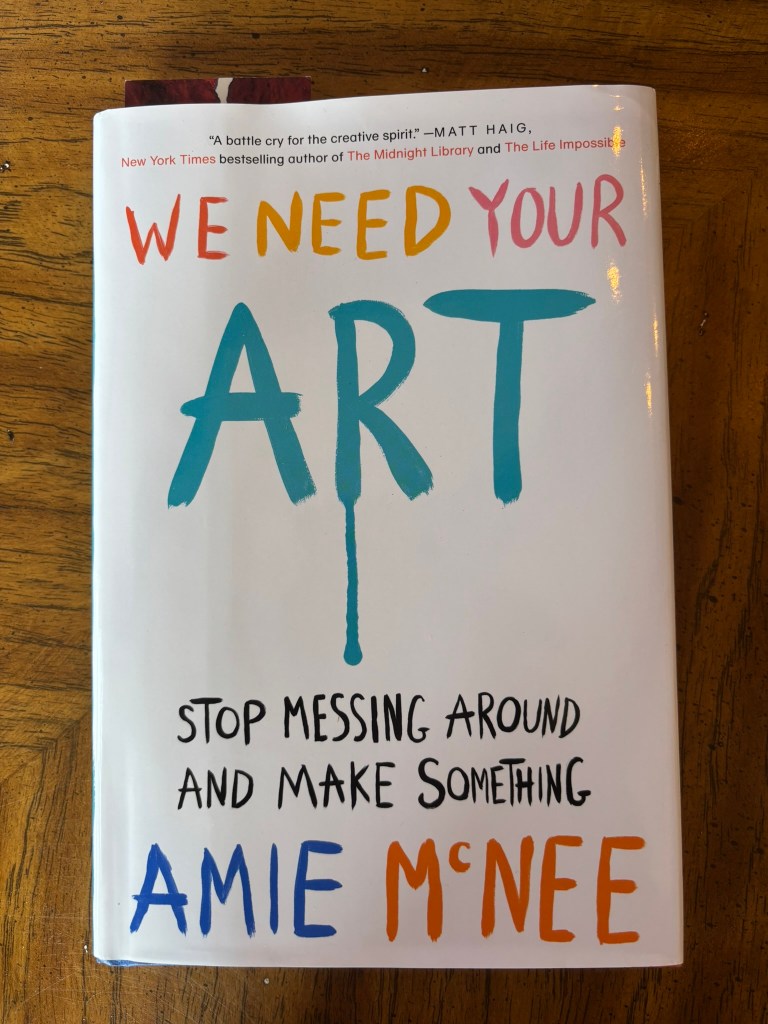
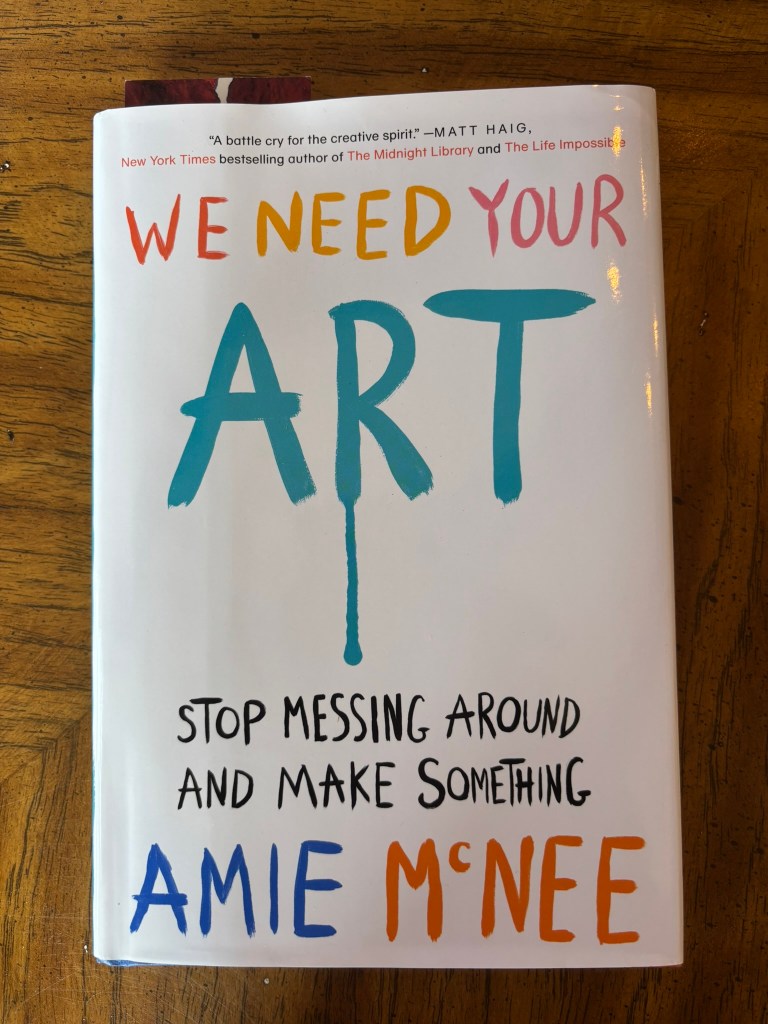
    I had a lot of this mindset validated by reading Amie McNee’s wonderful We Need Your Art: Stop Messing Around and Make Something. My writer friend Gloria recommended it when I was smarting from that rejection of my spicy shifter story, and since McNee’s social media had already piqued my interest, I went ahead and ordered her book. I’m so glad I did.

    McNee offers some wonderfully comforting insights, especially regarding perfectionism. Basically, she argues, you just have to let it go. (Are you hearing that song in your head now?)

    This isn’t news. We all know that, yes, we can’t be perfect, and we shouldn’t try. That’s conventional wisdom. But, McNee’s reasons for severing ourselves from this awful pursuit feel fresh.

    She argues that perfectionism is actually dangerous.

    Not only does it prevent you from doing your work–or at least as much as you might otherwise–it also leads to lower-quality art in the long run. You become overly afraid of the inevitable mistakes and failures, and you prevent yourself from taking risks.

    Perfectionism will also make you deeply unhappy because what you do and what you hear about your work will never be enough.

    Perfectionism is seductive, she argues, because it feels like the great preventative, that magical cure-all for all things cringe and painful. If I am perfect, I will never be hurt goes the illogical thinking. For many of us, that’s the Siren’s Call, one that promises to keep us free from anguish, but it drowns us instead.

    I am the pursuit of perfection and I am horrifying. Image from Reddit

    Thus, it takes a “powerful reframe,” a lot of mindset work, to overcome it. If we can, however, we are liberated. Our art will be better for it, and more importantly, we will be happier, even through the silences and rejections and inevitable discomfort that will befall us because it always does. That is art, and that is life.

    One of McNee’s great suggestions for achieving this reframe is “Make shitty art. Do it every day.” Isn’t that fantastic? I love how assertive and rebellious it is.

    Invite crappy work into your practice, she challenges. You don’t have to share it, but don’t shy away from it either. Don’t shut it down; it’s better to finish it and move on.

    It will help you learn that it’s safe to be imperfect, not just in your heart but in your body too. You have to be physically relaxed when you’re creating, even when you know it’s probably dog doo. That way, you can amplify your enjoyment and let yourself do all the necessary work and even cross boundaries that might be too scary otherwise.

    That is how we creatives make lots of “small magic,” as she calls it. When small magic, which absolutely includes shitty art, happens, we eventually make our way into the powerful, profoundly true and moving creations–our wonderful, incredible, “big” art, as I’m calling it. But first, we must make the shit. And there will always be shit. Creativity is a recursive act. Rarely, if ever, is it linear.

    I’m working hard right now to embrace this.

    To a certain extent, I’ve always feared failure. I’m not an obsessive perfectionist in all things like some poor souls, but I’ve wrestled with it often enough.

    I struggled with my body being imperfect when I was dancing, and that led to a bout of anorexia and years of body dysmorphia that I’m finally overcoming.

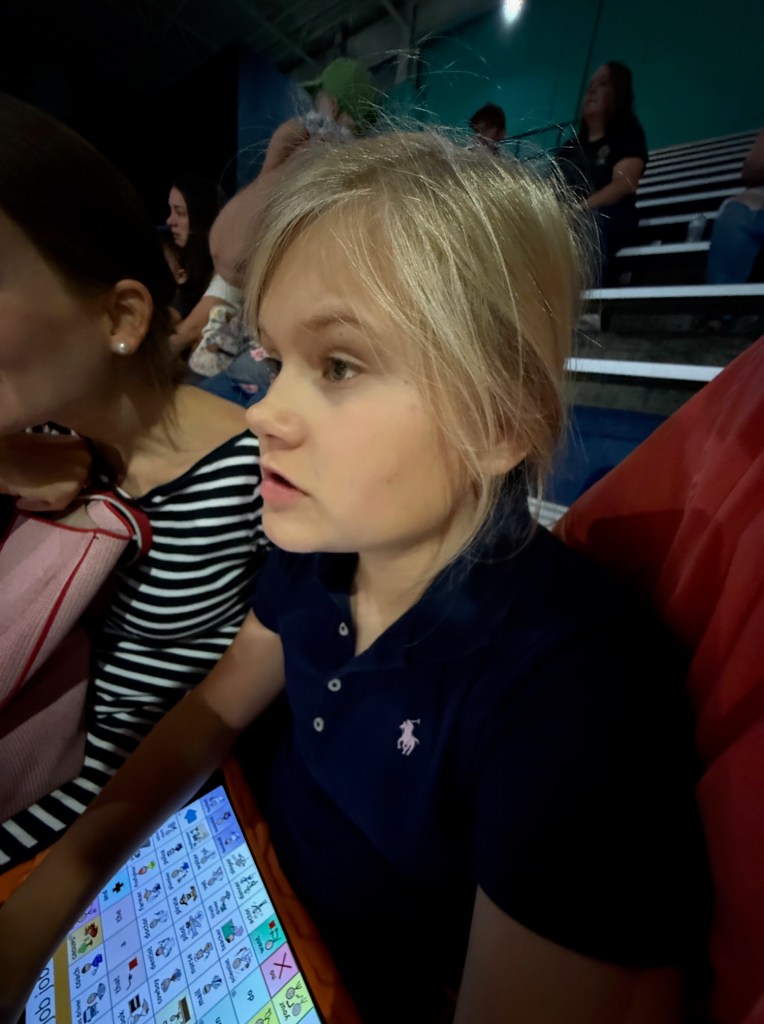
    I struggled with it when my daughter was first diagnosed with autism. I thought we had to figure out all the best therapies right away, and if I just used every moment with her at home in the most effective ways, she could close all those gaps–we could cure her developmental delays! She would start to speak! All of that would mean I was in fact a good mom.

    I realized a couple years in, thankfully, that this was impossible. While she does need support and accommodations, Daphne will always learn and grow at her own pace, and we would all be miserable and unhealthy if I obsessed about somehow “fixing” her. That isn’t real love, anyway. She doesn’t need to be fixed.

    Daphne immersed in the sea lion show at Mystic Aquarium

    Now, I’m wrestling with perfectionism in my writing. It’s manifesting as reluctance to submit pieces for the final time, even after I’ve addressed all edits. I keep wanting to tinker, to rethink word choices and phrases, to make little changes here and there even when I know it’s not really helping the overall quality and maybe even hindering it. I’m holding on too tightly to some of my work because I’m afraid of its inadequacy.

    But you know what? It will always be inadequate (at least to a certain extent) because it will never be perfect. Nothing is. Shakespeare and Joyce and Morrison and all the greats were imperfect, too. Perfection is a mirage; it doesn’t really exist.

    At some point, a story just is what it is. I have to let it be done so I can free up time to work on new material–that’s how the growth, all that small magic, happens.

    It’s hard, though, to find that balance between giving your work the time it needs so that it has the best shot–which is important– and becoming perfectionistic, even detrimental, about it by dragging it out too long. Hopefully, discerning this difference will get easier with practice.

    So, in the spirit of all this–the season, the healthy creative mindset–I am working to let go of these things that do not serve me. I’m not resisting the anxiety, but I am working to move through it by letting myself share pieces that have been completed more quickly and are now truly finished. I am working on letting things be done so I can move on.

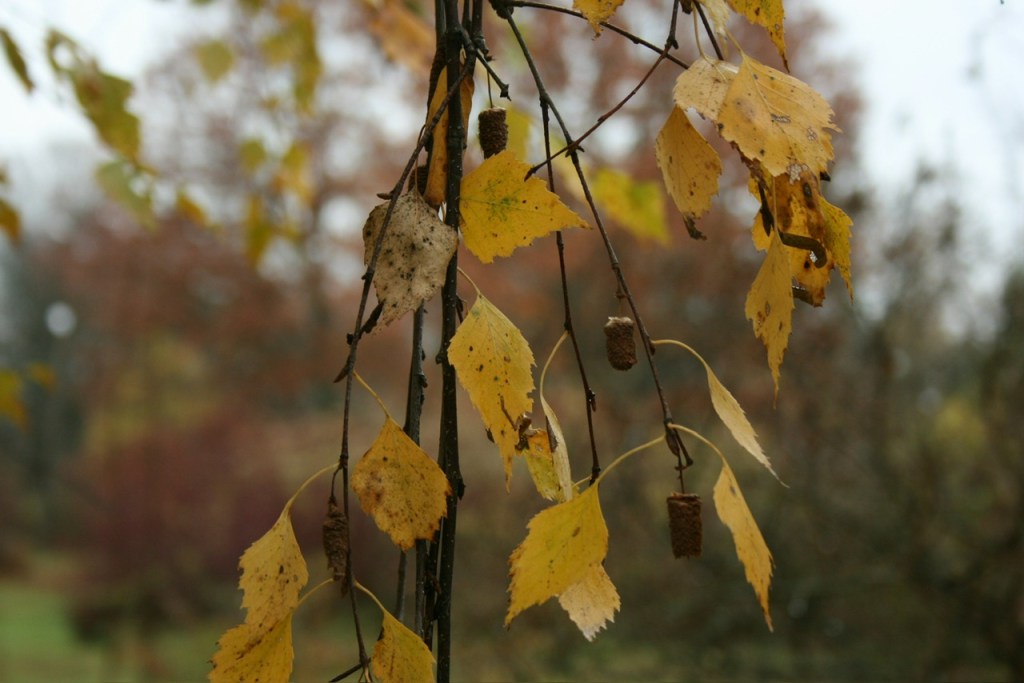
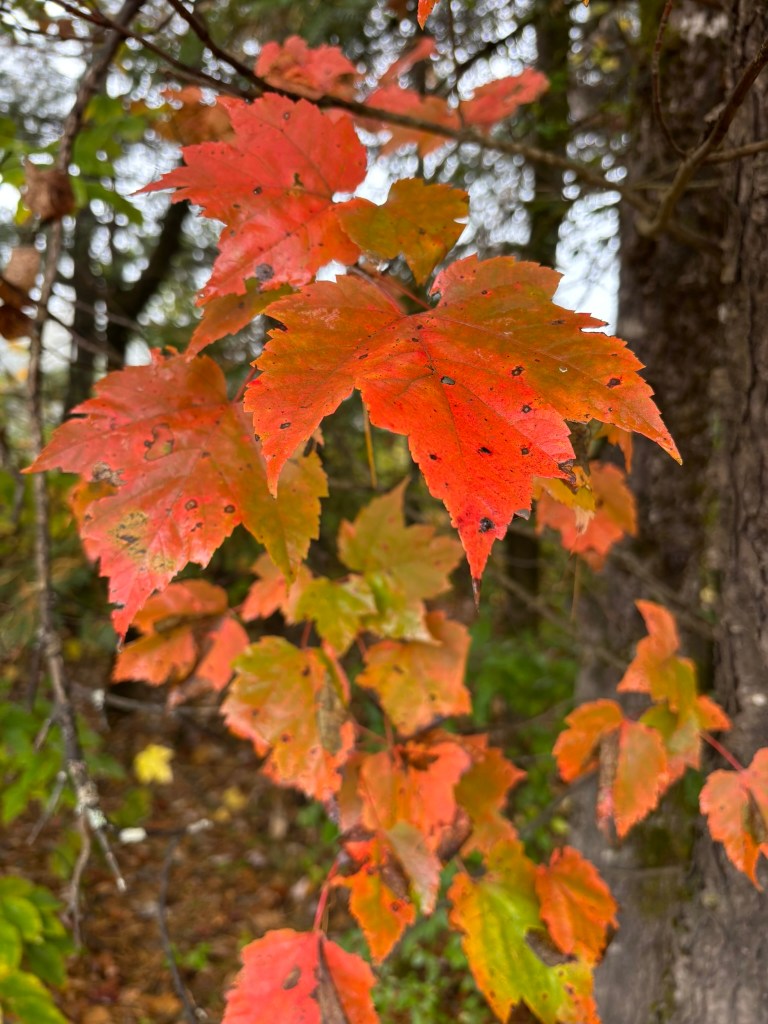
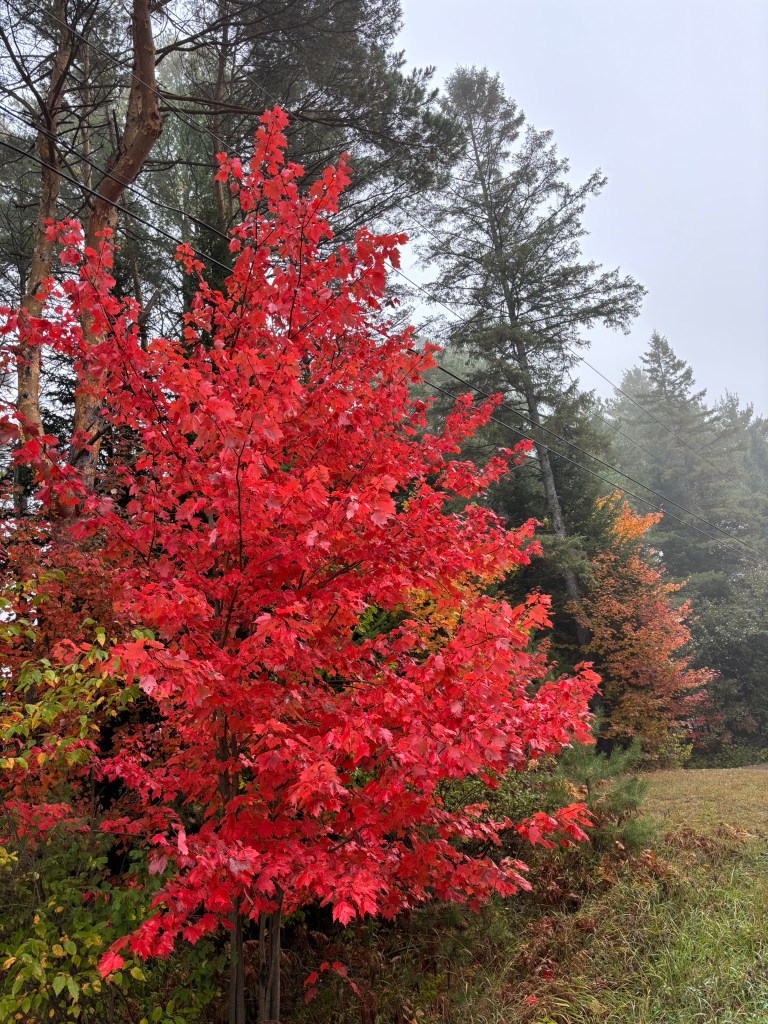
    Foliage on our road

    So, here’s something I composed quickly this week. It’s another seasonal haiku, this one in honor of foliage season, and I am proclaiming it officially done.

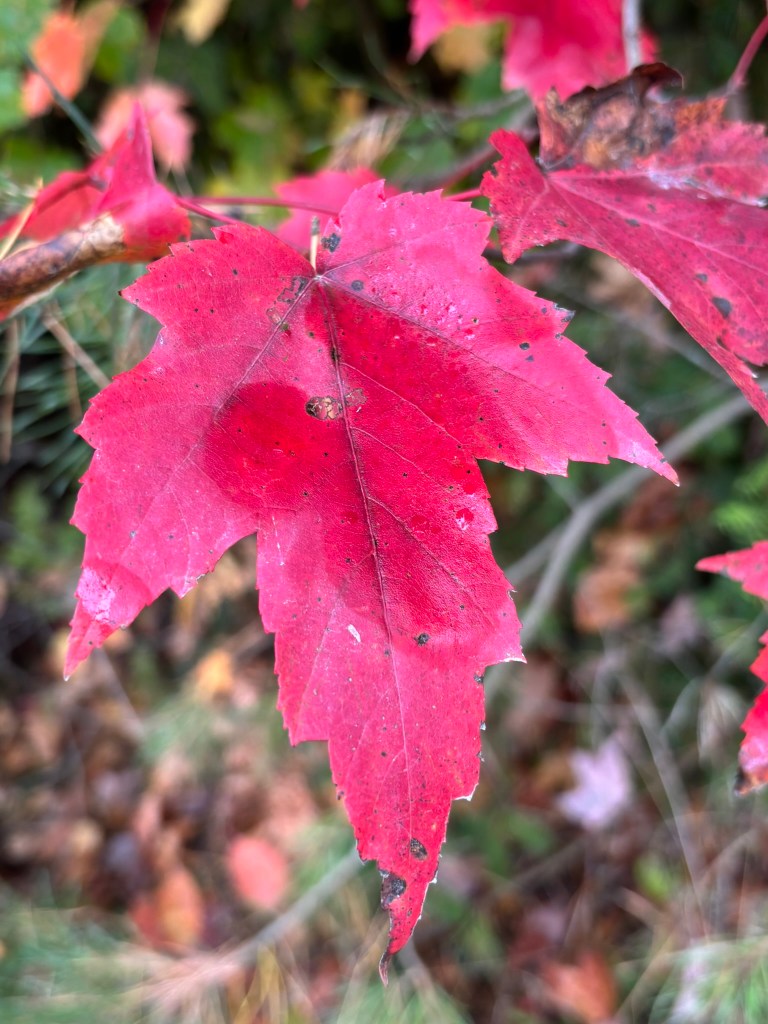
    More foliage

    Death becomes the leaves.

    Precious fall ephemerals,

    ruby and citrine.

    And more

    Thank you for reading, and Happy Mabon! Is there anything you’re working to let go of?

    Until next time!

    XOXO,

    Jenn
    Download a free e-book to read my latest story.

  • Hello from Mystic, Connecticut!

    We are on a short vacation just four hours from home, here in this historical maritime village of southern New England.

    Tomorrow my husband will help take the famous schooner The Brilliant out on a little harbor jaunt. He spent time crewing catamarans and other sailboats in his youth, and he has always wanted to go out on this boat, so this was one of his big gifts for his 50th birthday. Thank you, Uncle J.T.!

    Image from the Mystic Seaport Museum

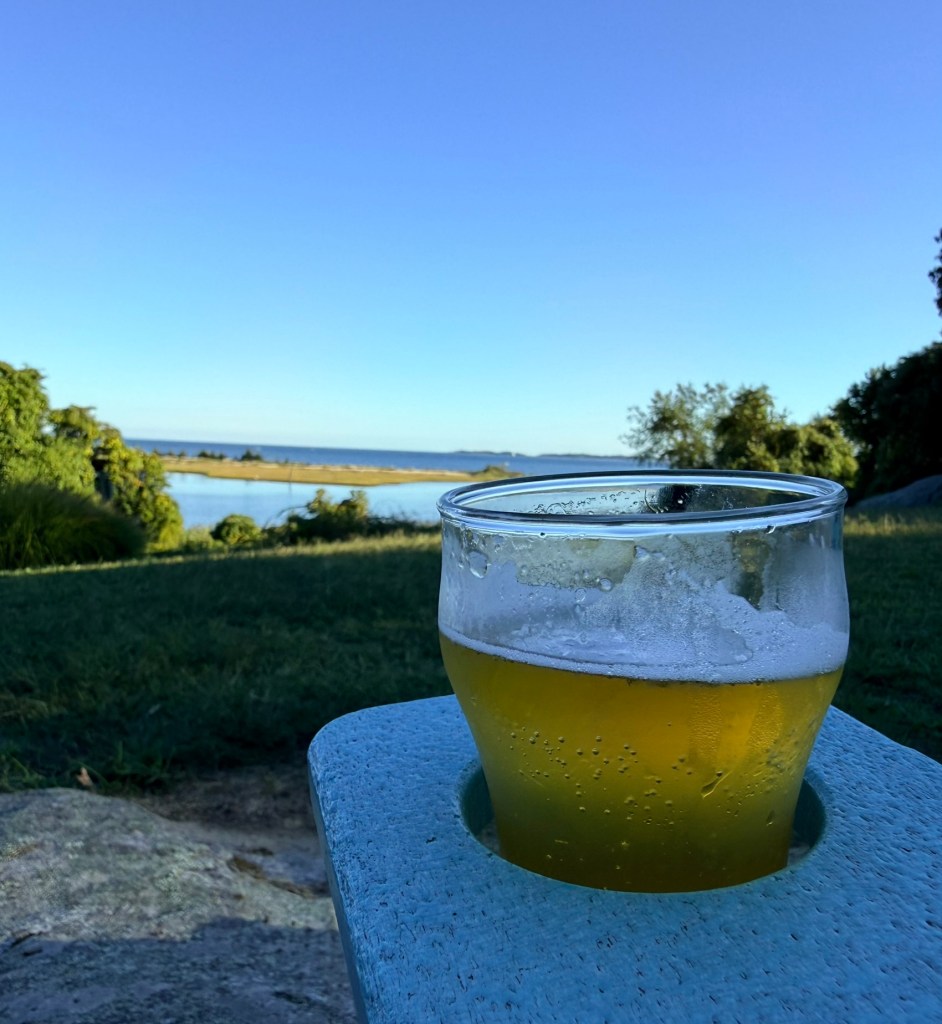
    In preparation for this special event, we rented a seaside cottage via Air BnB that looks out on a little inlet marsh, and we arrived yesterday evening. After getting groceries and unpacking, Jer and I sipped local craft beer in Adirondack chairs looking out at the water while Daphne listened to her music and enjoyed the autumn sunset with us.

    Seaside Happy Hour
    Daphne enjoying the view

    Today has been a special day for me and her especially.

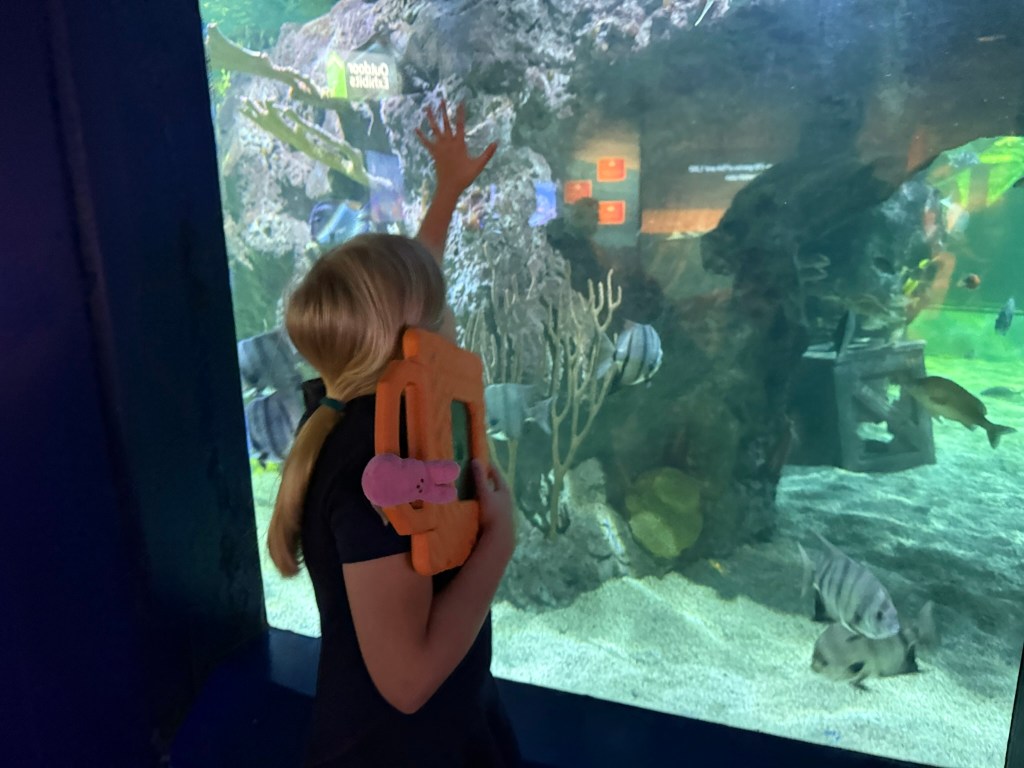
    Aquarium
    So many fish!

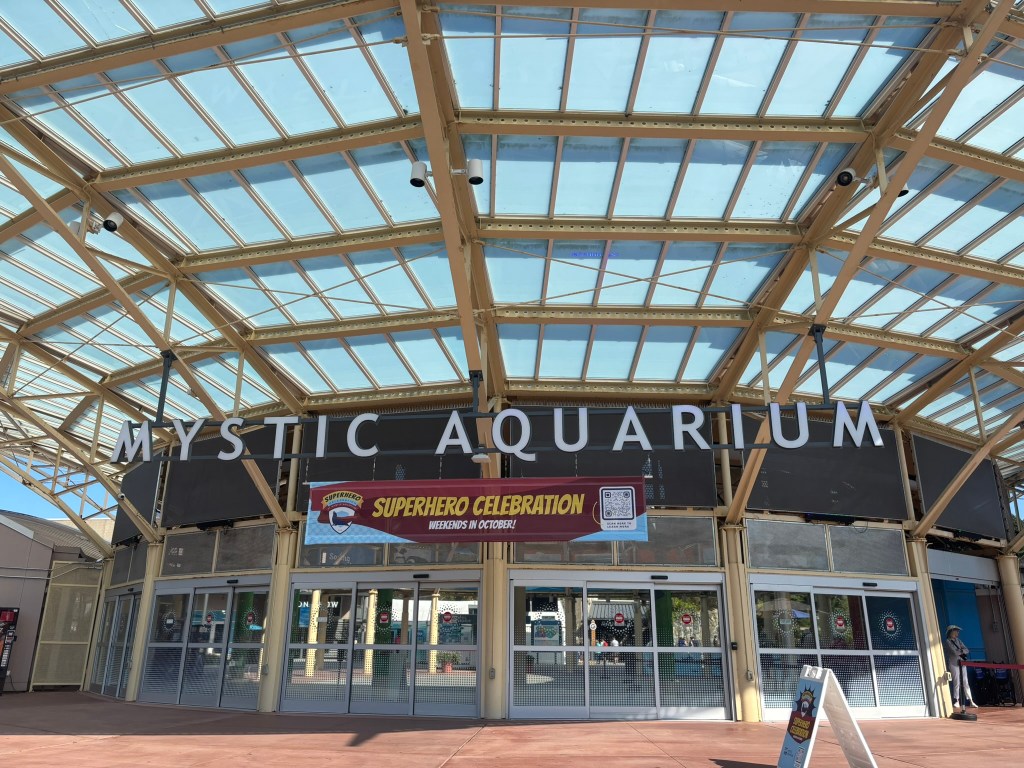
    We spent two hours at the famous Mystic Aquarium, where Daph’s favorite experience was the sea lion show. She sat fully engaged in the fifteen minute performance totally sans iPhone or iPad, a rarity, and cried a little when it was over. It was an impressive show, with three sea lions zooming through the water, leaping out, and dancing, waving, and doing handstands on the stage behind the tank. An actual story unfolded–the animals and their trainers made up the Sea Squad, and they were all fighting to clean up the beaches of the Pacific Northwest. The environmental message was kid-friendly and well-done, and the sea lions were sleek and graceful.

    Bravo!
    Before the show

    In fact, Daph was clear she needed as a souvenir a small sea lion plushie–$20!!– from the enormous gift shop (as large as any of the exhibits). Of course, her dad said yes.

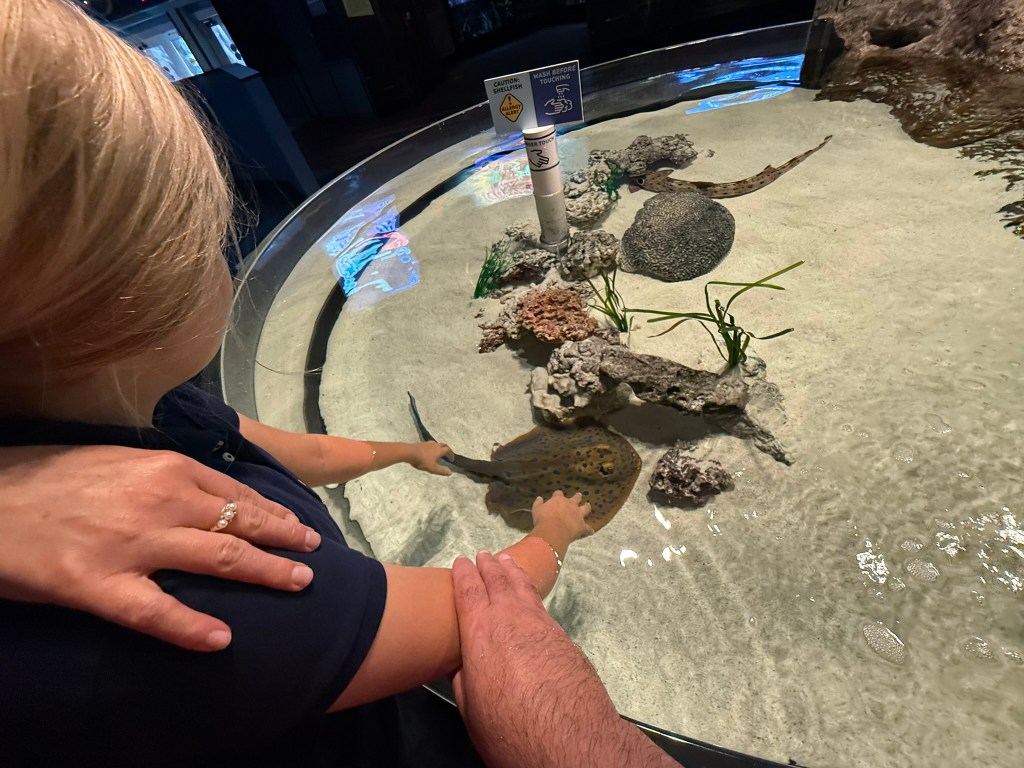
    She also enjoyed the beluga tank and stingray petting zoo.

    That spotted ray was very curious.

    It’s always a joy to see her immersed in something new, though it also reinforced how much she loves all things aquatic.

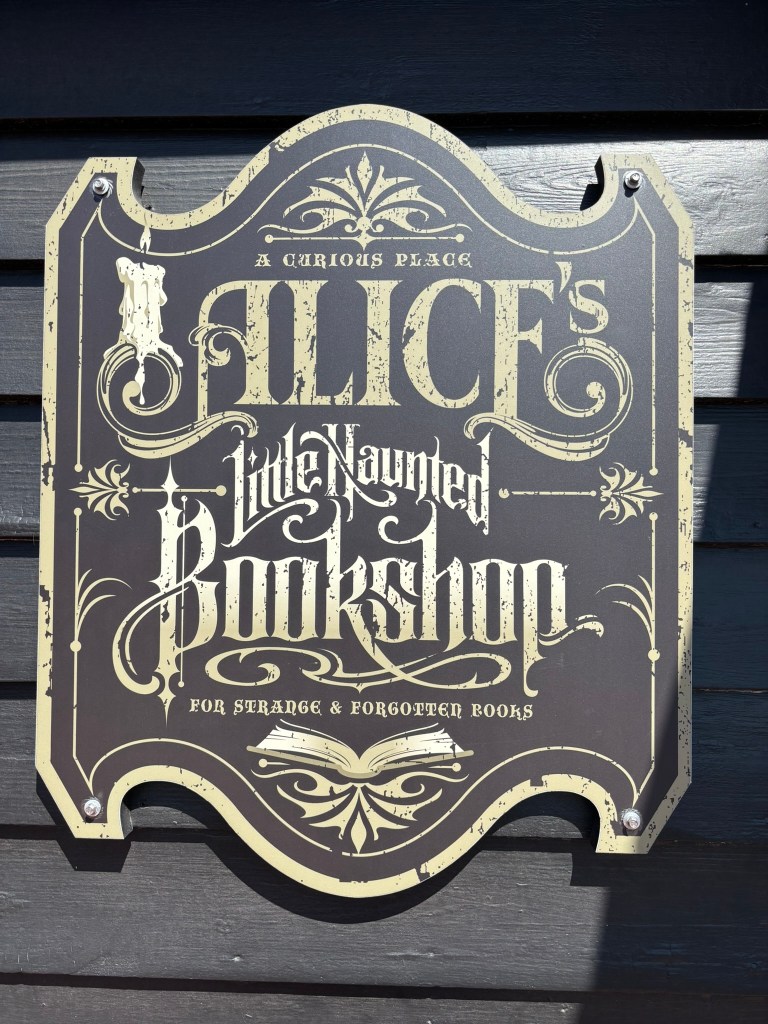
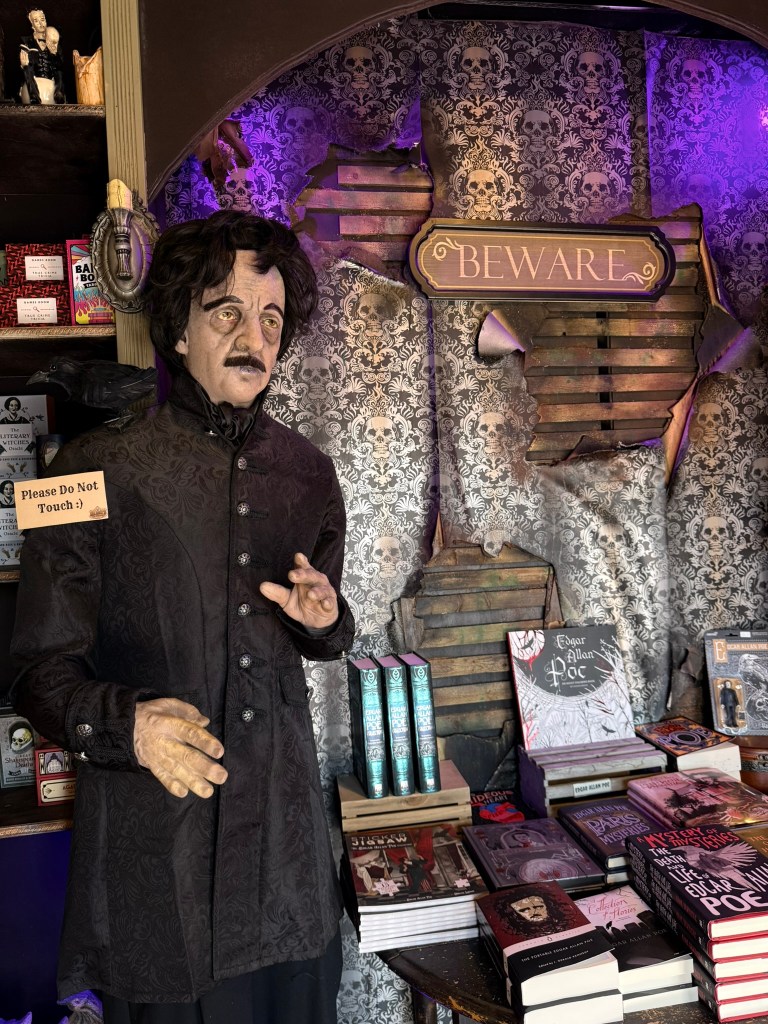
    After that, we ventured over to the Olde Mistick Village to shop. There was a place I definitely needed to go–Alice’s Little Haunted Bookshop.

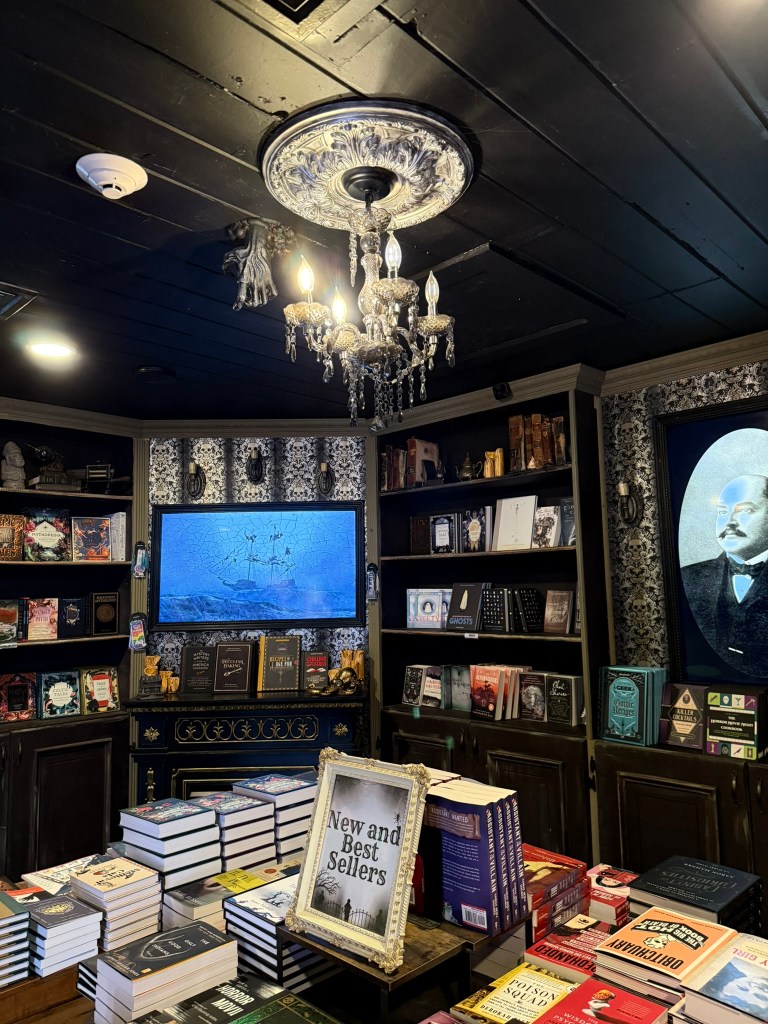
    Oh. My. Goodness!!

    It was a brilliantly atmospheric brick-and-mortar horror merchant’s, and I could have browsed there all day.

    Heaven

    I snapped a few quick pics and narrowed down my choices to Sir Walter Scott’s Supernatural Short Stories and Nettle and Bone by T. Kingfisher, both perfect for spooky season.

    Oh, Edgar!

    We absolutely need more genre-driven, specialty little brick-and-mortars in the world–am I right, fellow bibliophiles?

    Mystic itself is a gorgeous blue-blooded New England seaside village. It exudes quiet Old Money wealth, so I’m glad I brought my Tiffany pearls.

    I’m viewing this weekend not only as a wonderful family trip, but as a personal treat for having just had a story published in Spellbound.

    It’s important that we writers treat ourselves. The publication day of a book or literary magazine is often quiet, so much so it can feel anticlimactic, so it’s important to do something for ourselves to honor our work. After all, we created something new, with our own imaginations, that didn’t exist in the world before now, and here it all is. That is absolutely magical, especially in this era of ever-encroaching AI.

    Are you doing anything special to usher in the autumn season?

    Or, if you’re a book lover like me, what would be your ideal brick-and-mortar bookshop? What would it look like, contain, exude? What titles and authors would be found there?

    Thank you for reading. Happy autumn, and see you next week!

    XOXO,

    Jenn
  • Image from Canva

    “But some women only require an emergency to make them fit for one.”

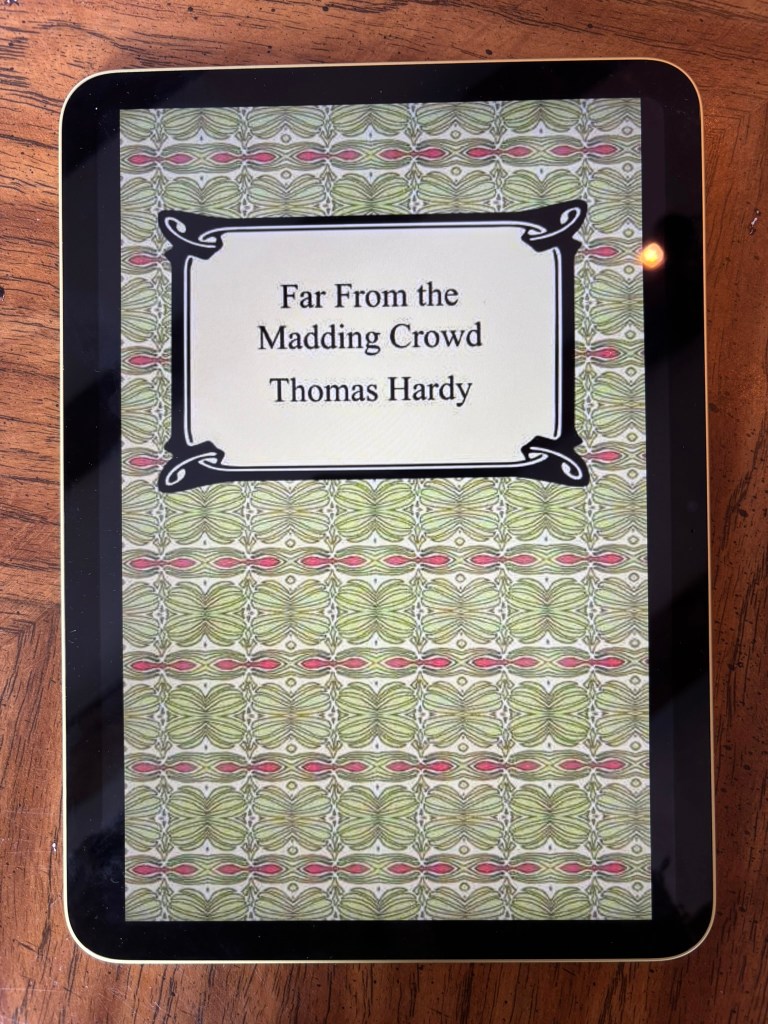
    That is a quotation from Chapter VII of Thomas Hardy’s Far from the Madding Crowd, which I’m currently reading.

    Current read

    It refers to heroine Bathsheba Everdine who, upon inheriting her uncle’s farm, is forced to deal immediately with a fire. As the quote suggests, she does so cooly and competently.

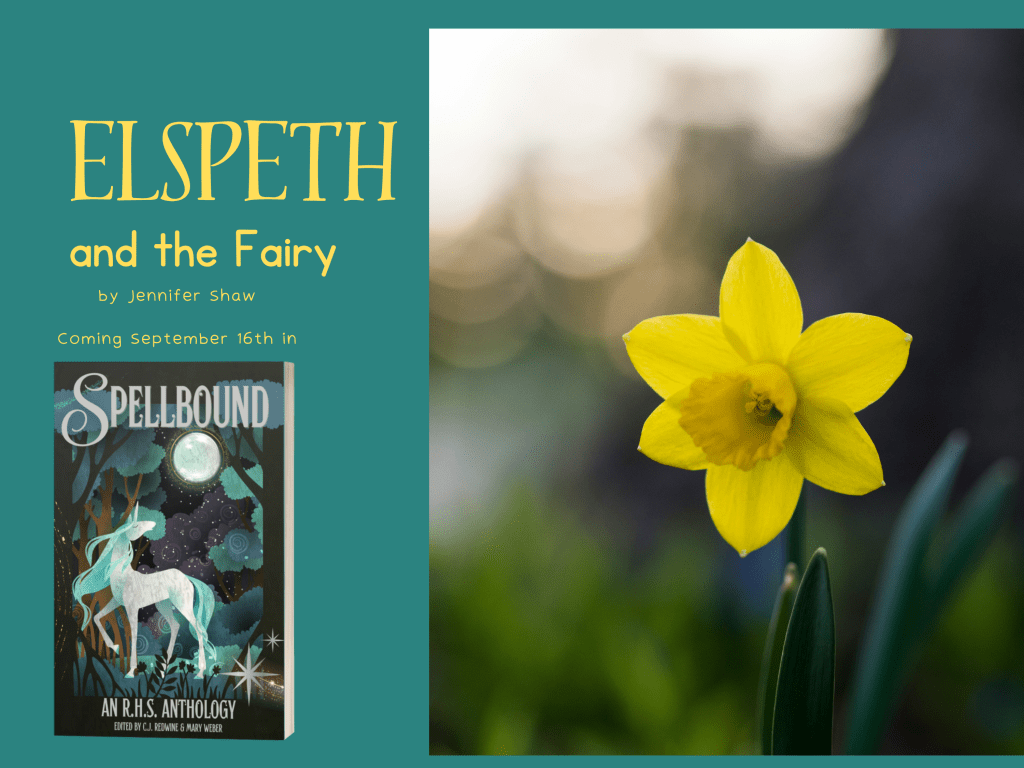
    It brought to my mind, however, a main character of my own, Lady Elspeth Aiken, from “Elspeth and the Fairy,” soon to be published in the Red Herrings Society’s magic and fantasy anthology, Spellbound.

    Images from Canva and Unsplash

    Unlike Bathsheba and Elspeth, I do not do well under duress. I never have. If someone screams, or shrieks, or something shatters, or–God forbid–there’s any bit of blood, my insides shrivel. The couple times I’ve witnessed a car accident, I’ve turned away. We pull over, of course, and I’ll dial 911, but I’m not the one leaping out to check on passengers and administer first aid, though I was once CPR certified for my job as a Pure Barre instructor.

    When I was teaching high school and, in the hallway, two students suddenly went at each other–fists flying, wild-eyed, deaf to all reason–my feet cemented into place.

    When we had our mandatory district training on how to take down an armed gunman who might break into our classrooms (isn’t that awful?), I went through the motions but always thought, Heaven help my kids if a psycho enters my room. I hope one of them can handle it, because I sure won’t be able to.

    I fly from emergencies, not toward them.

    I wait for someone else–another teacher, a hall monitor, my husband–to swoop in and control the situation, superior in their level-headedness. I do well if I don’t lose my own shit entirely.

    It’s one of the things I despise most about myself. Something that makes me so keenly, painfully aware of my worst shortcomings.

    Now, in the days leading up to my latest publication, it also makes me reflect on where my character Elspeth comes from, and how much I appreciate her.

    She is the protagonist of my original fairy tale, the younger daughter of a Scottish lord. After her kingdom’s heir-presumptive is cursed to suffer, endangering her land, she takes it upon herself to enter the menacing realm of the fairies, hoping she can somehow save him.

    Her characterization is definitely born in part from my awareness of my own awful weakness. Elspeth is able to do what I do not think I could do myself, and as the author, I bask in her bravery and fortitude. I project my desire for my own heroism onto her.

    Elspeth, image from Microsoft Design

    As writers, we often craft protagonists who represent perfected or idealized versions of ourselves. They are people we aspire to be, or they are curated versions of us we can still recognize. (Why are there so many FMCs who are bookish, clumsy, yet beautiful enough to attract the sexy, morally gray hero, after all?)

    I have no doubt this played a role in Elspeth’s conception. She has a bravery I naturally lack, and one I’ve been trying to develop.

    When I was outlining this story, I had something else in mind for her, too.

    Given the story’s genre, where virtue is often rewarded, I wanted to explore the archetype of the empath–the great natural nurturing soul I encountered again and again in my teaching career and, now, one I thankfully observe among my daughter’s classmates every schoolyear, bless their hearts (I am using that Southernism earnestly).

    Photo by Curated Lifestyle on Unsplash

    An empath is someone who deeply feels another’s emotions, especially their pain. It makes them finely attuned to all injustices and good in emergencies, especially ones of the emotional kind. When I was teaching high school English, there was always at least one empath among my students every year, often two or three. They were usually girls, but sometimes they were boys.

    They were the ones who stuck up for anyone suffering a snide remark. The ones who offered to explain a concept in a different way to the kid who still didn’t get it, when I was at a loss for any other way to break it down. They were the ones who volunteered in organizations like PALs. The ones who never tolerated bullying of any kind and who always had a smile for me, who always took a minute to ask me, “How are you feeling today, Ms. Ashley?,” especially in those early years when I was on a steep learning curve. (Ashley was my maiden name.) They were the students who were wise and already maternal or paternal decades beyond their years.

    I’ll never forget one empathetic student of mine, Erica. She was already eighteen but in my English II when I worked in our district’s credit recovery program, and she was a bright and a natural teacher herself. She’d moved to Houston from California. Unfortunately, a lot of her high school credits hadn’t transferred, so she was stuck retaking several classes she’d already passed, including mine. She took this injustice in stride, however, and quickly made friends through her magnetic self-confidence and wonderful tenderness and sympathy. In class, she did a lot of tutoring and helped maintain the momentum of discussions and activities. She genuinely loved most everyone and wanted good experiences for all of us.

    She did wonders for me, one day.

    My husband and I had recently received our then three-year-old’s autism diagnosis. We were reeling from the confirmation of this awful suspicion while trying to adapt to a schedule of brand new therapies, sessions where I still couldn’t believe a speech therapist had to teach my nonspeaking daughter the meaning of “Put in” by modeling a crayon going in a box… All of this while attempting to process a shadowy future terrifying in its uncertainty. For my husband, it was a metaphorical death. For me, it felt like a gaping wound that “simply would not heal” (that’s actually a line from my fairy tale), one that continued to throb with a complex mix of fear, rage, hopelessness, and even, irrationally, shame (in myself somehow, not my child).

    In the face of such a crucible, life doesn’t stop. I was still getting up at 4:30 am every day, traipsing into work, juggling the stress of planning, grading, and trying to motivate kids who’d been disappointed in their academic experiences–many of whom had their own serious challenges, including an array of learning disabilities. I was raw and overloaded and exhausted, and one morning I lost it on Erica’s class. I don’t remember what I yelled, or what prompted it. The class probably wasn’t listening, or someone had given me attitude, but just before the period ended, I burst into tears.

    Let me tell you, for both the teacher and students, this is one of the cringiest, most painful things that can happen in a classroom.

    When the bell rang, my students filed out in silence, even Erica. After that was lunch, and thankfully I could be alone. I closed my door, sat at my computer, and tried to enter grades but only saw the names and numbers blur. I finally gave in to sobs, letting myself feel all the things washing through me.

    Twenty minutes later, there were two tentative knocks at my door. Erica, accompanied by a friend, peeked in. She held up a gigantic, greasy McDonald’s bag.

    Photo by Branislav Rodman on Unsplash

    Her brow softly creased, she whispered, “May I come in, Mrs. Shaw?”

    I smiled at her, trying to lighten things. “Of course.”

    The kids shut the door behind them and pulled up desks next to mine. Erica spread out paper napkins and laid out the boxes of Super-Sized fries and 20 piece McNuggets. She handed me a sweaty Coca-Cola fountain drink. I never indulged in soda, but that day, the sweetness did more for my soul than I care to admit.

    “I thought you might be hungry.” Erica’s face was lively with kindness and concern.

    I thanked her profusely and tried to decline, assuring her I was fine and that I wished she hadn’t spent any money on me, but she only said, “I was going there anyway. Please eat.”

    So I did. I didn’t have the energy to keep resisting, and I was famished.

    The three of us ate together. Erica knew about my daughter since I’d shared a little about our situation with my classes, but she carried on a perfectly light conversation and occasionally patted my shoulder. We talked about music, movies, television, probably Game of Thrones, even Watt Pad where Erica was writing stories. By the time the bell rang for 6-7th period, we were all laughing, and most of my embarrassment was gone. Much of the tension had eased from my neck and shoulders, and I felt like I could face the rest of the day.

    On her way out, Erica folded me into a bear hug, and I let myself relax in her arms. Maybe I was leaning too much on a student, and it wasn’t professional. But, in that moment, we were just two human beings, and Erica’s need to provide solace, and mine to receive it, overrode everything else.

    She looked visibly relieved on her way out, too. Again, a true empath.

    Erica is who I envisioned when I wrote Elspeth.

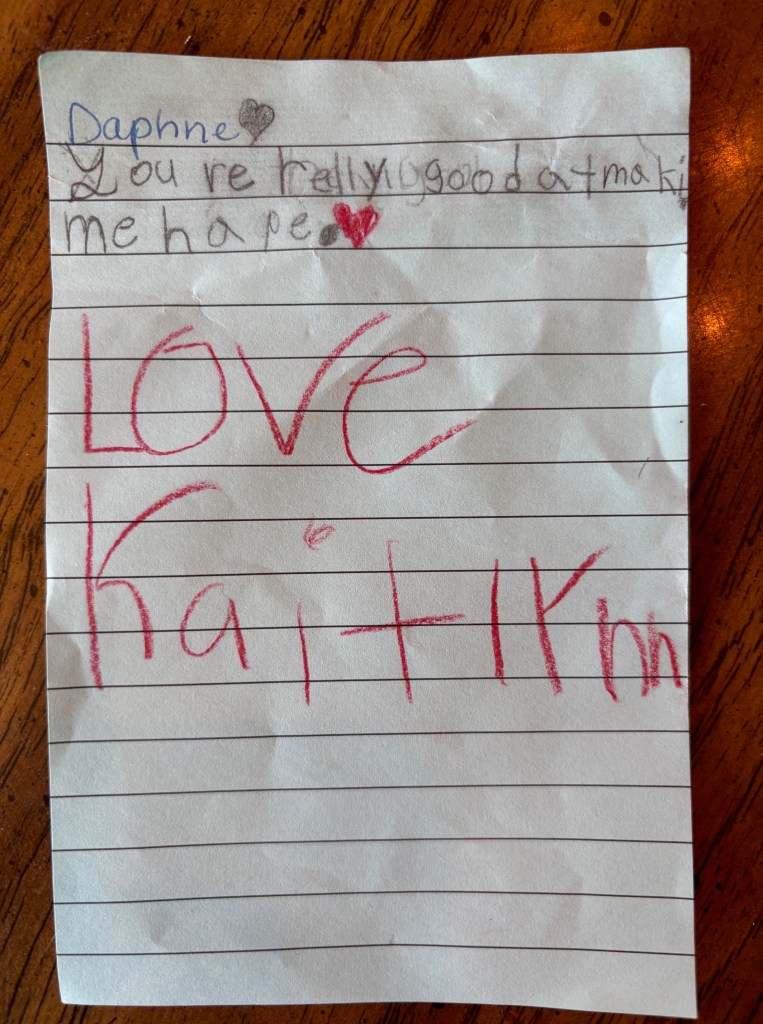
    She, and all the students that came before her, and all the students after her–including all the kiddos now who, every year, befriend my autistic daughter, who rub her back when she’s crying or hold her hand at recess or toss the playground ball back and forth with her or sing her “Humpty Dumpty” for the ten thousandth time, who I count on to ease my nerves when I drop my child off everyday, which is such an act of faith–they are the many wonderful, necessary souls I pay tribute to in this story.

    A note from my daughter’s classmate. She gets several like these regularly from a couple different students.

    They are the ones who make this world bearable, and who inspire us to try changing it.

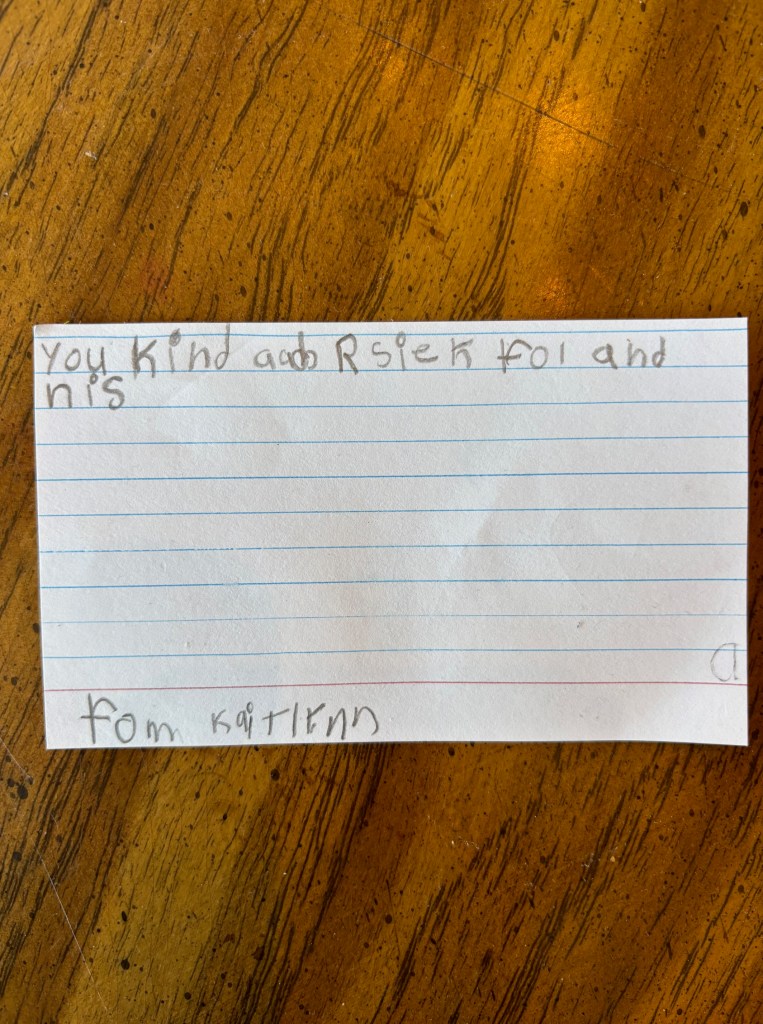
    Another note from Kaitlynn. This one I found in Daphne’s backpack yesterday.

    They are the ones who need particular care, too. Because they internalize more than the average person, they are susceptible to their own unique depression and burnout. I try to check in at least occasionally with these exceptional souls, whether it’s face-to-face with a current friend or online with former students and colleagues, Erica included.

    Image from the public domain

    With that said, here is an excerpt from “Elspeth and the Fairy,” one that helps showcase my protagonist’s care and sensitivity. When I drafted this scene, I was asking myself, how would Erica respond?

    Late one winter, Elspeth and Fiona tramped through a snowy field, reveling in the cloudless blue sky of the first temperate day. They huffed as they trudged, breath steaming through lips parted in delightful exertion, when a figure on horseback appeared over the ridge. Hunched over, he clung to the dappled-gray’s neck, his weight slumped to one side.

    As the horse galloped closer, they heard the man’s terrified cry:

    “Whoa!!”

    A string of furious words followed the plea, so crass that both girls, now young ladies, flinched.        

    “By Morrigan,” gasped Fiona, casting her eyes up to the vast blue dome, looking for crows. “What awful thing comes this way?”

    “Just a man.” Elspeth squinted to see more clearly. “In distress.”

    The horse, as nobly outfitted as its passenger, nearly overtook them, rearing up on hind legs to dislodge the aggrieved rider. The young man slid down, then groped madly away in the snow, desperate to avoid the stallion’s hooves. Though his mount cantered off, he ducked down, shielding his head and neck, and howled as if something from the sky were swooping down on him.

    “Sir!” Elspeth rushed toward him, her sister hanging back. “Are you alright?”

    “Do not you hear it?!”

    “What?” cried Fiona.

    “Two of you?!” The man shook his head. He did not look directly at either of them. Instead, he gaped far over their shoulders. Then he thrust his chin at the sky. “That horrible screech?!”

    Both sisters looked up at the silent, empty blue, then back at the poor young man. The bluebird sun sheened his damp auburn brow and highlighted the angular lines of his fine jaw.

    “I’m afraid we hear nothing.” Elspeth crouched down to take the man’s elbow, large and feverish beneath her hands. He shrank away as if burned.

    “I cannot see!” he cried, “Out of nowhere, I am blind! And I hear too much—things that are not there?!” His voice lifted and broke on the question before he struggled on: “My tongue, too, is separate from myself; I cannot control it! I am cursed! CURSED!

    He screamed another volley of blasphemes so jarring they pained the girls’ ears.

    “An appalling enchantment,” Fiona whispered, her eyes two enormous orbs. 

    When Elspeth crept forward to lay a hand on him again, the man shoved her hard into the snow.

    “Fiend!” her sister hissed.

    “It’s alright.” Elspeth rose, gesturing for Fiona to calm herself. “He’s only frightened.”

    She stood over the panicked figure who was no better than a trapped animal, robbed of all assurance.

    “My lord, I am no wicked thing, just a mortal woman who wants to help you. Please let me.”

    The man flung his hands over his mouth.

    Elspeth steeled her voice. “If you remain out here like this, after the sun goes down, you will not live to feel it rise.”

    He only rocked back and forth.

    “I am reaching out now.” Elspeth knelt again to take his elbow. At her touch, a heart-wrenching wail broke from him, and she could not resist encircling him in her arms.

    “Be careful!” Fiona cried.

    “You will be alright,” Elspeth soothed, her cheek against the man’s. “We will help you home.”   

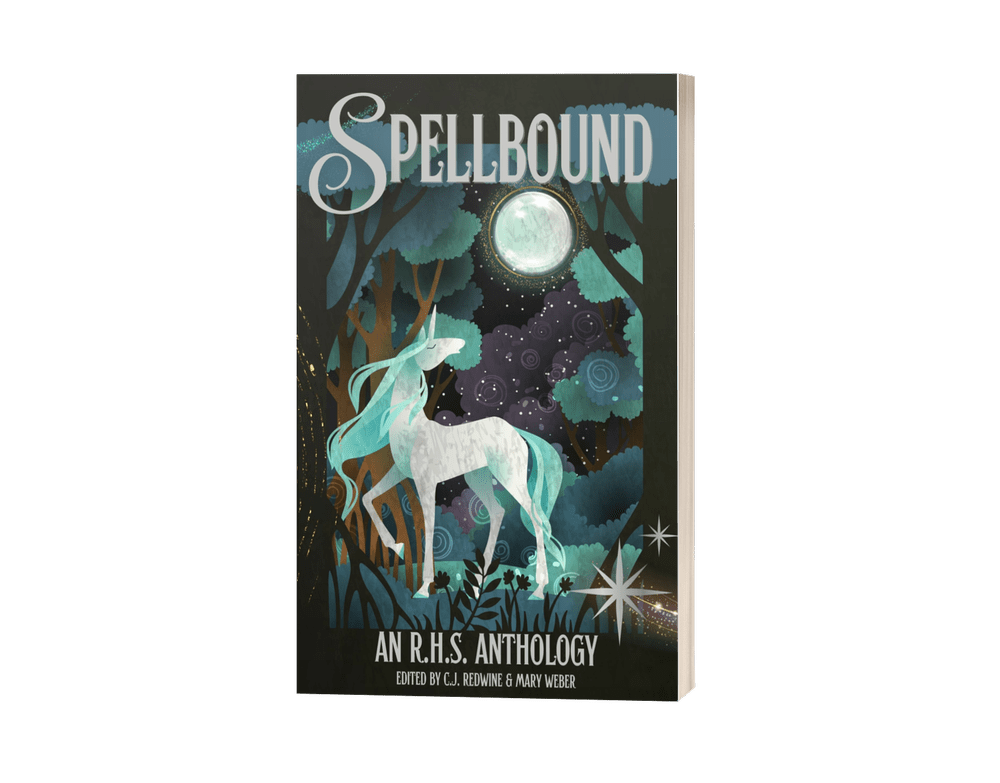
    If this appeals to you, I hope you’ll consider downloading the free e-book. Spellbound releases September 16th.

    Photo from Canva

    Full disclosure: this scene is slightly longer than the version included in the anthology. I had to trim it to keep the story under a certain word count, but I prefer this version and feel it does a better job highlighting Elspeth’s nature while contrasting her to her sister.

    I am kinder than Fiona, but I hate to admit that in this situation, I’d probably be right there with her, cowering back.

    Before I wrap this up, here are a few additional teasers for more stories in Spellbound, penned by my talented co-contributors.

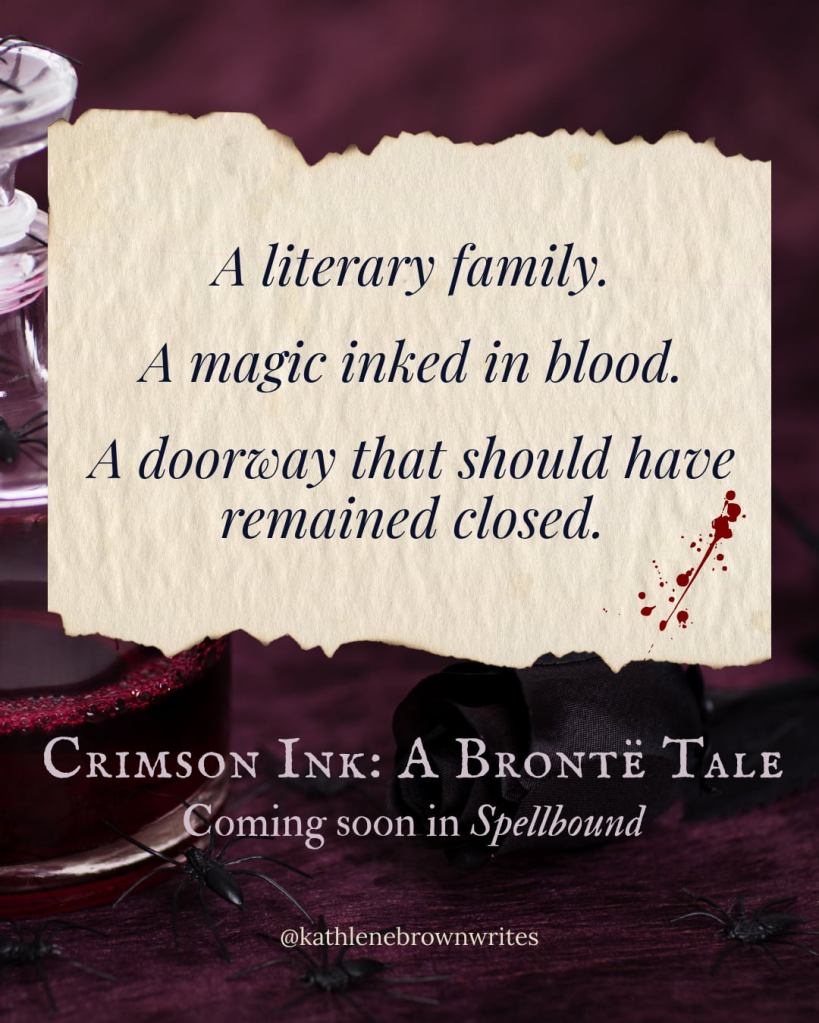
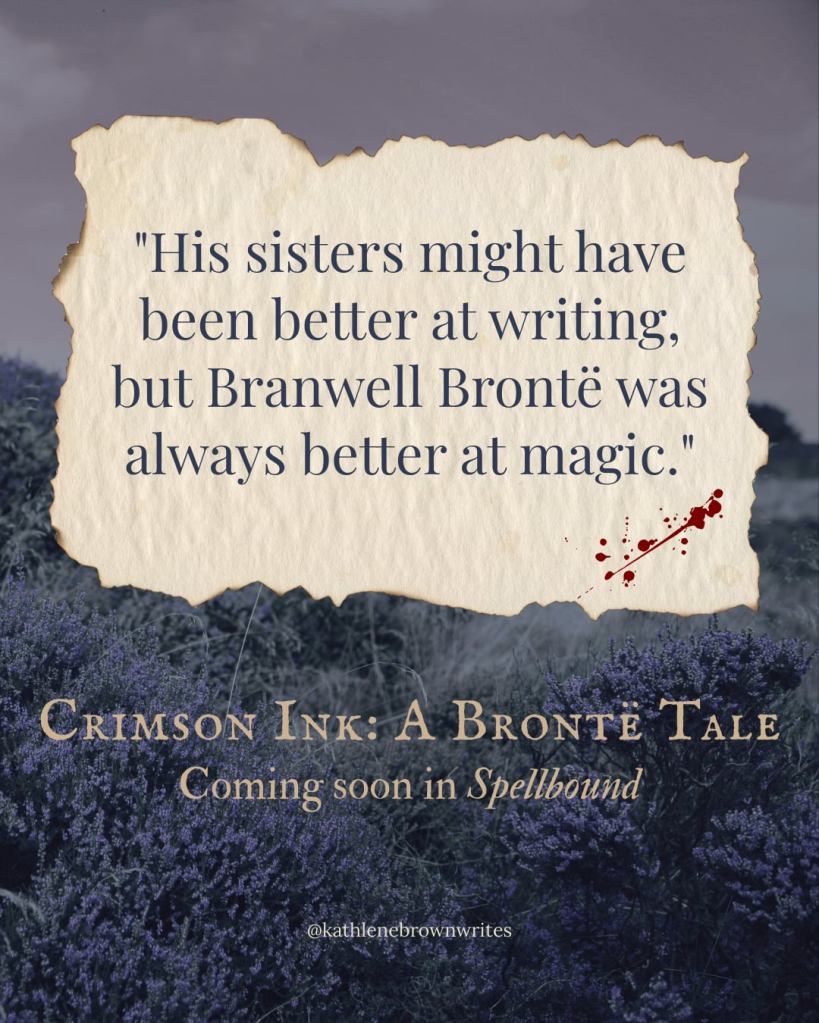
    “Crimson Ink” by Kathlene Brown

    Branwell Brontë has always lived in the spaces between his sisters’ talents and his father’s expectations, better at conjuring the family’s childhood magic than finding a voice on the page. When a letter stirs old ambitions, Branwell draws blood, inks an incantation, and forces open a doorway to a forbidden world created by his sister. But Emily’s dark, haunting world is restless, and it pushes back. Crimson Ink: A Brontë Tale by Kathlene Brown is a gothic short story about the cost of creation, sibling loyalty, and the brittle line between imagination and ourselves.

    I’ve had a sneak peak at this one, and I thoroughly enjoyed it! Brown’s descriptions are precise and evocative, and her literary allusions and connections are clever and intriguing. I’m excited to read more about this fictional version of the Bronte family and hope the author expands this narrative into its own book.

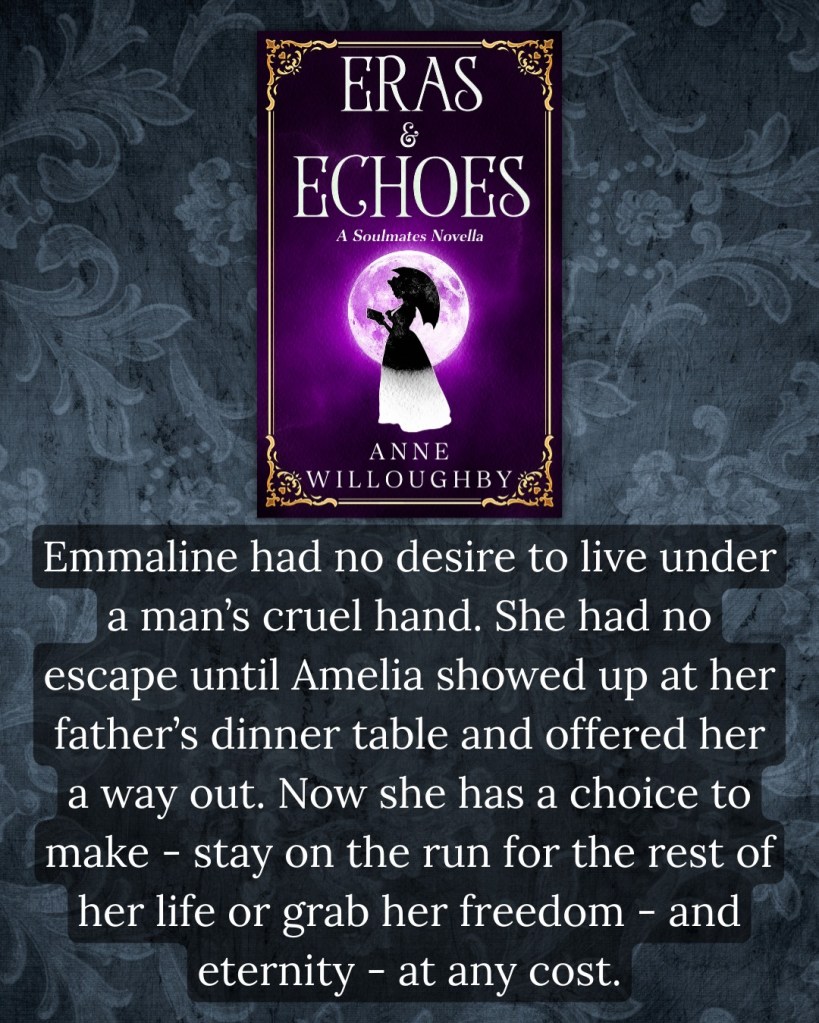
    “Eras and Echoes” by Anne Willoughby

    I’m looking forward to reading this one! Who doesn’t love a good vampire story, especially when it involves a woman’s liberation?

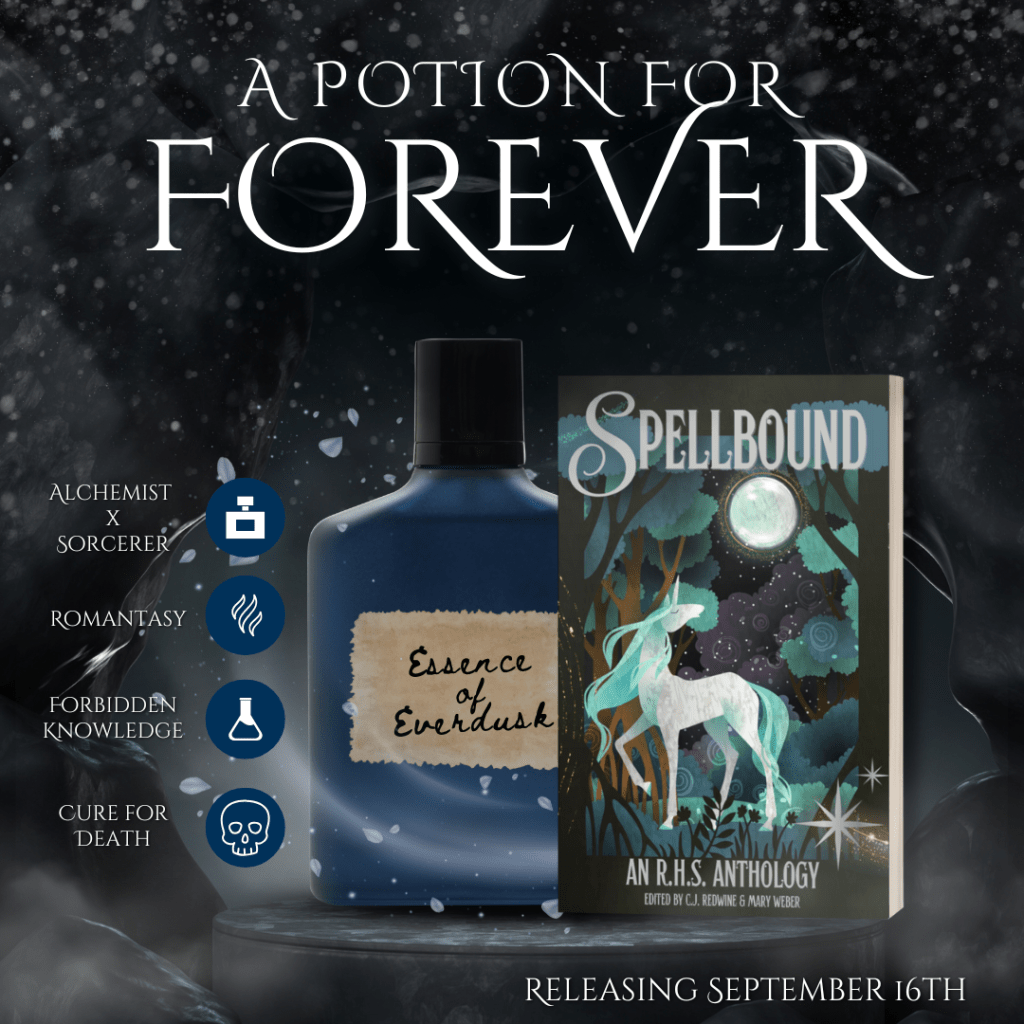
    “A Potion for Forever” by Colleen Brown

    Immortality has a price. Love demands a greater one. Vespera came for the flower that could grant her eternity. Thorne was the sorcerer bound to keep it hidden. Together, they uncover a love strong enough to rival forever. …if one of them doesn’t destroy it first.

    “Suddenly, eternity seemed smaller than a single lifetime with you.”

    I am always a fan of my friend Colleen’s work and truly cannot wait to dive into this! It sounds like an epic, swoon-worthy romantasy!

    If these have whetted your appetite, you’re in for a treat. There are fourteen tales total, all sure to be magnificent. They contain nothing beyond a “PG-13” rating, so this collection is appropriate for younger readers too.

    Here is a preorder link. I’ve been assured no one will be charged anything on release day, despite Amazon’s listing as $0.99.

    If you’re a writer, I’d love to hear where your main characters come from. If you’re a reader, have you ever encountered a character so relatable or inspiring (or something else) that s/he was seared into your memory?

    See you again soon!

    XOXO,

    Jenn
  • Though the autumnal equinox isn’t until September 22nd, today, August 31st, feels like the last day of summer (I’m posting this a couple days after drafting, obviously).

    It’s been a good one.

    I wish I had half as much attitude as my daughter

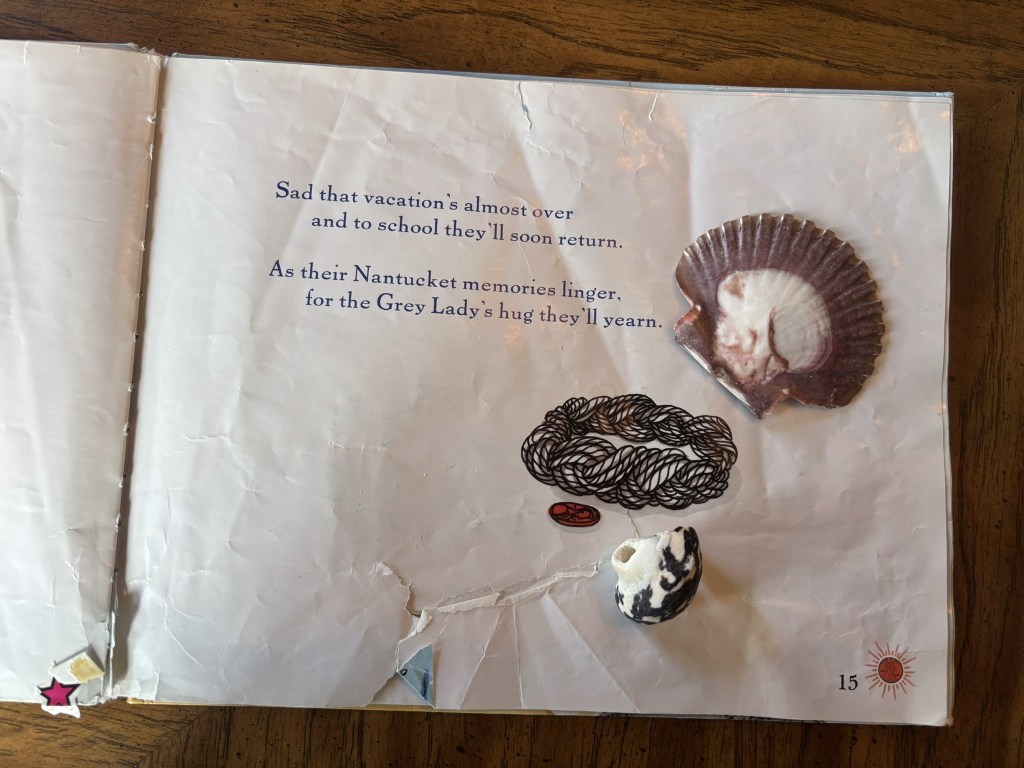
    All season, Daphne’s enjoyed going through her old books and picking favorites to read. Jenny’s Pennies by Peter Saverine has been a particularly beloved one this week, and it’s a perfect selection for closing out the warm months.

    Here’s my attempt at visual artistry
    A well-loved book mentioning that shift from summer to school

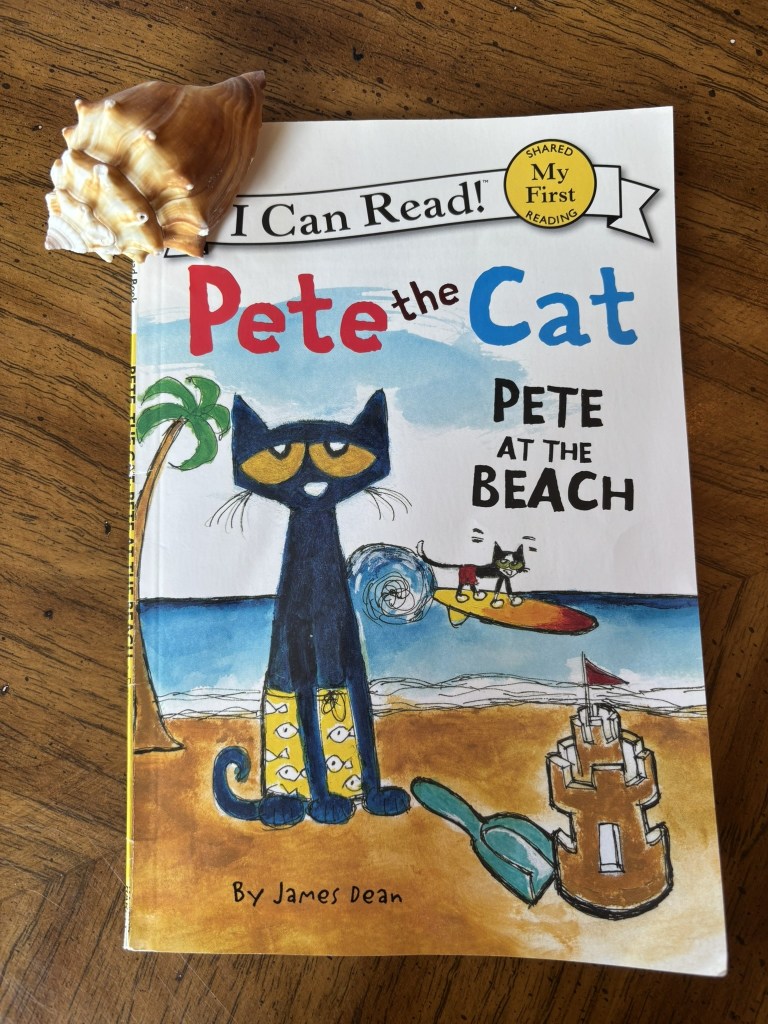
    We’ve also practiced with all of her I Can Read! books, and she’s gotten attached to Pete the Cat: Pete at the Beach by James Dean.

    Are you seeing a theme?

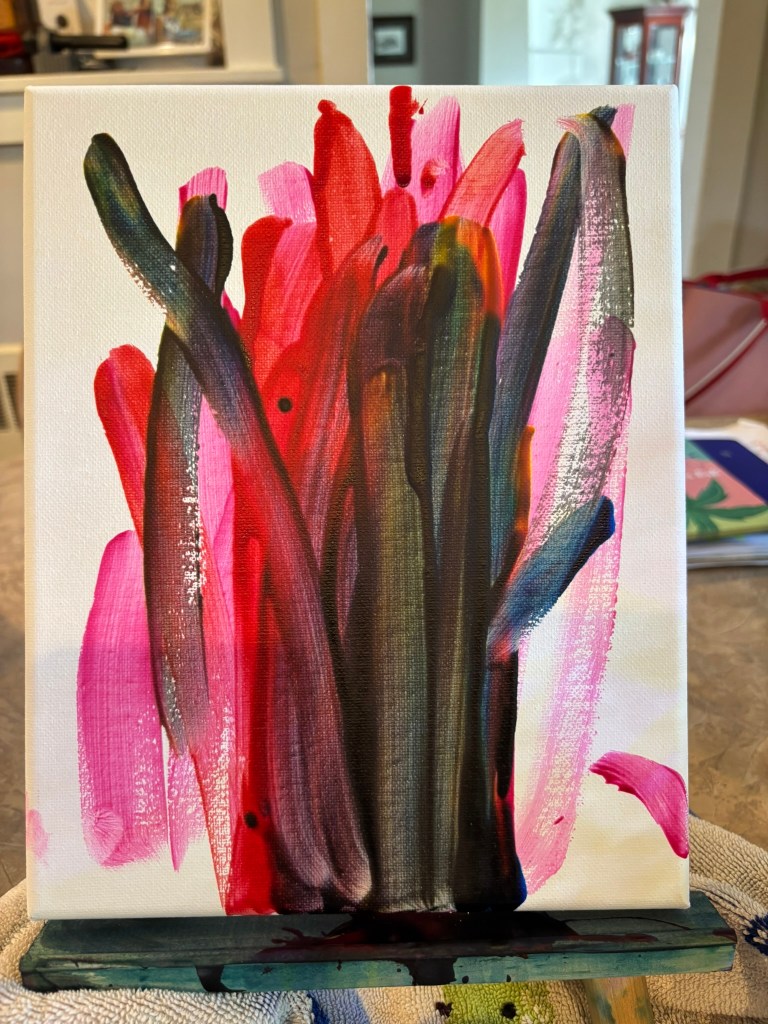
    She’s done more painting, too. We gave a new one to her Grammy and Munka for hosting Jer’s 50th birthday celebration. The most recent one, done on the first of her larger canvases, we’re mailing to her Grandma and Grandad.

    This painting of Daph’s I like to call Fairy Fire

    Daph also enjoyed her half-days of July summer school, and we’ve savored lots of fun time with loved ones, including two sets of her grandparents, three of her uncles, and several friends, both old and new. It’s always good to socialize as much as possible in these easy months because we’re basically on our own in the dead of winter. It’s too hard for people to come visit us with all the snow and ice.

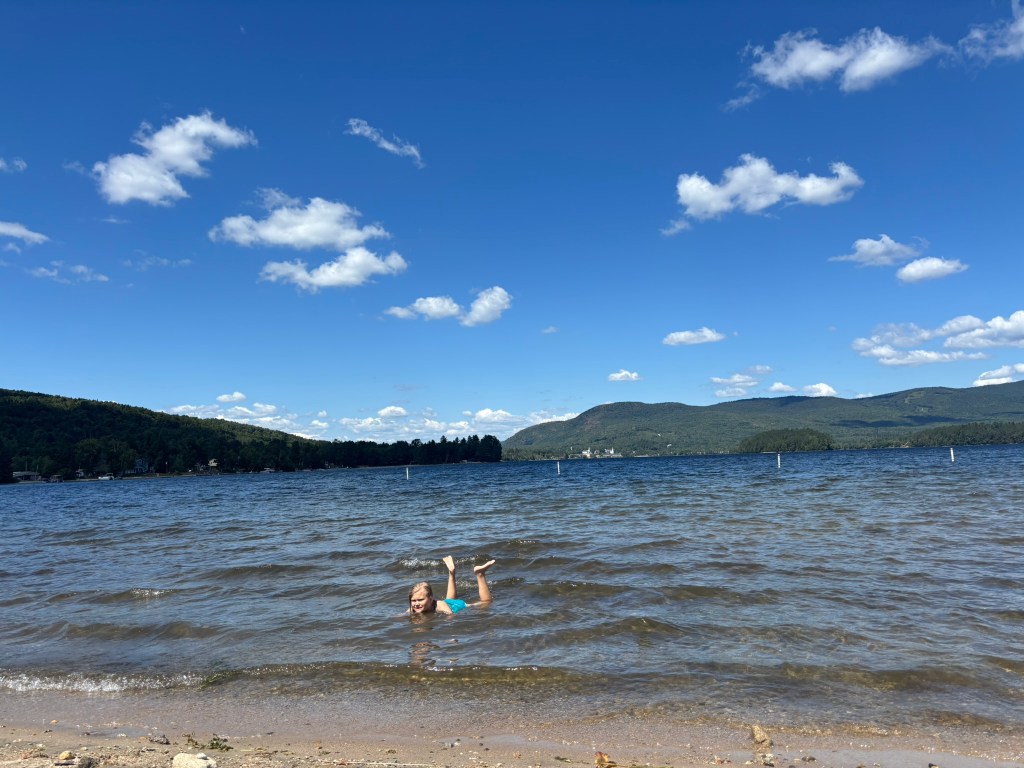
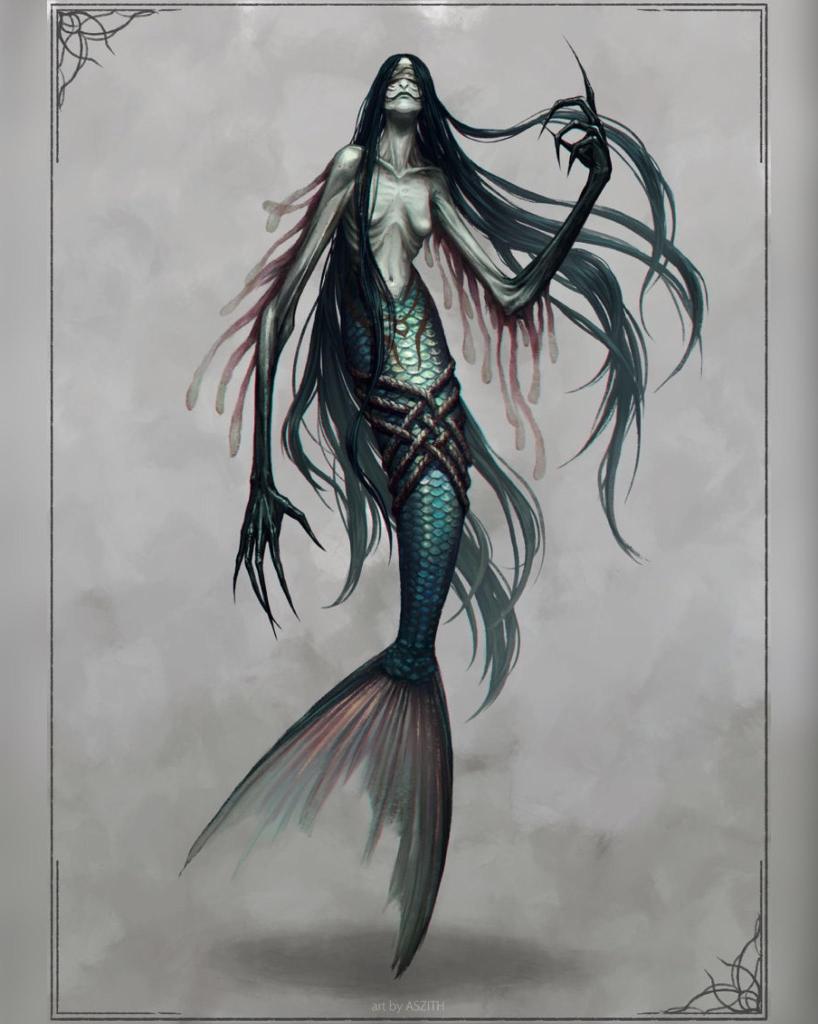
    Beaching like a mermaid at Island Pond

    Of course, we’ve done a ton of swimming–in the saltwater pool at Wildflower Inn, in Crystal, Willoughby, Island Pond, and Maidstone Lakes, and at the beach in York, Maine. At York, the waves were high and the water choppy thanks to the hurricane just off the coast. The red flags were flying, signaling that undertows were likely and swimming was forbidden.

    That wasn’t going to stop Daph, though. We stayed right by her, allowing her in only waist-deep, and let her play in the waves. She loved waiting for a big one, then sitting down just as it crashed over her, sweeping her back toward the shore. Back home, she had dozens of clumps of seaweed caught in her hair, and she smelled like a fish market. I had to scrub and scrub with two applications of shampoo, and even combing out her wet hair, I was still catching pieces of ocean flora. It was everywhere–on the comb, the bathmat, the tile floor, and of course all over the shower. Quite nasty, actually.

    “Now you really are a mermaid,” I told her.

    She started fourth grade on Wednesday, August 28th, and had a fantastic first two days of school and a pretty good Friday. Her homeroom and special education teachers are the same from last year, and she’s with a lot of her former classmates, so that’s always beneficial. It helped to ease into a new year with a short week and a long weekend, too.

    Having so much time back to myself blew me away last week. It felt like another adjustment, though a good one. I read and wrote a bit, mostly on this blog. I’m easing back into fiction because it always feels daunting after a long break, and I’m considering trying Amy McNee’s Two Week Reset Plan as described in her book We Need Your Art.

    A writer friend highly recommended this, and it’s soothed my creative anxieties

    I have plenty of projects in mind, but it all feels a little overwhelming right now, and the gentle and forgiving fourteen day schedule McNee recommends sounds like a good way to assuage those weird nerves that come along with creative reentry.

    Speaking of books, I thoroughly enjoyed my own grownup summer reading. Alas, I only read five titles–Daph got up too early every day for me to make full use of early morning reading–but that’s ok. Three of those titles were novels published this year, and two of those were debuts–yay! I enjoy supporting new authors. The others were a bestseller from 2020 and a classic, so a good mix.

    The classic, which I’m still on now, is Thomas Hardy’s Far from the Madding Crowd.

    I love Hardy, and I haven’t read any of his work in several years, not since my twenties. It took me a few chapters to get back into the rhythm of that more complex 19th century syntax, but now I’m trucking along nicely, enjoying the characters and appreciating the pastoral details much more now that I live in the countryside myself. It’s an interesting little introduction to sheep farming, which I appreciate since much of Vermont’s history involved this particular livestock, and I’ve considered making one character in a potential historical novel set here in VT a sheep farmer.

    I’m also amused by Hardy’s humor. I don’t remember his other novels having comical moments, but I’m sure they do and I just didn’t pick up on them, or they didn’t stick in my memory. In this novel, his depiction of the rural folk–the farm hands, carters, waggoners, malters, and their wives–is great, right down to their names and dialogue. One little boy is christened Cainy Ball because his mother, ignorant in her Scripture, mixed up who was who between the Biblical brothers, believing she was naming her son after the one murdered and not the murderer. Another farmhand, a hen-pecked man, is referred to mostly as “Susan Tall’s husband.” You can imagine what Susan Tall is like.

    Here’s my favorite funny line thus far. It occurs when the heroine, Bathsheba Everdene, who has just inherited a large farm she’s determined to run herself, is handing out wages for the first time. She asks a seasoned employee about two female farmhands, meaning are they good, productive workers? He interprets her question as a moral one and answers, “Oh mem–don’t ask me! Yielding women–as scarlet a pair as ever was!”

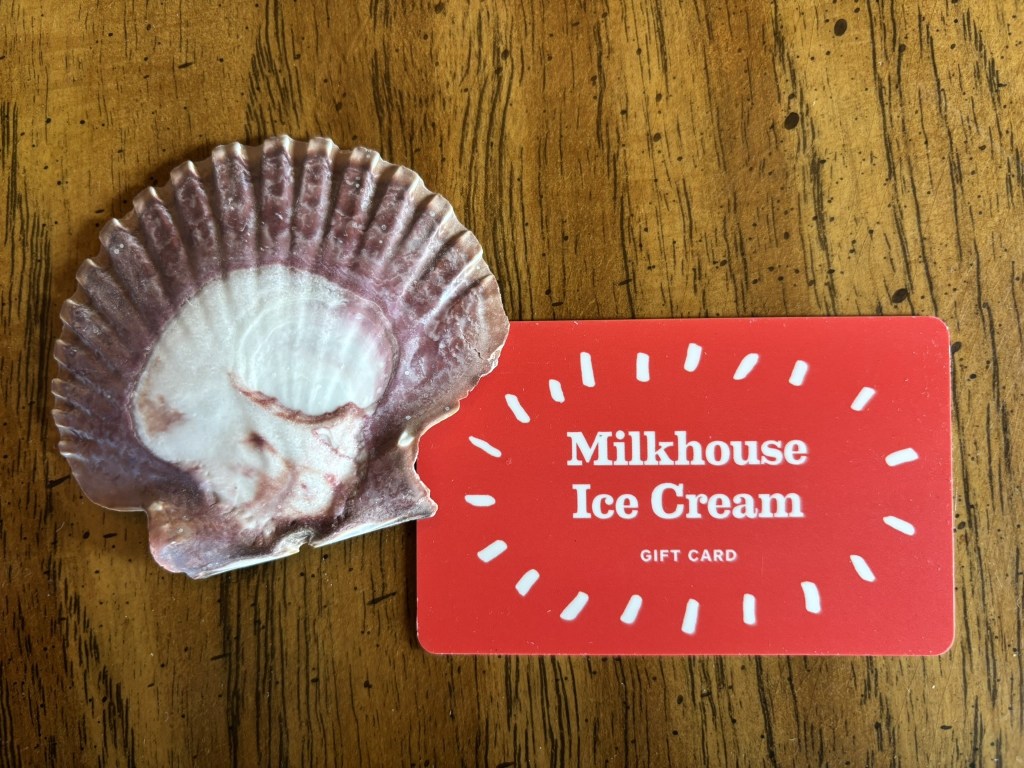
    My summer reading efforts were rewarded when I won a prize in the St. Johnsbury Atheneum’s drawing!

    Sweet reward for pleasant efforts

    I rarely win anything, so this was fun. I haven’t spent the gift card yet but will soon, preferably while Daph’s at school so I can enjoy my treat in perfect peace and quiet.

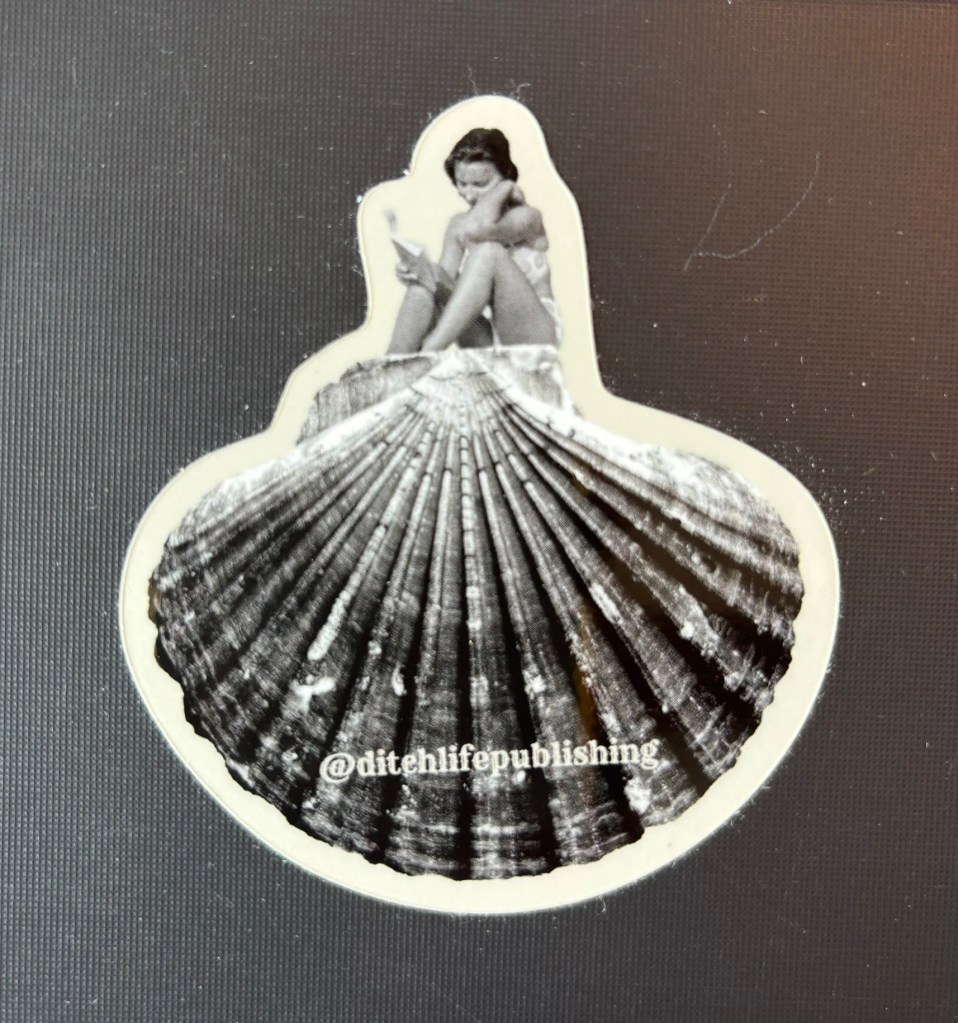
    Finally, I received my contributor’s copy of Ditch Life Magazine, a debut literary publication beautifully summer-themed, in the mail a week ago.

    I have a piece of contemporary flash fiction in it which was accepted back in April 2024, so it was amazing to finally have the publication in my hands. It arrived accompanied by a lovely thank you note and sticker, and all of it was a nice pick-me-up after that recent rejection.

    Beautiful sticker now gracing my laptop

    I was worried that rereading my piece after so long would make me cringe, but it didn’t. Sure, there are a few lines I’d like to go back and edit, but overall, I’m proud to have it among some gorgeous and moving work. The other contributors have impressive bios, so I’m in good company.

    All in all, we’ve had a wonderful end to the summer.

    One of eight pumpkins growing in my garden

    The season is definitely turning. Morning temperatures are in the mid-forties and afternoons in the high sixties. My pumpkins and sunflowers are growing well, and there are even a few red and orange leaves scattered here and there in the trees. It looks like we might have an earlier foliage season, given how dry the weather has been. Today, we spent some time at a local corn maze, and it was a nice way to invite the new season in.

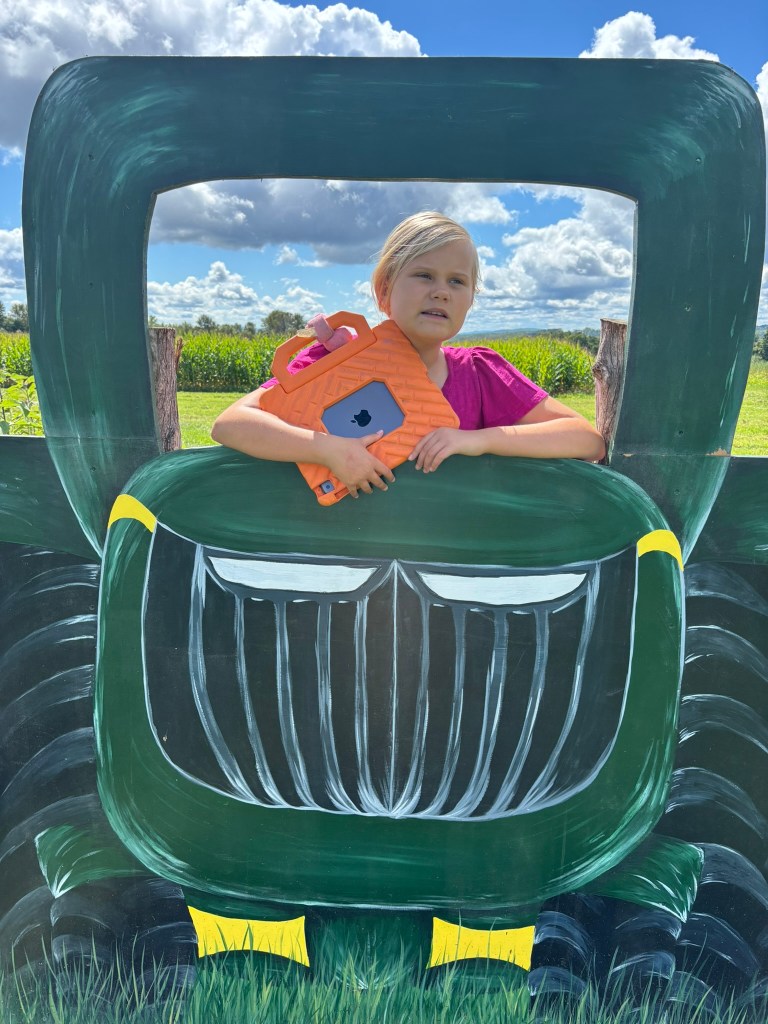
    Farmer Daph
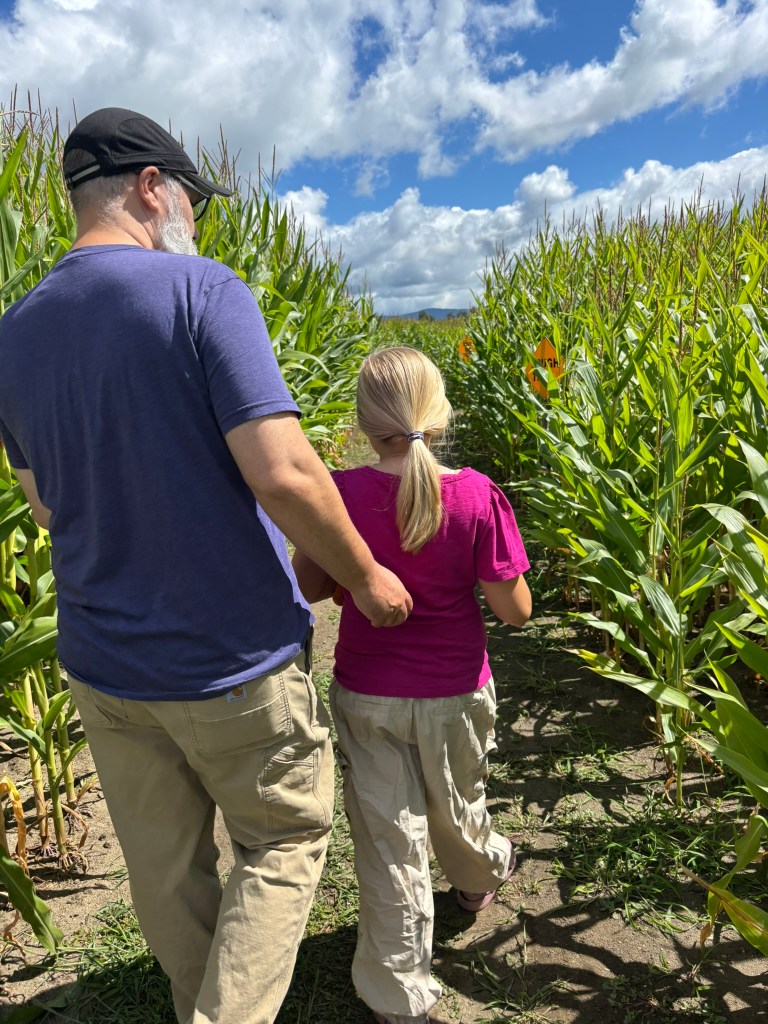
    With Dad in the corn maze

    I’m looking forward to sharing more about my fall and winter writing plans, which include a zero draft of a novel-length WIP, a gothic romance. Plus, I have an original fairy tale coming out in a few weeks in the Red Herrings Society’s magic and fantasy anthology, Spellbound.

    I’m looking forward to teasing more about that, including some of the stories by my fellow contributors, so stay tuned!

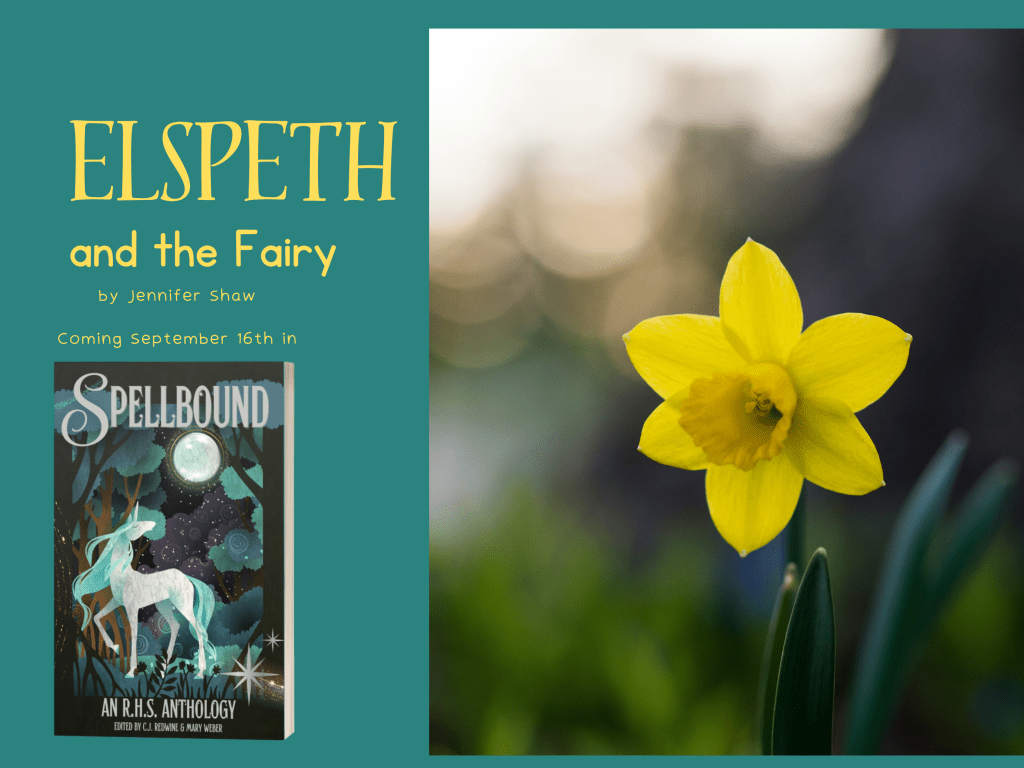
    I’m no Canva pro, LOL. Daffodil photo by Aaron Burden on Unsplash

    I truly did try my best to squeeze this post in as my fourth and final one for August, but circumstances kept working against me, so I just had to give it up and post today. The world will not end because I didn’t upload four times in August.

    I did write two more August posts last week, but I didn’t send out email notifications because I didn’t want to flood inboxes. My own is overwhelming me, so I know how irksome that can feel.

    If you’re interested, you can catch up on those previous August posts here:

    The Books that Made Me: Final Installment

    and

    Two Haikus, Plus Some Thoughts on Versatility

    Thanks for reading, and please feel free to share anything you’d like about your own summer or even your fall plans. I hope you’re enjoying these liminal days.

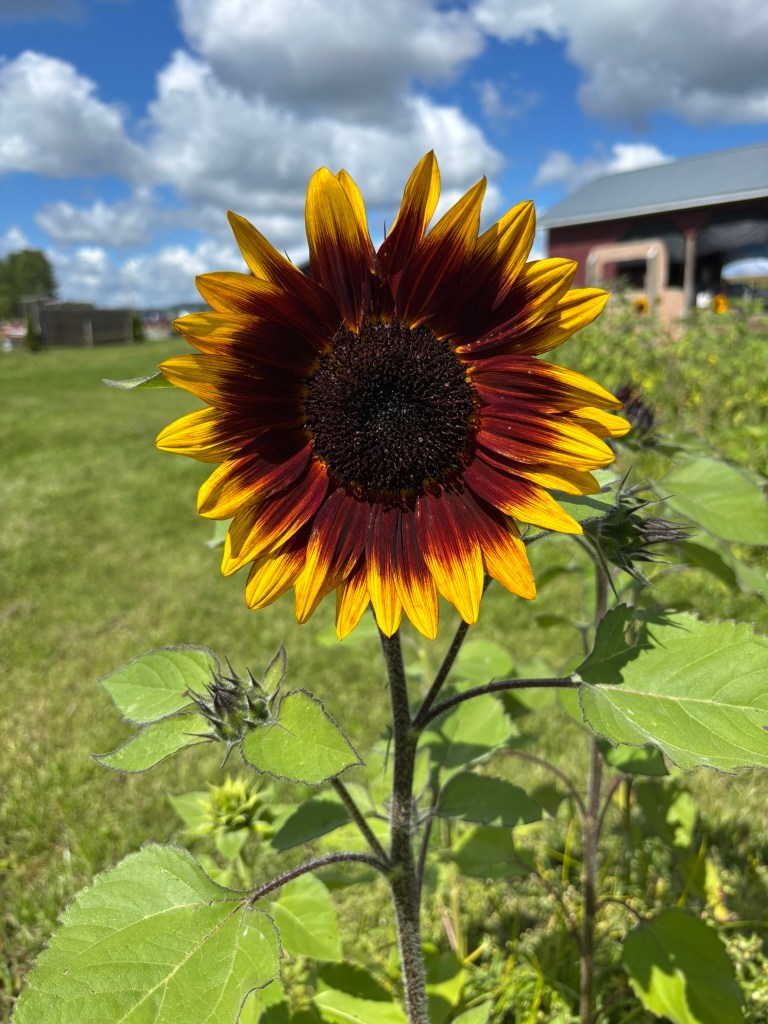
    Sunflower at the Kingdom Corn Maze in Sutton, VT

    See you next week, when I’ll get back to a more regular posting schedule. I’m hoping to post on Thursday or Friday of each week.

    XOXO,

    Jenn
  • A couple months ago, I hopped on this bandwagon and began writing about my favorite novels from childhood, the ones that sealed my love of reading and proved the most formative in my literary tastes and aspirations.

    To recap:

    Number Three: Wait Til Helen Comes by Mary Downing Hahn

    Number Two: The Witch of Blackbird Pond by Elizabeth George Speare

    And, here is Number One. The book with the most enduring influence, the one I loved most as an introverted, bookish kid learning to adore all things creepy yet beautiful.

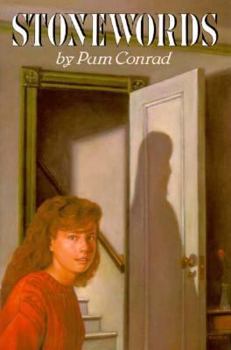
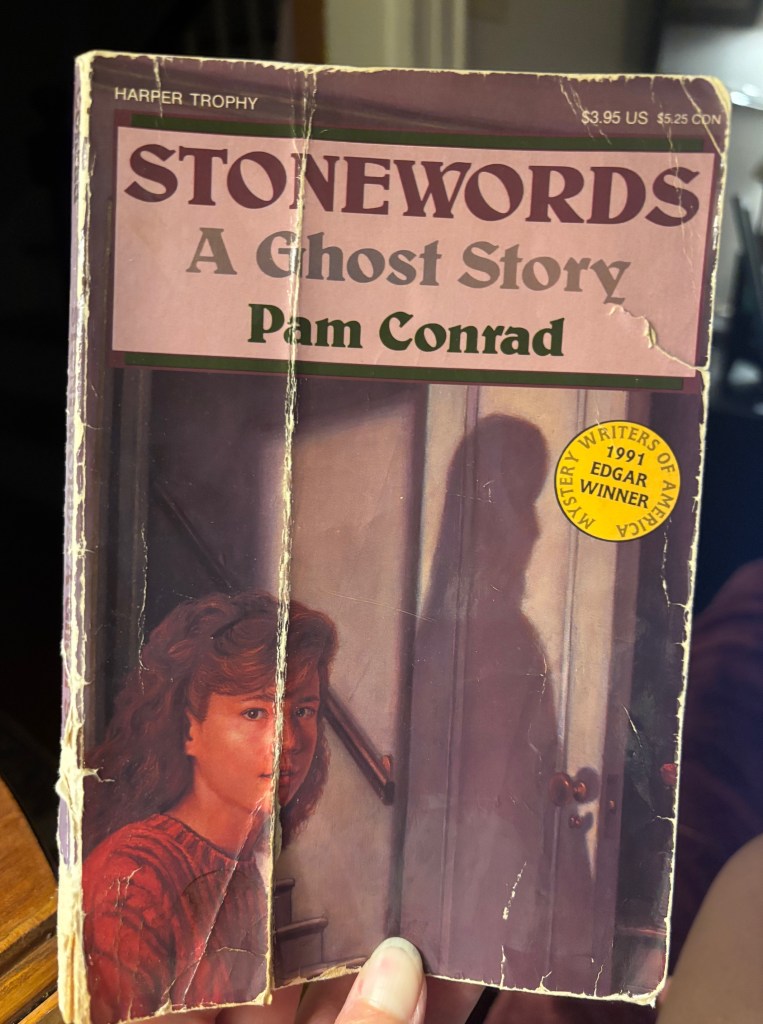
    Stonewords: A Ghost Story by Pam Conrad (published by Harper Trophy Books in 1991)

    Image from thriftbooks.com

    The first time Zoe met Zoe Louise, Zoe was four years old. Zoe Louise was more than 100. From that day on — living in the same house, separated by a staircase and a century — Zoe and Zoe Louise have been an important and permanent part of each other’s lives.

    Now Zoe is older. And although Zoe Louise never grows up, she is changing in dreadful, frightening ways. Time is running out for Zoe’s best friend — and Zoe is the only one who can help her. To do so, she must travel back 100 years in time and somehow alter the past. But in changing the past, must she also change the present? If she saves her friend’s life, will she lose Zoe Louise forever?

    An “eerie and gripping time fantasy.” (Blurb and quote from original printing, c/o Amazon.com)

    Oh, this novel. I’m not sure I can do justice to how much I loved it, and how much it has affected me.

    It is so perfectly and profoundly bittersweet, a love story about friendship. Zoe does in fact alter the past by saving Zoe Louise’s life. The consequence, however, is that the portal bridging their times closes for good, and Zoe never sees her first, and best, friend again. I loved that resolution–it was the right one, the inevitable one. It needed to happen, but it also made my chest ache. I understood even then, it was a story about the hard sacrifices of real love.

    Isn’t that so apt for a story about growing up?

    This novel also uses first-person point of view, though its narration is less immediate than Hanh’s in Wait Till Helen Comes. Rather, I remember it being more reflective. It’s the older main character Zoe looking back on her experience, and that more distant, wiser frame gives the language a simple yet sophisticated, lyrical quality. It’s been described as “spare,” which I agree with, but I remember thinking it was gorgeous and haunting. I began to absorb a lot about how word choice and point of view create tone and effect, thanks to Conrad’s style.

    This book also included details delicious to a little girl like me. Zoe, who lives with her grandparents, enjoys an impressive playhouse that her Pop-Pop added as a kind of outdoor annex to their actual house. Inside is a child-sized kitchen and living room, which blew my mind. I would have sold my soul for something like that. I believe Zoe meets Zoe Louise, the ghost from the past, for the first time in that playhouse, where they become friends. I also loved that–I would have killed for a permanent playmate, someone who could show up randomly, at any time, in my own home, to be my companion and mine alone.

    Image from Microsoft Designer

    I realize now, as an adult better versed in literary subgenres, that this story has a definite gothic element. The past is very much alive and at play in events, and the house itself, or at least that magical back staircase, has an eerie energy of its own. It seems to facilitate events, as if the universe wants little Zoe Louise’s life to be spared. There’s even a macabre scene where Zoe Louise visits Zoe in the present time (as usual), except she’s rotting. Her body drips fluid, certain bones are visible, and this causes Zoe to realize she must act soon to save her friend from something terrible. In short, this book provided my first literary experience with gothic elements, and I absolutely ADORE gothic tales now, thanks in large part to this YA masterpiece capturing my heart.

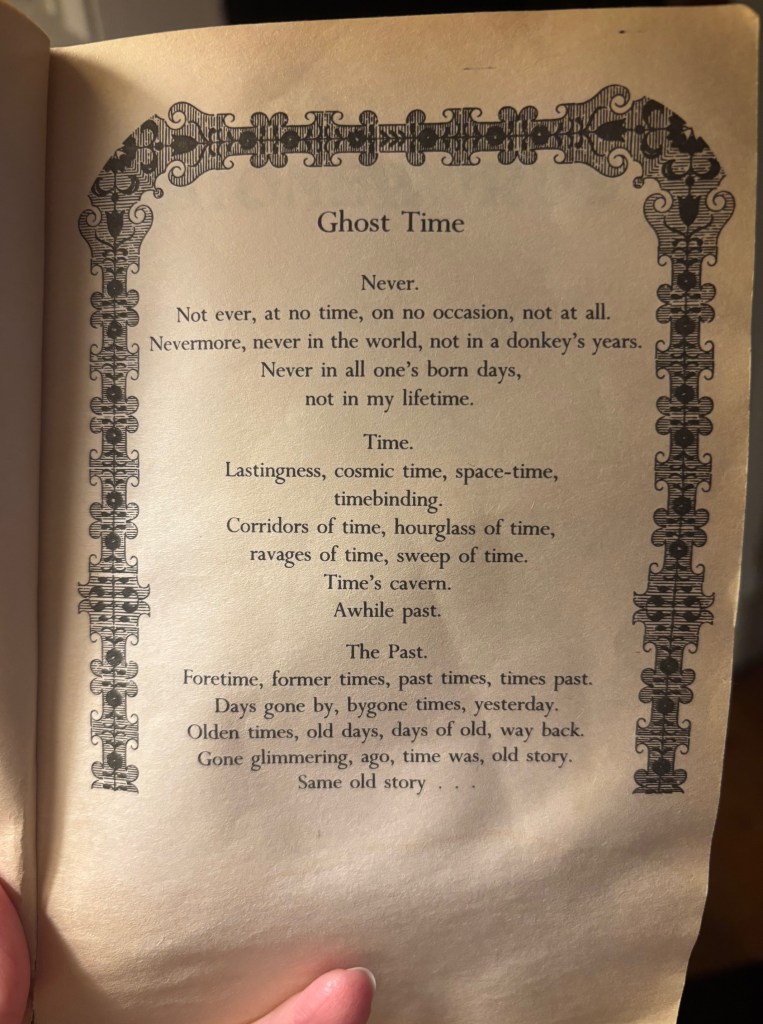
    The best aspect of Conrad’s book, however, is how respectful it is to young readers. It seems she wrote it on the premise that even adolescents can draw deep conclusions on their own and handle grown-up references. For example, it opens with a meditative, ambiguous poem about ghosts, the past, and time.

    Conrad’s poem, which prefaces the novel

    At another point in the story, Zoe’s grandmother says their pug looks “like Emily Dickinson.”

    There’s even a moment when older, pre-teen Zoe is visiting the past, her presence invisible to all except Zoe Louise, and finds herself in her friend’s parents’ bedchamber. There, she reaches out to stroke Zoe Louise’s father’s cheek. The man, after all, is young and handsome, and Zoe is growing up, feeling urges toward the opposite sex for the first time, though that is strictly implied (and something I didn’t get until much later, on a third or fourth reading). Feeling Zoe’s touch, the father lifts his hand to his cheek, in true haunted fashion.

    I read this book multiple times.

    The first time, I was nine, and I loved the playmate and playhouse details best.

    Then, as I got older and continued to reread it, I was better able to make all the meaningful inferences Conrad intended. It takes Zoe (and readers) a while, for instance, to realize Zoe Louise is actually a ghost. Readers are also left to realize on their own, that Zoe the main character is actually named after Zoe Louise, since main character Zoe’s mother adored the name on the headstone in the local cemetery and–oh wow–that headstone actually belongs to Zoe Louise herself (though the “Louise” part is worn away).

    Image from Microsoft Designer

    There are more instances of implication, though I can’t specifically cite any others off the top of my head. There’s not a lot that’s explicit in this book, actually, and that made it a wonderfully layered, resonant, and sophisticated reading experience. Stonewords was a book I could revisit again and again and always derive from it something fresh. I didn’t have another deep reading experience like that until I was much older and began studying Joyce Carol Oates’s short masterpiece Where Are You Going, Where Have You Been?

    That says a lot about Conrad’s achievement.

    This novel deserved the many awards it won: Edgar Allan Poe Award for Best Juvenile Mystery (1991), Boston Globe-Horn Book Honor Book (1990), & Mystery Writers of America’s Best Juvenile Mystery Award (1991), among others (Google).

    I think it might also be out of print, but like Hanh’s and Speare’s novels, it’s still available for purchase on Amazon and in a few other places like Thriftbooks.com.

    I’m so glad I still have my childhood copy.

    Beloved book

    ***

    These three books were not the bestselling sensations that JK Rowling’s, Suzanne Collins’s, and Stephanie Meyer’s were, but their fascinating premises, emotional themes, and beautiful language made such powerful impressions on me that I strive to write similar material now. Skill-level aside, the only real exception between my work and theirs is, I write my stories for adults because, hey, I want the same gorgeous, gothy, haunting vibes but with at least a dash of sex and romance.

    We’re all grownups now, after all.

    While writing these particular posts I realized, writing aside, how these books have even influenced my general life choices. I live in New England now, like Kit in Witch of Blackbird Pond, in an old, possibly-haunted house like Molly and Zoe both do, and my husband is a handsome former sailor, similar to Nathaniel Eaton, Kit’s love interest in WoBP and my first book crush.

    That’s a lot of similarity, too much to be purely coincidental.

    I’d love to hear about the most powerful childhood book that shaped you. What was it, and why?

    See you again soon!

    XOXO,

    Jenn
  • Hi, friends! Today is my fifteenth wedding anniversary, and I’d planned to write a short tribute to my loving, nearly-perfect husband, but my daughter’s not having it.

    So, to get my final post for July live in as little time as possible, I’m sharing a previously-written review of a book I just finished. Next week, I will effuse about the best decision of my life: to marry one of the most wonderful men I’ve ever known.

    Image from amazon.com

    I enjoyed The Housewarming by Kristin Offiler, which I downloaded through Amazon’s July First Reads.

    Told through multiple points of view, this mystery follows estranged friends Callie, Meg, Tess, and Lindsey as they are drawn back together on the five-year anniversary of their friend Zoe’s disappearance. At the same time, zealous true crime podcaster Patricia Adele (who initially ruined their lives in the wake of her own exploitative investigation) also reappears. Patricia has a book about Zoe’s case in the works, and she’s ready to barb them all with fresh questions and provocative new leads, even as Callie, the group’s default leader and original Judas, plans a special housewarming memorial to honor Zoe on Block Island, where the girls had their final summer trip together and where Zoe was last seen.   

    This novel is the story of four grieving friends still trying to put their lives and, tentatively, their friendships back together. They face opposition not only from Patricia but one another, as each brings her own secrets and confessions to the party.

    This book is nearly perfectly paced, as a mystery ought to be. Nothing ever dragged, and I ate up each chapter as the author breadcrumbed tidbits and planted a few effective red herrings. I also enjoyed all the details of the Rhode Island setting—the houses and beaches of Block Island, plus the one-way streets of fancy, touristy Newport, with which I’m familiar.

    The novel also does a nice job questioning whether true crime blogs and podcasts are an ethical form of entertainment. Patricia’s desire to feed her own amateur investigations and speculations to her fans drives her intrusive, insensitive behavior, even as it comes from a strange, sad place of personal alienation and has a clearly negative impact on Zoe’s friends and family. It’s a timely, relevant issue, considering how real-life bloggers like Turtleboy affect cases like Karen Read’s. I’m a true crime junkie myself, and the novel made me consider whether my love for these podcasts is in good taste, and whether these influencers pose a real threat to the justice system.  

    Karen Read and blogger Aidan Kearney, also known as Turtleboy. Image from the Boston Herald

    The best thing about The Housewarming, however, is its exploration of and ultimate tribute to female friendships. These women feel real, and my heart broke, then mended, over all the ways their shared tragedy and time both together and apart evolved their relationships, just as it does in real life. This book struck me as a kind of love letter to all the girls’ girls, all those who grew up with a tight-knit group enjoying their own little traditions and intimacies and struggling with their inevitable secrets and betrayals as life reshapes them.

    In this spirit, I love how the missing woman, Zoe, is given a voice at the very end, her single chapter creating a bittersweet clarity and poignancy that made my chest ache. Readers find out enough about what truly happened to her, and who Zoe actually was, to feel satisfied, while the story retains a haunting, realistic degree of ambiguity. There is no single, neat bow to tie everything up, and I appreciated that.    

    My only real nit-pick with this book was my feeling that Patricia the blogger’s story was incomplete. Her point of view is given a chapter once at the beginning and once in the middle, and I wish she’d been allowed one more chapter of her own at the end, perhaps to complete her own arc or provide a glimmer of something she might have learned or how she might change (or not change), or to plant the seed of something she might have realized based on what she witnesses at Callie’s party.

    I recommend this thoughtful, seasonal book for anyone who loves mystery and women’s fiction. Congratulations to Kristen Offiler for a strong debut!              

    What are your summer reading recommendations?

    See you all next week!

    XOXO,

    Jenn