My latest short story was released about a month ago, in an anthology of macabre yet heart-warming fiction. I like my story. I’m proud of it. I believe I made it the best it could be, given my time limit and current skillset.
Yet, I fought hard not to dread its publication day.
For me, release day is always underwhelming, at best. At worst, it’s disappointing, even painful, and I can’t help but wonder, am I alone in these feelings?
Before we writers have anything published—by a professional group, a literary magazine, a small press, a large press, ourselves—we fantasize about the milestone. We imagine how, when we see our own sentences in print—sharp, black, starkly gorgeous against the white—the moment will include a soundtrack of celestials chorusing from the stars.
After all, pub day will be a result of serious effort, the completion of something that likely took us a long time. Maybe the process will have been difficult in several ways, and the piece finally reaching this peak will be our best work yet, or our luckiest. Most likely, it will be the result of much sweat and doubt and maybe a few tears and, finally, a little dice blowing and rolling.
The natural progression of such an accomplishment would suggest a culmination of pure, cathartic joy, right?
Cue the applause, the confetti, the fireworks. We’ve worked hard, we’ve achieved something good, it’s over, and we’ve earned some delicious rest. A respite, too, from doubt and anxiety.
Except, most likely, there are no fireworks. What we get instead is a quiet reception, and we find ourselves waiting, waiting for something (however illogically) with a strange hollow ache. At worst, those old, nasty feelings of inferiority flare right back up, hotter and hungrier than ever because, well, we might only hear crickets. Or, the praise that finally trickles in, even if it’s lovely and sincere, isn’t enough. (Is it ever?)
I’ll be honest—the anticlimax of release day is not unlike my earliest experiences with sex. Over the years, from all the books I wasn’t quite ready for and movies I probably shouldn’t have seen, the idea of sex took on a mythic quality. Then I had actual intercourse. At an appropriate age, mind you, with the sweetest guy, and it was all tender and consensual.
Yet I couldn’t help but think, wow. Is that all there is to it?
Where’s the exquisite pleasure? The deep rest that’s supposed to follow?
That’s been my experience thus far with publishing.
Let me qualify something. I am a writer, and this latest piece is my eighth publication (all short form), but I am not a professional author. I’ve never made money from my work. Right now, I’m a hobbyist, though I don’t like that connotation, and I hope I’m still in my “ugly duckling” stage (I wish I could remember who coined that so I could give them proper credit, but alas I can’t). I don’t say any of this to belittle myself, only to acknowledge that maybe it’s different for the pros, especially the best-selling ones.
Somehow, though, I suspect it isn’t. Not really.
Jodi Meadows, a traditionally published fantasy author, spoke to my writing group a few years ago. Among her frank and eye-opening recollections, she advised us, don’t be surprised if your book is received much more quietly than you’d like it to be. Kristen Offiler, whose wonderful debut novel The Housewarming came out last year, marked her release day in a recorded Zoom with her writer friend Lindsey Smith, which they shared on their Substack The Meaning Makers. During her interview with Smith, Offiler said the day was basically like any other day. I’m sure if I googled this issue, other quotes and examples would appear.
I know how challenging it can be to produce even a short work you feel good about. I can’t imagine how it must feel to spend months, or years, on an entire book (draft after draft after draft of 100k words, sometimes scrapping everything and starting completely over, force-feeding yourself on blind faith that you can do this tremendously challenging thing and it will prove worthwhile in the end) only to discover that publication day, the apex of this odyssey, is nearly as ordinary as any other square on the calendar.
What the hell?
Maybe other writers don’t experience this letdown (dare I say, occasional resentment?). I don’t feel like anyone talks about it much, at least not in what I’ve seen and heard. I’ve had to wonder, then, what exactly is my problem? Where’s this particular dissatisfaction coming from?
For me, I think the issue lies partly in the lens through which I’ve been viewing publication. Maybe I’m trying, unfairly, to compare writing and publishing to a different kind of art form altogether.
Before I wrote, I danced. I spent a handful of teenaged years on a pre-professional track, attending a performing arts high school and dancing leads in a little regional company (those were such wonderful, happy years). What I understood initially about art, hard work, and accomplishment, then, came through these experiences.
Dance is, by definition, a performing art. It is meant to culminate formally before a live audience. First, you learn a piece from a choreographer, director, or repertoire master. Then you rehearse it to “clean” it, and rehearsals move from the studio onto the stage, in costumes under lights with live music, where all the unforeseen foibles are revealed and ironed out. All of this, of course, is careful, linear preparation for the performance itself, a formal date set to happen in front of real people, flesh-and-blood bottoms in seats. You get to perform, then, in what feels like a formal, communal apex, in real time, and hopefully all goes well. Finally, before the curtain falls to signify the end (yes, it is all now officially over), the applause is a literal thing. Hugs and flowers go round.
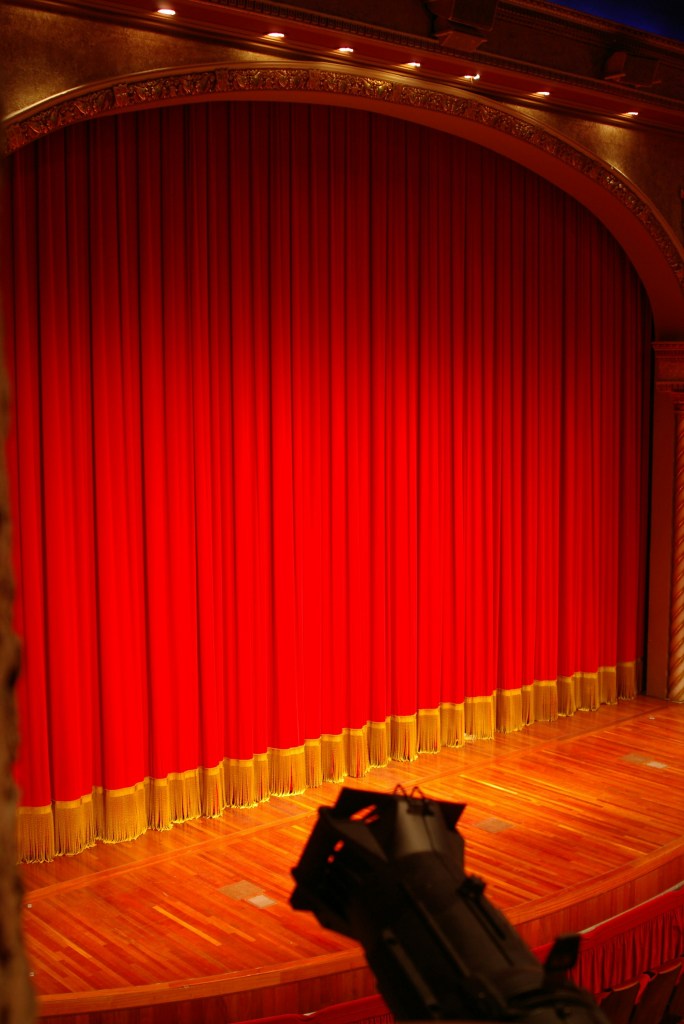
If you’re lucky, you get a performance run, a series of shows with different audiences and additional chances to get those most important moments right. When you do, that feeling of transcendence, of blissful completion, is like nothing else.
It helps, too, that in classical ballet, productions often culminate in musical and narrative apotheoses—swelling strings for grand pas de deux and in melodramatic finales in Swan Lake, for example, or in George Balanchine’s magnificent Theme and Variations. As an experience, the artist, in this case, the dancer, can’t ask for greater height, or more closure.
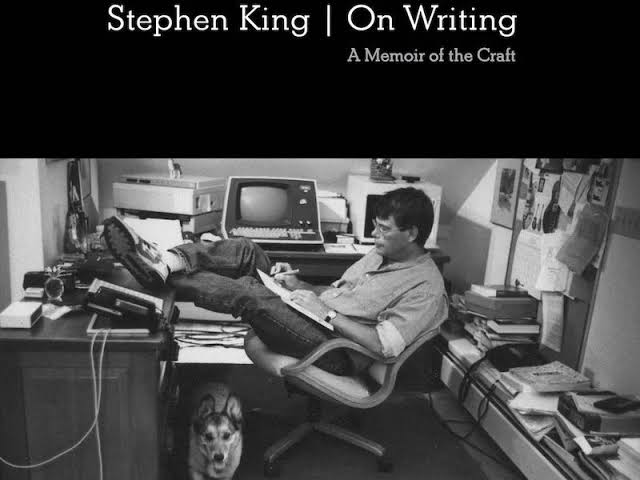
Writing and publishing—a liberal art—are very different. Stephen King defines writing as “telepathy, of course,” which is a brilliant definition.
All the way into its life after publication, then, writing is a relatively solitary, silent endeavor, not nearly as communal or linear. It’s something conceived, shaped, and reshaped in the symbols of language (always rather slippery), then conveyed to faceless, muted readers one by one, over vast distances and ever-longer periods of time. Thus, it makes its slow, strange, easily misunderstood way to others whom the artist will never know much, if anything, about.
And, when a piece is finally out in the world, an author might hear little about it. Even when good reviews roll in, the author is not there to experience the entirety of the work with readers themselves, who may have a wonderful, personalized, vicarious experience and never share those details.
Where is the certainty, then, the clear pleasure and closure for us, the writers?
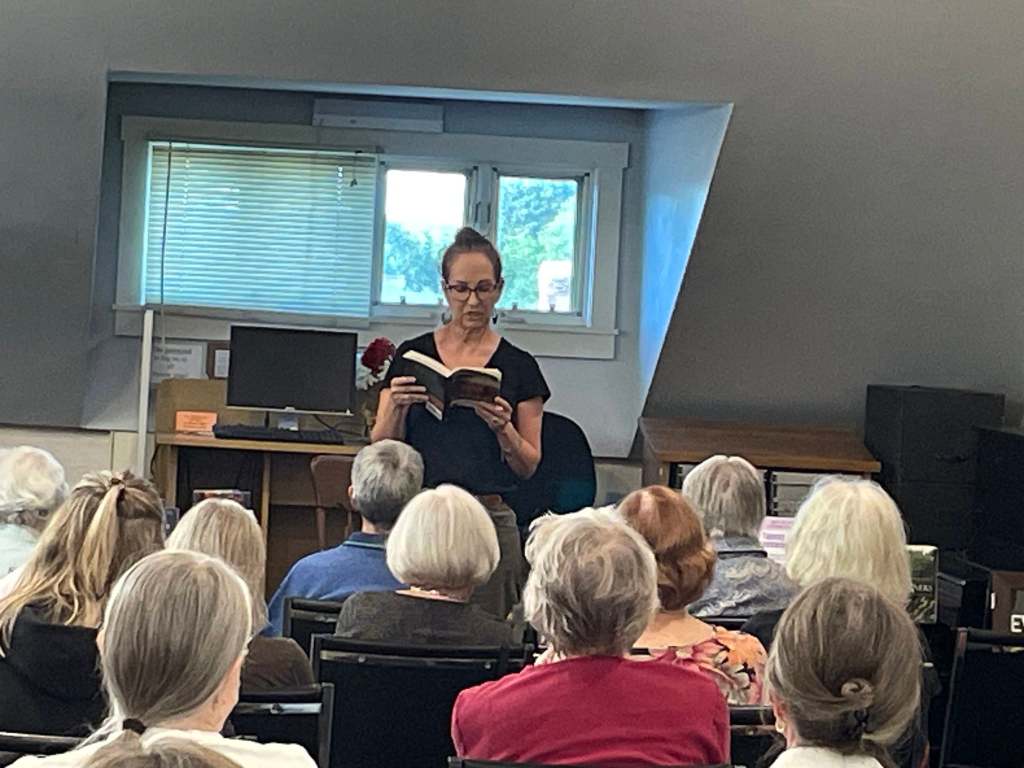
Yes, there are book signings and author events. This summer I attended one for Vermont native Tammy Greenwood at our local library. She was celebrating the publication of her sixteenth novel, Everything Has Happened, and she read excerpts from the early chapters before taking questions and signing copies. It was a lovely experience, and we did applaud her, but it still felt more like a presentation with a bit of conversation mixed in, not a performance.
But there’s a flip side to all this, too. Writing, as silent transmission, is also never-ending. Even if it feels like our piece gets eaten by the void, it still exists out there somewhere, discoverable to someone who, down the line, might enjoy it or even love it enough to share it, though it’s likely we’ll never know that. In this way, the piece’s possibilities extend indefinitely. Such is not so easily the case with most performing arts (music being the exception), unless they are filmed or recorded, and that’s infrequent.
Published writing, then, offers a kind of ongoing availability that a live performance often cannot. It occurs to me as I write this: That’s what release day actually means. The term refers to the piece’s liberation into the world, where it begins its second life, accessible to everyone. Release day is, in truth, a new beginning for the work itself, not a perfectly satisfying culmination for us, the writers.
I have been selfish with that word “release.”
But even this understanding doesn’t always soothe the ache that can throb in the quiet. In that quiet, I’ve often struggled.
Keeping this new perspective in mind, however, has helped. This time, for this release, I let go of the naive belief that some kind of glorious external validation should crown the day. I took steps instead to appreciate myself. I attempted a kind of bookish after-care, if you will, and for me, that meant not:
- rereading the published story (I skimmed for correct formatting, sure, but the story was done and had its home. There was no reason to agonize about overused ellipses or the additional sentence or two that could also have been cut)
- haunting the Amazon page for reviews (this led, in the past, to all sorts of weird negativity. And, well, comparison, unreliable anyway, is the thief of joy)
- lingering on social media (basically, for the same reasons noted above)
What caring for myself on this publication day did mean—I chose to focus on the wonderful fact that, yet again, I created something out of my own brain from nothing. I put something original into the world that did not exist before. I find this fact, as I hope we all do, awe-inspiring. To commemorate it, I composed a little blessing to be read, going forward, on every publication day. I won’t share it here because it’s only for me, but writing it was surprisingly heartening.
That little blessing underscored something I realized, at 6 pm in my small, steamy farmhouse kitchen: I am such a readily creative person now. I drafted that little composition in ten minutes in my Notes app while boiling spaghetti noodles, and it pleased me enough that I only line-edited it a bit after dinner.
Had someone told me, five years ago, to dash off something like that, I would have frozen at my laptop or note pad, agonizing over what the hell I could manage that wouldn’t sound ridiculous or cringey.
Now, words—lovely, and cringey, sure, and everything in between—spring from my fingers.
And that ease has come through the practice of writing.
It is not a performance, but it is a practice. Doing it, refining it, and letting it improve me are the surefire gifts that belong to me and me alone. Therein lies its real satisfaction.
On that note, I’m a nostalgic early Millennial. While writing this post, the 2000 movie Center Stage drifted back into my mind.
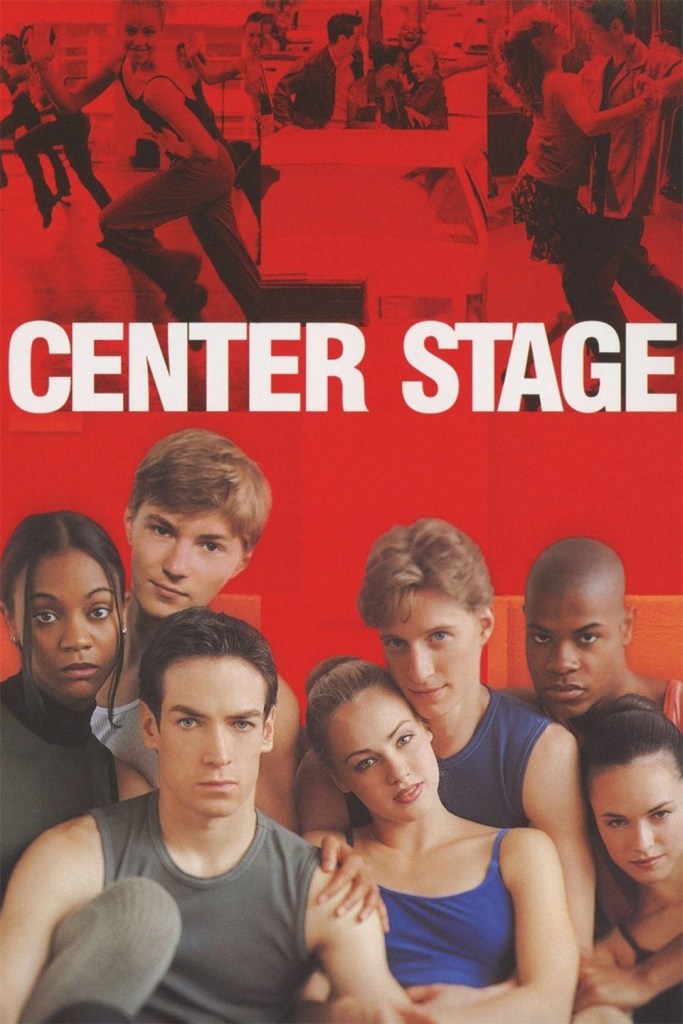
As silly as that film can be, there’s a quiet, tender scene that suggests what is, in fact, a significant similarity between writing and dancing.
In this scene, American Ballet Academy instructor Juliette Simone (played perfectly by Donna Murphy) comforts the young, talented dancer Eva Rodriguez (Zoe Saldana in her breakout role). Eva is hurt she wasn’t given a lead role in the school’s famous end-of-year performance, inspired by the real School of American Ballet’s annual workshop, where outstanding students garner contracts with professional companies, whose recruiters are often in the audience.
Referring to the “unforgiving” director who miscast her (and all the choreographers and directors like him), Juliette says softly, “The unwise dancers blame them. He didn’t like me; she was unfair; I should have had that part. The smart ones know where to look when things get rough.” Arms crossed, she shakes her head. “It isn’t there.”
Juliette glides back toward the studio’s floor-to-ceiling window. Facing Eva, New York City filling the glass behind her, she taps the smooth wooden barre with the palm of her hand. “It’s here,” she says. “If you come back here, you’ll be home.”
Yes, home.
A practice, never a performance.
Thanks for reading!
XOXO,
Jenn