Happy Spooky Week, friends!
I’ve always loved gothic stories. From Pam Conrad’s YA Stonewords to Poe and the Brontes and Frankenstein, all the way to the gothic romances enjoying a resurgence today, I can’t get enough.
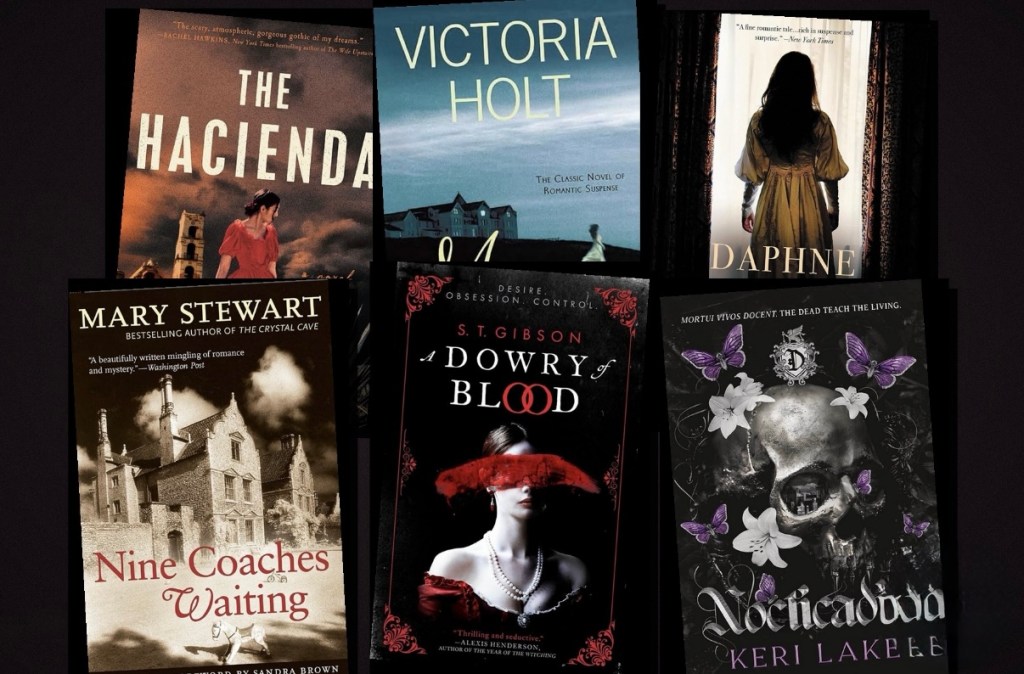
This genre satisfies so much of what I adore: ethereal narratives with a sense of timelessness; haunting atmospheres; lush, gorgeous prose; family curses, forbidden/deviant love, morbid expressions of wealth and status (manifested so often in enormous old houses), ghosts (literal and metaphorical), and folkloric/psychological horror.
When the epic and historical meet the creepy and beautiful, my heart follows.
Lucky for me, I now live in Vermont, which cultivates this taste.
That might sound odd.
People tend to associate Vermont, New England’s playground, with ski weekends, hiking, and mountain biking. They might also think of East Coast hippies and Phish, Vermont being the land of Bernie Sanders and the ultra libs.
Before I got here, I imagined it as an old Currier and Ives print. Parts of it are indeed like that–Woodstock, I’m looking at you.
But Vermont’s wilder, darker, and more solitary than I expected, and I absolutely loved discovering that. It set my writer’s mind on fire with possibilities.
Here, then, are five reasons why brave little Vermont would be a great place to set a gothic novel (especially here in the north country).
5. A History of New England Superstition
There’s plenty of evidence to suggest early Vermonters believed in witches and vampires. The last recorded New England witch trial occurred in North Pownal in 1785. In the late 18th and early 19th centuries, during outbreaks of tuberculosis, villagers also dug up the corpses of their relatives and burned their hearts and livers because they believed they’d become vampiric entities feeding on the living. You can read a little more about these tragic events here in last year’s blog post, inspired by the unique-to-Vermont witch window in my old farmhouse.
For much of the 19th century, Vermont also served as a hub for American Spiritualism.
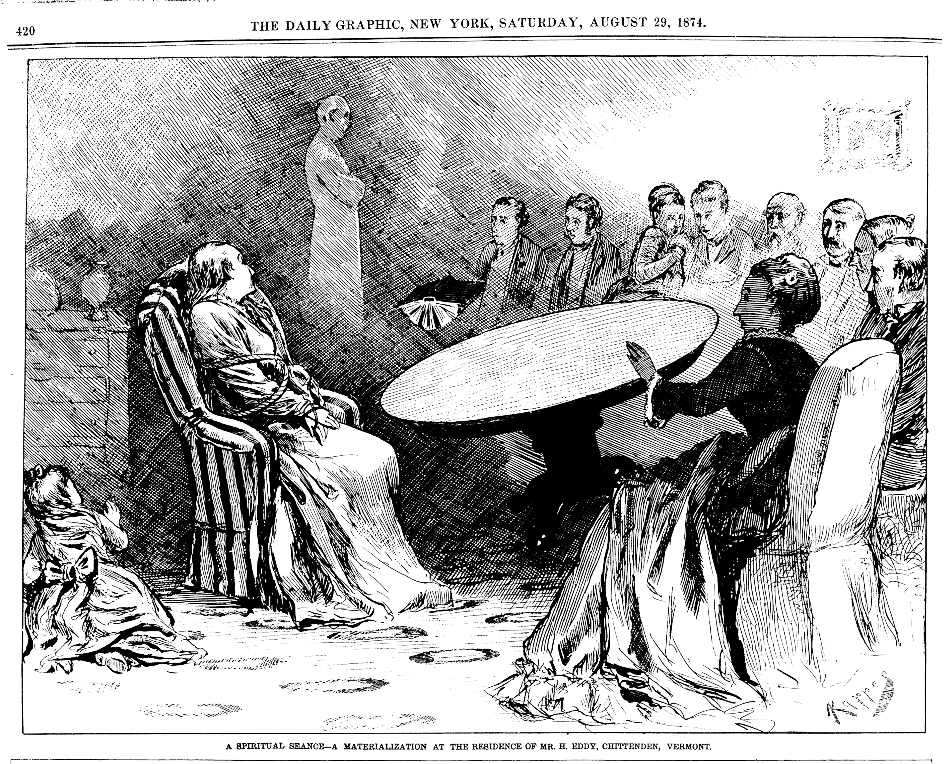
Most famous were the spiritual mediums William and Horatio Eddy. These brothers were said to have shown signs of talent in the occult from an early age. As adolescents, their abusive father hired them out to perform seances in traveling shows throughout Europe and North America.
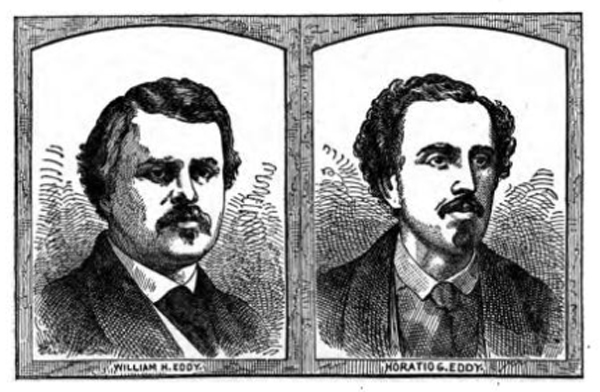
After Eddy Sr’s death, William and Horatio returned to Chittenden, where they built an inn on their family’s farm. There, they became famous for conjuring spirits of the dead, often the deceased friends or loved ones of the inn’s guests. During these shows, such strange, inexplicable things occurred that even determined skeptics like reporter Henry Olcott experienced a change of heart. Along with a team of engineers and carpenters, Olcott strove to expose the Eddys as frauds, but he never could find proof of their deceit. Thus, Olcott became a vocal, devoted believer.
Other Vermont mediums from this era include Marenda Briggs Randall, George Grow, Austin Simmons, Achsa W. Sprague, Lucy Ainsworth Cooke, and Solomon W. Jewett.
Such history is a perfect springboard into a gothic tale. However, it’s not just witches, vampires, and mediums that prove a little morbid. The landscape of Vermont itself plays an eerie role.
4. Coydogs
I’d never heard this colloquial term until our neighbor mentioned it. But I certainly couldn’t miss the strange howling of these eastern coyotes–it’s among the most eerie and beautiful experiences I’ve had in nature.
In the 19th century, when coyotes were driven eastward from the Midwest, and wolves from Canada migrated south, these canines bred, becoming the progenitors of what Vermonters now call coydogs. Today, their descendants continue to intermix with feral dogs, and at night, you can hear their strange sounds.
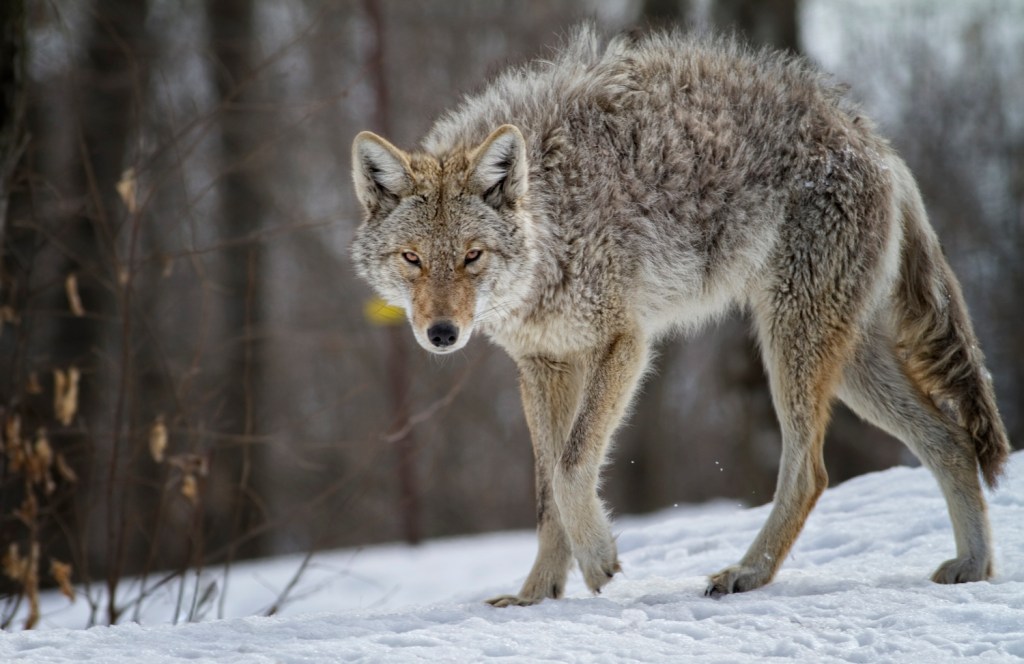
The sound is hard to describe–it’s both spine-tingling and almost sublime, in everything from long, melancholic, solitary howls to the sharp, playful yips and cries of several together. Coydogs live in packs, and they’re shy, only making themselves known at night. Their cries and howls tend to sound like the wails of lost children, and it can be hard to place their locations. They might seem like they’re right outside our windows, but there’s usually no trace of them by morning, so we think the sounds must echo strangely off the hills. When I catch a howl now, usually when I’m cleaning up dinner, I’ll step out to the porch, close my eyes, and let them take hold of my imagination.
If I didn’t know better, the sound would chill me to the bone. I now possess a very real understanding and appreciation for why ancient people believed forests were haunted. Coydogs sound like the ghosts of lost little girls.
No wonder early New Englanders thought witches were out in the woods stealing children.
It’s quite the atmospheric detail, don’t you think?
3. Lost Villages Overtaken by the Forest
Vermont’s geography makes large-scale farming difficult. Its soil is poor, its rivers run north into Canada, its winters are harsh, and it’s one of the most rugged areas in the United States, consistently ranked near the top of the “least flat” locations.
Despite such obstacles, Vermonters did make a go of sheep farming in the early 19th century. Consequently, 60% of the state’s forests were cut down by midcentury to make way for hill farms and sheep pastures. But “Merino Mania” proved unsustainable after protective tariffs were lowered, railroads expanded westward toward cheaper (and flatter) land, Australia and New Zealand flooded the international market with better wool, and overgrazing had stripped the topsoil.
Additionally, other natural resources like logging, charcoal production, and slate quarrying were easily exhausted. Add to all that outbreaks of disease and extreme weather, and it wasn’t unusual for populations, especially in the outposts, to dwindle. When that happened, towns lost their tax base and governance and ultimately disappeared after the remaining residents packed up and left.
The forest replenished itself with vengeance. Encouraged by the natural climate and 20th century conservation efforts, hundreds of woods sprouted back up, covering what had been farms, villages, and other settlements. Today, it is not unusual to discover on a hike or ATV trail stone cellar holes, moss-covered stone walls, overgrown family cemeteries, and old trails. There are even documented routes through Vermont’s ghost towns available to curious hikers.
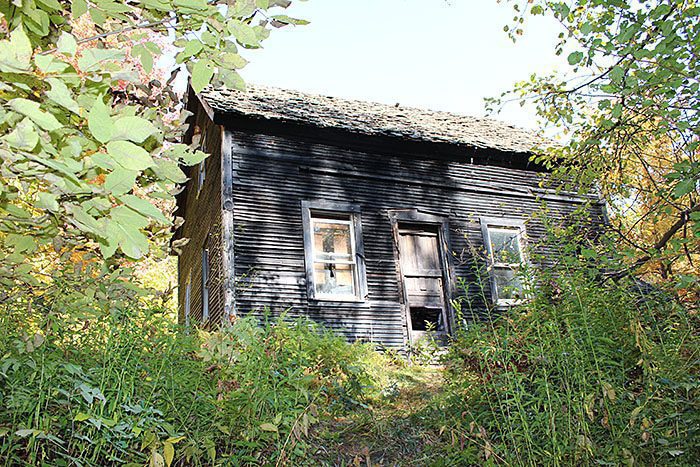
Our family has seen these remnants of settlements on our own adventures, and there’s definitely something phantom and lonely about them. It’s easy to imagine a scenario where more than just nature and the market might have caused a village’s collapse.
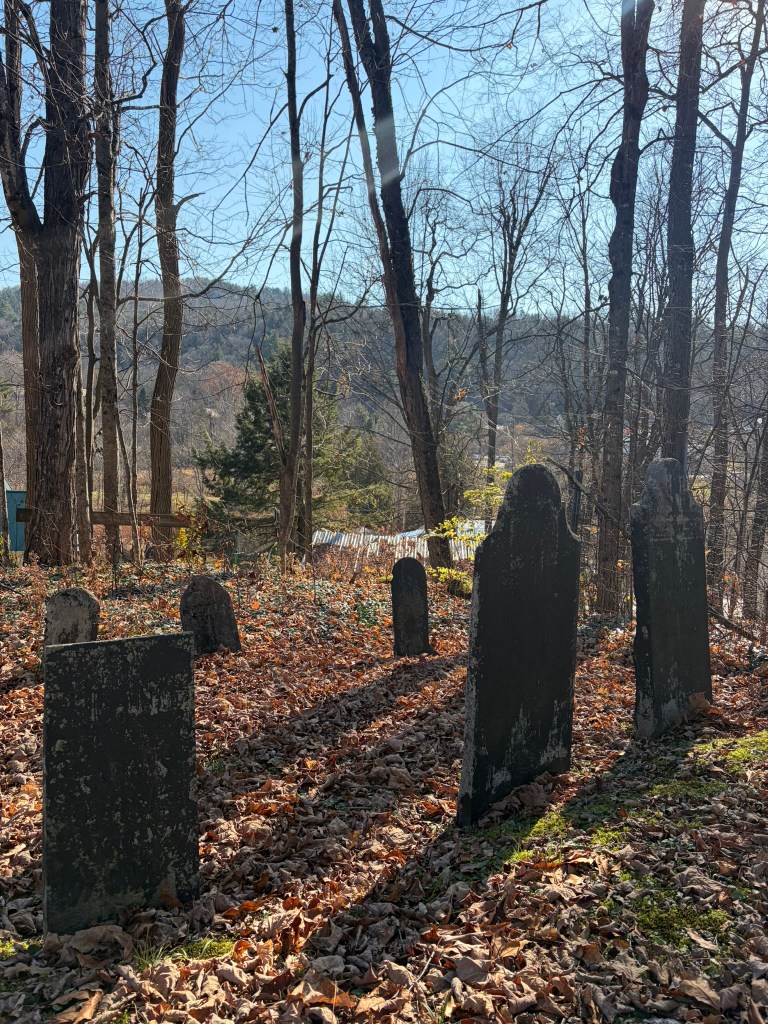
Nor can you help imagining what might linger there. And speaking of lingering…
2. A General Sense of Timelessness
Vermont sometimes feels like the land that time forgot. Especially to me, a gal from the concrete Texas ‘burbs where everything is big and new and always expanding, the population always growing.
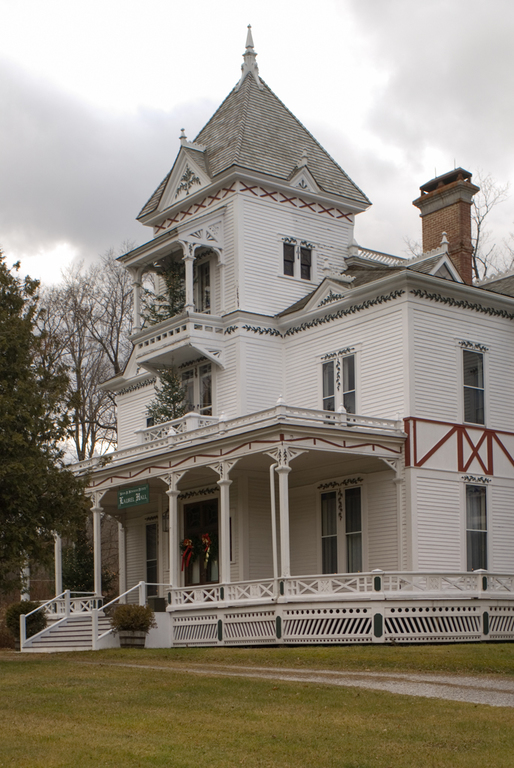
For many of the reasons noted above, Vermont has never been a populous, high-producing state. There’s just never been a lot of forward momentum, it seems, in terms of modern development.
But, our area is full of old Vermont families that dug in deep, who’ve been here for generations. You see the same set of last names everywhere, names of extended families who might still live near one another on the same hill (one such family covers our area, Pudding Hill). They’re proud of their traditions and histories, as they should be, and they tend to be a little wary of newcomers, who they often call “flatlanders” or “flatties,” the more derogatory term.
Thus, Vermont may be socially and politically progressive, but in other ways, it’s also old-fashioned. There are still several small, rural public-school campuses that trace their origins back to the original consolidated municipal schools. One-room schoolhouses remain standing in most towns. Business owners might be third, fourth, fifth generation.
Things feel more analog–you can still find a plethora of announcements and current events on community corkboards in the grocery stores and libraries. There are more dirt roads than paved ones.
Here, I feel steeped in history. Old buildings remain in use, town squares have hardly changed, old, covered bridges still stand, and antique Victorian houses, both abandoned and renovated, are a dime a dozen.
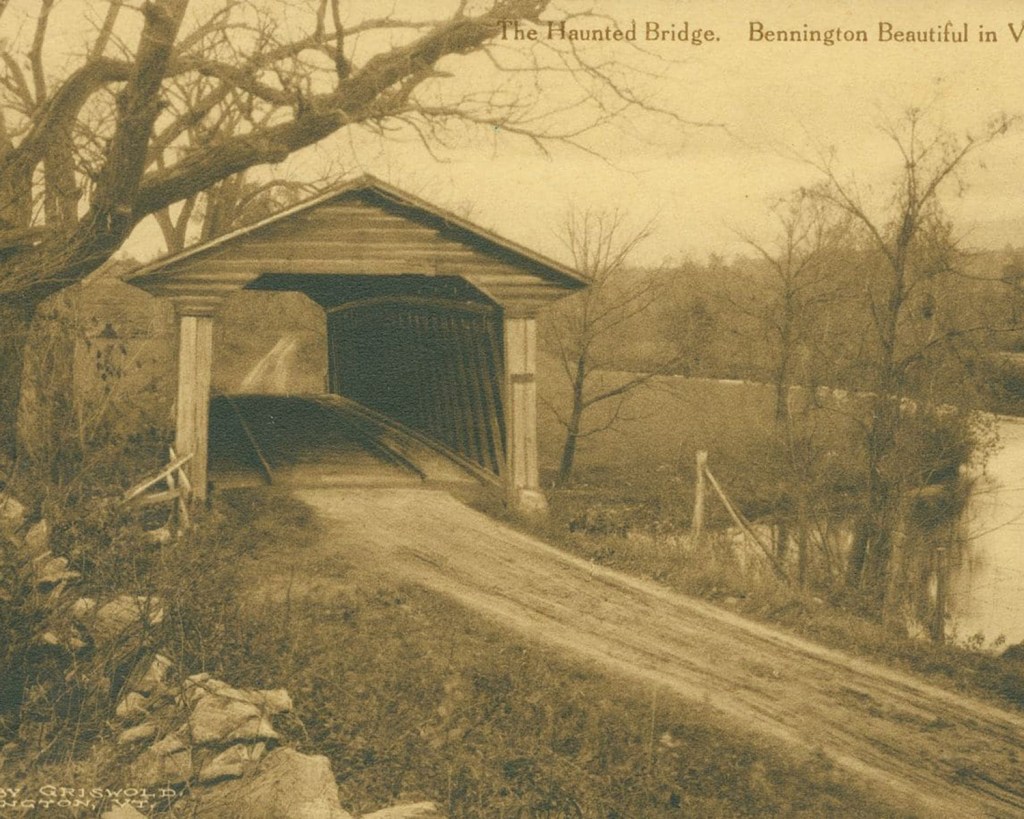
In that way, as in any good gothic narrative, the past is very much a part of Vermont’s present.
Now, imagine that past has a terrible, haunted history. One that comes to life in the depths of a brutal Vermont winter.
1. The Cold and the Darkness
This is the most basic, but to me it feels like the big one.
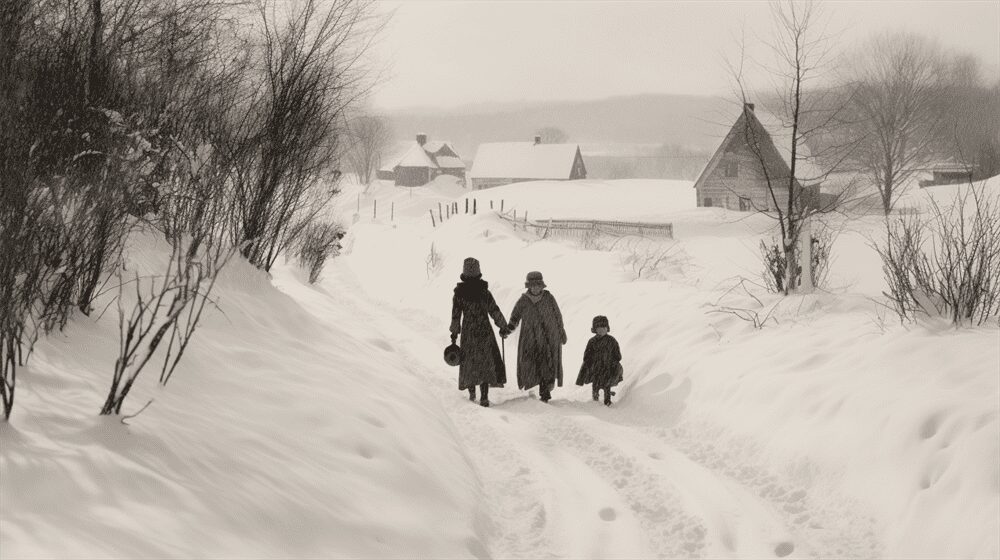
Vermont is not the coldest state in the US (we’re only #8 in the top ten), but our temperatures certainly plunge. The lowest temp our family has experienced here is -23 F. Let me tell you, that kind of freeze sucks the air from your lungs and makes the tips of your fingers and ears burn like they’re on fire, even if you’re wearing thick gloves and a hat. I’ve spent time outside in such cold taking my hens food and water. Each time, something deep inside me cried out, “Inside, now!! You are all done out here.” I can’t even identify where in my body that warning came from; it must have been just a flare of intuition from my lizard brain. I heeded it, for sure.
But slower, and more insidious, than the cold is the darkness. Late autumn and winter are dark.
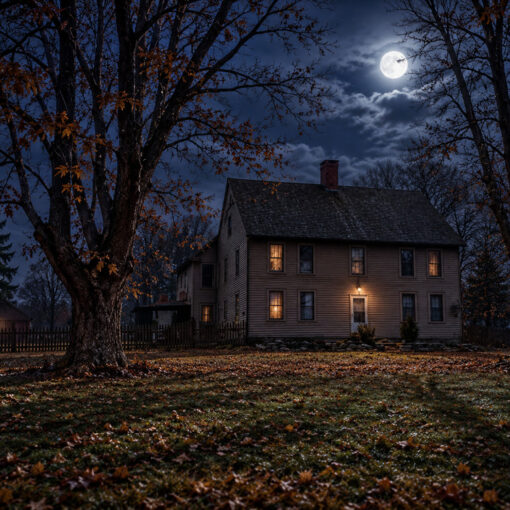
Vermont is one of the least sunny states in the country, and a chronic lack of sunlight has many unhealthy effects. Aside from vitamin D deficiency, too little light can cause persistent fatigue, low energy, and clinical depression.
Sounds a bit like a beginning for The Shining-style madness, yes?
In contrast, after several gray, gloomy winter days, when the sun finally reappears (ah, those bluebird mornings!) you can quite literally feel your skin drinking in that natural light. Your mood shoots up; the world feels beautiful and hopeful again.
We are creatures of the sun, I now understand; we need it for our well-being. I realized, last winter, that it’s not so much the amount of snow or freezing temperatures that make winter hard, it’s this lack of light.
It can drive us all a little mad.
So, there you have it. Madness, eerie forests, and haunted, ever-present histories—the best reasons why Vermont’s a wonderfully creepy setting.
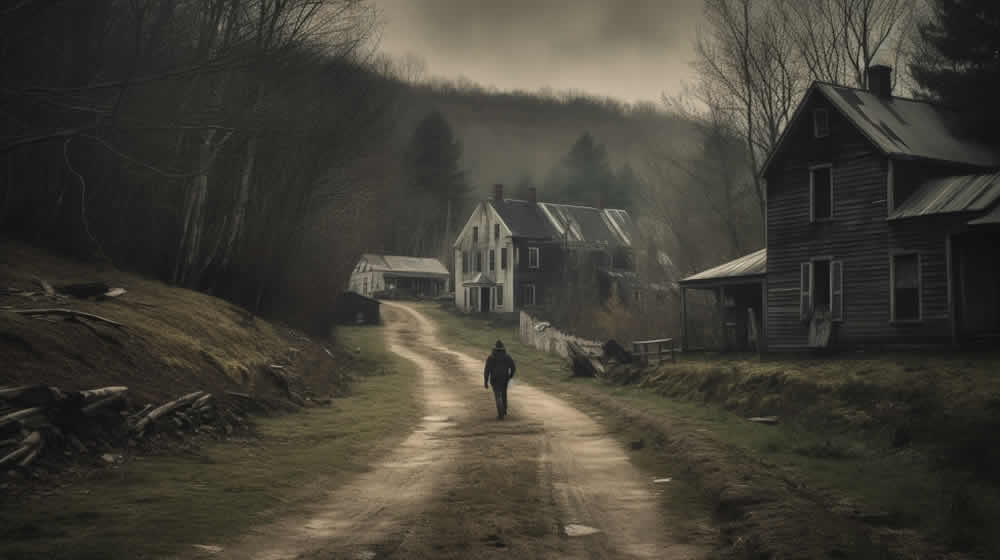
For a while now, I’ve had a general idea for a Vermont gothic romance. It’s set in the early 1900s and involves an enormous old Victorian house or maybe hotel sitting alone atop a high hill, at the edge of a deep forest. It belongs to an old local family that found success elsewhere but returned to flaunt its new wealth, with terrible consequences.
The protagonist is a forty-year-old woman who was roped into marriage within this family, but they’re all dead now and she inhabits the house with no one other than a devoted housekeeper, whose own lineage (and secret activity) is questionable. Of course, the house is horribly haunted.
The story kicks off with a young doctor, new to town and engaged to the daughter of his mentor, doing what is essentially a welfare check on our widow protagonist. This sets the stage for the two of them to fall in love.
Chaos ensues, of course, culminating in some kind of isolation in the depths of winter, when the protagonist must stand alone in the house against the forces of darkness, even as the young doctor fights his way back to her.
But these are all broad strokes. The finer details elude me.
So, for now, it will remain a creative seed, hopefully taking firmer root and growing one day.
Thanks for reading! Happy fall, and if you celebrate Halloween, I hope you have a great time.
I’m always open to new gothic and other chilling titles, so feel free to drop a recommendation, or anything else, in the comments.
See you next month!
XOXO,
Jenn
*If you’re curious, you can read a blog post here from last week about the underwhelming quality of a book’s publication day. I’m not emailing everything out so as to be considerate of inboxes.
Here, also, is a link to the anthology where you can find my latest short story, The One Who Wouldn’t Jump. It’s spooky and involves Halloween. Enjoy!